Side-by-Side IQ Profile: Chesapeake Bay Retriever vs. Irish Red and White Setter
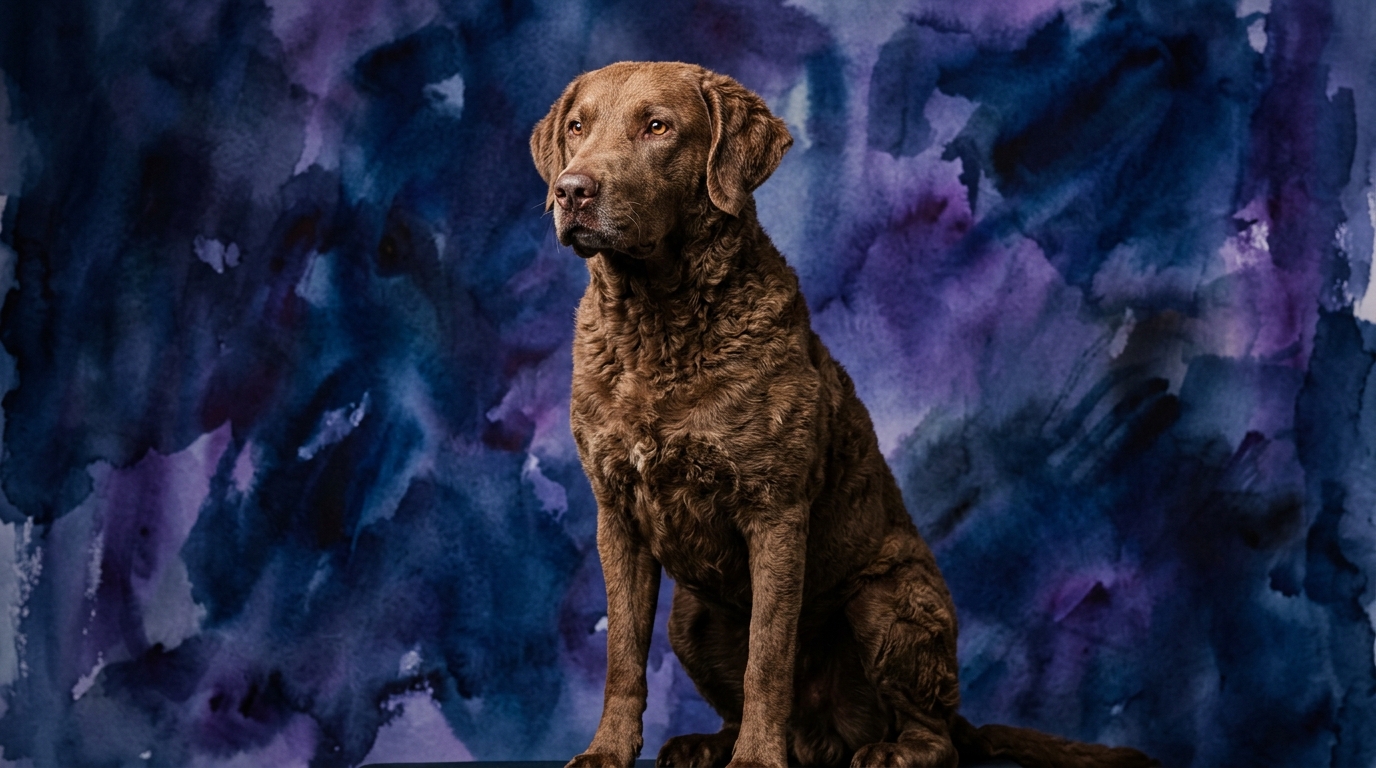
The Chesapeake Bay Retriever, or Chessie, consistently ranks among the more astute working breeds, reflected in its Coren rank of #27. Its cognitive strengths are particularly pronounced in areas demanding independent thought and robust recall. For Problem Solving, the Chessie scores an impressive 4/5, indicating a strong capacity to devise its own solutions to complex challenges, particularly in varied environments or when faced with unexpected obstacles during retrieving tasks. Its Training Speed is also 4/5, showcasing a swift ability to grasp and internalize new commands and routines, often thriving on the structure of learning. Social Intelligence for the Chessie is 3/5; while capable of deep bonds with its family, it tends to be more reserved with strangers and can be discerning in its social circles. The Instinctive Drive is 3/5, manifesting as a persistent and purposeful energy, especially when engaged in activities tapping into its retrieving heritage. Finally, its Memory is 4/5, allowing for a remarkable retention of intricate sequences, locations, and past experiences, which is crucial for reliability in demanding work.
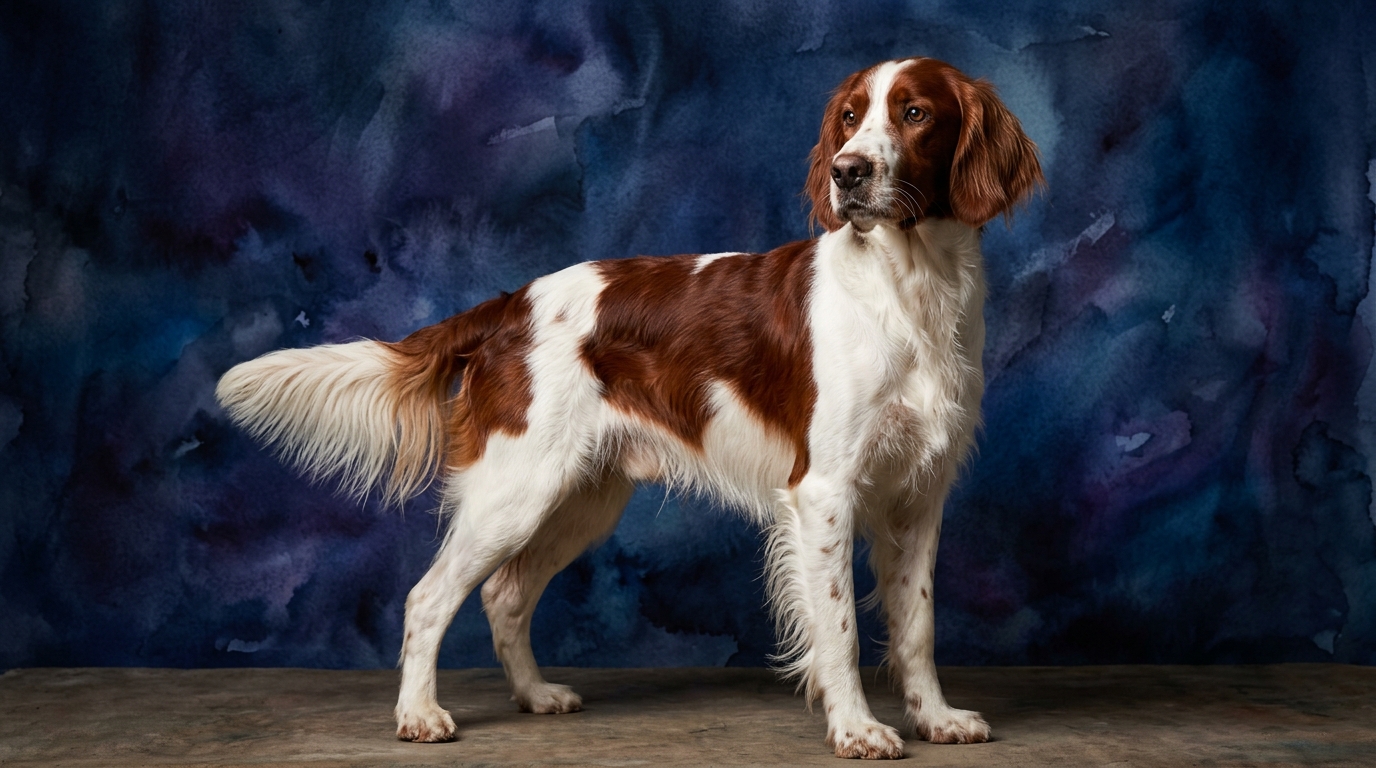
The Irish Red and White Setter (IRWS), while not Coren-ranked, presents a balanced and amiable cognitive profile that emphasizes cooperation and adaptability. In Problem Solving, the IRWS scores 3/5, demonstrating a solid ability to navigate familiar challenges and learn from experience, though perhaps with less independent ingenuity than the Chessie. Its Training Speed is 3/5, indicating a steady learning pace that benefits greatly from consistent, positive reinforcement and patience; they are willing learners, albeit sometimes with a charming propensity for distraction. Social Intelligence for the IRWS is 3/5, reflecting a generally open and friendly disposition towards both family and acquaintances, thriving on interaction and forming strong emotional connections. The Instinctive Drive is 3/5, expressed as a desire to range and point, a graceful and collaborative approach to field work rather than a singular, intense focus. Their Memory is 3/5, sufficient for retaining routines, commands, and familiar individuals, supporting consistent behavior in daily life, though perhaps not with the same detailed recall for highly complex tasks.
Where the Chesapeake Bay Retriever Wins Cognitively
The Chesapeake Bay Retriever's cognitive profile reveals distinct advantages, particularly in the realms of independent problem-solving and memory retention. With a problem-solving score of 4/5, Chessies are often observed to think critically and devise their own solutions when faced with obstacles, such as figuring out the best route to retrieve an item from challenging water conditions or navigating dense cover. This isn't just about following commands; it's about active mental engagement and strategic thinking, making them adept at tasks requiring ingenuity rather than rote repetition. Furthermore, their superior memory (4/5) reinforces this strength, allowing them to recall complex sequences of commands, remember the precise location of multiple fallen game, or understand intricate multi-step commands over extended periods. This combination means a Chessie can not only figure out how to do something, but also remember that solution and apply it consistently, which is invaluable in demanding field work or advanced obedience. Their focused intensity, reflected in their instinctive drive, further channels these cognitive assets into purposeful action, making them exceptionally effective working partners who apply their intellect with determination.
Where the Irish Red and White Setter Wins Cognitively
While the Irish Red and White Setter's scores are consistently at 3/5 across the board, their cognitive strengths lie in a different manifestation of intellect, one that prioritizes cooperative engagement and a balanced approach rather than intense, independent drive. Their social intelligence, rated 3/5, combined with their steady training speed (3/5), creates a dog that is highly responsive to positive interaction and thrives on companionship. An IRWS's 'win' isn't necessarily about outperforming in complex mental tasks, but in their harmonious integration into family life and their amiable disposition. Their problem-solving (3/5) and memory (3/5) are perfectly adequate for navigating daily routines and participating in a variety of activities without the demanding intensity that can sometimes accompany higher-scoring breeds. This balanced cognitive profile means they are less prone to single-minded obsession with tasks, offering a more adaptable and generally lower-stress intellectual presence in the home. Their instinctive drive, also 3/5, channels into a graceful, wide-ranging hunting style that values collaboration and keen observation over brute force, showcasing a different kind of working intellect.
Which is Easier to Train and Why
Based on the provided metrics, the Chesapeake Bay Retriever generally presents as the easier breed to train, primarily due to its faster training speed (4/5) compared to the Irish Red and White Setter's 3/5. Chessies tend to grasp new concepts and commands with greater rapidity, often eager to engage in structured learning sessions and displaying a focused intensity that aids in retention. Their strong desire to work alongside their handler, coupled with their robust memory, allows for quicker command acquisition and more reliable execution of complex routines. In contrast, while the IRWS is certainly trainable and possesses a willingness to please, their training speed is more moderate. They may require more repetition and patience, and their charming, sometimes distractible nature means that consistency and positive reinforcement are even more critical to keep them engaged. The IRWS's more balanced instinctive drive (3/5) means their focus can be broader, whereas the Chessie's focused drive can be more readily channeled into specific training objectives, making the overall training journey potentially more straightforward and efficient for the Chessie.
Which Suits Active Owners vs. Relaxed Owners
For active owners seeking a true working partner and a robust outdoor companion, the Chesapeake Bay Retriever is often the more fitting choice. Their elevated problem-solving and memory, coupled with a solid instinctive drive, mean they thrive on mentally and physically demanding activities such as advanced retrieving work, agility, or competitive obedience. They require consistent engagement and purposeful outlets for their cognitive and physical energy, making them ideal for individuals who lead an adventurous lifestyle and are prepared to provide structured challenges. Conversely, the Irish Red and White Setter, with its balanced cognitive scores and amiable disposition, is better suited for owners who appreciate an active but less intensely driven companion. While they certainly need regular exercise and mental stimulation to prevent boredom, their energy is often expressed through graceful ranging and social interaction rather than a relentless focus on tasks. They can adapt well to families seeking a sociable and charming companion for regular walks, hikes, and backyard play, without the demanding intellectual intensity that a Chessie often requires.
The Verdict
Choose the Chesapeake Bay Retriever if you are an experienced owner seeking a highly capable working partner for demanding field activities, advanced obedience, or competitive dog sports, valuing independent problem-solving and focused determination.
Opt for the Irish Red and White Setter if you desire a charming, sociable, and adaptable companion for an active family life, appreciating a balanced intellect that thrives on cooperative engagement and a less intense drive.
🧠 Find Your Pet's IQ Score
Our Pet IQ Lab assessment covers 25+ tests across 5 cognitive dimensions — personalized to your breed.
Take the Full IQ Test →Frequently Asked Questions
Are Chesapeake Bay Retrievers difficult for first-time dog owners?
Chesapeake Bay Retrievers are generally not recommended for first-time dog owners due to their strong will, independent problem-solving, and substantial exercise needs. They require consistent training, firm guidance, and ample mental and physical stimulation to thrive.
How much exercise does an Irish Red and White Setter need daily?
An Irish Red and White Setter typically requires at least 60-90 minutes of vigorous exercise daily, which can include long walks, running, or off-leash play in a secure area. They benefit from activities that engage their natural ranging instincts.
Do Irish Red and White Setters get along well with children and other pets?
Yes, Irish Red and White Setters generally have a gentle and sociable temperament, making them good companions for children and often getting along well with other pets when properly socialized from a young age. Their amiable nature contributes to harmonious household integration.