Side-by-Side Cognitive Profiles: Chessie vs. Kooikerhondje
The Cosmic Pet Pet IQ Lab employs a five-dimensional framework to assess canine intelligence, offering a nuanced view beyond simple obedience. Let's examine how the Chesapeake Bay Retriever and the Kooikerhondje measure up in each area.
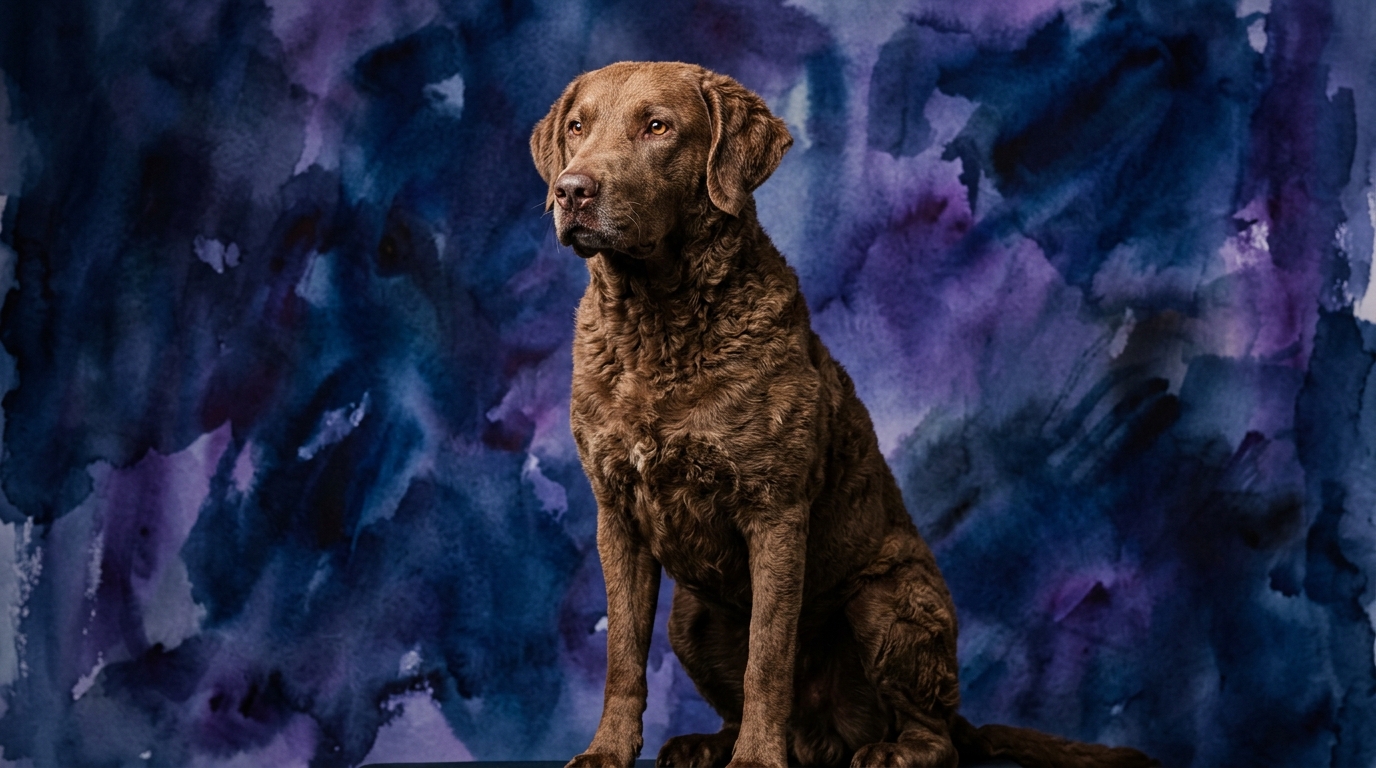
For the Chesapeake Bay Retriever, a breed recognized with a Coren rank of #27, its cognitive profile is robust. Its Problem Solving is rated 4/5, indicating a strong capacity for independent thought and figuring out complex tasks, particularly those involving retrieval or navigating obstacles. Training Speed stands at 4/5, meaning Chessies exhibit a rapid grasp of new commands and routines, often requiring fewer repetitions to solidify learning. Social Intelligence is 3/5, demonstrating a moderate understanding of human cues and emotional states, forming strong bonds but sometimes showing independence. Its Instinctive Drive is 3/5, reflecting a pronounced natural inclination for retrieving and working in water, which guides its behavior and focus. Finally, Memory is 4/5, allowing it to retain learned information and experiences over significant periods, crucial for consistent performance and recall of past training.
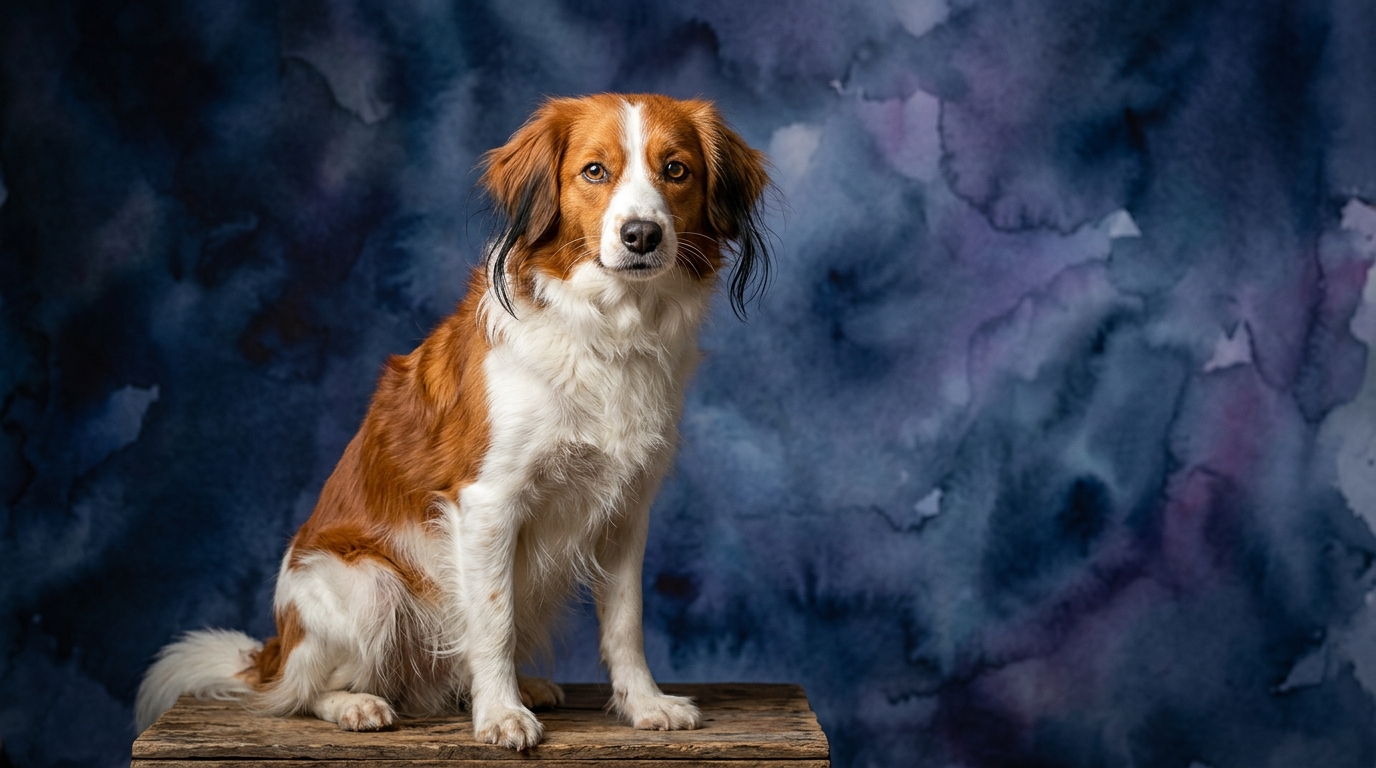
The Kooikerhondje, while not Coren-ranked, presents a consistent cognitive profile. Its Problem Solving is 3/5, indicating it is capable of solving practical problems but may rely more on learned patterns or guidance than on spontaneous, complex strategizing. Training Speed is 3/5; these dogs learn at a steady pace, requiring consistent and positive reinforcement to integrate new skills effectively. Social Intelligence is 3/5, showing a similar moderate level of social awareness, often attuned to family dynamics but potentially reserved with strangers. Its Instinctive Drive is 3/5, possessing a natural, albeit less intense, drive for flushing and retrieving, reflecting its historical role in duck decoying. Memory for the Kooikerhondje is 3/5, meaning it holds onto information and experiences reasonably well, allowing for reliable recall of training with ongoing reinforcement.
Where the Chesapeake Bay Retriever Excels Cognitively
The Chesapeake Bay Retriever's cognitive strengths truly shine in its problem-solving capabilities and memory retention. With a Problem Solving score of 4/5, Chessies often display a tenacious, independent approach to tasks. This translates into their ability to persist at a puzzle or a retrieval challenge until they succeed, rather than waiting for human intervention. For instance, if a retrieve involves navigating a dense thicket or a complex current, a Chessie is more likely to devise a solution on its own, showcasing remarkable ingenuity and resilience.
Their strong Memory, also rated 4/5, means that once a Chessie has learned a task or a route, that knowledge is deeply ingrained. This attribute is invaluable in field work where remembering specific marks, scent trails, or complex sequences of commands is crucial for success. An owner might find that a Chessie, even after a period of inactivity, can pick up complex training routines with minimal refresher. This cognitive strength is rooted deeply in their working history, where self-reliance and enduring recall were paramount for successful retrieves in challenging, often solitary, environments.
Where the Kooikerhondje Excels Cognitively
While the Kooikerhondje's individual scores are generally moderate, its specific blend of traits allows it to excel in different cognitive contexts. Its Problem Solving at 3/5 is often expressed in a nuanced way, showing cleverness in social situations or in subtly manipulating its environment for comfort or attention, rather than through brute-force solutions. They might figure out how to open a specific cupboard or communicate a need through subtle cues and body language, demonstrating a different kind of practical intelligence.
The Kooikerhondje's Training Speed (3/5) combined with its Social Intelligence (3/5) means it is highly responsive to positive reinforcement and often eager to please its primary caregivers. While they may not learn as quickly as a Chessie in a formal obedience setting, their desire to cooperate and their sensitivity to human feedback can make them very precise and willing partners in tasks where cooperation and attention to detail are key. They often excel in activities like agility or rally obedience where precision and responsiveness to cues are more valued than independent, spontaneous problem-solving. Their Instinctive Drive (3/5) for flushing, though not as intense as a Chessie's retrieving drive, gives them a focused energy for specific, guided tasks.
Which is Easier to Train and Why
When considering ease of training, both breeds present unique considerations derived from their cognitive profiles. The Chesapeake Bay Retriever, with a Training Speed of 4/5, generally picks up new commands and routines with impressive rapidity. Their strong Memory (4/5) further solidifies this learning, making them reliable once a skill is acquired. However, their independent Problem Solving (4/5) and strong Instinctive Drive (3/5) mean they can sometimes be strong-willed or focused on their own agenda, particularly if training doesn't align with their natural instincts. They require a confident, consistent trainer who can effectively channel their drive and intelligence, often by leveraging their desire to work and retrieve. A Chessie might challenge boundaries more, necessitating patience and unwavering clarity in expectations.
The Kooikerhondje, with a Training Speed of 3/5, learns at a steady pace. They are typically more sensitive and less inclined to challenge authority than a Chessie. Their Social Intelligence (3/5) indicates they respond well to positive reinforcement and are often motivated by pleasing their owner. While they may take more repetitions to master a skill, they are generally more compliant and less likely to exhibit outright stubbornness. Their training benefits from gentle, consistent methods, focusing on building a strong, trust-based relationship. They are less likely to spontaneously 'outthink' their owner during a training session but also might not offer novel solutions to complex, unguided tasks.
Which Suits Active Owners vs. Relaxed Owners
The Chesapeake Bay Retriever, with its robust build, strong Instinctive Drive (3/5), and need for significant mental and physical stimulation, is a better match for active owners. They thrive on challenging activities like hunting, competitive obedience, dock diving, or long, vigorous hikes. Their impressive problem-solving capacity means they need more than just physical exercise; they need engaging tasks and 'jobs' to do to prevent boredom. Owners who enjoy spending hours outdoors, engaging in structured training, or participating in dog sports will find a Chessie to be an incredibly rewarding and tireless companion.
The Kooikerhondje, while still a sporting dog, typically has a more moderate energy level compared to a Chessie. Their Instinctive Drive (3/5) is present but generally less intense, and their problem-solving (3/5) tends to be more about cleverness within a household context than brute-force outdoor challenges. They enjoy walks, playtime, and mental games but are often content to relax indoors with their family after their needs are met. They can adapt well to families who enjoy regular, but not necessarily extreme, outdoor activities, and who appreciate a companion that is attentive and enjoys close companionship without demanding constant, high-octane engagement.
The Verdict
Choose a Chesapeake Bay Retriever if you are an experienced, active owner seeking a resilient, independent working partner for demanding outdoor pursuits and enjoy a dog that can problem-solve complex challenges.
Opt for a Kooikerhondje if you prefer a sensitive, cooperative companion for moderate activity levels, valuing a dog that thrives on close family bonds and responsive, positive training methods.
🧠 Find Your Pet's IQ Score
Our Pet IQ Lab assessment covers 25+ tests across 5 cognitive dimensions — personalized to your breed.
Take the Full IQ Test →Frequently Asked Questions
Which breed is more independent in its thinking?
The Chesapeake Bay Retriever, with its 4/5 problem-solving score, tends to be more independent in its thinking, often devising its own solutions to challenges. The Kooikerhondje, at 3/5, is capable but often relies more on learned responses or guidance from its owner.
Do both breeds adapt well to family life?
Both breeds can adapt well to family life, showing a social intelligence of 3/5. Chessies form strong bonds but can be more reserved with strangers, while Kooikerhondjes are often described as sensitive and devoted to their families, though they can also be wary of new people.
Is one breed more prone to stubbornness during training?
The Chesapeake Bay Retriever, due to its independence and strong will, might exhibit more stubbornness if training isn't engaging or consistent with its drives. The Kooikerhondje is generally more sensitive and eager to please, making them less prone to outright stubbornness with appropriate positive reinforcement.