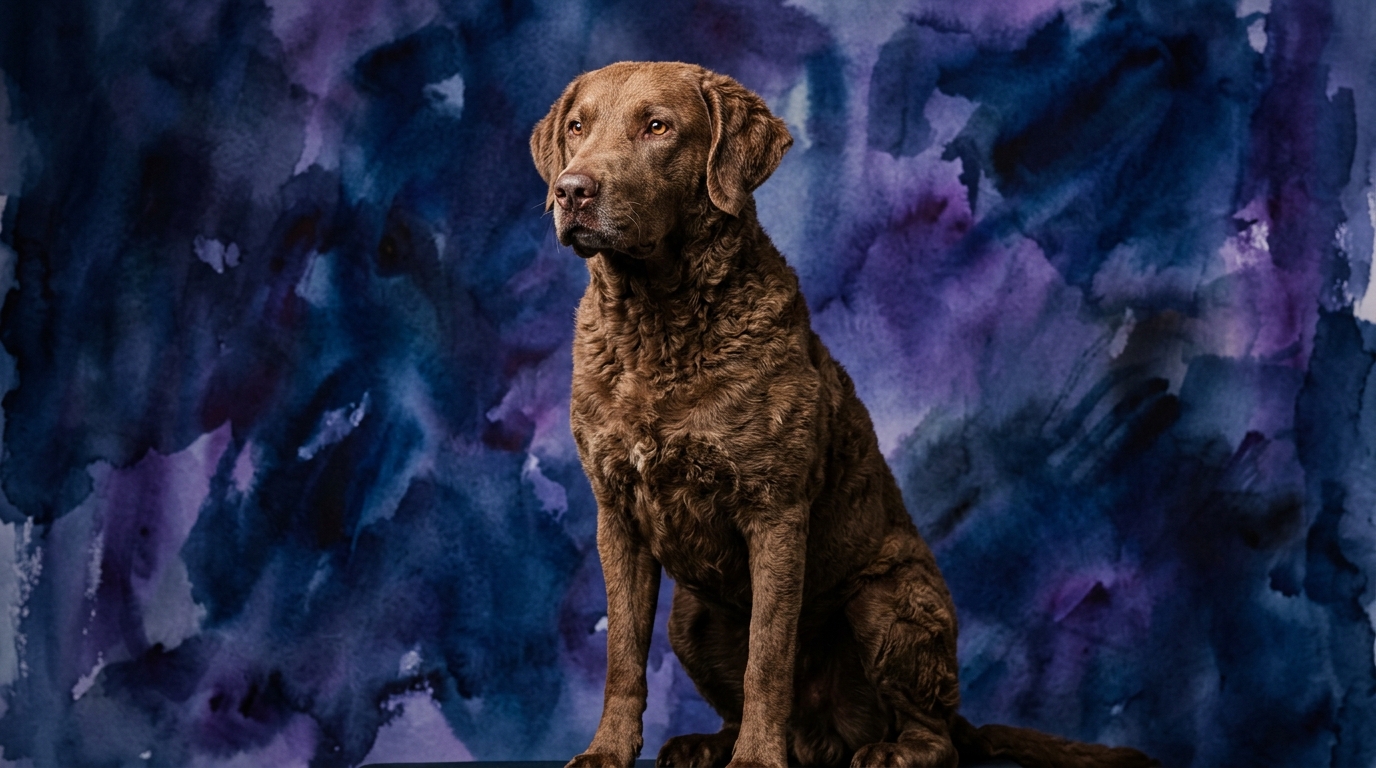
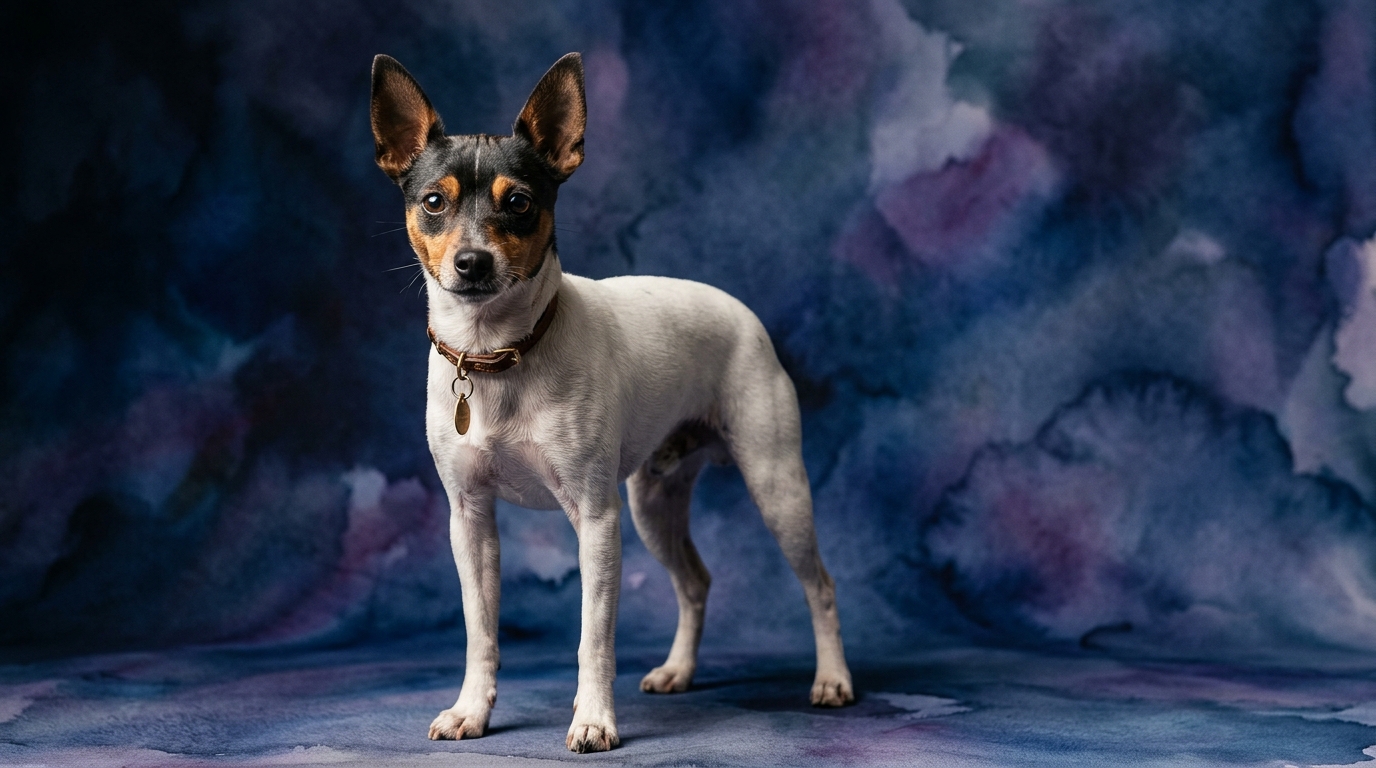
Side-by-Side IQ Profile: Chesapeake Bay Retriever vs. Toy Fox Terrier
The Cosmic Pet Pet IQ Lab employs a five-dimensional framework to assess canine intelligence, offering a nuanced understanding beyond simple obedience. Let's examine how the Chesapeake Bay Retriever (CBR) and the Toy Fox Terrier (TFT) measure up in each dimension.
**Chesapeake Bay Retriever (Coren Rank #27):** This sporting breed exhibits a strong aptitude for tasks requiring focus and memory.
**Problem Solving (4/5):** The CBR exhibits a strong capacity for independent thought when faced with challenges, particularly those involving retrieval tasks or navigating complex environments to reach a goal. Their ability to strategize and adapt in the field reflects a robust problem-solving aptitude.
**Training Speed (4/5):** These retrievers are quick to grasp new commands and routines, often requiring fewer repetitions than many other breeds. Their eagerness to work and strong focus contribute significantly to their efficient learning curve, making them responsive to consistent instruction.
**Social Intelligence (3/5):** While capable of forming deep bonds with their primary caregivers, the CBR's social intelligence often manifests as a discerning nature rather than universal friendliness. They can read human cues and intentions effectively within their trusted circle but may be reserved or aloof with strangers.
**Instinctive Drive (3/5):** The powerful drive to retrieve and work in water is a cornerstone of the CBR's being, influencing their focus and persistence. This drive, while not as broadly expressed as in some other working breeds, is intensely channeled towards their specific historical purpose.
**Memory (4/5):** A CBR's capacity for recall is impressive, allowing them to remember learned commands, routines, and even specific locations or situations over extended periods. This strong memory is crucial for complex retrieving tasks and navigating familiar territories.
**Toy Fox Terrier (Not Coren-Ranked):** This toy breed demonstrates a clever and spirited approach to intelligence.
**Problem Solving (3/5):** The TFT demonstrates a moderate ability to figure out novel situations, often employing cleverness and persistence to achieve their aims. While not always direct, they are resourceful in navigating their environment or manipulating situations to their advantage.
**Training Speed (3/5):** TFTs learn at a steady pace, generally requiring a moderate number of repetitions to solidify new commands. Their independent terrier spirit means they respond best to engaging, positive reinforcement methods that keep their attention and make learning feel like a game.
**Social Intelligence (3/5):** These small terriers possess a keen awareness of their human companions' moods and intentions, often adapting their behavior accordingly. They thrive on interaction and can be quite attuned to household dynamics, though their social circle might be more selective.
**Instinctive Drive (3/5):** The TFT carries a distinct terrier drive, characterized by a spirited prey drive and an inclination towards digging and vocalizing. This instinctual energy, while sometimes channeled into playful mischief, reflects their historical role as small game hunters.
**Memory (3/5):** TFTs have a solid memory for routines, locations, and learned behaviors, allowing them to recall previously taught commands and remember specific interactions. Their recall is reliable for daily life and consistent training reinforcement.
Where the Chesapeake Bay Retriever Wins Cognitively
The Chesapeake Bay Retriever's cognitive profile distinguishes it particularly in areas requiring sustained focus and an understanding of complex sequences. Their superior Problem Solving (4/5) and Memory (4/5) are direct reflections of their heritage as dedicated waterfowl retrievers. A CBR independently assesses challenging retrieves, remembering exact bird falls and planning efficient routes through dense cover or icy water to bring them back. This isn't just about speed, but about strategic thinking and spatial memory under pressure. For instance, a CBR might navigate a labyrinthine scent trail, recalling previous successful paths, or figure out how to open a gate that obstructs its path to a desired object, demonstrating a higher-level cognitive process than simple trial-and-error. Their Training Speed (4/5) further enhances this, allowing them to absorb multi-step commands and intricate field routines with remarkable efficiency, building on their strong foundational memory. This combination means they excel at tasks that demand both quick learning and long-term retention of complex operational protocols.
Where the Toy Fox Terrier Wins Cognitively
While the Toy Fox Terrier might not possess the same raw problem-solving power for complex, physical tasks as the CBR, their cognitive strengths lie in their adaptability and quick-wittedness in different contexts. The TFT's specific type of problem-solving (3/5) often manifests as cleverness and persistence, particularly in navigating their immediate environment or engaging in intricate play. They are adept at finding creative solutions to access forbidden areas or engaging in subtle manipulation to get what they want from their humans, often using charm and persistence rather than brute force. Their social intelligence, while rated similarly, translates into nuanced family interactions, where they are attuned to human emotions and dynamics, often using observation to their advantage. A TFT's spirited instinctive drive (3/5) also provides a unique cognitive edge, channeling into determined focus during play or when "hunting" toys, demonstrating a tenacious engagement that can be highly rewarding in interactive games. Their agility of mind allows them to quickly switch between activities, maintaining engagement without the singular, intense focus of a retriever.
Which is Easier to Train and Why
The Chesapeake Bay Retriever generally presents as the easier breed to train for formal obedience and complex tasks due to its superior Training Speed (4/5) and robust Memory (4/5). Their historical role demands a dog that absorbs commands quickly and retains them reliably, even under distracting conditions. CBRs typically possess a strong desire to please their handler and a focused work ethic, which translates into fewer repetitions needed to solidify a behavior and a greater consistency in execution. For example, teaching a CBR a multi-part retrieve sequence, like "mark, send, back, over," progresses faster and is retained more durably than with a TFT. Their instinctive drive, while specific, is often channeled into compliance with direction during work.
The Toy Fox Terrier, with a Training Speed of 3/5 and Memory of 3/5, requires a different approach. They are intelligent and capable learners, but their independent terrier spirit means they can be more easily distracted or decide that a task isn't worth their effort. Training a TFT often requires more creativity, shorter sessions, and a higher reliance on positive reinforcement and making the training feel like a game. While they can learn a wide array of commands, their retention might require more consistent refreshers, and their compliance can be more conditional on their mood or perceived reward. For instance, a TFT might learn "sit" quickly but then choose not to sit if a more interesting scent or sight captures their attention, reflecting their inherent independence and less intense desire to solely please.
Which Suits Active Owners vs. Relaxed Owners
For **active owners**, the Chesapeake Bay Retriever is an ideal match. Their robust physical and mental energy demands consistent outlets, making them perfectly suited for individuals or families who embrace an active outdoor lifestyle. CBRs thrive on activities like hiking, swimming, retrieving games, dog sports such as agility or obedience trials, and even field work. Their strong instinctive drive and problem-solving abilities mean they excel when given a "job" to do, whether it's a long walk through varied terrain or a complex training session. An owner who can provide daily vigorous exercise and engaging mental challenges will find a CBR to be a devoted and fulfilled companion. Neglecting their activity needs can lead to boredom and potentially destructive behaviors, underscoring their dynamic lifestyle requirement.
**Relaxed owners** will likely find the Toy Fox Terrier a more suitable companion. While possessing a lively spirit, their exercise requirements are considerably less demanding than a CBR's. TFTs are content with daily walks, indoor play sessions, and interactive games that satisfy their terrier curiosity without requiring extensive outdoor excursions. Their smaller size makes them adaptable to apartment living, provided they receive regular mental stimulation through puzzle toys, trick training, or engaging play. They enjoy being close to their human companions and are often happy to curl up for quiet time after their energy has been expended. A relaxed owner who appreciates a charming, spirited companion capable of independent thought but without the need for intense physical exertion will find the TFT a delightful addition to their home.
The Verdict
Opt for a Chesapeake Bay Retriever if you are an active, experienced owner seeking a dedicated working companion who excels in complex problem-solving, rapid learning, and robust outdoor activities. Their exceptional memory and training speed make them ideal for demanding tasks and consistent, engaging mental stimulation.
Select a Toy Fox Terrier if you desire a spirited, clever companion who thrives in a more relaxed indoor environment, appreciating interactive play and trick training, and whose independent streak is met with patient, engaging methods. They are a charming fit for owners who enjoy a dog with personality and moderate exercise needs.
🧠 Find Your Pet's IQ Score
Our Pet IQ Lab assessment covers 25+ tests across 5 cognitive dimensions — personalized to your breed.
Take the Full IQ Test →Frequently Asked Questions
Can a Toy Fox Terrier excel at dog sports?
Yes, Toy Fox Terriers can do well in dog sports like agility, obedience, and rally. Their quickness, problem-solving skills, and desire for engagement make them capable competitors, especially when training is kept fun and rewarding.
Are Chesapeake Bay Retrievers good family dogs?
Chesapeake Bay Retrievers can be excellent family dogs, particularly for active families who understand their need for mental and physical stimulation. They form deep bonds with their immediate family but may be reserved with strangers, requiring early socialization.
How do their instinctive drives differ in daily life?
The Chesapeake Bay Retriever's instinctive drive primarily manifests as a strong urge to retrieve and work with water, leading to a focused dedication to tasks. The Toy Fox Terrier's drive is more typical of a terrier, expressed as a desire to chase small prey, dig, and vocalize, often appearing as spirited playfulness or determined curiosity.