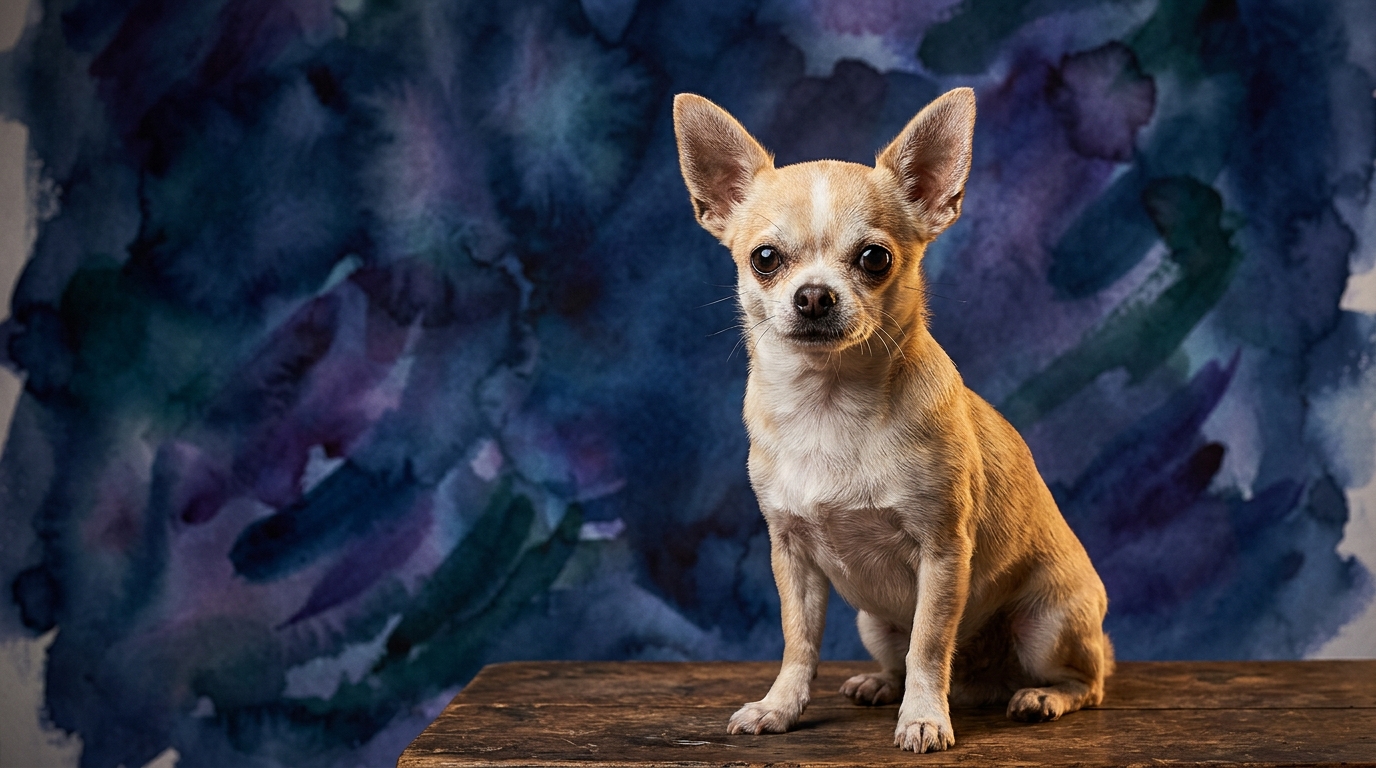

Side-by-Side IQ Profile: Chihuahua vs. Belgian Sheepdog (Groenendael)
The Cosmic Pet Pet IQ Lab employs a five-dimensional framework to assess canine intelligence, providing a granular look at how different breeds process information and interact with their world. For the Chihuahua, a Toy breed with a Coren rank of #67, their cognitive profile reflects a companion animal with specific strengths.
Chihuahua IQ: Problem Solving (3/5) indicates a moderate capacity for navigating challenges; they often learn by association and can solve simple puzzles but may find complex, multi-step problems daunting. Training Speed (3/5) suggests they absorb new commands at an average pace, requiring consistent, positive reinforcement to solidify learning. Social Intelligence (4/5) is a standout, showing an excellent ability to read human emotions and cues, forming deep, intuitive bonds with their owners. Instinctive Drive (3/5) is moderate, manifesting as alertness or a desire to chase small objects, often channeled into companionship rather than intense work. Memory (4/5) is good, allowing them to recall routines, learned behaviors, and favored individuals or locations effectively.
The Belgian Sheepdog (Groenendael), a Herding breed with an impressive Coren rank of #15, presents a cognitive profile built for purpose and intricate work.
Belgian Sheepdog (Groenendael) IQ: Problem Solving (5/5) signifies an exceptional capacity to analyze complex situations and devise effective strategies, constantly seeking solutions to environmental challenges. Training Speed (5/5) is outstanding, meaning they grasp new commands and concepts with minimal repetitions, making them highly adaptable to varied training disciplines. Social Intelligence (3/5) indicates they form strong bonds but interpret human signals more within the context of tasks and leadership, sometimes appearing reserved with strangers rather than overtly empathetic. Instinctive Drive (3/5) is balanced, fueling their desire for purpose and activity without being overwhelmingly intense in typical pet settings, allowing for trainability. Memory (5/5) is superior, enabling them to retain vast amounts of information, including complex command sequences and past events, with remarkable accuracy.
Where the Chihuahua Wins Cognitively
The Chihuahua's cognitive strengths truly shine in the realm of social intelligence, scoring 4/5, which is notably higher than the Belgian Sheepdog's 3/5 in this dimension. This translates to an exceptional ability to read human emotions and social cues, making them incredibly attuned companions. They often anticipate their owner's moods and react with comforting presence or playful antics, demonstrating a profound intuitive connection that goes beyond simple command-following. Their moderate memory (4/5) further enhances this bond, allowing them to recall specific interactions and preferences, reinforcing their role as empathetic and responsive family members, often appearing to understand their human's unspoken needs.
Where the Belgian Sheepdog (Groenendael) Wins Cognitively
The Belgian Sheepdog (Groenendael) demonstrates overwhelming cognitive superiority in areas demanding complex thought and rapid acquisition of skills. With perfect scores of 5/5 in Problem Solving, Training Speed, and Memory, they are truly exceptional learners and thinkers. Their ability to quickly analyze new situations and devise solutions makes them adept at navigating intricate environments or performing multi-step tasks that would challenge many other breeds. This rapid information processing, combined with their flawless memory, allows them to master advanced obedience, agility, and protection work with remarkable efficiency, retaining vast repertoires of commands and experiences over long periods. Their herding heritage underpins a mind built for purpose and intricate execution, consistently seeking mental engagement.
Which Is Easier to Train and Why
Evaluating trainability requires looking beyond mere willingness and assessing the speed and complexity of learning. The Belgian Sheepdog, with its 5/5 Training Speed and 5/5 Problem Solving, is inherently easier to train for intricate tasks and advanced obedience. They grasp new concepts almost instantaneously and can generalize learning across different situations, making them highly responsive to sophisticated command structures and rapid-fire instructions. Their superior memory (5/5) ensures commands are retained reliably, even after long breaks. These traits make them ideal for complex competitive dog sports or demanding service roles, where precision and rapid comprehension are paramount.
In contrast, the Chihuahua's 3/5 in both Training Speed and Problem Solving means they require more repetition and benefit from simpler, consistent commands. While they are certainly trainable and eager to please their human, their learning process is more gradual, and they may struggle with multi-step or abstract commands that a Groenendael would master effortlessly. The Chihuahua's social intelligence (4/5) can make them compliant due to their desire to please, but their cognitive processing speed for new information isn't as rapid as the Belgian Sheepdog's, necessitating patience and breaking down lessons into smaller, manageable steps for effective learning.
Which Suits Active Owners vs. Relaxed Owners
The choice between these breeds largely depends on an owner's lifestyle and capacity for engagement. The Belgian Sheepdog (Groenendael), with its exceptional problem-solving and training speed, thrives with active owners who can provide consistent mental stimulation and physical exercise. They require a 'job' to do, whether it's advanced training, dog sports, or extensive daily activities that challenge their sharp minds and energetic bodies. A relaxed owner who cannot commit to substantial daily engagement might find a Groenendael bored, potentially leading to undesirable behaviors stemming from understimulation and a lack of purpose, as their active minds need constant outlets.
Conversely, the Chihuahua, with its moderate problem-solving and instinctive drive, is a better fit for more relaxed owners, though they are far from sedentary. While they enjoy walks and playtime, their primary need is companionship and social interaction, leveraging their high social intelligence. They still benefit from consistent, positive training and mental enrichment, but their demands are less intense and more focused on interaction rather than complex, high-energy tasks. An owner who enjoys a close bond and can offer consistent, gentle guidance will find a Chihuahua a delightful companion, perfectly content with fulfilling social needs and moderate activity.
The Verdict
Choose a Chihuahua if you seek an emotionally perceptive companion who thrives on close social bonds and fits well into a more relaxed, yet engaging, lifestyle. Their moderate cognitive demands are perfectly met by consistent, positive training and ample affection.
Opt for a Belgian Sheepdog (Groenendael) if you are an experienced, active owner eager to engage a brilliant, fast-learning dog in advanced training, sports, or working roles, providing ample mental and physical challenges daily.
🧠 Find Your Pet's IQ Score
Our Pet IQ Lab assessment covers 25+ tests across 5 cognitive dimensions — personalized to your breed.
Take the Full IQ Test →Frequently Asked Questions
Can a Chihuahua learn complex tricks despite its moderate problem-solving score?
Yes, Chihuahuas can learn a variety of tricks, especially those involving social interaction or simple sequences, leveraging their good memory and desire to please. While they might take longer than a Belgian Sheepdog to master complex, multi-step routines, consistent and patient training with positive reinforcement will yield impressive results.
How does the Belgian Sheepdog's 3/5 social intelligence impact its family life?
A Belgian Sheepdog's 3/5 social intelligence means they are loyal and form strong bonds with their primary family but might be more reserved or less overtly emotionally expressive with strangers or in new social settings. They value structure and clear communication, thriving in environments where their role and expectations are well-defined, and they often bond deeply with the person who provides consistent leadership and training.
Is one breed more prone to anxiety or stress based on their IQ profile?
While not directly an IQ dimension, a Chihuahua's higher social intelligence and smaller size can sometimes make them more prone to anxiety if not properly socialized or if they feel insecure, relying heavily on their human for security. A Belgian Sheepdog's intense cognitive needs mean they can become stressed or anxious if under-stimulated or not given enough mental and physical challenges, requiring a purposeful outlet for their intelligence to prevent boredom-induced behaviors.