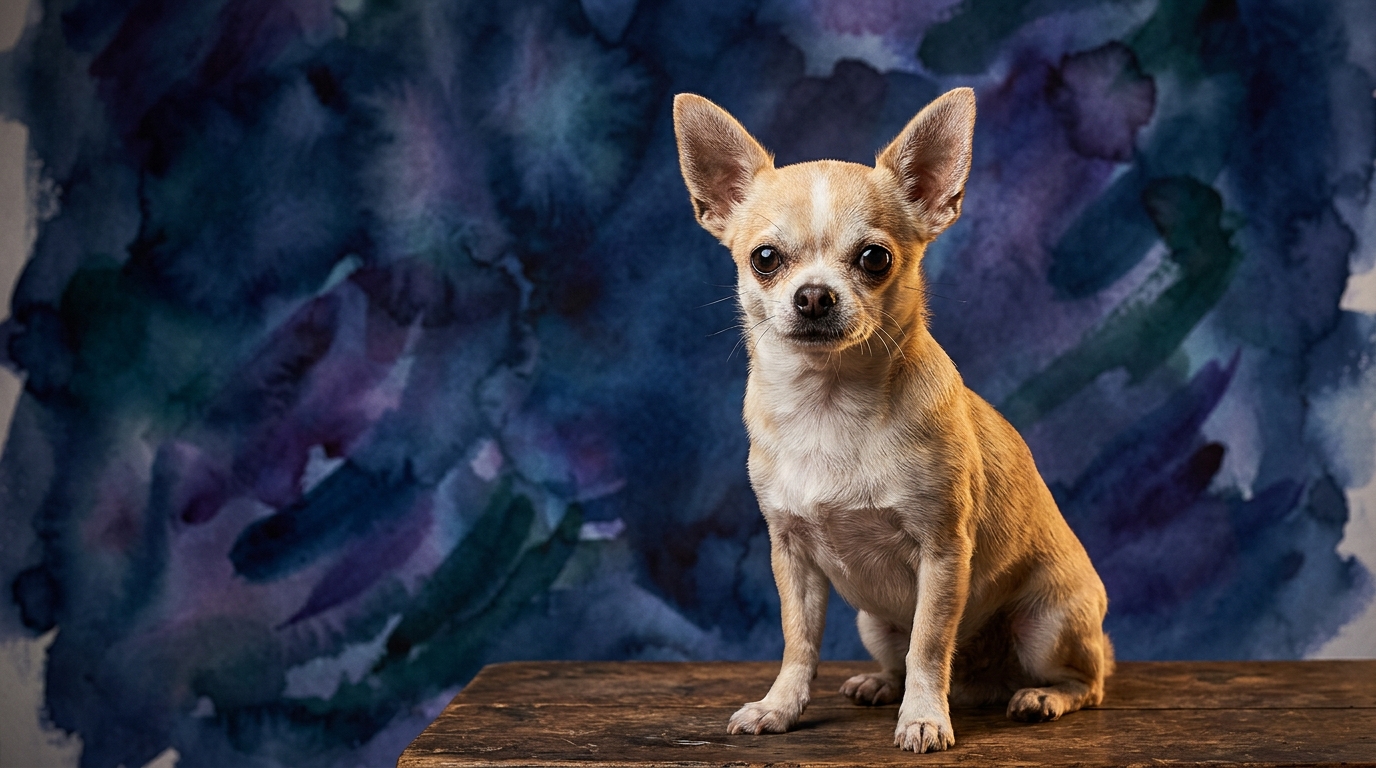

Side-by-Side Cognitive Profile: Chihuahua vs. Chesapeake Bay Retriever
At The Cosmic Pet Pet IQ Lab, we analyze five key cognitive dimensions to understand each breed's unique mental landscape. For the Chihuahua, a Toy breed with a Coren rank of #67, we observe a distinct set of abilities. Their Problem Solving is rated 3/5; they can navigate simple physical puzzles, often using persistence and vocal communication to achieve their goals, though multi-step challenges can be more demanding. Training Speed is 3/5, indicating they learn commands with consistency, but their independent streak requires patient, positive reinforcement. Where they truly shine is Social Intelligence, scoring 4/5, demonstrating a remarkable capacity to read human emotions and intentions, forming deep, intuitive bonds. Their Instinctive Drive is 3/5, manifesting as territorial alertness and a companion-focused motivation rather than complex working tasks. Finally, their Memory is 4/5; they retain routines, people, and experiences, contributing to their loyalty and sometimes their selective wariness.
The Chesapeake Bay Retriever, a Sporting breed holding a Coren rank of #27, presents a different cognitive blueprint. Their Problem Solving capability is 4/5, excelling in practical, goal-oriented scenarios, such as strategizing to retrieve objects from challenging environments. Training Speed is 4/5; these dogs are quick to grasp new commands and tasks, especially when motivated by purpose and work. Their Social Intelligence is 3/5; while intensely loyal to their families, they can be reserved with strangers and are less overtly expressive of subtle emotional cues than some breeds. Instinctive Drive also scores 3/5, but this is characterized by a strong, task-oriented retrieving drive for fetching, swimming, and working alongside humans. Their Memory is 4/5, robustly recalling commands, learned tasks, and environmental details, which is crucial for their working roles.
Where the Chihuahua Cognitively Excels
The Chihuahua's superior Social Intelligence, scoring 4/5, is a standout cognitive strength. They possess an exceptional ability to interpret human cues, often appearing to anticipate their owner's moods or desires and offering comfort or seeking attention at precisely the right moment. This empathetic connection is a hallmark of their mental prowess, making them particularly adept at forming profound, intuitive bonds. Their skill in non-verbal communication with humans, often through subtle shifts in body language or distinct vocalizations, allows them to convey needs and desires with remarkable clarity and sensitivity, fostering an unusually deep interpersonal connection.
Where the Chesapeake Bay Retriever Cognitively Dominates
The Chesapeake Bay Retriever's 4/5 rating in Problem Solving highlights their practical, goal-oriented cognitive strength. Their ability to strategize and adapt to retrieve objects from challenging environments, whether navigating icy water or dense cover, demonstrates sophisticated spatial awareness and logical sequence planning. Unlike the Chihuahua's more reactive problem-solving, the Chessie often exhibits a deliberate, methodical approach to overcoming obstacles, a testament to their working dog heritage. Their capacity to learn from experience and apply solutions to new, similar challenges is a significant cognitive advantage, making them exceptionally capable in real-world scenarios requiring ingenuity and perseverance.
Training Dynamics: Which Breed Learns with Greater Ease?
When considering ease of training, the Chesapeake Bay Retriever (Training Speed 4/5) generally offers a more straightforward experience for owners seeking a highly obedient and task-oriented companion. Their innate desire to work and their focused disposition mean they grasp new commands quickly, particularly when training is structured and involves a clear purpose. Chessies thrive on having a job, and their responsiveness to instruction reflects this intrinsic drive to cooperate in structured activities, making them eager participants in learning sessions.
In contrast, the Chihuahua (Training Speed 3/5), while fully capable of learning, can present more of a challenge due to their independent nature and occasional stubbornness. Their smaller size sometimes leads owners to inadvertently reinforce undesirable behaviors, but with consistent, positive reinforcement and engaging methods, they can become well-mannered companions. The key difference lies in the Chessie's intrinsic motivation to cooperate in structured tasks versus the Chihuahua's need for training to be more about engagement, relationship building, and making the learning process fun and rewarding to overcome their independent streak.
Lifestyle Match: Active Owners vs. Relaxed Companionship
The Chesapeake Bay Retriever is an ideal match for active owners. Their strong instinctive drive (3/5, specifically task-oriented) and robust problem-solving skills demand consistent mental and physical engagement. They thrive in environments where they can swim, retrieve, hike, or participate in dog sports and working trials. A Chessie without adequate stimulation can become bored, potentially leading to destructive behaviors, making them an unsuitable fit for a sedentary lifestyle or owners unable to commit to extensive daily activity.
Conversely, the Chihuahua is an excellent companion for more relaxed owners, though their high social intelligence (4/5) means they still require significant interaction and attention. While they enjoy walks and playtime, their exercise needs are modest, and their primary focus is often companionship and comfort. Their strong memory (4/5) and social intelligence make them sensitive to their owner's routine and emotions, making them ideal lap companions content with indoor activities, short bursts of outdoor exploration, and consistent human connection. They excel in environments where their human bond is paramount and they can be at the center of attention.
The Verdict
Choose a Chihuahua if you seek a highly sensitive, deeply bonded companion who thrives on close social interaction and indoor comfort, appreciating a more relaxed pace of life.
Opt for a Chesapeake Bay Retriever if you are an active individual or family seeking a robust, task-oriented partner for outdoor adventures and structured activities, valuing a dog that excels at practical challenges.
🧠 Find Your Pet's IQ Score
Our Pet IQ Lab assessment covers 25+ tests across 5 cognitive dimensions — personalized to your breed.
Take the Full IQ Test →Frequently Asked Questions
Does a Chihuahua's small size impact its intelligence?
A dog's size doesn't directly correlate with its intelligence, as cognitive abilities are complex and breed-specific. Chihuahuas demonstrate specific strengths in social intelligence and memory, proving that brainpower isn't limited by stature; their cognitive profile is simply different from larger working breeds.
Are Chesapeake Bay Retrievers difficult to live with due to their drive?
Chesapeake Bay Retrievers require significant mental and physical engagement to thrive. Their strong instinctive drive means they need a purpose or consistent activity; without it, they can become bored or exhibit undesirable behaviors. For active owners prepared to meet these needs, this drive makes them incredibly rewarding and capable partners.
Can a Chihuahua be trained for complex tricks or agility?
Absolutely, Chihuahuas can be trained for complex tricks and excel in agility, despite their moderate training speed. Their memory and social intelligence mean they can learn intricate sequences, especially when training is positive, fun, and leverages their desire for human interaction and attention.