Side-by-Side Cognitive Profiles
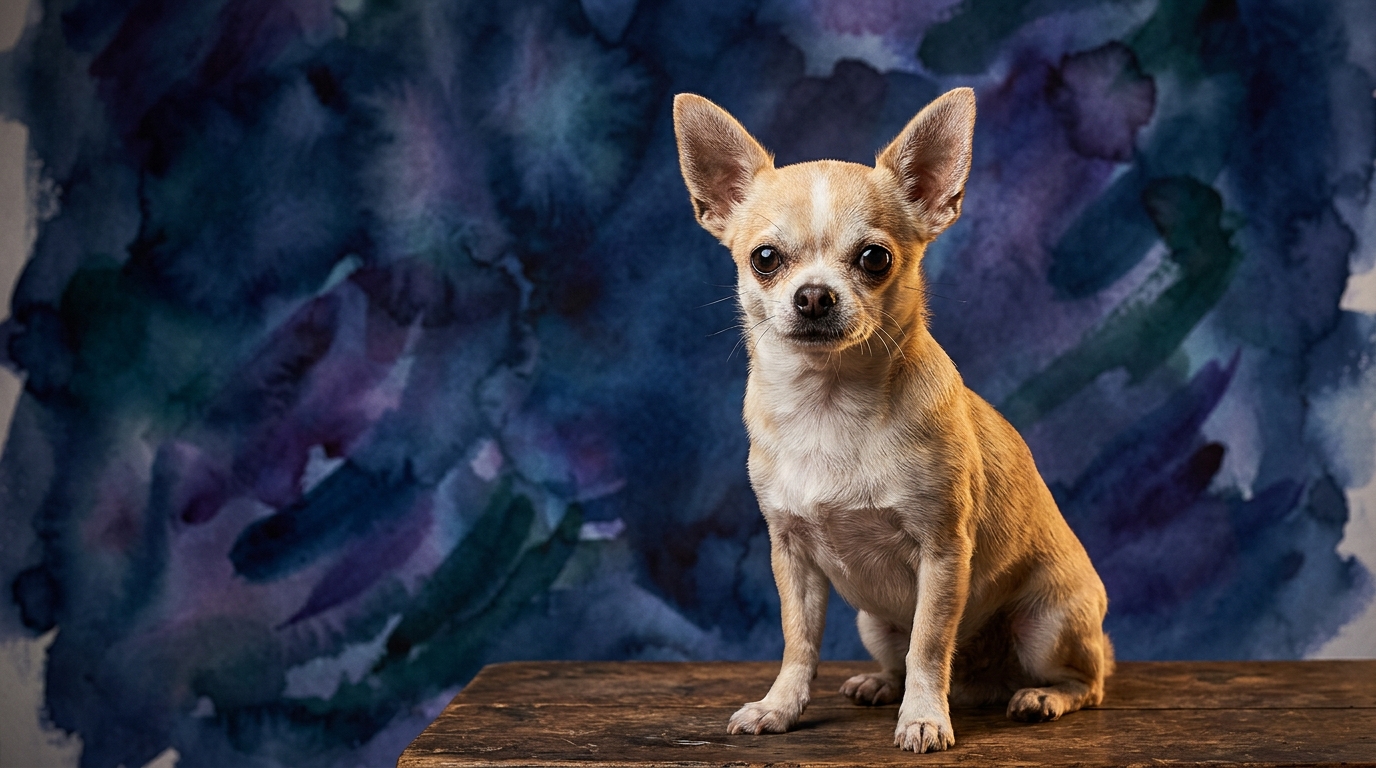
The Cosmic Pet Pet IQ Lab employs a multi-dimensional approach to assess canine cognition, moving beyond simple obedience to understand the nuances of each breed's mind. For the Chihuahua, ranked #67 on Coren's list, its profile reveals a Problem Solving score of 3/5, indicating an average capacity for navigating novel situations and figuring out solutions. Its Training Speed is also 3/5, suggesting it learns new commands at a moderate pace, neither exceptionally quick nor particularly slow.
Where the Chihuahua truly shines is in its Social Intelligence, scoring an impressive 4/5. This reflects a strong aptitude for reading human cues, understanding social dynamics, and forming deep, intuitive bonds with its primary caregivers. Its Instinctive Drive sits at 3/5, representing a balanced set of innate behaviors, while its Memory is robust at 4/5, allowing it to recall routines, commands, and past interactions with considerable accuracy.
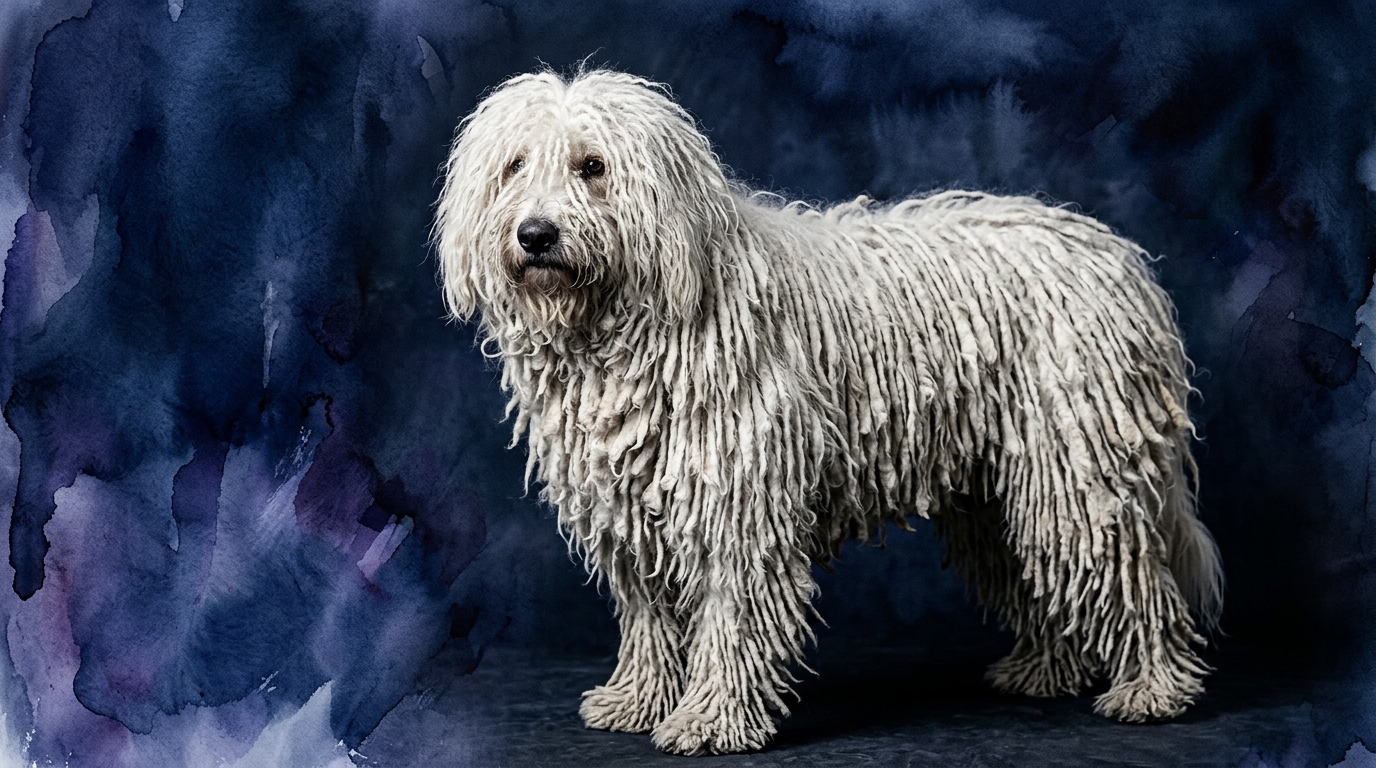
The Komondor, also holding Coren rank #67, presents a different cognitive blueprint, reflecting its heritage as a livestock guardian. Its Problem Solving ability is rated 3/5, similar to the Chihuahua, but often applied to independent decision-making in its protective role. Training Speed is also 3/5, indicating a steady, rather than rapid, learning pace that can be influenced by its independent nature.
In contrast to the Chihuahua, the Komondor's Social Intelligence is 3/5, suggesting it is less overtly focused on human social cues, prioritizing its protective duties. Its Instinctive Drive, also 3/5, is strongly channeled towards guardianship, leading to inherent territoriality and vigilance. Lastly, its Memory scores 3/5, meaning it retains information adequately but perhaps without the same vivid recall for complex social interactions as its toy breed counterpart.
Where the Chihuahua Excels Cognitively
The Chihuahua's cognitive advantages are most evident in its highly developed social intelligence and superior memory, both scoring 4/5. This breed possesses an exceptional ability to tune into human emotions and intentions, often anticipating needs or reacting to subtle shifts in mood. Owners frequently report their Chihuahuas exhibiting an almost uncanny understanding of their routines, from predicting walk times to knowing when a comforting presence is needed.
This heightened social acumen makes Chihuahuas particularly adept at forming intricate social bonds. They thrive on close companionship and can become extraordinarily attuned to their owner's lifestyle, often adapting their own behavior to fit seamlessly into the human household. Their impressive memory further supports this, allowing them to consistently recall specific commands, house rules, and even the preferences of different family members, making them remarkably consistent companions once trained.
Where the Komondor's Cognition Shines
While the Komondor's numerical scores in problem-solving and instinctive drive mirror the Chihuahua at 3/5, the nature of these cognitive functions is vastly different and tailored to its distinct purpose. The Komondor's problem-solving is intrinsically linked to its role as an independent livestock guardian. This isn't about solving puzzles for human entertainment, but rather assessing potential threats, strategizing how to deter predators, and making autonomous decisions in complex, dynamic outdoor environments without direct human command.
Its instinctive drive, while numerically similar, is singularly focused on protection, demanding a unique blend of vigilance, courage, and self-reliance. This cognitive framework allows the Komondor to operate effectively as a sentinel, making judgments about safety and responding appropriately to perceived dangers, a task that requires a different kind of mental fortitude and self-directed intelligence than a companion breed. This independence, often interpreted as stubbornness in traditional obedience, is a cognitive strength in its ancestral role.
Training Aptitude: A Tale of Two Approaches
Both breeds share a 3/5 score for Training Speed, yet the practical experience of training them can feel vastly different due to their other cognitive attributes. The Chihuahua, with its 4/5 social intelligence and 4/5 memory, often appears more eager to please and more receptive to human-directed training. They are quick to grasp what is expected of them in a social context and remember those expectations, which can make basic obedience and house training feel more straightforward, especially when positive reinforcement is consistently applied.
The Komondor's 3/5 social intelligence and 3/5 memory, coupled with its strong independent guardian drive, means its training requires a different strategy. Komondors are not inherently driven to perform tricks or seek constant human validation. Their learning, while steady, is often filtered through their innate judgment and purpose. Training a Komondor demands patience, consistency, and a deep understanding of its working dog mentality, focusing on clear boundaries and practical commands rather than elaborate routines. What might be perceived as a challenge in traditional obedience is, in fact, a reflection of their cognitive design for self-sufficiency.
Matching Breed to Lifestyle: Active vs. Relaxed Owners
The choice between a Chihuahua and a Komondor also hinges significantly on an owner's lifestyle and living situation. The Chihuahua is remarkably adaptable, fitting comfortably into both active and more relaxed households. While they enjoy walks and mental stimulation from puzzle toys or short training sessions, their modest size means their exercise needs can often be met indoors or with brief outdoor excursions. They are ideal for individuals or families seeking a close, portable companion who can thrive in smaller living spaces and enjoy a relatively calm domestic routine.
The Komondor, by contrast, is unequivocally suited for active, experienced owners who can provide ample space and a clear sense of purpose. Their sheer size, powerful build, and inherent guarding instincts necessitate a lifestyle that accommodates regular, purposeful exercise and mental engagement. They thrive in environments where they have a “job” to do, whether it’s guarding property or simply patrolling a large yard. A relaxed, sedentary owner in a small apartment would find the Komondor’s needs overwhelming, as its cognitive design demands a more expansive and engaged existence.
The Verdict
Choose the Chihuahua if you desire a highly socially intelligent, compact companion with an excellent memory for routines, perfect for close companionship and adaptable living.
Choose the Komondor if you are an experienced owner seeking an independent, robust guardian with deep-seated protective instincts, capable of autonomous decision-making in a spacious, purposeful environment.
🧠 Find Your Pet's IQ Score
Our Pet IQ Lab assessment covers 25+ tests across 5 cognitive dimensions — personalized to your breed.
Take the Full IQ Test →Frequently Asked Questions
Does a Chihuahua's small size affect its problem-solving abilities?
While a Chihuahua's physical capabilities differ from larger breeds, its problem-solving score of 3/5 indicates an average capacity to navigate its environment and figure out solutions. Its size influences the types of problems it encounters, not necessarily its inherent cognitive capacity.
Are Komondors difficult to train due to their independence?
Komondors are not "difficult" in the sense of lacking capacity, but their independence means they are less motivated by human approval for its own sake. Their 3/5 training speed is best utilized with consistent, fair methods that respect their working dog mentality, focusing on practical commands.
How does social intelligence differ between these two breeds?
The Chihuahua's 4/5 social intelligence means it is highly attuned to human emotions and social cues, thriving on close interaction. The Komondor's 3/5 social intelligence means it is more independent, prioritizing its protective role and less inclined to seek constant human validation, which is a functional trait for a self-reliant guardian.