Side-by-Side IQ Profile: Poodle (Standard) vs. Komondor
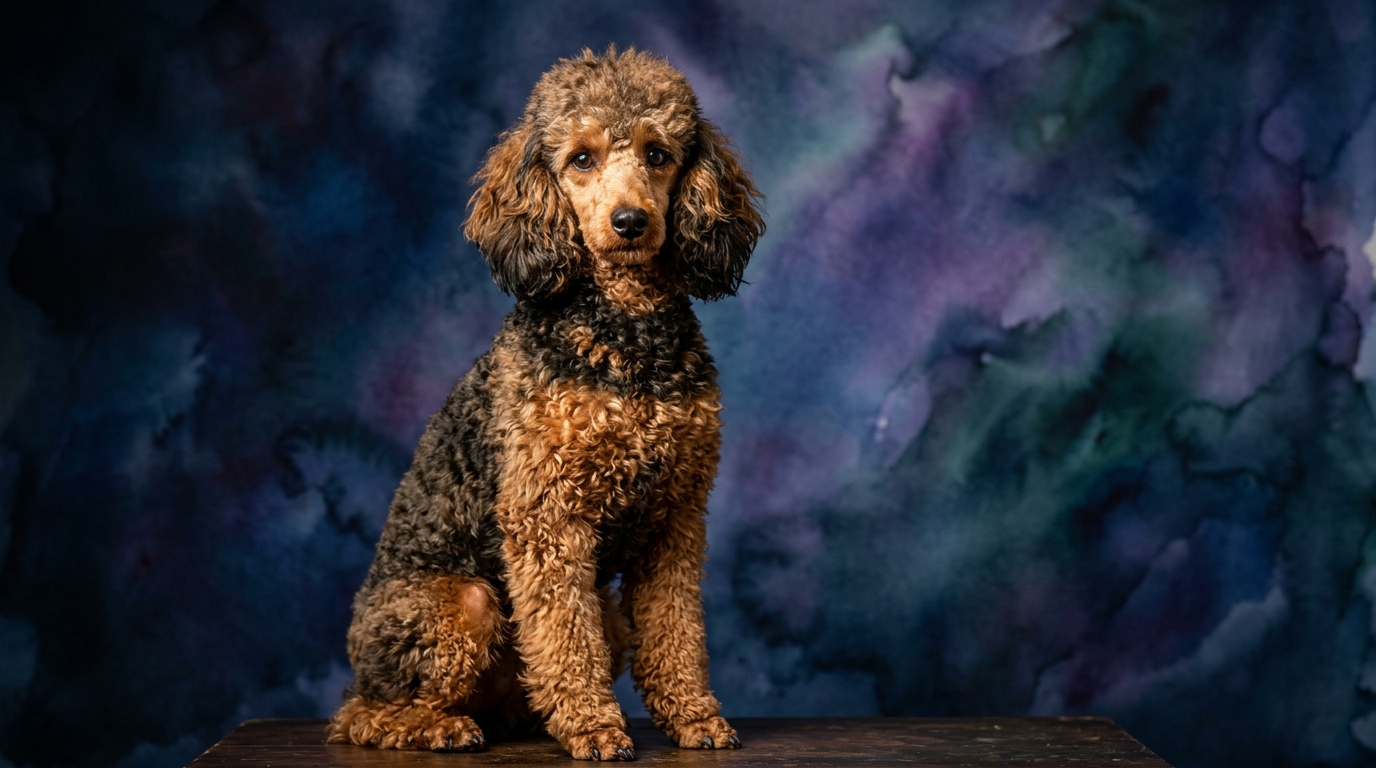
The Cosmic Pet Pet IQ Lab employs a comprehensive five-dimensional framework to assess canine cognition, providing a nuanced understanding beyond simple labels. For the Poodle (Standard), often admired for its versatile capabilities, this framework illuminates a profile geared towards rapid adaptation and intricate interaction. Their Problem Solving capability rates at a perfect 5/5, indicating an exceptional capacity to analyze novel situations, strategize, and execute solutions efficiently. This isn't just about learning tricks; it's about understanding complex sequences and adapting to new environments with minimal frustration. Their Training Speed also scores 5/5, reflecting their eagerness to absorb new commands and behaviors with remarkable alacrity, often requiring fewer repetitions than many other breeds. Social Intelligence, another 5/5, means they are acutely attuned to human cues, intentions, and emotional states, fostering deep cooperative bonds. Their Instinctive Drive, at 4/5, speaks to a foundational motivation that can be channeled effectively into various activities, from retrieving to agility, without being overwhelmingly dominant. Finally, their Memory at 5/5 ensures they retain learned information and experiences over long periods, building upon past knowledge.
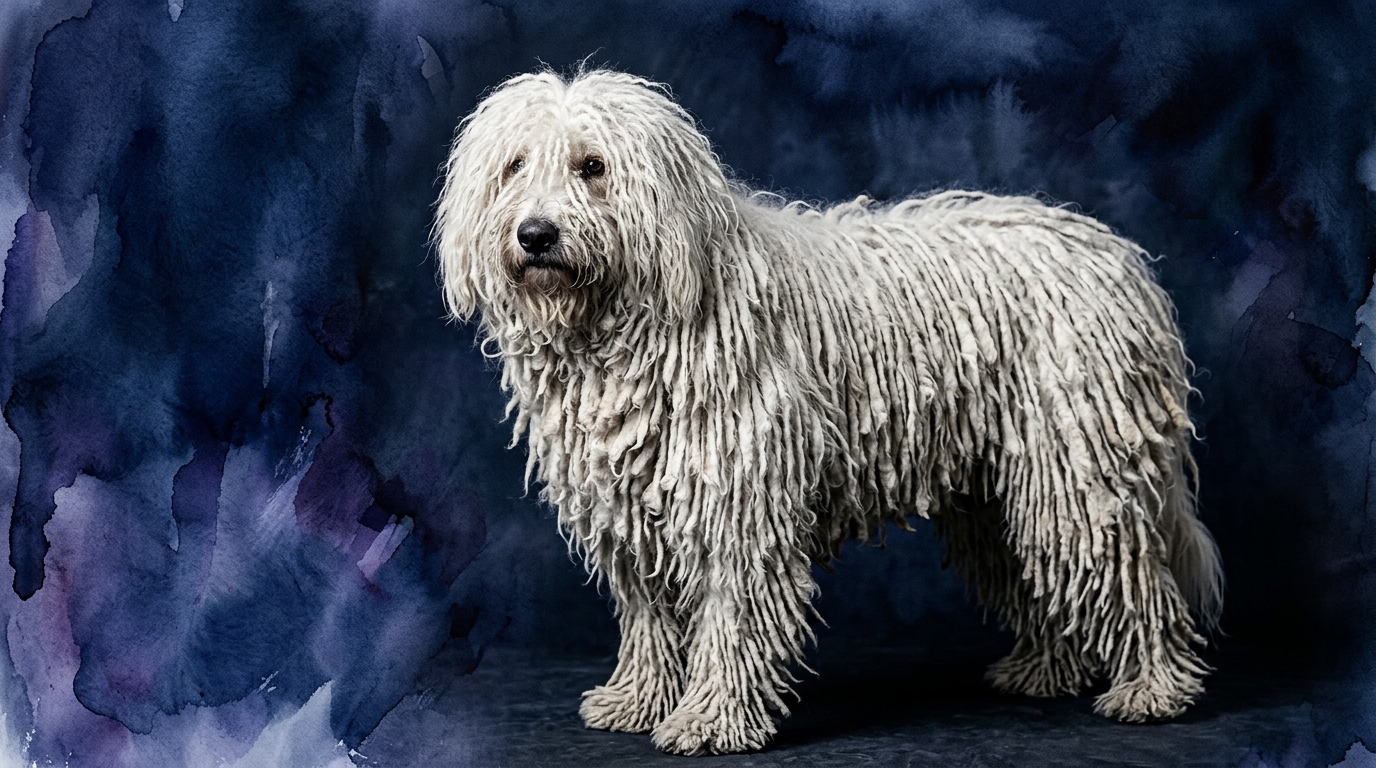
In stark contrast, the Komondor, a majestic working breed with a heritage rooted in livestock guardianship, presents a cognitive profile optimized for independent decision-making and unwavering watchfulness. Their Problem Solving ability is rated at 3/5, suggesting a thoughtful, deliberate approach to challenges rather than immediate, rapid adaptation. They assess situations with an inherent skepticism, often preferring to rely on their own judgment rather than seeking human direction for every novel scenario. Training Speed, also at 3/5, reflects a breed that learns at a moderate pace, often requiring consistent, patient repetition, as they are less driven by the immediate desire to please or perform for human approval. Their Social Intelligence at 3/5 means they are observant of their human companions and their flock, but they operate with a degree of emotional detachment, prioritizing their guardian duties over constant social engagement. Instinctive Drive, rated 3/5, is specifically channeled towards protection and territorial defense, rather than a broad spectrum of human-directed activities. This drive is potent within its specific context but manifests differently from a breed designed for collaborative tasks. Their Memory, also 3/5, supports their ability to recall important territorial boundaries, perceived threats, and established routines essential for their guardian role, rather than a vast repertoire of human-taught commands.
Where the Poodle (Standard) Wins Cognitively
The Poodle (Standard) consistently demonstrates superior cognitive flexibility and an exceptional aptitude for intricate, multi-step tasks. Their 5/5 Problem Solving score translates into a remarkable ability to generalize learned concepts, applying solutions from one context to entirely new scenarios without extensive retraining. For instance, a Poodle taught to retrieve specific objects by name can often extend this skill to identify and fetch new, unnamed items after only a few demonstrations. This cognitive agility allows them to excel in complex canine sports like obedience, rally, and agility, where rapid decision-making, sequential task execution, and precise timing are paramount. Their perfect scores in Training Speed and Social Intelligence further amplify this advantage; they not only grasp new concepts quickly but are also inherently motivated to collaborate with their human partners, making them profoundly responsive to nuanced communication. This combination enables them to master a wide array of sophisticated behaviors, from intricate service dog tasks to theatrical performances, with a seemingly effortless grace and understanding.
Where the Komondor Wins Cognitively
While the Komondor’s cognitive profile differs from the Poodle, its strengths are profoundly effective within its specialized domain: autonomous guardianship. The Komondor's 3/5 Problem Solving and Instinctive Drive scores, combined with their moderate Social Intelligence, mean they excel at independent judgment and self-directed vigilance. They possess a deep-seated ability to assess environmental cues, distinguish routine from anomaly, and make decisions regarding potential threats without constant human intervention. For example, a Komondor guarding livestock will independently patrol boundaries, interpret subtle changes in wind or scent, and determine the appropriate response to a perceived predator – be it a deterrent bark or a direct confrontation. Their lower Training Speed and Social Intelligence, rather than being deficits, are integral to this self-sufficiency; they are less prone to distraction by human whims and more focused on their inherent protective mandate. Their memory, while rated 3/5, is particularly adept at retaining spatial information about their territory and recognizing patterns of behavior in their charges and surroundings, forming a robust mental map crucial for their duties. This breed's cognitive architecture is designed for unwavering, self-regulated protection, a nuanced intelligence distinct from human-centric cooperation.
Which is Easier to Train and Why
Based on their Cosmic Pet Pet IQ Lab profiles, the Poodle (Standard) is unequivocally easier to train for a wide spectrum of tasks and commands. Their 5/5 Training Speed and 5/5 Social Intelligence are the cornerstones of this ease. Poodles exhibit an innate desire to engage with and please their human companions, making them highly receptive to positive reinforcement and eager to understand what is being asked of them. They quickly form associations between commands and actions, and their keen social intelligence allows them to interpret subtle body language and vocal inflections, streamlining the learning process. Behavioral differences include their tendency to offer behaviors readily and their rapid recovery from errors, making training sessions productive and enjoyable. They thrive on mental stimulation and the collaborative problem-solving inherent in training, often offering creative solutions to new challenges posed by their handler.
The Komondor, with a 3/5 Training Speed and 3/5 Social Intelligence, presents a more significant training challenge. Their independent nature and historical role as self-sufficient guardians mean they are not inherently driven to perform for human approval in the same manner as a Poodle. They learn, but often at their own pace and with a discerning eye, evaluating if a command aligns with their perceived purpose or if it's simply a frivolous human request. Real behavioral differences include a tendency towards selective hearing when commands lack immediate relevance to their guardian instincts, and a preference for making their own decisions rather than blindly following direction. Training a Komondor requires immense patience, consistency, and a deep understanding of their guardian mindset. While they can learn commands, their motivation often stems from building a respectful working relationship rather than an eager desire to perform. Owners must demonstrate clear, consistent leadership and make training relevant to the Komondor's intrinsic motivations, rather than expecting the rapid, enthusiastic compliance seen in a Poodle.
Which Suits Active Owners vs. Relaxed Owners
The Poodle (Standard) is an ideal match for active owners who relish engaging in a variety of activities and mental challenges with their canine companion. Their high scores across Problem Solving, Training Speed, and Memory mean they thrive on consistent mental stimulation, whether through advanced obedience, agility, trick training, or even canine freestyle. These dogs enjoy learning new things and participating actively in family life, requiring owners who can dedicate time to structured training, puzzle toys, and interactive play sessions that tap into their versatile cognitive abilities. A Poodle's social intelligence ensures they are happy to be part of every adventure, from long hikes to urban explorations, making them excellent partners for owners seeking a responsive and adaptable companion for an active lifestyle.
Conversely, the Komondor is better suited for owners who appreciate a more relaxed, yet watchful, presence and are prepared for the specific demands of a large, independent guardian breed. While 'relaxed' might imply low maintenance, for a Komondor it means an owner who understands and respects their inherent self-sufficiency. They are not dogs that require constant human-directed activity or elaborate training regimens to be content. Instead, they need space, a perceived territory to oversee, and an owner who respects their deliberate pace and independent decision-making. Their lower scores in general training speed and social engagement mean they are not seeking constant interaction or complex new tasks. They are content to observe and patrol, making them suitable for owners who value a calm, vigilant companion and are prepared for the commitment to managing a breed whose primary cognitive strength lies in independent guardianship, not constant entertainment or highly varied activity.
The Verdict
Choose the Poodle (Standard) if you seek a highly adaptable, cooperative companion eager for diverse mental challenges and rapid, versatile training. This breed thrives on intricate interaction and excels in environments where varied learning and participation are valued.
Opt for the Komondor if you value an independent, self-sufficient guardian with a calm, watchful demeanor and a deep-seated instinct for protection. This breed is best for owners who appreciate a dog's autonomous judgment and are prepared for a deliberate approach to training that respects their intrinsic purpose.
🧠 Find Your Pet's IQ Score
Our Pet IQ Lab assessment covers 25+ tests across 5 cognitive dimensions — personalized to your breed.
Take the Full IQ Test →Frequently Asked Questions
Does a Komondor's lower training speed mean it cannot be trained?
No, a Komondor's 3/5 training speed indicates they learn at a more moderate pace and require consistent, patient methods, rather than an inability to learn. Their independent nature means they evaluate commands and are less driven by immediate human approval, requiring an owner to build trust and make training relevant to their inherent motivations.
How does a Poodle's 5/5 social intelligence manifest in daily life?
A Poodle's exceptional social intelligence means they are highly attuned to human emotions and intentions, making them remarkably responsive and cooperative companions. They often anticipate cues, seek interaction, and readily adapt their behavior based on their understanding of human communication, fostering a strong, empathetic bond within the family.
What specific cognitive strength allows the Komondor to be an effective guardian?
The Komondor's cognitive strength lies in its independent problem-solving (3/5) combined with its focused instinctive drive (3/5) for protection, enabling it to autonomously assess and respond to environmental threats. They excel at self-directed vigilance, making their own judgments about situations and consistently patrolling their territory without needing constant human direction.