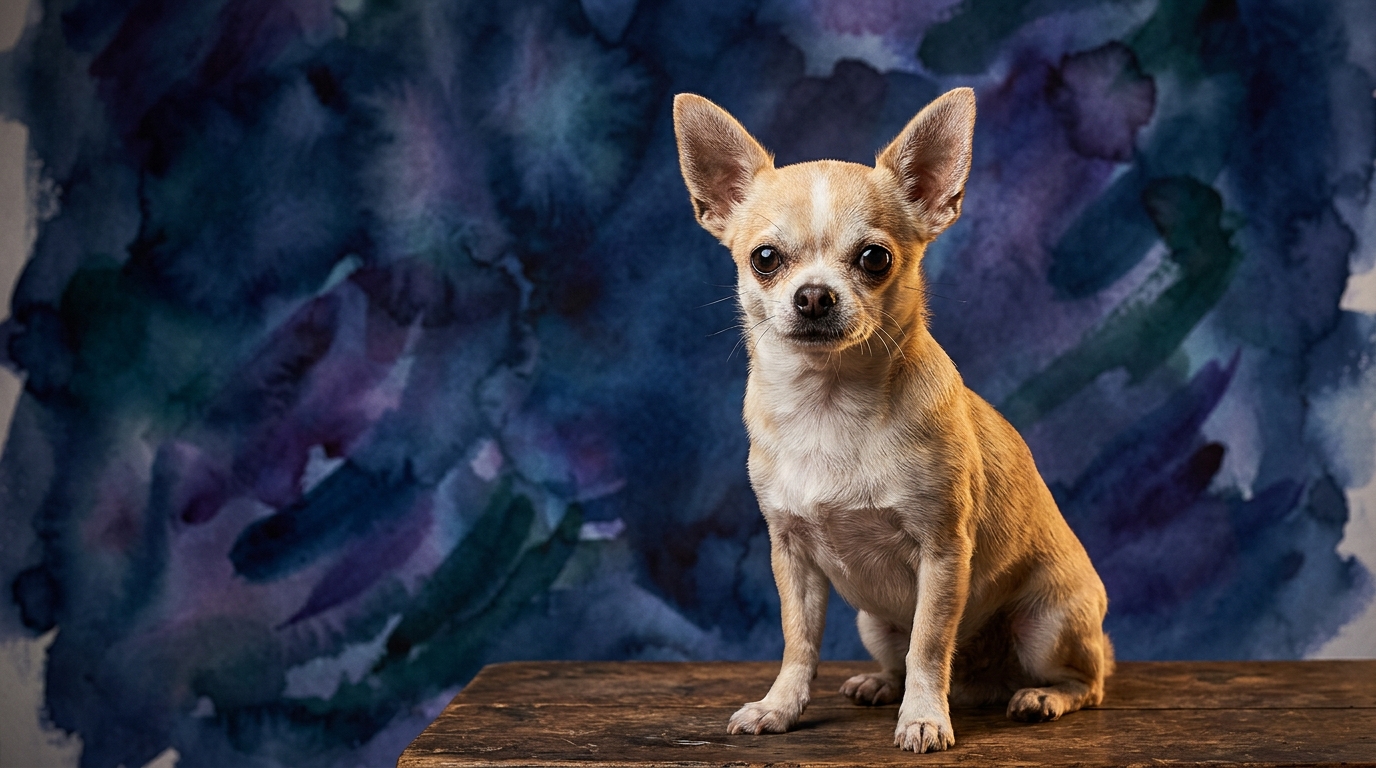
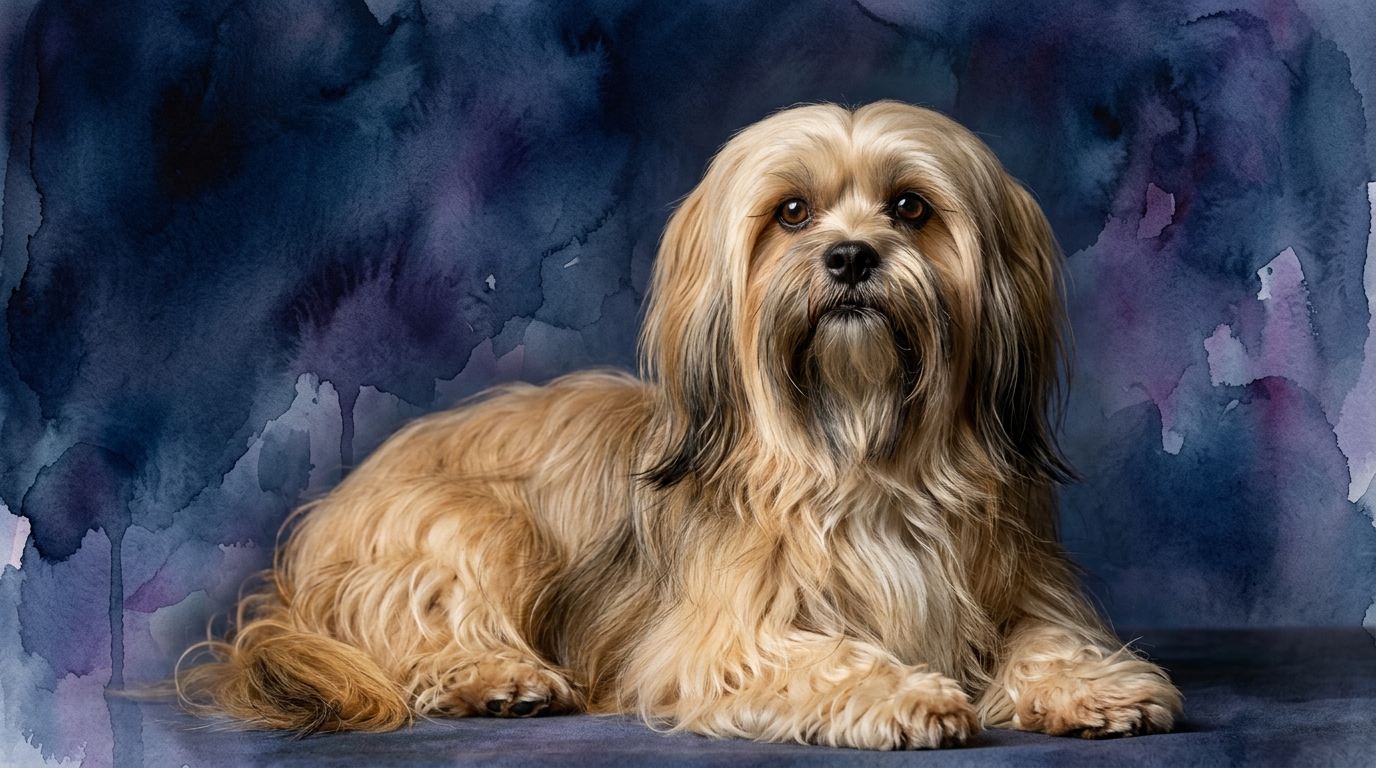
Side-by-Side IQ Profile
The Chihuahua, ranking #67 on the Coren intelligence scale, presents a cognitive profile characterized by specific strengths. Their Problem Solving is rated at 3/5, indicating a moderate capacity for navigating novel situations and figuring out solutions to simple environmental puzzles, like accessing a favored toy under furniture. They can learn to manipulate objects to achieve a goal but often rely on trial-and-error rather than complex strategizing.
Their Training Speed, also at 3/5, suggests that Chihuahuas absorb new commands and routines at an average pace. Consistency and positive reinforcement are crucial for effective learning, as they are capable of mastering a broad range of behaviors, though not always with immediate grasp.
A standout trait for the Chihuahua is their Social Intelligence, scoring a robust 4/5. This reflects a keen ability to read human emotions, understand social cues within a household, and adapt their behavior based on owner responses. They are often highly attuned to their human companions' moods and social dynamics, fostering a deep, responsive bond.
The Instinctive Drive of a Chihuahua is rated at 3/5, indicating that innate drives, such as prey drive or territoriality, are present at a moderate level. While they may exhibit some guarding behaviors or chase small critters, these instincts typically do not dominate their overall cognitive landscape.
Finally, Chihuahuas boast a strong Memory, scoring 4/5. This robust capacity allows them to recall learned commands, routines, and past experiences with considerable accuracy over time. This aids significantly in reinforcing good habits and remembering specific locations or individuals, contributing to consistent behavior.
The Lhasa Apso, positioned closely at #68 on the Coren intelligence scale, exhibits a cognitive makeup with its own unique nuances. Their Problem Solving also stands at 3/5, reflecting a moderate aptitude for finding solutions. Lhasa Apsos often approach challenges with a determined and persistent method, working through issues independently, though not necessarily with speed or complex pre-planning.
Similar to the Chihuahua, the Lhasa Apso's Training Speed is 3/5, meaning they learn new tasks at an average rate. Their independent streak can sometimes be perceived as stubbornness, necessitating patience, clear communication, and consistent positive methods for effective training.
The Lhasa Apso’s Social Intelligence is rated at 3/5. While they form strong, loyal bonds with their primary caregivers, they can be more reserved or discerning with strangers and less overtly expressive in interpreting human social cues compared to more effusive breeds. Their social engagement is often more selective.
Their Instinctive Drive is 3/5, moderately developed and frequently manifesting as a strong territorial instinct rooted in their historical role as watchdogs. This drive influences their alertness and protective tendencies, which require a specific cognitive focus on environmental awareness, even if not expressed through a high prey drive.
Lhasa Apsos possess an average Memory, scoring 3/5. They are capable of retaining learned information and routines, but might benefit from more frequent refreshers or consistent reinforcement to solidify complex behaviors over extended periods, particularly when compared to breeds with higher memory scores.
Where Chihuahua Wins Cognitively
The Chihuahua's cognitive profile showcases distinct advantages in two key areas: Social Intelligence (4/5) and Memory (4/5). Their elevated social intelligence allows them to process and interpret human emotional states and social signals with greater finesse. This means a Chihuahua is often quicker to pick up on subtle changes in their owner's tone, body language, or mood, leading to a more responsive and emotionally congruent companionship. For instance, they might instinctively offer comfort when sensing distress or adjust their behavior based on a slight shift in household dynamics. This acute social awareness fosters a deep, almost intuitive bond, making them seem exceptionally tuned into their human world.
Furthermore, the Chihuahua's superior memory score (4/5) indicates a stronger capacity for information retention. They are more likely to vividly recall specific training commands, house rules, and even the locations of previously hidden treats or favored resting spots. This robust memory contributes significantly to their ability to maintain consistent behavior over time and to learn complex sequences of actions. A Chihuahua might remember a trick learned months ago with minimal prompting, or precisely recall the route to a favorite park after a long absence, demonstrating a persistent cognitive map of their environment and experiences.
Where Lhasa Apso Wins Cognitively
While the Lhasa Apso shares several identical scores with the Chihuahua, their particular application of certain cognitive traits, especially in Problem Solving (3/5) and Instinctive Drive (3/5), positions them uniquely. Their problem-solving, though rated equally, often manifests with a distinct self-sufficiency and persistence. A Lhasa Apso, historically bred to be an independent sentinel, might approach a challenge by methodically trying different solutions until one works, less reliant on human intervention or immediate reward. For example, they might meticulously work to dislodge a toy from under furniture through various pushes and nudges, demonstrating a tenacious, self-directed form of cognitive effort. This independent problem-solving can be a significant advantage in situations requiring self-reliance rather than collaborative effort.
Additionally, their Instinctive Drive (3/5), while numerically the same, is often channeled into a vigilant territorial awareness. This isn't just a physical trait; it requires a specific cognitive focus on environmental scanning, pattern recognition for anomalies, and an innate understanding of their designated "domain." A Lhasa Apso's cognitive processes are finely tuned to detect and assess potential threats or unusual occurrences within their perceived territory, demonstrating a focused application of their drives that serves a protective function. This constant, low-level cognitive engagement with their surroundings makes them exceptionally good at alerting their households, a distinct advantage in specific home environments.
Which is Easier to Train and Why
When comparing trainability, the Chihuahua, despite sharing a 3/5 Training Speed score with the Lhasa Apso, often presents as the "easier" student due to its higher Social Intelligence (4/5) and Memory (4/5). A Chihuahua's keen ability to read human cues and its strong desire for social engagement means it is generally more motivated by praise, attention, and the approval of its owner. This social receptiveness makes them more inclined to focus on the trainer and understand what is being asked, leading to quicker initial responses and a more fluid training experience. Their excellent memory further solidifies this advantage, as they retain commands and learned behaviors for longer periods, requiring fewer repetitions and refreshers. For instance, a Chihuahua might grasp a new trick faster because it connects the verbal cue and physical action with the reward and its owner's positive feedback more readily, and then remembers that connection consistently.
The Lhasa Apso, with its moderate Social Intelligence (3/5) and Memory (3/5), coupled with its historically independent nature, often requires a different training approach. While perfectly capable of learning, they might be less motivated by social praise alone and more by tangible rewards or their own internal desire to cooperate. Their discernment means they might not always be eager to please every individual or perform on command without clear incentive, which can be interpreted as stubbornness. Training a Lhasa Apso often demands more patience, consistent positive reinforcement, and a deep understanding of their individual motivations. They might take longer to generalize commands to new environments or with different people, and their learning might seem less immediate or spontaneous compared to the socially eager Chihuahua.
Which Suits Active Owners vs. Relaxed Owners
The choice between a Chihuahua and a Lhasa Apso based on owner lifestyle hinges significantly on the nature of "activity" and "relaxation" desired. For owners who are "active" in terms of desiring a highly interactive, emotionally responsive, and mentally engaged companion, the Chihuahua often presents a better fit. Their elevated Social Intelligence (4/5) means they thrive on constant interaction, understanding and responding to their owner's every nuance. While not requiring extensive physical exercise, they demand significant mental stimulation through play, training, and being an integral part of daily life. An active owner for a Chihuahua is one who enjoys teaching new tricks, engaging in interactive games, and having a dog constantly by their side, keen to participate in household activities or social outings. They are ideal for individuals who want a communicative and deeply bonded companion, even if their physical activity is limited to brisk walks or indoor play.
Conversely, the Lhasa Apso, with its moderate Social Intelligence (3/5) and more independent streak, tends to suit "relaxed" owners who appreciate a companion that is present but not always demanding direct engagement. Their historical role as guardians instilled a sense of self-sufficiency; they are content to observe their surroundings, patrol their territory, and engage on their own terms. While they enjoy walks and playtime, they don't typically require the same level of constant social interaction or emotional mirroring as a Chihuahua. A relaxed owner for a Lhasa Apso is one who provides consistent care, routine, and a secure environment, but also respects their dog's need for personal space and independent activity. They are suited for individuals who value a sturdy, watchful companion that offers quiet loyalty without incessant demands for attention, appreciating a dog that can entertain itself or simply be a calm presence.
The Verdict
Choose a Chihuahua if you seek a deeply socially engaged companion with an excellent memory, eager to participate in your daily life and respond to your emotional cues, thriving on constant interaction and mental games.
Opt for a Lhasa Apso if you prefer an independent, discerning companion with a strong sense of self-reliance and territorial awareness, content with observing and engaging on their own terms, offering a calm yet watchful presence.
🧠 Find Your Pet's IQ Score
Our Pet IQ Lab assessment covers 25+ tests across 5 cognitive dimensions — personalized to your breed.
Take the Full IQ Test →Frequently Asked Questions
Is a Chihuahua easier to house train than a Lhasa Apso?
While both breeds have moderate training speed, a Chihuahua's higher memory (4/5) and social intelligence (4/5) can sometimes make house training slightly more straightforward. They might remember routines and associate specific areas with elimination more consistently, and are often more eager to please their owners by adhering to rules.
Do Chihuahuas or Lhasa Apsos adapt better to living in apartments?
Both breeds are well-suited for apartment living due to their small size and moderate exercise requirements. However, a Chihuahua's higher social intelligence means they might adapt faster to new social environments within an apartment complex, while a Lhasa Apso's territorial instincts (3/5) might mean they are more vocal about perceived intruders or noises.
Which breed is better with children, based on their IQ profiles?
Neither breed's IQ profile specifically indicates a 'better' fit for children, as temperament and socialization are paramount. A Chihuahua's higher social intelligence might make them more perceptive to a child's mood, but their delicate nature requires careful handling. A Lhasa Apso's discerning social intelligence and independent nature mean they might tolerate children if well-socialized, but prefer respectful interactions.