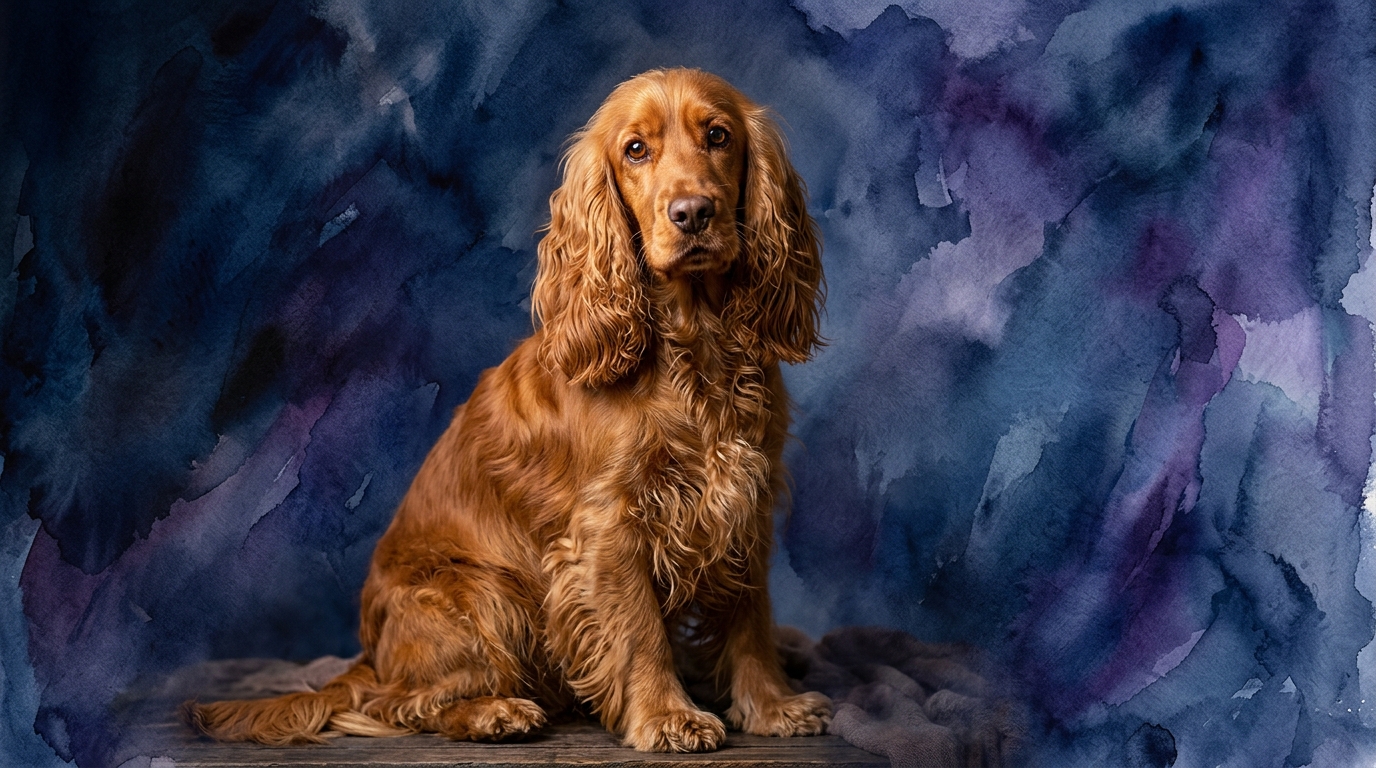

Side-by-Side Cognitive Profiles
The Cosmic Pet Pet IQ Lab employs a five-dimensional framework to assess canine intelligence, offering a granular view of each breed's cognitive strengths. For the Cocker Spaniel, ranked #20 by Coren, their profile highlights a blend of practical intelligence and exceptional social skills.
**Cocker Spaniel (Sporting Group, Coren Rank #20):** Problem Solving (3/5) — Adept at navigating complex environments or figuring out how to retrieve a hidden toy, demonstrating practical, goal-oriented thinking. Training Speed (4/5) — Their responsiveness to cues and eagerness to please make them quick learners, often grasping new commands with fewer repetitions. Social Intelligence (5/5) — Exceptional at reading human emotions and intentions, they thrive on interaction and can adapt their behavior to social contexts seamlessly. Instinctive Drive (4/5) — Possess a strong natural drive for retrieving and following scents, indicative of their heritage as hunting companions. Memory (4/5) — Capable of retaining a wide range of commands, routines, and experiences, contributing to their consistent performance.
The Dogue de Bordeaux, a robust Working Group breed not included in Coren's rankings, presents a more uniform cognitive landscape, emphasizing steadiness and loyalty over rapid adaptability.
**Dogue de Bordeaux (Working Group, Not Coren-Ranked):** Problem Solving (3/5) — Exhibits a steady, deliberate approach to challenges, often relying on physical presence or learned routines rather than intricate strategizing. Training Speed (3/5) — Requires more consistent reinforcement and patience during training, as they process information at a more measured pace. Social Intelligence (3/5) — Forms deep bonds with their immediate family, showing loyalty, but may be more reserved or less overtly expressive with strangers compared to more effusive breeds. Instinctive Drive (3/5) — Their primary drive leans towards guarding and protection, manifesting as a watchful demeanor rather than a strong chase or retrieve instinct. Memory (3/5) — Retains important information and routines, particularly those related to their family and territory, but might not recall as vast a repertoire of arbitrary commands.
Where the Cocker Spaniel Excels Cognitively
The Cocker Spaniel undeniably shines in areas demanding quick cognitive processing and social attunement. Their perfect 5/5 score in Social Intelligence means they possess an almost uncanny ability to interpret human cues, making them exceptionally empathetic companions. This manifests not just in understanding verbal commands, but in perceiving subtle shifts in tone, body language, and mood, often responding with comforting gestures or a playful invitation to interact. Furthermore, their 4/5 Training Speed score, coupled with their strong Memory, allows them to build an extensive behavioral repertoire rapidly. They excel in activities requiring sequential learning and rapid recall, such as complex obedience routines, agility courses, or scent work where they must remember specific targets and paths. Their Instinctive Drive for retrieving is also a cognitive asset, as it fuels their focus and persistence in task-oriented play, turning learning into an engaging game. This combination of keen social awareness, rapid learning, and robust memory makes the Cocker Spaniel a highly adaptable learner in varied environments, particularly those involving close human partnership.
Where the Dogue de Bordeaux Displays Unique Strengths
While the Dogue de Bordeaux's cognitive profile appears more measured, their strengths lie in a different sphere of intellect, primarily rooted in their Working Group heritage. Their 3/5 score in Problem Solving, though equal to the Cocker, is often applied to different types of challenges. A Dogue de Bordeaux might excel at understanding spatial relationships within their territory, discerning who belongs and who doesn't, or patiently waiting for a specific outcome. Their Instinctive Drive (3/5) is focused on vigilance and protection, meaning they possess a cognitive framework for assessing potential threats and maintaining a steady, watchful presence. This isn't about rapid-fire decisions but rather a deliberate, consistent evaluation of their surroundings. Their Social Intelligence (3/5), while not as effusive as a Cocker's, translates into profound loyalty and a deep, unwavering bond with their chosen family. They may not read every nuanced human emotion, but they understand the core dynamics of their household and their role within it, providing a steadfast, comforting presence. Their Memory (3/5) is robust enough to retain critical routines and associate specific people with their safety and comfort, contributing to their reliability as family guardians.
Training Dynamics: Cocker Spaniel vs. Dogue de Bordeaux
Evaluating ease of training requires considering both breeds' innate predispositions. The Cocker Spaniel, with its 4/5 Training Speed and 5/5 Social Intelligence, generally presents an easier training journey for most owners. Their eagerness to please, coupled with their capacity to quickly understand human expectations and motivations, means they often pick up new commands and routines with fewer repetitions. They respond well to positive reinforcement, thriving on praise and interactive rewards, and their strong memory ensures that learned behaviors are retained. Conversely, the Dogue de Bordeaux, with a 3/5 Training Speed, requires a more patient, consistent, and structured approach. Their deliberate processing means that while they *can* learn, they may take longer to solidify commands. Owners must be clear, firm, and persistent, avoiding ambiguity, and understand that the Dogue's loyalty, rather than an intense desire to please, is often the primary motivator for cooperation. Their lower social intelligence score compared to the Cocker suggests they might not always be as finely tuned to subtle human corrections, requiring more overt and consistent guidance. While both breeds benefit from early socialization and positive reinforcement, the Cocker Spaniel's inherent cognitive wiring makes the training process generally smoother and faster.
Matching Breeds to Lifestyles: Active vs. Relaxed Owners
The cognitive profiles of these two breeds heavily influence their suitability for different lifestyles. The Cocker Spaniel, with its high instinctive drive (4/5) and rapid training speed (4/5), thrives with active owners who enjoy engaging in mentally stimulating activities and regular physical exercise. Owners who appreciate teaching complex tricks, participating in dog sports like agility or scent work, or simply enjoy extended walks and interactive play will find the Cocker Spaniel's cognitive energy and responsiveness a perfect match. Their social intelligence also means they generally enjoy being involved in family activities and outings. In contrast, the Dogue de Bordeaux, with its more measured instinctive drive (3/5) and deliberate processing, is better suited for relaxed owners who appreciate a calm, watchful companion. While they still require regular, moderate exercise to maintain physical health, their mental stimulation often comes from observing their environment and fulfilling their role as a family presence. Owners who prefer quiet evenings, gentle walks, and a steadfast companion rather than a constant playmate will find the Dogue de Bordeaux's composed demeanor and deep loyalty more fitting. Their social intelligence, while strong within their family unit, doesn't demand the same constant external engagement as a Cocker's.
The Verdict
Choose a Cocker Spaniel if you seek an effusive, highly trainable companion eager for interactive learning, dog sports, and a close, communicative bond built on shared activities. Their capacity for rapid skill acquisition and social nuance makes them ideal for engaged, active households.
Opt for a Dogue de Bordeaux if you desire a calm, loyal guardian whose intelligence manifests as steady devotion and a watchful presence, thriving in a stable home with consistent routines and owners who appreciate their quiet strength.
🧠 Find Your Pet's IQ Score
Our Pet IQ Lab assessment covers 25+ tests across 5 cognitive dimensions — personalized to your breed.
Take the Full IQ Test →Frequently Asked Questions
Do Cocker Spaniels get bored easily without mental stimulation?
Yes, Cocker Spaniels, with their high social intelligence and instinctive drive, thrive on mental engagement. Without sufficient interaction and problem-solving opportunities, they can become restless or develop undesirable behaviors.
How does the Dogue de Bordeaux's problem-solving ability compare in real-world scenarios?
A Dogue de Bordeaux's problem-solving often manifests in practical ways, like navigating their environment for optimal comfort or discerning patterns in household routines. They might be less inclined to figure out complex puzzle toys quickly but are adept at understanding their territory.
Is it true that Dogue de Bordeaux dogs are difficult to train due to their nature?
While not 'difficult,' Dogue de Bordeaux dogs require a patient and consistent training approach due to their more deliberate training speed. Their loyalty to their family is a strong motivator, but they benefit from clear, firm guidance and positive reinforcement over extended periods.