
Side-by-Side IQ Profile
The German Shepherd exhibits a comprehensive cognitive prowess across all measured dimensions, reflecting their demanding roles in herding, protection, and service.
Problem Solving (5/5): This breed demonstrates exceptional aptitude for navigating complex situations, adapting to new challenges, and devising solutions independently, a hallmark of their herding and protection heritage.
Training Speed (5/5): German Shepherds assimilate new commands and routines with remarkable rapidity, often grasping concepts after very few repetitions, making them highly responsive to advanced training protocols.
Social Intelligence (5/5): Their ability to interpret human cues, understand social hierarchies, and respond appropriately to various social contexts is profound, enabling deep bonds and effective partnership.
Instinctive Drive (5/5): Possessing a powerful, innate drive for purpose, protection, and work, these dogs are motivated by challenges and excel when given a job to do, channeling their energy into productive tasks.
Memory (5/5): German Shepherds retain intricate sequences of commands, learned behaviors, and environmental details over extended periods, crucial for complex working roles and consistent performance.
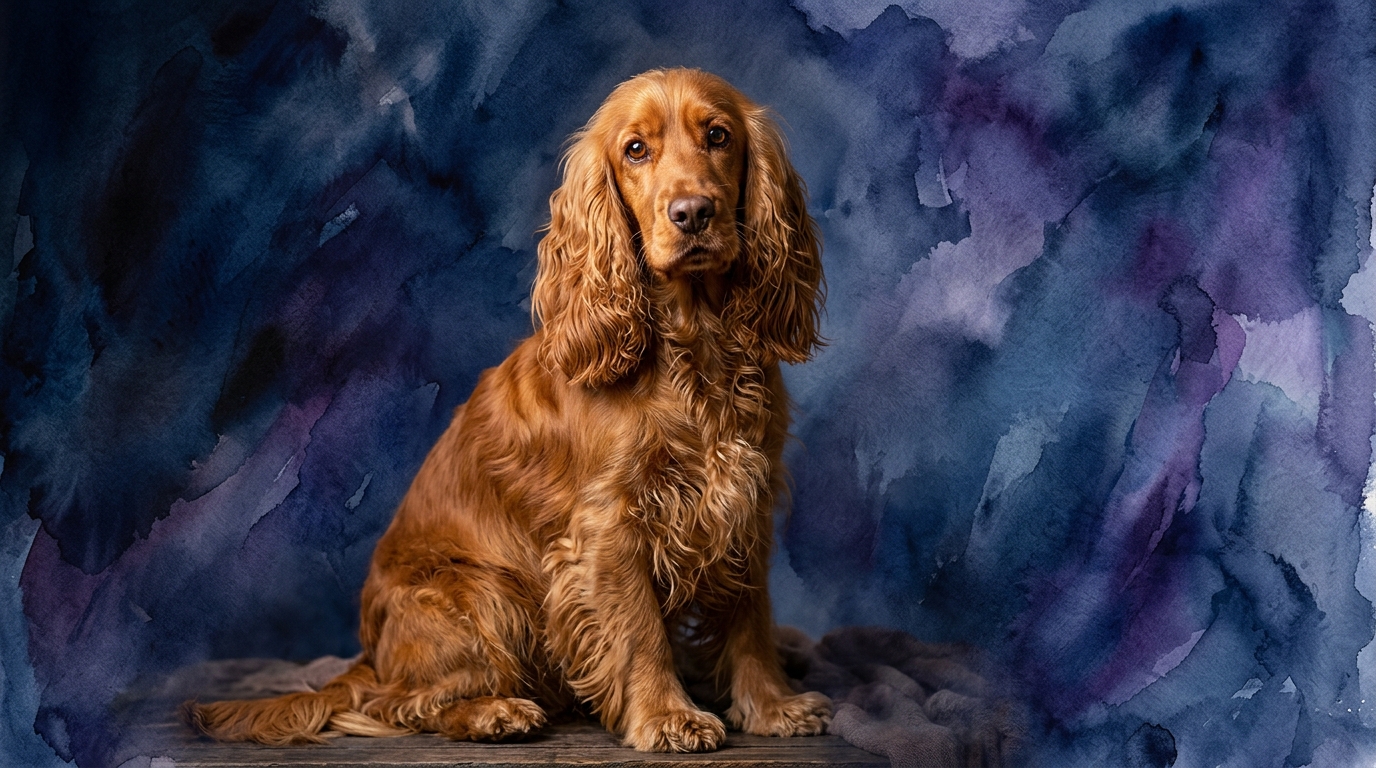
The Cocker Spaniel presents a balanced cognitive profile, emphasizing their cooperative nature and strong social acumen, tailored for companionship and sporting activities.
Problem Solving (3/5): While capable of navigating everyday challenges and learning routines, Cocker Spaniels typically approach problem-solving with less independent strategizing compared to breeds specialized in complex decision-making, often relying on learned responses or human guidance.
Training Speed (4/5): Cocker Spaniels learn new commands at a good pace, demonstrating eagerness and responsiveness, though they might require slightly more repetition than the fastest learners to solidify complex behaviors.
Social Intelligence (5/5): A standout trait, their social acumen is exceptional; Cocker Spaniels are highly attuned to human emotions, excel in cooperative interactions, and thrive on companionship, making them wonderfully empathetic family members.
Instinctive Drive (4/5): Their instinctive drive is strong, particularly for scent work and retrieving, reflecting their sporting origins. While not as overtly 'driven to work' as herding breeds, they possess a keen desire to participate and engage in activities with their people.
Memory (4/5): Cocker Spaniels possess good memory for learned behaviors and routines, enabling them to reliably recall commands and pleasant experiences, contributing to their trainability and consistent companionship.
Where German Shepherd Wins Cognitively
The German Shepherd's unmatched 5/5 in Problem Solving allows them to excel in dynamic, unpredictable environments where independent thought is paramount, such as search and rescue operations or complex protection work. They don't just follow orders; they process situations and adapt their responses.
Their superior Training Speed (5/5) translates into an ability to rapidly master multi-stage commands and intricate behavioral chains, making them ideal candidates for specialized roles requiring a vast repertoire of learned actions, from advanced obedience to service dog tasks. This swift learning curve means less repetition is needed for complex concepts.
Furthermore, the German Shepherd's perfect 5/5 in Memory ensures that once these complex skills are learned, they are retained with remarkable fidelity, allowing for consistent, reliable performance even after periods of inactivity. Their powerful Instinctive Drive (5/5) fuels this cognitive prowess, providing internal motivation for challenging mental tasks.
Where Cocker Spaniel Wins Cognitively
The Cocker Spaniel’s exceptional 5/5 Social Intelligence is where they truly shine, often demonstrating a nuanced understanding of human emotions and social dynamics within a family unit. This profound empathy allows them to form incredibly strong bonds, offering comfort and companionship, and making them exceptionally intuitive family members.
While their Problem Solving is rated 3/5, their strong Social Intelligence and 4/5 Training Speed combine to make them highly cooperative learners, eager to please their human companions. They might not independently strategize complex solutions, but they are exceptionally good at learning what you want them to do and responding consistently in social contexts.
Their 4/5 Instinctive Drive, while different in manifestation from a German Shepherd's, is perfectly suited to their sporting heritage, focusing keenly on scent and retrieve tasks with enthusiasm and tenacity. This drive, coupled with their social nature, makes them excellent participants in activities like agility or scent work, where cooperation and responsiveness are key.
Which is Easier to Train and Why
When considering 'easier to train,' the context matters significantly. German Shepherds, with their 5/5 Training Speed and Memory, can learn a vast array of complex commands and sequences very quickly. However, their high instinctive drive and problem-solving ability mean they require an owner who can consistently provide structured mental engagement and clear, firm guidance, or their cognitive power can manifest as boredom or independent decision-making.
Cocker Spaniels, possessing a 4/5 Training Speed and 5/5 Social Intelligence, are often perceived as 'easier' for the average family owner seeking a well-mannered companion. Their eagerness to please and deep connection to their human partners mean they are highly motivated by positive reinforcement and praise, making basic obedience and household manners relatively straightforward to instill.
Therefore, for advanced, specialized working tasks and rapid mastery of intricate routines, the German Shepherd's cognitive profile makes them faster learners for that specific type of demanding training. For general companionship, basic obedience, and a dog that is highly attuned to family dynamics and eager to cooperate, the Cocker Spaniel's blend of social intelligence and good trainability often presents a smoother, more intuitive training experience for many households.
Which Suits Active Owners vs Relaxed Owners
German Shepherds, with their formidable 5/5 Instinctive Drive and 5/5 Problem Solving, demand a significant commitment from their owners for both physical exercise and intense mental stimulation. They thrive with active owners who can provide daily vigorous activity like long runs, challenging hikes, or participation in dog sports such as agility, protection work, or competitive obedience.
Their cognitive needs are equally demanding, requiring consistent training, puzzle toys, and roles that allow them to use their intellect. A German Shepherd without sufficient outlets for their energy and intellect can become bored, potentially leading to undesirable behaviors like excessive barking, destructive chewing, or anxiety.
Cocker Spaniels, while still requiring regular exercise, are generally better suited for owners with a moderately active lifestyle. Their 4/5 Instinctive Drive means they enjoy daily walks, playful romps in the yard, and interactive games, but typically do not require the same intensity or duration of activity as a German Shepherd.
Their high 5/5 Social Intelligence means they flourish with owners who prioritize companionship, gentle play, and consistent interaction within the home. They appreciate owners who engage them with moderate mental stimulation, such as scent games or trick training, alongside their physical activity, integrating seamlessly into a relaxed yet engaging home environment.
The Verdict
Choose a German Shepherd if you are an experienced owner seeking a dedicated, highly trainable partner for advanced work, protection, or intense dog sports, and are prepared to meet their profound needs for mental and physical engagement daily.
Opt for a Cocker Spaniel if you desire an affectionate, socially intuitive companion who excels in family life, enjoys moderate activity, and responds well to positive, cooperative training for general companionship.
🧠 Find Your Pet's IQ Score
Our Pet IQ Lab assessment covers 25+ tests across 5 cognitive dimensions — personalized to your breed.
Take the Full IQ Test →Frequently Asked Questions
Are German Shepherds naturally more protective than Cocker Spaniels?
Yes, German Shepherds possess a strong 5/5 instinctive drive that includes natural protective instincts, stemming from their heritage as herding and guard dogs, leading them to be naturally more watchful and territorial. Cocker Spaniels, while loyal, have a 4/5 instinctive drive geared more towards sporting activities like flushing and retrieving, making them less inclined towards overt protection.
Can a Cocker Spaniel be trained for complex tasks like a German Shepherd?
While Cocker Spaniels have good training speed (4/5) and memory (4/5), their problem-solving (3/5) and instinctive drive (4/5) are generally not geared towards the same level of complex, independent decision-making or high-stakes work that German Shepherds excel at. They can learn many tricks and tasks but typically not with the same depth or speed for multi-stage, adaptive roles as a GSD.
Which breed is better with children, based on their social intelligence?
Both breeds can be good with children, but their approaches differ. Cocker Spaniels, with their 5/5 social intelligence and inherent gentleness, often adapt very well to family dynamics, forming close bonds and being very tolerant. German Shepherds also have 5/5 social intelligence, but their strong drive and larger size mean they require careful socialization and supervision around children, as their play can be more boisterous and their protective instincts can be misdirected if not managed.