
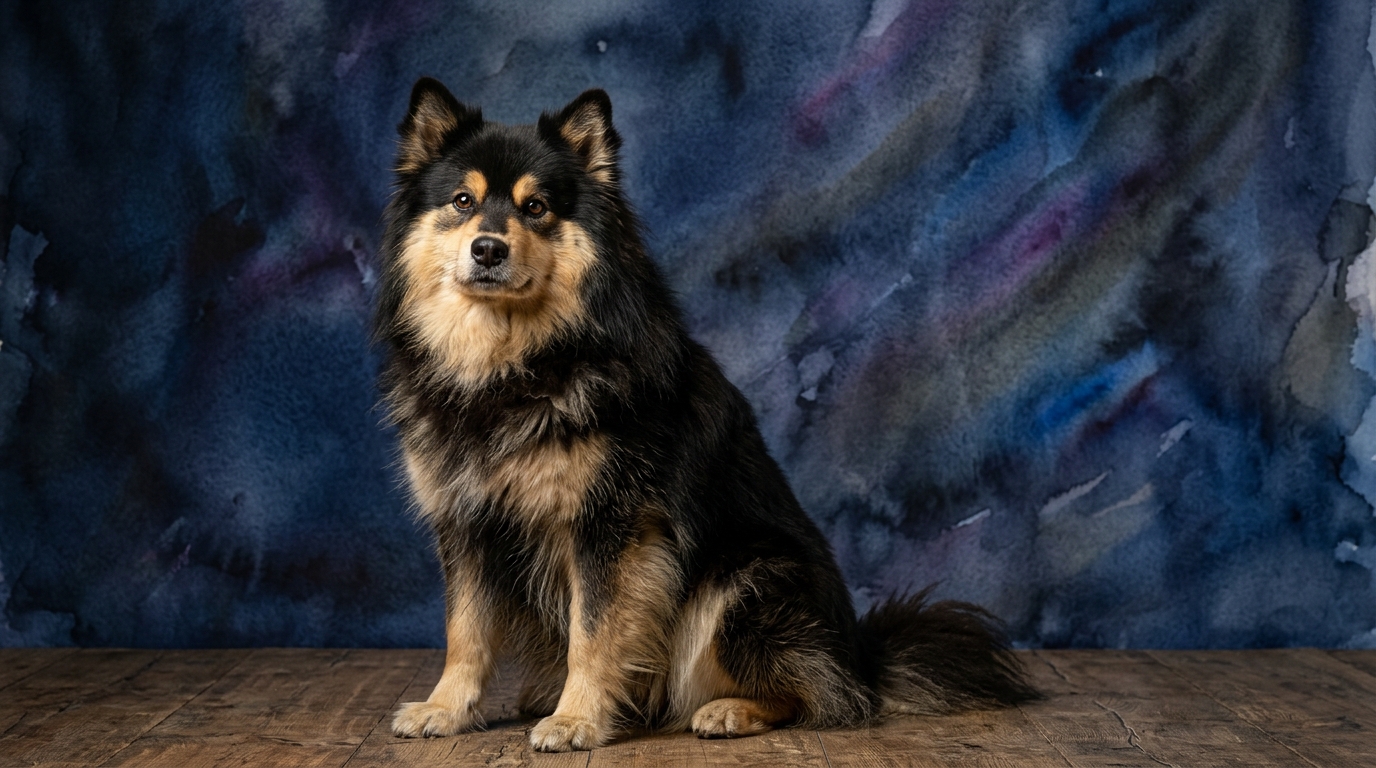
A Side-by-Side Look at Cognitive Profiles
Both the Cocker Spaniel and the Finnish Lapphund are rated 3/5 for problem-solving, indicating a moderate capacity for navigating novel challenges independently. The Cocker, with its background in flushing game, often applies this skill to devising strategies for retrieving dropped items or accessing interesting smells, with solutions tending to be practical and resource-oriented. The Finnish Lapphund, originating from herding reindeer, also exhibits a practical problem-solving approach, often related to spatial reasoning or finding efficient routes, though perhaps with less spontaneous innovation.
In training speed, the Cocker Spaniel shows a clear advantage with a 4/5 rating, compared to the Finnish Lapphund's 3/5. The Cocker's eagerness to please and strong desire for interaction, coupled with its focus on human cues, allows it to grasp new commands and routines relatively quickly. The Finnish Lapphund, while capable of learning, may require more repetition and patience, often evaluating the 'why' behind a command, a trait common in herding breeds that need to make independent decisions.
The Cocker Spaniel truly shines with a 5/5 rating in social intelligence, indicating an exceptional ability to interpret human emotions, body language, and intentions. This breed forms deep bonds and often anticipates owner needs, making it a highly empathetic companion. The Finnish Lapphund, rated 3/5, possesses a more reserved social intelligence; it understands group dynamics and family structures well but may not exhibit the same effusive, immediate connection with strangers, focusing more on maintaining group cohesion within its perceived 'pack.'
The Cocker Spaniel has a 4/5 instinctive drive, primarily centered around its sporting heritage, manifesting as a strong prey drive, a keen nose for scent work, and a desire to flush and retrieve. This drive is a powerful motivator but requires appropriate outlets. The Finnish Lapphund's 3/5 instinctive drive is rooted in its herding background, expressed through a tendency to gather, patrol, and maintain boundaries, often with a watchful eye, requiring understanding and management.
With a 4/5 memory rating, the Cocker Spaniel retains learned behaviors, routines, and associations effectively, contributing to its rapid training speed and adaptability. It remembers people, places, and commands reliably. The Finnish Lapphund's 3/5 memory rating suggests it also retains information, but perhaps requires slightly more consistent reinforcement over time. Its memory is particularly strong for spatial layouts and established routines within its territory, beneficial for a herding breed.
Where the Cocker Spaniel's Mind Excels
The Cocker Spaniel's cognitive strengths are most apparent in its unparalleled social attunement and quick uptake of new information. Its 5/5 social intelligence means it often acts as a remarkably sensitive emotional barometer, picking up on subtle cues from its human companions and adjusting its behavior accordingly. This makes them exceptional therapy or emotional support animals, as they genuinely connect on a deeper, more intuitive level.
Furthermore, its 4/5 training speed is a direct result of its eagerness to engage and its strong memory, allowing owners to teach a broad repertoire of commands and tricks with relative ease. This makes them versatile participants in dog sports like obedience or agility. Their problem-solving (3/5) often manifests in inventive ways to achieve social interaction or access desired objects, strategies remembered (4/5 memory) and repeated, reinforcing their adaptability within a human household.
The Finnish Lapphund's Unique Cognitive Strengths
While the Finnish Lapphund's cognitive profile might appear less outwardly demonstrative than the Cocker's, its strengths lie in its independent thinking, environmental awareness, and steadfast loyalty, all stemming from its herding roots. Its 3/5 problem-solving is often applied to practical, real-world scenarios, such as navigating complex terrain or assessing potential threats to its family.
This breed isn't looking for human approval for every action; rather, it processes its environment and makes judgments based on its own assessment, a crucial trait for a working dog operating without constant human direction. Their instinctive drive (3/5) translates into a vigilant, protective nature and a strong sense of territory, while their memory (3/5) is robust for spatial awareness and routines within their established environment, making them reliable guardians.
Training Dynamics: Which Breed Learns Faster?
Based on their respective profiles, the Cocker Spaniel is generally easier and faster to train than the Finnish Lapphund. The Cocker's 4/5 training speed and 5/5 social intelligence create a powerful combination: they are highly motivated by human interaction and praise, picking up on cues quickly. This means they often respond well to positive reinforcement, eager to perform behaviors that earn them attention and rewards.
In contrast, the Finnish Lapphund, with a 3/5 training speed and 3/5 social intelligence, often approaches training with a more independent, questioning mindset. While capable of learning, they may not possess the same inherent drive to perform purely for human approval. Owners might find they need to make training sessions more engaging and demonstrate the 'purpose' of a command for a Lapphund to fully commit, as their motivation often stems from understanding and utility.
Matching Lifestyles: Active vs. Relaxed Owners
For active owners seeking a highly engaged and responsive companion, the Cocker Spaniel often presents a more aligned cognitive match. Their 4/5 instinctive drive, combined with their training speed and social intelligence, means they thrive on activities that involve interaction, scent work, retrieving, and learning new skills. They enjoy being an integral part of family outings, whether it's a brisk walk, a game of fetch, or participating in dog sports.
The Finnish Lapphund, while certainly not a couch potato, might be a better fit for owners who appreciate a more independent yet devoted companion, or those who engage in specific types of outdoor activities. Their 3/5 instinctive drive means they enjoy purposeful activities like hiking or exploring, but their need for constant, high-intensity human-directed activity might be lower than a Cocker's. They often enjoy observing and patrolling their environment, and a relaxed owner who provides consistent routines and secure outdoor access will find a loyal, calm presence.
The Verdict
Choose a Cocker Spaniel if you desire a highly socially attuned, eager-to-please companion who will thrive on interactive training and shared activities, quickly learning new behaviors.
Opt for a Finnish Lapphund if you value an independent, watchful, and deeply loyal companion who connects on a more reserved level and appreciates consistent routines and purposeful outdoor exploration.
🧠 Find Your Pet's IQ Score
Our Pet IQ Lab assessment covers 25+ tests across 5 cognitive dimensions — personalized to your breed.
Take the Full IQ Test →Frequently Asked Questions
Is the Cocker Spaniel a good choice for first-time dog owners?
Yes, the Cocker Spaniel's high social intelligence and training speed often make them suitable for first-time owners who are committed to consistent positive reinforcement and providing ample mental and physical stimulation. Their eagerness to please simplifies the learning process for both dog and owner.
Do Finnish Lapphunds require a lot of exercise?
Finnish Lapphunds do require regular exercise, typically moderate daily activity like long walks, hikes, or play sessions, to keep them content. While they aren't extreme athletes, their herding background means they appreciate purposeful outdoor time and mental engagement.
How do these breeds typically interact with children?
Cocker Spaniels, with their high social intelligence and affectionate nature, generally interact very well with respectful children, often becoming playful and patient family members. Finnish Lapphunds, while devoted to their family, may be more reserved with children they don't know well, but are typically gentle and watchful with their own family's children once a bond is established.