
A Side-by-Side Cognitive Snapshot
The Cocker Spaniel, ranking #20 on the Coren intelligence scale, presents a well-rounded and engaging cognitive profile. Their Problem Solving is rated at 3/5, indicating a capacity to navigate moderately complex tasks, often using learned patterns rather than pure innovation; they can figure out how to retrieve a toy from under furniture or open a simple latch with some trial and error. Training Speed for the Cocker Spaniel is an impressive 4/5, meaning these dogs absorb new commands and routines quickly, eager to please and responsive to positive reinforcement, forming strong associations between actions and rewards efficiently. Their Social Intelligence is exceptional at 5/5, making them exceptionally attuned to human emotions and social cues; they understand subtle shifts in tone and body language, often anticipating needs or moods. Instictive Drive stands at 4/5, reflecting a strong inherent desire for flushing and retrieving, manifesting as persistent sniffing, tracking, and a desire to carry objects, which is purposeful and often directed towards interaction. Finally, their Memory is rated 4/5, indicating they retain learned commands, routines, and experiences over long periods, remembering people, places, and specific training sequences, contributing to their consistent performance.
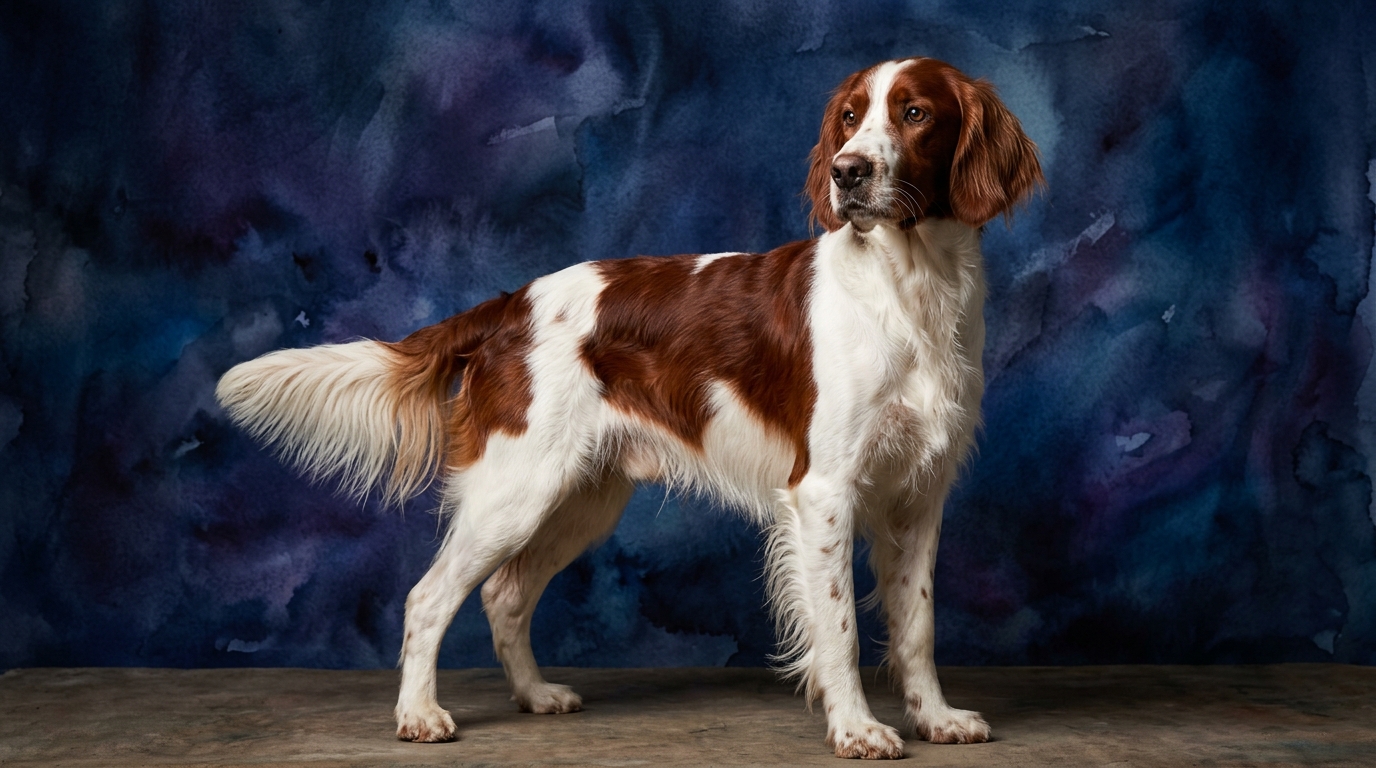
The Irish Red and White Setter, while not listed on the Coren ranking, possesses a distinct and practical set of cognitive abilities. Their Problem Solving is rated 3/5, demonstrating a practical ability to overcome challenges, often through persistence and observation; they can work out how to reach a desirable item or navigate familiar environments effectively, but don't typically invent novel solutions. For Training Speed, they score 3/5, meaning they learn at a steady pace, requiring consistent and patient instruction to solidify new behaviors; while capable, they might take a few more repetitions than some breeds to grasp complex concepts. Their Social Intelligence is 3/5, suggesting they connect well with their human companions, understanding basic social interactions and forming strong bonds; their social understanding is direct and affectionate, though perhaps less nuanced than breeds scoring higher. The Irish Red and White Setter’s Instinctive Drive is 3/5, exhibiting a natural inclination for scenting and pointing, typical of a setter, but this drive is often expressed with a degree of independence; they are driven by their environment and internal motivations, sometimes appearing less outwardly focused on human direction than other sporting dogs. Their Memory is also 3/5, indicating a solid capacity for recalling past experiences and learned commands, though perhaps not with the same depth or speed of recall as breeds with higher scores; they remember routines and familiar faces reliably.
Where the Cocker Spaniel Shines Cognitively
The Cocker Spaniel's exceptional social intelligence (5/5) allows them to interpret human emotions with remarkable precision, often acting as intuitive companions who seem to anticipate needs before they are voiced. Their strong desire to cooperate makes them outstanding therapy or emotional support animals, where reading nuanced human signals is paramount. Furthermore, their rapid training speed (4/5) means they quickly link actions to consequences, mastering new commands and complex sequences with fewer repetitions. This efficiency in learning, combined with their eager-to-please disposition, makes them particularly adept at advanced obedience, agility, and even scent work where quick pattern recognition is key. Their robust memory (4/5) ensures these learned behaviors are retained reliably, allowing for consistent performance over time without frequent refreshing. This blend of social attunement and quick, lasting learning solidifies their position as highly adaptable and responsive partners in various structured activities.
Unpacking the Irish Red and White Setter's Cognitive Strengths
The Irish Red and White Setter, while not boasting the same high scores in training speed or social intelligence as the Cocker Spaniel, demonstrates a practical and persistent approach to cognitive tasks, earning a solid 3/5 across several dimensions. Their problem-solving (3/5) is characterized by a steady, methodical exploration of their environment, often relying on their keen senses and physical capabilities to navigate challenges. For instance, they might meticulously work to retrieve a hidden toy through trial and error, rather than immediately seeking human assistance. Their instinctive drive (3/5) is rooted in their heritage as a pointing breed, manifesting as a focused, independent pursuit of scent that can be harnessed for field work. This drive, while not always overtly cooperative, speaks to a self-sufficient cognitive processing of their environment, prioritizing sensory input and internal motivation. Their memory (3/5) ensures consistency in daily routines and learned behaviors, providing a stable foundation for their interactions and expectations. These qualities make them dependable companions who, once they grasp a concept, apply it with a consistent, unyielding demeanor.
Training Dynamics: Who Learns Faster?
The data clearly indicates the Cocker Spaniel (Training Speed 4/5) possesses a distinct advantage in learning new commands and routines compared to the Irish Red and White Setter (Training Speed 3/5). Cocker Spaniels typically pick up cues with fewer repetitions, driven by their strong social intelligence (5/5) which makes them highly attuned to human feedback and eager to cooperate. They quickly form associations between their actions and desired outcomes, often motivated by praise and connection. In contrast, the Irish Red and White Setter, while trainable, requires more patience and consistency. Their learning pace is steady rather than rapid, and their instinctive drive (3/5), while present, can sometimes lead them to follow a scent or internal motivation over a direct command if not consistently reinforced. Training a Setter often involves harnessing their independent spirit and channeling their natural predispositions, whereas a Cocker Spaniel often thrives on a more direct, collaborative approach from the outset. This difference means the Cocker Spaniel might excel in environments demanding rapid acquisition of complex sequences, while the Setter benefits from a more gradual, reinforcing training regimen.
Tailoring to Lifestyles: Active vs. Relaxed Owners
For active owners seeking a highly responsive and engaged partner, the Cocker Spaniel often presents a more suitable match. Their high social intelligence (5/5) and quick training speed (4/5) mean they readily engage in diverse activities like agility, obedience trials, or even complex trick training, thriving on consistent interaction and mental stimulation. They are eager to please and possess a robust instinctive drive (4/5) that, while rooted in scenting, is often channeled into interactive play and retrieving games. They require regular physical exercise and mental challenges to prevent boredom and harness their energetic nature constructively. Conversely, the Irish Red and White Setter, while also a sporting breed requiring ample exercise, might appeal to active owners who appreciate a dog with a more independent streak. Their steady problem-solving (3/5) and instinctive drive (3/5) mean they enjoy exploring and engaging with their environment on their own terms, often requiring less constant human direction during activities like long hikes or field work. They are not as intensely focused on human approval for every action, making them ideal for owners who enjoy having a companion alongside them rather than a constant collaborator. Their moderate social intelligence (3/5) suggests they form strong bonds but may not demand the same level of emotional mirroring as a Cocker Spaniel, making them a good fit for active individuals who appreciate a loyal but slightly more self-contained partner.
The Verdict
Opt for the Cocker Spaniel if you seek a highly trainable, socially intuitive companion eager for collaborative activities, from advanced obedience to emotional support roles, thriving on consistent interaction and mental engagement.
Select the Irish Red and White Setter if you prefer a steady, independent, and persistent companion for active outdoor pursuits, valuing a dog that engages with its environment with a practical, self-reliant approach.
🧠 Find Your Pet's IQ Score
Our Pet IQ Lab assessment covers 25+ tests across 5 cognitive dimensions — personalized to your breed.
Take the Full IQ Test →Frequently Asked Questions
Is the Cocker Spaniel a good choice for first-time dog owners?
Yes, their high social intelligence and quick training speed make them relatively easier to train and integrate into a household. Their eagerness to please and responsiveness to cues can simplify the learning curve for new owners, provided their exercise and grooming needs are met.
How much exercise does an Irish Red and White Setter need?
As a sporting breed, they require substantial daily exercise, typically 60-90 minutes of vigorous activity like running, hiking, or field work. Their instinctive drive benefits from opportunities to explore and scent, which helps keep them mentally stimulated and prevents boredom.
Can both breeds live in apartments?
While both breeds are adaptable, a Cocker Spaniel might manage apartment living better given adequate daily exercise and mental stimulation, thanks to their smaller size and strong desire for companionship. An Irish Red and White Setter, due to its larger size and more independent nature in its instinctive drive, would likely prefer a home with a yard and more expansive outdoor access, even with consistent rigorous exercise.