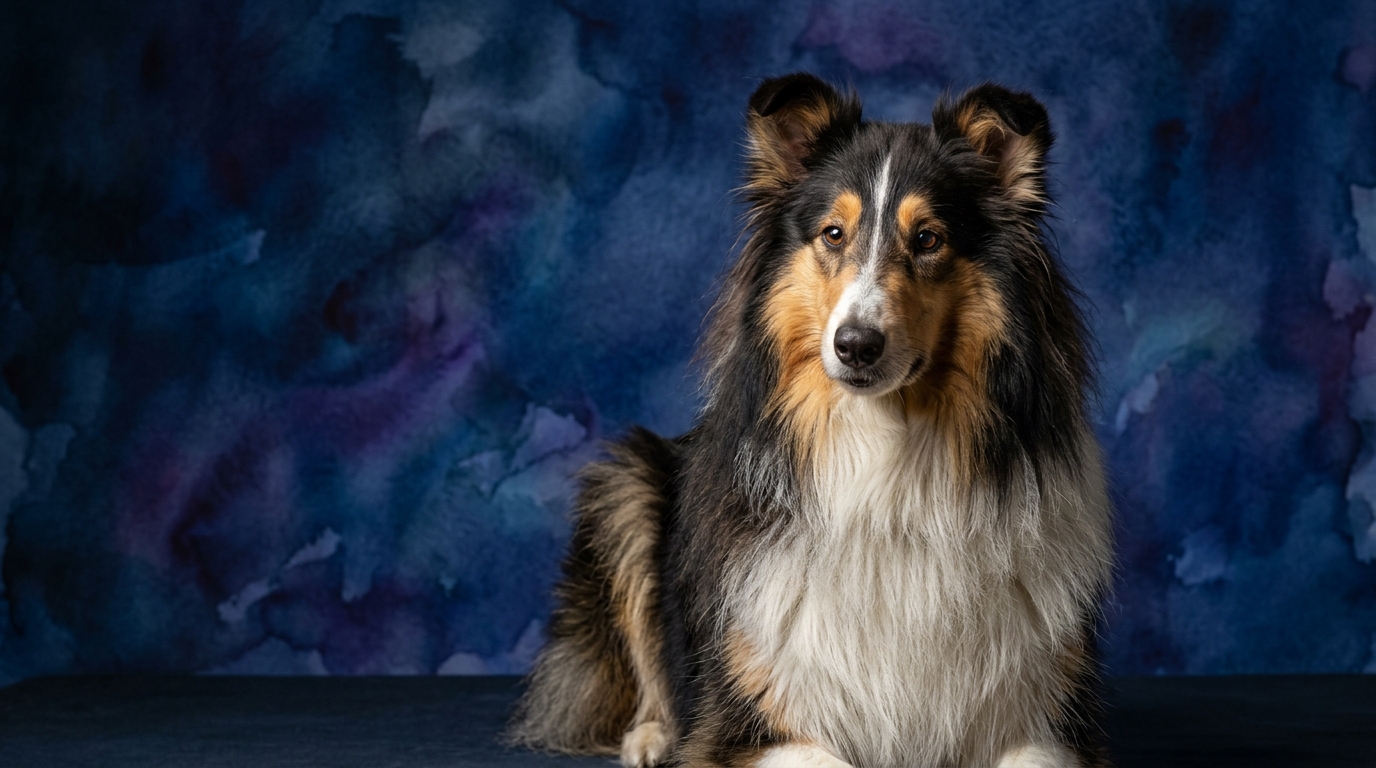
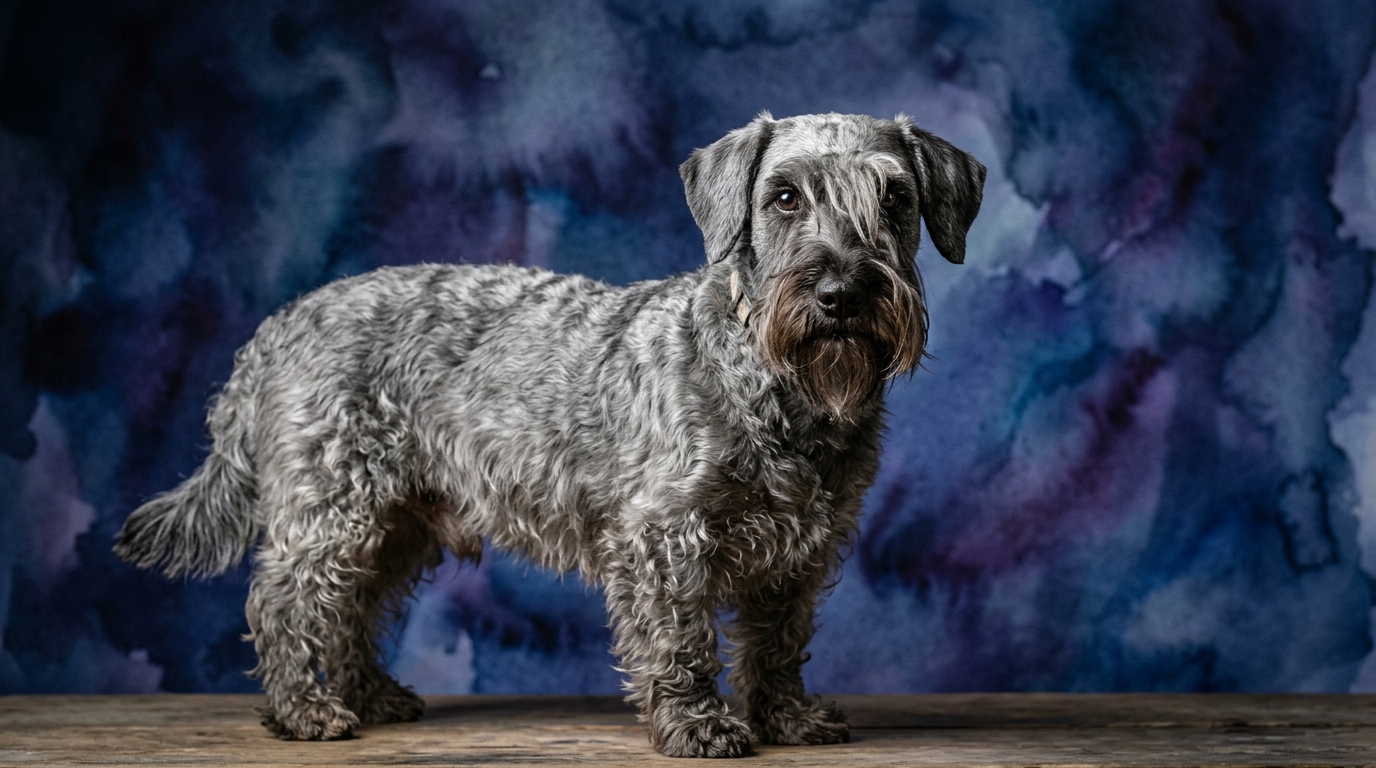
Side-by-side IQ profile
The Cosmic Pet Pet IQ Lab employs a five-dimensional framework to map canine cognition, providing a nuanced perspective beyond simple obedience. For the Rough Collie, a breed celebrated for its herding prowess, this framework reveals a sophisticated mental architecture. Their Problem Solving is rated 4/5, indicating an ability to strategically assess situations and plan multi-step actions, crucial for maneuvering livestock. Training Speed also stands at 4/5, reflecting their quick grasp of commands and eagerness to cooperate with a handler. Social Intelligence scores 3/5, signifying an understanding of human cues and strong familial bonds, though they can be reserved with strangers. Their Instinctive Drive is 3/5, primarily manifesting as a strong, controlled herding impulse rather than a raw prey drive. A standout trait is their Memory, rated an impressive 5/5, allowing them to recall complex sequences and routines over extended periods.
In contrast, the Cesky Terrier, a less common but equally compelling breed developed for vermin control, presents a different cognitive blueprint. Their Problem Solving is 3/5, reflecting an independent, practical approach to navigating confined spaces and overcoming obstacles in pursuit of quarry. Training Speed is also 3/5; while capable of learning, their self-reliant nature often requires more patient and consistent repetition. Social Intelligence, at 3/5, indicates strong loyalty to their chosen family but can be selective in forming new bonds. Their Instinctive Drive, also 3/5, is a tenacious, persistent prey drive focused on small animals, often leading to focused, self-directed action. Finally, their Memory is rated 3/5, sufficient for retaining commands and routines, but perhaps not with the same depth or complexity as the Collie.
Where Collie (Rough) wins cognitively
The Rough Collie's cognitive strengths shine particularly bright in areas demanding retention, strategic planning, and cooperative learning. Their exceptional Memory, rated 5/5 compared to the Cesky's 3/5, is a significant advantage. This means a Collie can recall intricate command sequences, remember complex routines, and build upon past learning experiences with remarkable efficiency over long durations. This capacity for long-term retention makes them adept at advanced obedience, agility, and service roles where precise, remembered actions are paramount.
Furthermore, the Collie's Problem Solving ability, scoring 4/5 against the Cesky's 3/5, reflects a more analytical and strategic mind. Where a Cesky might tackle a problem with persistent, direct action, a Collie is more inclined to observe, assess variables, and devise a multi-step solution. In their historical role, this meant anticipating livestock movements and executing nuanced herding patterns. This translates into a dog that can often figure out how to open gates, retrieve specific items, or navigate novel obstacles by thinking through the situation rather than relying solely on trial and error. Their Training Speed of 4/5 also highlights their quicker acquisition of new concepts and behaviors, making them generally faster to pick up new cues and adapt to evolving training challenges than their terrier counterpart.
Where Cesky Terrier wins cognitively
While the Rough Collie excels in cooperative, strategic thought, the Cesky Terrier's cognitive advantages lie in tenacity, independent action, and focused drive application. Although both breeds score 3/5 in Instinctive Drive, the nature of this drive in the Cesky is distinct and provides a specific cognitive edge. Their drive is rooted in self-directed pursuit and persistence, vital for their original role of flushing and dispatching vermin in challenging, confined spaces. This translates into an unwavering focus on a chosen task, often in the absence of direct human guidance, allowing them to overcome physical and mental obstacles independently.
The Cesky's Problem Solving at 3/5, while lower than the Collie's, reflects a different kind of mental agility – one geared towards practical, self-reliant solutions in dynamic, unpredictable environments. They are adept at navigating tight tunnels, squeezing through small openings, and persistently working to achieve a goal, even when it requires creative physical manipulation or sustained effort. This isn't about planning a complex strategy with a handler, but about independently finding a way through or around an immediate physical challenge. Their cognitive style allows them to operate effectively and autonomously in situations where a more handler-dependent breed might falter, demonstrating a robust mental resilience and a strong internal locus of control when engaging with their environment.
Which is easier to train and why
When it comes to ease of training, the Rough Collie generally presents a smoother path for most owners due to several key cognitive factors. Their Training Speed of 4/5 means they typically grasp new commands and behaviors with fewer repetitions, absorbing information quickly. This is synergized by their exceptional Memory (5/5), ensuring that once a lesson is learned, it is retained effectively over time. Furthermore, their Social Intelligence, while 3/5, is geared towards understanding and responding to human cues, fostering a cooperative learning environment. Collies often display a strong desire to please their handler, making them highly receptive to positive reinforcement and structured training methods. Their herding background instills a natural inclination to work in partnership, making them less prone to independent “terrier mischief” or stubborn resistance.
The Cesky Terrier, with a Training Speed and Memory both at 3/5, can be more challenging to train, requiring greater patience and consistency. Their problem-solving approach, while effective for independent tasks, doesn't always translate into a desire for human-directed learning. The Cesky's inherent instinctive drive, focused on independent hunting, can make them easily distracted by environmental stimuli like scents or small movements, diverting their attention from training exercises. Their self-reliant nature means they may question commands or prefer to follow their own instincts, particularly if a command conflicts with their internal drive. Owners often report that Ceskys require more creative motivation and a firm but fair approach, as their cognitive style prioritizes self-determination over constant compliance.
Which suits active owners vs relaxed owners
The choice between a Rough Collie and a Cesky Terrier also hinges significantly on an owner's lifestyle and activity level. A Rough Collie typically suits owners who appreciate a moderate to active lifestyle, focusing on mental engagement and structured activities. While not necessarily extreme athletes, their need for mental stimulation from training, puzzle toys, and consistent interaction is substantial. Their herding background means they thrive when given a “job” or purpose, whether it's participating in obedience trials, agility, or simply learning a repertoire of complex tricks. Owners who enjoy long, engaging walks, consistent training sessions, and providing a structured daily routine will find the Collie a rewarding companion. Neglecting their cognitive needs can lead to boredom and potentially undesirable behaviors.
Conversely, the Cesky Terrier can suit both moderately active owners and those who appreciate a more relaxed indoor presence, provided their specific needs are met. While they possess a persistent energy rooted in their terrier drive, it often manifests in bursts rather than sustained endurance. They require regular, focused exercise that allows them to engage their senses and instinctive drives, such as brisk walks, scent games, or even earthdog trials. Once their physical and mental needs are satisfied, Ceskys are often content to relax indoors, making them suitable for owners who enjoy quiet evenings but are committed to daily outings that stimulate their terrier instincts. Owners who appreciate an independent spirit and can provide consistent, engaging mental challenges will find the Cesky a fulfilling companion, even if their overall activity level isn't that of a marathon runner.
The Verdict
Choose the Rough Collie if you seek a highly trainable, cooperative companion eager to learn complex tasks and thrive on a strong partnership, valuing deep loyalty and consistent mental engagement.
Opt for the Cesky Terrier if you appreciate an independent, resilient spirit with a keen problem-solving mind for specific tasks, and are prepared for a more persistent, often creative approach to training.
🧠 Find Your Pet's IQ Score
Our Pet IQ Lab assessment covers 25+ tests across 5 cognitive dimensions — personalized to your breed.
Take the Full IQ Test →Frequently Asked Questions
Are Rough Collies generally good family dogs, especially with children?
Rough Collies are often gentle and patient, making them suitable family companions. However, like any breed, proper socialization from a young age and respectful interactions from children are crucial for a harmonious household. Their herding instincts might lead to gentle "nips" at heels if not channeled appropriately.
Do Cesky Terriers get along well with other pets, particularly smaller animals?
Due to their strong instinctive drive for vermin control, Cesky Terriers can be challenging with smaller pets like cats, hamsters, or rabbits without very careful and early socialization. They can generally coexist with other dogs if introduced properly and raised together, but their independent nature means supervision is always advised.
What kind of mental exercise is most beneficial for each of these breeds?
Rough Collies thrive on complex obedience training, agility, herding games, and puzzle toys that require sequential thinking, leveraging their strong memory and problem-solving skills. Cesky Terriers benefit from scent work, digging opportunities (in designated areas), puzzle toys that challenge their independent problem-solving, and structured walks where they can explore safely.