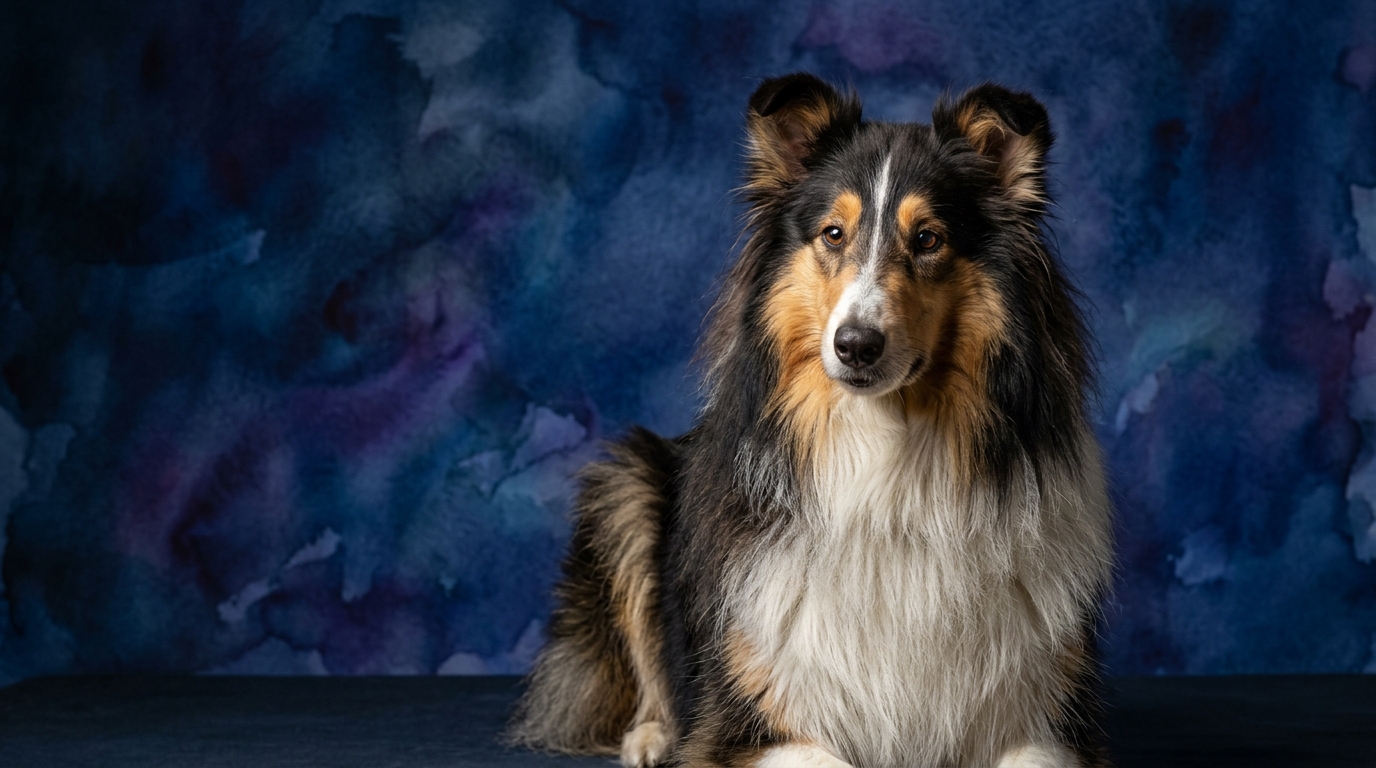
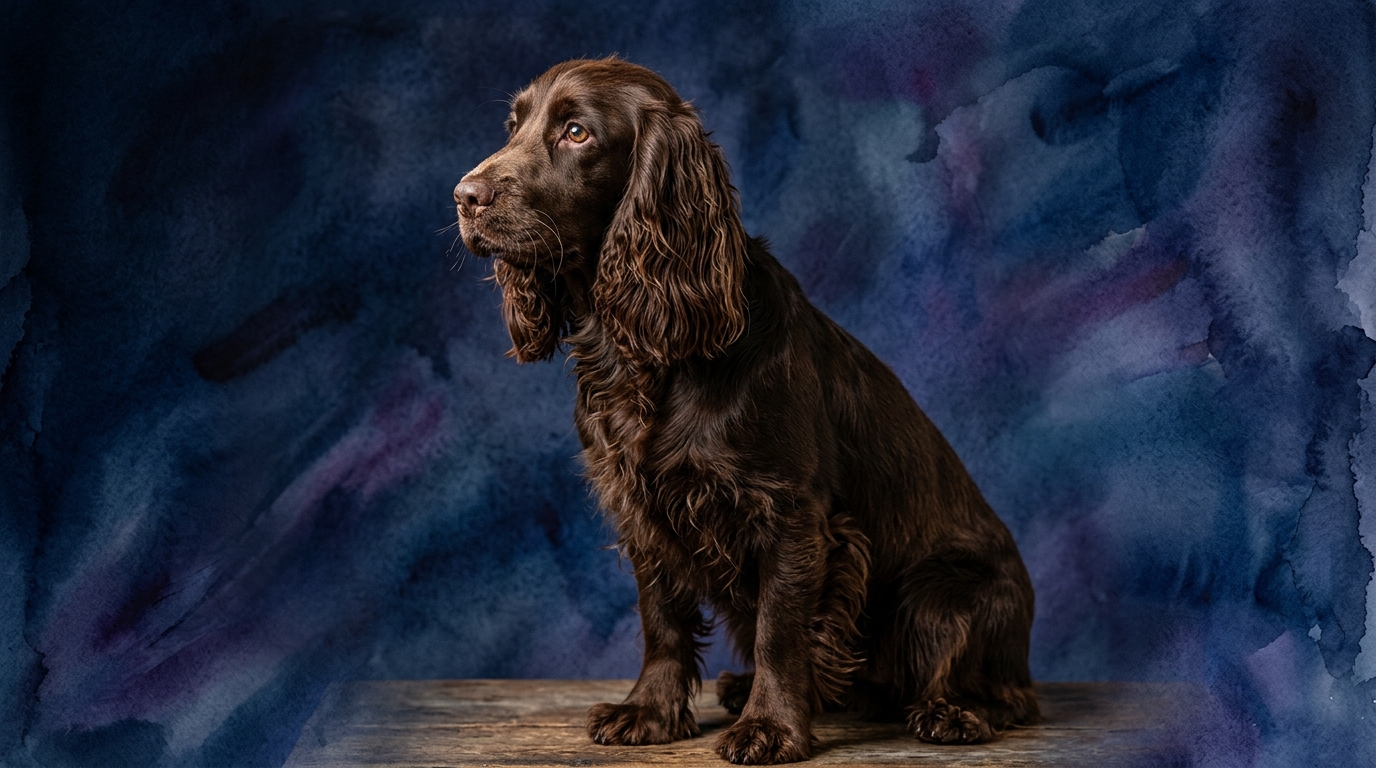
Side-by-Side IQ Profile: Collie (Rough) vs Field Spaniel
The Cosmic Pet Pet IQ Lab employs five key dimensions to evaluate canine intelligence, offering a nuanced view beyond simple obedience. Let's examine how the Collie (Rough) and Field Spaniel measure up.
The Collie (Rough), ranked #16 in Coren's list for Working and Obedience Intelligence, demonstrates robust cognitive abilities. Its Problem Solving is rated 4/5, indicating a strong capacity for navigating complex scenarios and deducing solutions to multi-step challenges. Training Speed also scores 4/5, meaning these dogs process and internalize new commands with impressive rapidity, often requiring fewer repetitions than many breeds to master novel behaviors. In Social Intelligence, the Collie (Rough) earns a 3/5, possessing a functional understanding of human social cues and group dynamics, capable of forming strong bonds and responding appropriately, though not exceptionally nuanced in interpreting subtle emotional states. Its Instinctive Drive is 3/5, reflecting a moderate, manageable herding heritage that can be channeled into structured activities without becoming overbearing. Finally, Memory is a standout strength at 5/5, showcasing exceptional long-term retention of commands, routines, and past experiences, allowing them to build a vast repertoire of learned behaviors over time.
The Field Spaniel, while not Coren-ranked, presents a balanced cognitive profile suited to its sporting role. Its Problem Solving is rated 3/5, indicating a practical, competent mindset capable of figuring out straightforward challenges and learning effectively through trial and error, though less inclined towards abstract or multi-layered puzzles. Training Speed also scores 3/5, with new commands being learned at an average, steady pace; consistent positive reinforcement and regular practice are key to solidifying new behaviors. Social Intelligence is 3/5, displaying an average capacity for interpreting social cues, fostering warm family relationships, and interacting appropriately with others, contributing to their amiable nature. Instinctive Drive is also 3/5, carrying a moderate sporting drive, particularly evident in their enthusiasm for scent work and retrieving, which provides a natural motivation for engagement without dominating their personality. Memory is rated 3/5, possessing a solid, average recall for learned tasks and familiar routines, dependable for everyday commands and established patterns.
Where Collie (Rough) Wins Cognitively
The Collie (Rough) truly shines in areas demanding high retention and complex application. Its perfect 5/5 Memory score means these dogs can recall a remarkable number of commands and sequences over extended periods, making multi-stage tasks or advanced obedience routines well within their grasp. This superior memory allows for progressive learning, where new skills build efficiently upon previously mastered ones without significant relearning.
Coupled with its 4/5 Problem Solving ability, the Collie (Rough) can not only remember what to do but also adapt those learned behaviors to novel situations or figure out new solutions when faced with an unfamiliar obstacle. This cognitive flexibility means they are not just rote learners but active thinkers capable of extrapolating from past experiences. Their 4/5 Training Speed is a direct reflection of this quick grasp and retention, allowing them to progress rapidly through training curricula, a trait highly valued in competitive dog sports or service roles where a broad skill set is essential. The Coren ranking further underscores their aptitude for understanding and executing commands with precision and consistency.
Where Field Spaniel Wins Cognitively
While the Field Spaniel's individual scores might appear lower than the Collie's in some dimensions, its cognitive strengths lie in a different kind of winning: balance and adaptability for a companion role. With all its scores at a consistent 3/5 (Problem Solving, Training Speed, Social Intelligence, Instinctive Drive, Memory), the Field Spaniel offers a uniformly competent and predictable cognitive experience. This consistency means fewer extreme challenges or specialized demands on an owner, providing a straightforward and reliable companion.
Its moderate Instinctive Drive (3/5) is a particular advantage for many families. Unlike breeds with extremely high drives that require constant, intense outlets to prevent undesirable behaviors, the Field Spaniel's sporting instincts are present but manageable. They enjoy scent work and retrieving without becoming obsessive or easily frustrated if not working every moment. This balance translates into a dog that is less prone to neurotic behaviors stemming from understimulation, fostering a more relaxed home environment. Their average Social Intelligence (3/5) ensures they integrate well into family life without the potential for overthinking or being overly sensitive to subtle human emotional shifts, leading to a generally amiable and resilient disposition.
Which is Easier to Train and Why
Based on The Cosmic Pet IQ Lab's metrics, the Collie (Rough) is generally easier to train for a wide array of commands and complex tasks. Their 4/5 Training Speed means they pick up new concepts and cues with remarkable alacrity, often requiring fewer repetitions to achieve proficiency. This rapid learning curve is powerfully augmented by their 5/5 Memory, ensuring that once a behavior is learned, it is retained over long periods, making maintenance training efficient and effective. Collies enjoy the mental engagement that training provides and often thrive on learning new skills, making them enthusiastic participants in training sessions.
The Field Spaniel, with its 3/5 Training Speed and 3/5 Memory, requires a more patient and consistent approach. While willing to please, they will necessitate more repetitions to solidify new behaviors and may not retain complex sequences as readily as a Collie. Their moderate sporting drive can be a valuable motivator in reward-based training, especially when incorporating scent games or retrieving, but it also means distractions might require more management. Owners should be prepared for a steady, incremental progress rather than rapid leaps in skill acquisition, focusing on positive reinforcement to build confidence and reinforce learning.
Which Suits Active Owners vs Relaxed Owners
The Collie (Rough) is best suited for active owners who are prepared to provide significant mental stimulation alongside physical exercise. Their 4/5 Problem Solving and 5/5 Memory mean their minds need to be engaged regularly through activities like advanced obedience, agility, herding trials, or complex puzzle toys. Owners who enjoy teaching new tricks, participating in dog sports, or embarking on long, mentally stimulating walks will find a rewarding partnership with a Collie (Rough). A relaxed owner might inadvertently lead to a bored Collie, which could manifest in less desirable behaviors due to unmet cognitive needs.
The Field Spaniel, with its balanced 3/5 scores across the board, is an excellent fit for moderately active owners. They thrive on regular, engaging exercise such as daily walks, retrieving games, and scent work, but do not typically demand the intense, intricate mental challenges that a Collie (Rough) might. Their moderate Instinctive Drive means they appreciate having a job to do, but are equally content to relax at home once their exercise needs are met. This adaptability makes them suitable for owners who enjoy consistent activity but are not necessarily seeking a canine partner for competitive, high-stakes dog sports or constant intellectual sparring.
Choosing between a Collie (Rough) and a Field Spaniel hinges on your lifestyle and your expectations regarding canine cognitive engagement.
The Collie (Rough) is the preferred choice for those seeking a highly trainable, mentally agile companion capable of excelling in advanced obedience, dog sports, or roles requiring complex problem-solving and a vast memory. They thrive with owners committed to providing consistent mental challenges and structured activities, rewarding them with a deeply engaged and responsive partner.
Conversely, the Field Spaniel is ideal for owners who desire a good-natured, adaptable companion with a balanced temperament and moderate activity requirements. They are a wonderful fit for families who enjoy regular, engaging outdoor activities like walks and scent games, and appreciate a willing participant in family life without the demand for constant, intricate mental tasks, offering a straightforward yet affectionate partnership.
The Verdict
Choose the Collie (Rough) if you seek a highly trainable dog for advanced obedience, dog sports, or a partner that thrives on complex mental challenges and retains a vast repertoire of commands.
Choose the Field Spaniel if you are looking for a good-natured, adaptable companion who enjoys moderate activity, scent games, and is a willing participant in family life without demanding constant intricate mental tasks.
🧠 Find Your Pet's IQ Score
Our Pet IQ Lab assessment covers 25+ tests across 5 cognitive dimensions — personalized to your breed.
Take the Full IQ Test →Frequently Asked Questions
How does the Collie (Rough)'s exceptional memory influence daily life?
The Collie (Rough)'s 5/5 memory means they retain commands and routines with remarkable consistency, making daily interactions predictable and reinforcing good habits. They can easily remember household rules, training cues, and even complex sequences, requiring less frequent refreshing of learned behaviors over time.
What kind of mental stimulation benefits a Field Spaniel most?
Field Spaniels benefit greatly from mental stimulation that taps into their moderate sporting drive, such as scent work, retrieving games, and puzzle toys that involve finding hidden treats. Consistent, positive-reinforcement based training sessions that teach practical commands also keep their minds engaged without overwhelming them with overly abstract challenges.
Are either of these breeds prone to specific behavioral challenges related to their IQ?
The Collie (Rough), with its high cognitive capacity, can become bored or destructive if not adequately stimulated mentally, potentially leading to excessive barking or chewing. The Field Spaniel, while generally adaptable, might display stubbornness if training is inconsistent, or become overly focused on scent trails if not managed during walks due to its moderate instinctive drive.