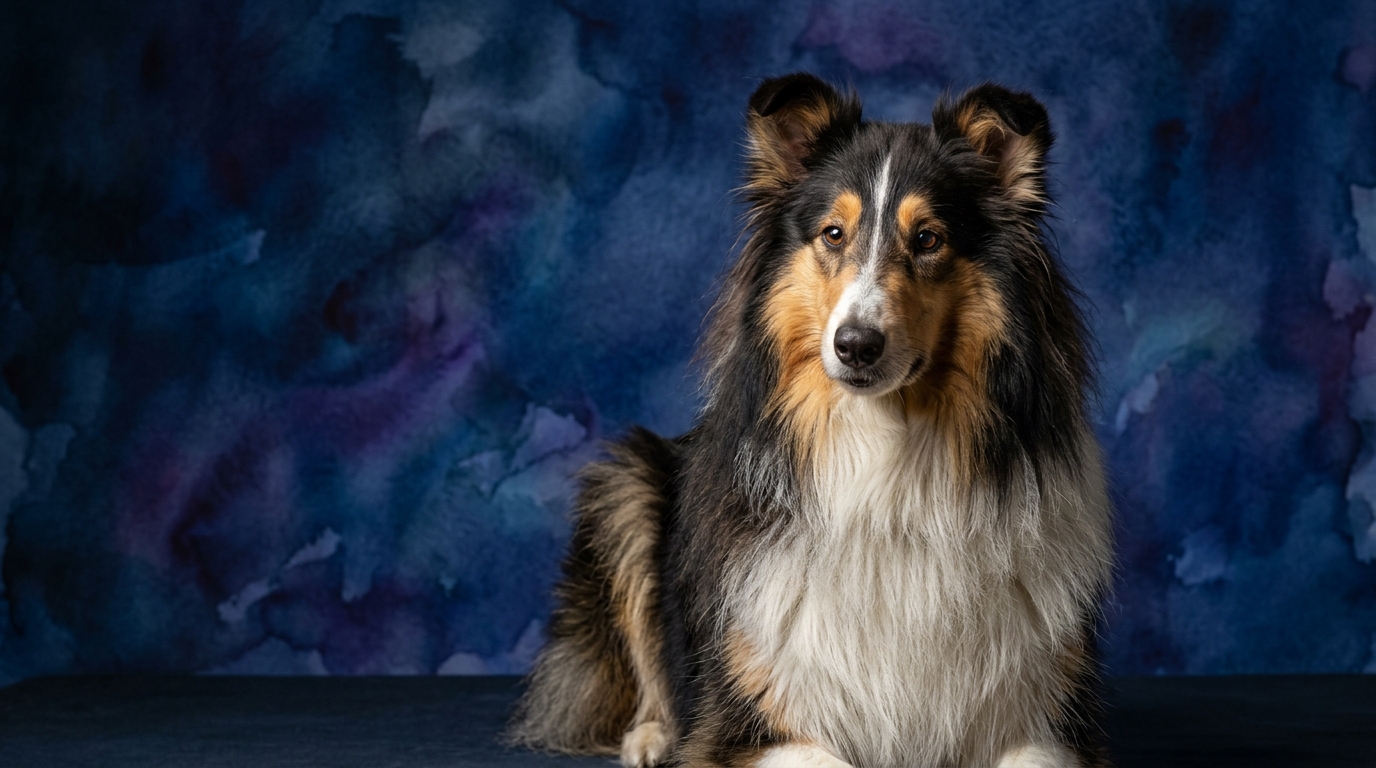
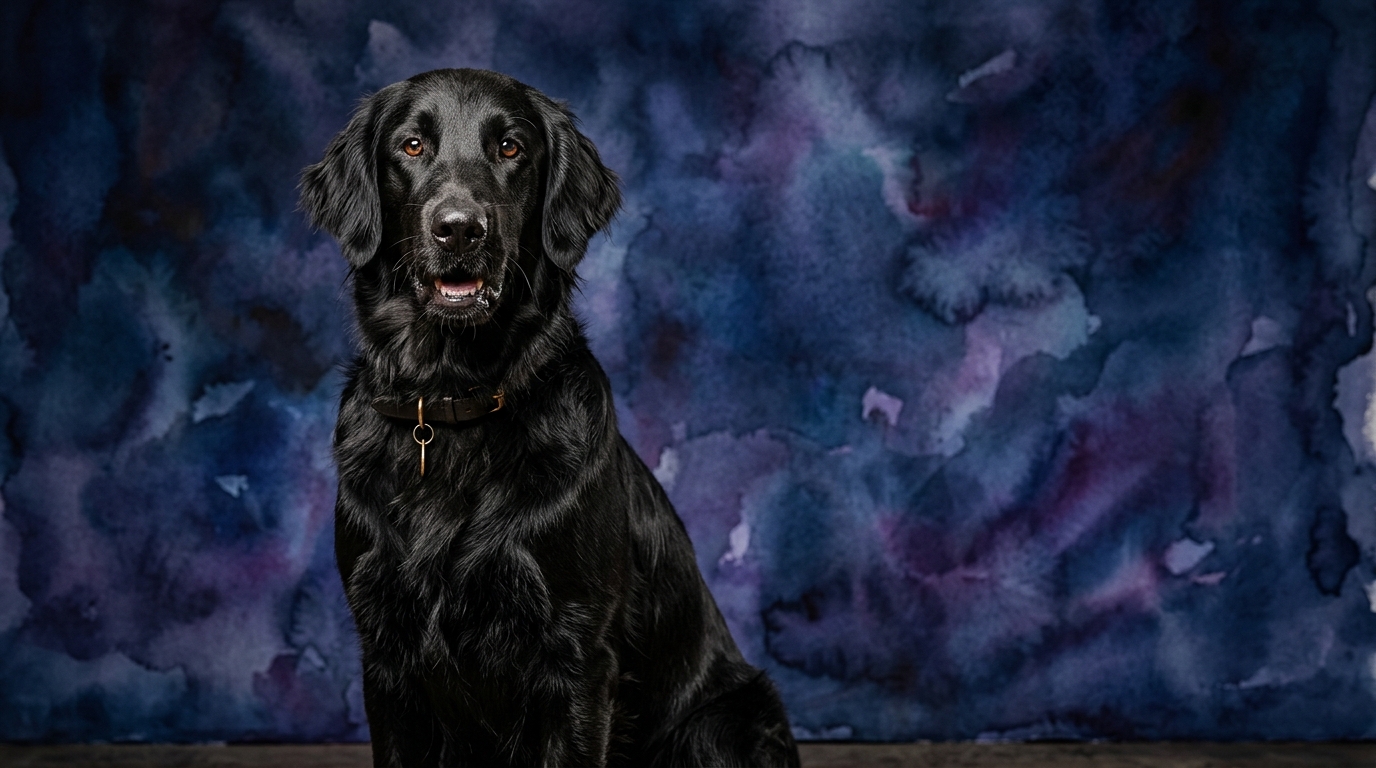
Side-by-Side IQ Profile
The Collie (Rough) presents a compelling cognitive blueprint: Problem Solving at 4/5 manifests in their capacity to strategize livestock movement, anticipate flock behavior, and make independent decisions when guiding animals. Their Training Speed of 4/5 reflects an eager responsiveness to commands and a quick grasp of complex sequences required for herding work. Social Intelligence at 3/5 indicates an awareness of handler cues and flock dynamics, fostering a cooperative working relationship. While their Instinctive Drive of 3/5 is specifically channeled towards managing and moving animals, a Memory score of 5/5 highlights their exceptional ability to recall intricate routes, specific tasks, and individual animal behaviors over time.
The Flat-Coated Retriever, mirroring these scores, applies its intellect differently: Problem Solving 4/5 in this breed is evident in their ability to navigate diverse terrains, locate fallen game, and adapt retrieving strategies based on environmental factors. Their Training Speed of 4/5 signifies a strong desire to please and a rapid acquisition of commands essential for field work, often driven by positive reinforcement and handler enthusiasm. Social Intelligence at 3/5 points to their cooperative nature with handlers and an understanding of hunting party dynamics. Their Instinctive Drive of 3/5 is primarily focused on seeking, retrieving, and carrying objects with exuberance. The 5/5 Memory score underscores their remarkable capacity to mark multiple falls, remember scent trails, and recall specific locations of retrieves even after distractions.
Where Collie (Rough) Wins Cognitively
The Collie's cognitive edge lies in its nuanced understanding of abstract patterns and predictive reasoning, a hallmark of its herding legacy. While both breeds score 4/5 in Problem Solving, the Collie applies this to dynamic, fluid situations involving multiple moving entities, often requiring foresight and strategic planning to guide a flock without direct handler commands. Its 5/5 memory isn't just about recall; it's about storing and retrieving complex operational sequences and adapting them to varying field conditions, remembering specific herd members or environmental cues that influence movement. This capacity for independent, yet context-aware, decision-making within a structured task gives it a unique cognitive advantage in scenarios demanding proactive management rather than reactive retrieval.
Where Flat-Coated Retriever Wins Cognitively
The Flat-Coated Retriever demonstrates a distinct cognitive strength in its application of problem-solving (4/5) and memory (5/5) to tasks requiring persistent focus and environmental navigation, driven by a strong intrinsic motivation for retrieval. Its memory excels in marking specific locations of fallen game, even over long distances or after multiple distractions, and recalling scent patterns with precision. This breed's problem-solving is particularly adept at efficiently traversing varied terrain, overcoming obstacles to reach a target, and adapting its search patterns based on wind direction or handler signals. The Flat-Coat's cognitive superiority manifests in its joyful, unwavering dedication to a task, blending its physical prowess with a sharp spatial and olfactory memory to execute complex retrieving scenarios with remarkable accuracy and enthusiasm.
Which is Easier to Train and Why
Despite identical 4/5 Training Speed scores, the *nature* of training might feel different due to their instinctive drives (both 3/5) and historical roles. The Collie, with its herding background, often possesses a sensitivity to handler intention and a desire for structured interaction, making it highly responsive to clear, consistent direction. Its herding instinct means it excels when given a job to do, and training can tap into this innate desire for purpose and control. However, if not given appropriate mental engagement, their independent problem-solving can manifest as self-directed activities that might not align with owner expectations.
The Flat-Coated Retriever, conversely, brings an exuberant “joie de vivre” to training, often driven by its strong retrieving drive. Their training speed is fueled by a desire to engage and please through active participation, thriving on positive reinforcement and playful interaction. While equally quick to learn, their enthusiasm can sometimes be perceived as a challenge, requiring patient redirection to maintain focus amidst distractions, especially those related to scent or movement. Their social intelligence (3/5) is geared towards cooperative partnership in action, making them eager participants in games and exercises that mimic their retrieving purpose, potentially making them feel “easier” to motivate for owners who enjoy high-energy, interactive training sessions.
Which Suits Active Owners vs. Relaxed Owners
For active owners seeking a true partner in structured activities, the Collie (Rough) is an excellent match. Its 3/5 instinctive drive, channeled into herding, translates into a need for mental stimulation and purposeful work beyond just physical exercise. Owners who enjoy dog sports like agility, obedience, or even urban herding activities will find the Collie's problem-solving (4/5) and memory (5/5) thrive on learning complex sequences and strategies. A "relaxed" owner who cannot provide consistent mental engagement might find the Collie's independent thinking leads to boredom-induced behaviors, as their cognitive needs extend beyond a simple walk.
The Flat-Coated Retriever, also with a 3/5 instinctive drive, is ideal for active owners who enjoy robust physical activity and joyful interaction. Their retrieving drive means they excel in activities like fetch, swimming, hiking, and field trials, where their problem-solving (4/5) and memory (5/5) are applied to navigating environments and retrieving objects. While they also appreciate mental challenges, their primary outlet is often physical engagement coupled with interaction. A "relaxed" owner might struggle with the Flat-Coat's inherent exuberance and stamina, as their cognitive and physical needs are deeply intertwined with vigorous play and outdoor adventures.
The Verdict
Choose a Collie (Rough) if you desire a thoughtful companion for intricate, strategic tasks, appreciating a dog that can anticipate and manage dynamic situations with a keen memory for complex patterns.
Choose a Flat-Coated Retriever if you seek an enthusiastic, joyful partner for active, interactive pursuits, valuing a dog with exceptional spatial memory and unwavering dedication to retrieving tasks.
🧠 Find Your Pet's IQ Score
Our Pet IQ Lab assessment covers 25+ tests across 5 cognitive dimensions — personalized to your breed.
Take the Full IQ Test →Frequently Asked Questions
Do both breeds require similar amounts of mental stimulation?
Yes, with identical Problem Solving and Memory scores, both breeds benefit immensely from consistent mental engagement, though the *type* of stimulation may differ based on their inherent drives. Collies thrive on strategic tasks, while Flat-Coats enjoy interactive, physically demanding challenges that engage their retrieving instincts.
How do their similar social intelligence scores (3/5) manifest differently?
For the Collie, 3/5 social intelligence often translates to a sensitive awareness of handler cues and a desire for cooperative work within a structured framework, particularly in herding contexts. For the Flat-Coat, it means a joyful, eager partnership in interactive activities, thriving on positive reinforcement and shared enthusiasm during retrieving games or training.
Given their identical memory scores (5/5), are they equally good at remembering commands?
Absolutely, both breeds possess exceptional memory for commands and sequences, making them quick learners. The distinction lies in *how* that memory is applied; a Collie might excel at remembering a complex herding pattern, while a Flat-Coat might remember the precise location of multiple hidden retrieves.