
Side-by-Side Cognitive Profile
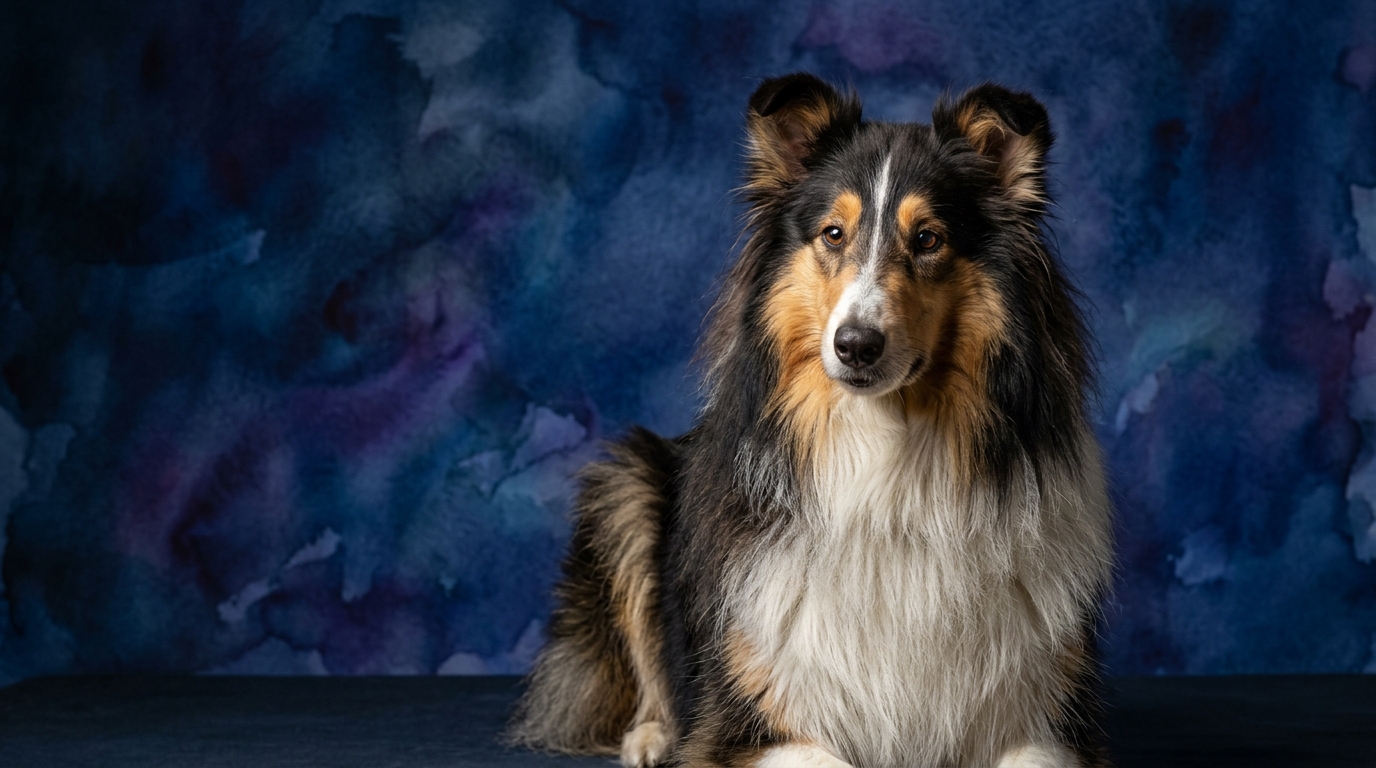
At The Cosmic Pet Pet IQ Lab, we analyze canine intelligence across five key dimensions. The Collie (Rough), a Herding breed, consistently shows elevated cognitive abilities, while the Manchester Terrier, a Terrier, presents a balanced but generally moderate profile.
Problem Solving: The Collie (Rough) scores 4/5, indicating a strong capacity for independent thought and figuring out novel solutions. The Manchester Terrier's 3/5 suggests competence in problem-solving, often utilizing tenacity but potentially requiring more guidance for complex tasks.
Training Speed: With a 4/5, the Collie (Rough) grasps new commands and routines quickly, often with minimal repetition. The Manchester Terrier's 3/5 means they are trainable, but may require more consistent reinforcement and patience to solidify behaviors.
Social Intelligence: Both breeds register 3/5, signifying a moderate ability to interpret human cues and adapt to social dynamics. They form strong bonds and understand group interactions, though perhaps not with extreme sensitivity.
Instinctive Drive: Both also score 3/5 here. For the Collie, this represents a manageable herding impulse. For the Manchester Terrier, it's a moderate prey drive and terrier tenacity, present but less intense than in some other working breeds.
Memory: The Collie (Rough) excels with a perfect 5/5, demonstrating exceptional retention of learned behaviors, routines, and experiences over long periods. The Manchester Terrier's 3/5 indicates functional memory, sufficient for daily life and training, but not as profoundly retentive as the Collie's.
Where Collie (Rough) Wins Cognitively
The Collie (Rough) demonstrates distinct cognitive strengths in several areas. Their 4/5 problem-solving score means they often show initiative, adeptly navigating challenges from complex puzzles to new environments, often requiring less direct human intervention. This cognitive flexibility allows for rapid adaptation to changing situations. Their 4/5 training speed makes them exceptionally receptive students; they quickly associate commands with actions, leading to a fluid and rewarding learning process. This capacity for rapid assimilation allows them to master complex sequences at an impressive pace. However, the Collie's most remarkable cognitive advantage is its perfect 5/5 memory. This exceptional retention ensures that once a behavior or command is learned, it is deeply ingrained. Owners can expect their Collie to recall commands reliably even after long breaks, consistently adhere to house rules, and remember people or places encountered months or years prior. This profound memory underpins their reliability and consistency, making them steadfast companions.
Where Manchester Terrier Wins Cognitively
While the Manchester Terrier doesn't numerically exceed the Collie, its consistent 3/5 scores across the board form a highly functional cognitive profile. For a terrier, a 3/5 instinctive drive is advantageous; their natural prey drive is present but more manageable than in some higher-drive terriers. This allows for focused training and companionship, reducing conflicts and making them adaptable. Their 3/5 problem-solving ability is robust for daily challenges and games, often coupled with a tenacious spirit. This persistence, combined with moderate training speed, means they are capable learners. Though not as quick as a Collie, they can master a wide range of commands with consistent effort. The Manchester Terrier's balanced cognitive profile makes it a versatile companion, engaging with its environment and learning without the intense mental demands of specialized working breeds. Their cognitive strength lies in their well-rounded, resilient, and adaptable nature, ideal for an active companion role valuing a keen, spirited intellect.
Which Is Easier to Train and Why
Comparing their IQ profiles, the Collie (Rough) is generally easier to train than the Manchester Terrier. The Collie's 4/5 training speed enables them to grasp new commands and routines with remarkable efficiency, often needing fewer repetitions. This rapid learning is significantly supported by their exceptional 5/5 memory, ensuring that once a lesson is learned, it is retained long-term. Owners will find a Collie quickly understands expectations and applies that knowledge consistently; for instance, house training or reliable recall often progress swiftly due to their superior cognitive retention. In contrast, the Manchester Terrier, with a 3/5 training speed, demands more patience and consistency. While fully capable learners, they may require more repetitions to solidify commands, and their 3/5 memory suggests occasional refreshers might be beneficial to maintain sharp skills. Their terrier nature, though balanced with a 3/5 instinctive drive, can sometimes lead to an independent streak, occasionally prioritizing their interests over a command if motivation is lacking. Thus, while both are trainable, the Collie's superior learning speed and memory typically make the training journey smoother and faster.
Which Suits Active Owners vs. Relaxed Owners
The distinct cognitive profiles suggest different owner compatibility. The Collie (Rough), with herding roots, high problem-solving (4/5), and exceptional memory (5/5), thrives with active owners providing consistent mental stimulation and physical exercise. They enjoy learning new tasks, dog sports like obedience or agility, and puzzles. A relaxed owner unable to fulfill their need for cognitive engagement might see undesirable self-directed "work." Their moderate instinctive drive (3/5) requires an owner who can direct this energy. The Manchester Terrier, with consistent 3/5 scores, suits an active owner not seeking the intense cognitive partnership a Collie offers. They enjoy regular exercise, spirited playtime, and exploration, but their cognitive demands are less intense. They adapt well to varied activity levels as long as companionship and moderate exercise are met, fitting owners who enjoy daily walks and engaging play without needing advanced dog sports as a primary outlet.
The Verdict
Choose a Collie (Rough) if you desire a highly trainable companion with exceptional memory, ready for complex learning, advanced obedience, or dog sports, and you can provide consistent mental enrichment.
Opt for a Manchester Terrier if you seek a spirited, adaptable companion that enjoys moderate activity and consistent training, appreciating a balanced cognitive profile that thrives on companionship and engaging daily routines without intense specialized demands.
🧠 Find Your Pet's IQ Score
Our Pet IQ Lab assessment covers 25+ tests across 5 cognitive dimensions — personalized to your breed.
Take the Full IQ Test →Frequently Asked Questions
Does the Coren ranking affect their IQ scores?
Coren's ranking primarily assesses "working intelligence and obedience," which correlates strongly with training speed and problem-solving. The Collie's #16 rank reflects its higher scores in these areas, while the Manchester Terrier's unranked status suggests its cognitive strengths align differently, not necessarily indicating a lack of intelligence but rather a different kind of working aptitude.
How does instinctive drive differ between these breeds?
Both breeds score 3/5 for instinctive drive, but its manifestation differs; in the Collie, it's a moderate herding impulse, whereas in the Manchester Terrier, it's a moderate prey drive characteristic of terriers. This means a Collie might try to "herd" family members, while a Manchester Terrier might be more inclined to chase small animals.
Can a Manchester Terrier learn complex tricks despite its lower training speed score?
Absolutely. A 3/5 training speed means the Manchester Terrier is perfectly capable of learning complex tricks and commands; it simply might require more repetitions and consistent, positive reinforcement compared to a breed like the Collie. Their tenacity can be an asset in mastering challenging tasks over time.