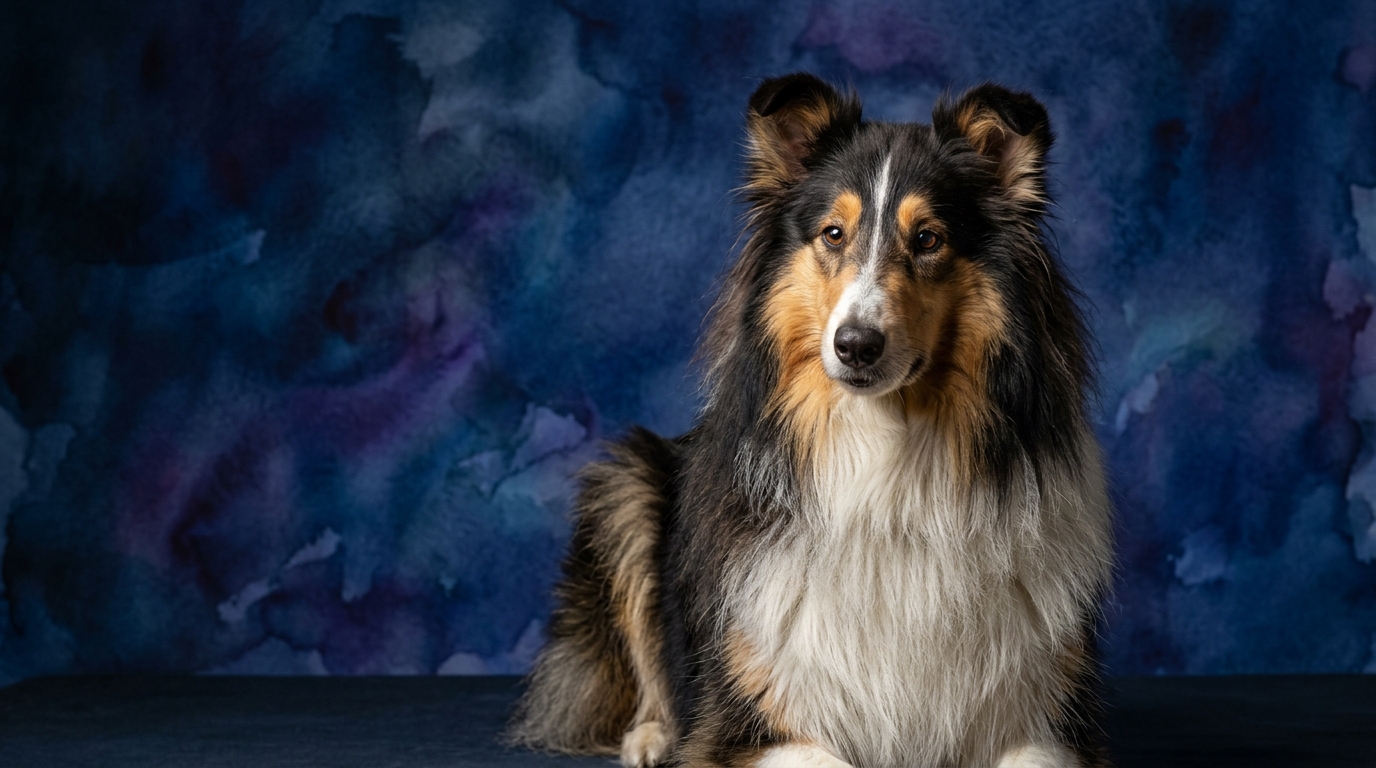
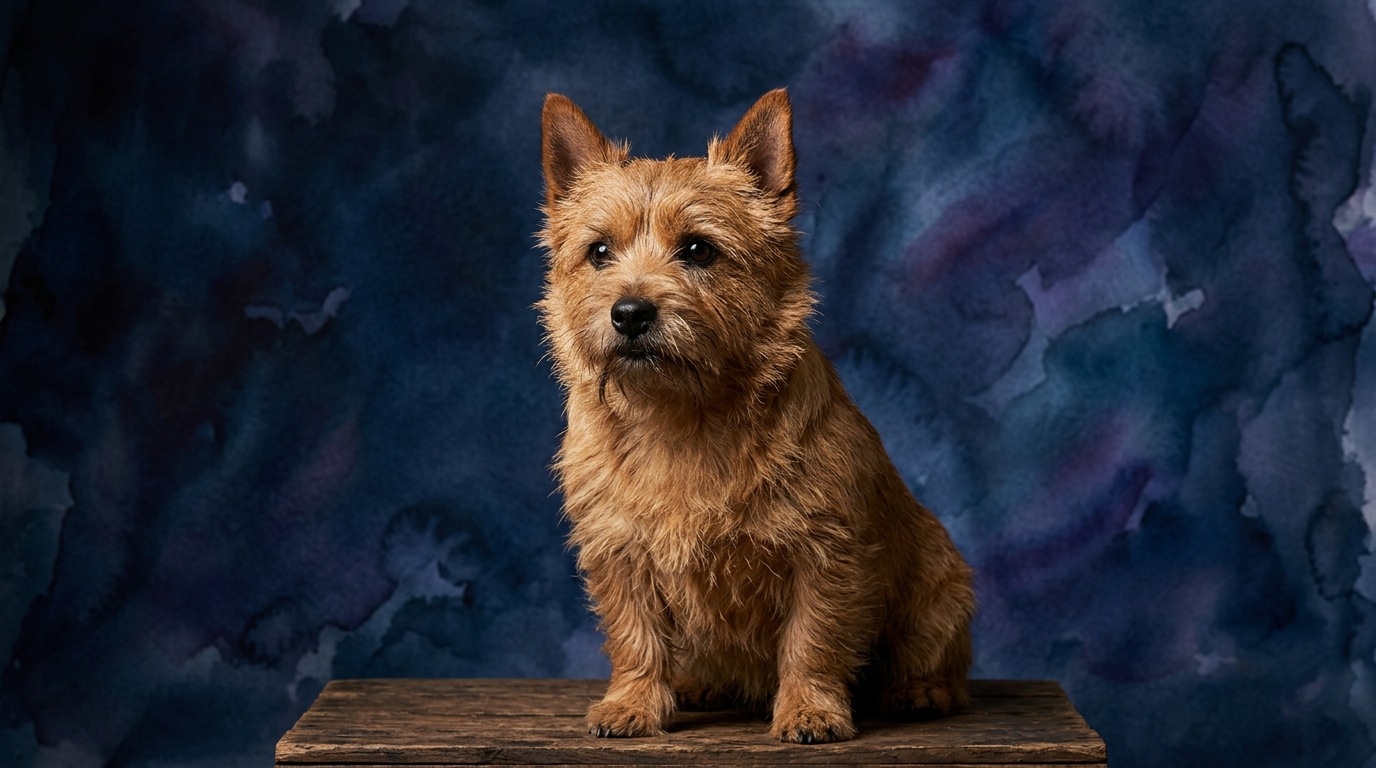
Side-by-Side IQ Profile: Collie (Rough) vs Norwich Terrier
The Collie (Rough), recognized by Stanley Coren as #16 in working intelligence, showcases a cognitive profile refined by centuries of herding. Their Problem Solving is rated 4/5, indicating a strong capacity for understanding complex sequences and adapting strategies to environmental changes, such as guiding livestock or navigating obstacles in a familiar setting. Training Speed, also 4/5, highlights their eagerness to learn and quick assimilation of new commands, often requiring fewer repetitions than many other breeds. Social Intelligence at 3/5 suggests they are attuned to human emotional states and can form deep bonds, though they might exhibit a reserved demeanor around strangers. Their Instinctive Drive, rated 3/5, primarily manifests in their herding tendencies, which are present but generally manageable in a pet environment, translating to a desire to keep their 'flock' (family) together. Uniquely, their Memory stands at an impressive 5/5, allowing them to recall a vast repertoire of commands, routines, and experiences with remarkable consistency over long periods.
The Norwich Terrier, a breed not assessed by Coren's traditional ranking, possesses a different kind of intelligence, born from its history as a fearless vermin hunter. Their Problem Solving is rated 3/5, demonstrating a resourceful and tenacious approach to overcoming immediate obstacles, often driven by instinct, like figuring out how to retrieve a buried toy or access a desired space. Training Speed, also 3/5, indicates they are capable learners, but their independent spirit and strong will can sometimes make the process require more patience and creative motivation from their human counterpart. Social Intelligence, at 3/5, shows they are engaged with their human family, capable of reading cues and forming strong attachments, yet their bold and sometimes feisty nature may lead to more direct social interactions. Their Instinctive Drive, also 3/5, is strongly rooted in their terrier heritage, manifesting as a keen prey drive, a love for digging, and an unyielding determination once focused on a task. Their Memory, rated 3/5, is sufficient for retaining important commands and routines, but perhaps less comprehensive in its long-term, detailed recall compared to the Collie.
Where the Collie (Rough) Excels Cognitively
The Collie (Rough) exhibits a clear cognitive advantage in areas demanding structured learning, consistent recall, and complex task execution. Their exceptional 5/5 Memory means they not only grasp new commands quickly but retain them with remarkable fidelity over their lifetime, making them incredibly reliable in obedience and performance activities. This superior memory allows for the layering of intricate command sequences, where a Collie can perform a series of actions in a specific order without constant prompting. Their 4/5 Problem Solving capability, coupled with their high Training Speed, enables them to excel at tasks requiring abstract thought or adapting learned behaviors to slightly varied scenarios, such as navigating agility courses or performing service dog duties. Historically, their role in managing livestock demanded an ability to understand and react to dynamic situations while adhering to a shepherd's instructions, a cognitive strength that translates into a dog eager to engage in cooperative, intellectually stimulating work. This makes them particularly adept at absorbing and applying information within a human-directed framework.
Where the Norwich Terrier Shows Its Unique Strengths
The Norwich Terrier, while not excelling in structured obedience like the Collie, demonstrates a distinct cognitive strength in independent problem-solving and tenacious resourcefulness. Their 3/5 Problem Solving, though lower numerically, reflects a practical, self-directed intelligence. This is evident in their ability to persistently work towards a goal, whether it's unearthing a hidden treat, escaping a perceived confinement, or finding a way to reach a favorite toy. Their strong 3/5 Instinctive Drive fuels this cognitive approach, meaning they excel when their intelligence is channeled into tasks that mimic their historical purpose – hunting and exploration. They might not learn a complex 10-step routine as quickly as a Collie, but they are masters at figuring out the most efficient (and sometimes mischievous) way to achieve their own objectives. This breed's resilience and determination mean they are not easily deterred by setbacks; they will try multiple approaches until they succeed, showcasing a gritty, hands-on form of cognitive flexibility that is invaluable in real-world, self-initiated challenges.
Trainability: Which Breed is Easier and Why
Without a doubt, the Collie (Rough) is generally easier to train compared to the Norwich Terrier, a distinction rooted deeply in their respective cognitive profiles and historical roles. The Collie's 4/5 Training Speed and unparalleled 5/5 Memory mean they absorb new commands rapidly and retain them for the long term. Their strong desire to please and cooperative nature, a remnant of their herding partnership with humans, makes them highly receptive to instruction. A Collie will likely internalize a complex 'stay' command, including duration and distance, with fewer repetitions and maintain that understanding consistently over weeks or months. This cooperative spirit means they are often eager to engage in structured learning sessions and respond reliably to cues.
Conversely, the Norwich Terrier, with a 3/5 Training Speed and 3/5 Memory, presents a more significant training challenge. Their independent, tenacious spirit, honed by generations of solitary vermin hunting, means they often prioritize their own instincts over human commands. While capable of learning, their training requires immense patience, consistency, and a strong emphasis on positive reinforcement to make learning more appealing than their self-directed impulses. For instance, teaching a Norwich reliable recall might be a continuous effort, as their powerful prey drive can easily override a learned command if a squirrel suddenly appears, demanding a higher level of engagement and proofing in varied environments.
Matching Breeds to Owner Lifestyles
For owners seeking a partner for sustained, structured activities and mental engagement, the Collie (Rough) is the more suitable choice. They thrive on having a 'job' to do, whether it's agility, obedience, or even learning intricate tricks. Their need for consistent mental stimulation alongside physical exercise means they excel with owners who enjoy active participation in their dog's learning journey and can provide regular, stimulating training sessions. A truly relaxed owner might find the Collie's need for mental work overwhelming.
The Norwich Terrier, while energetic for its size, can be a better fit for owners whose 'activity' might be more spontaneous or less rigidly structured. They enjoy bursts of intense play and exploration but don't necessarily demand the same level of continuous, complex mental work as a Collie. They are well-suited for owners who appreciate a feisty companion for adventures and walks, but who might prefer shorter, more frequent bursts of activity rather than prolonged, highly focused training sessions, as long as their physical exercise needs are adequately met.
The Verdict
Owners seeking a cooperative, highly trainable companion for complex tasks, dog sports, or a dog that excels in structured learning environments will find the Collie (Rough) an ideal partner. Their exceptional memory and eagerness to please make them reliable and rewarding for those who enjoy consistent, intricate training.
Owners who appreciate an independent, spirited companion with a tenacious spirit and a knack for self-directed exploration, and who are prepared for consistent, patient training, will adore the Norwich Terrier. They are best for those who value a dog's feisty personality and can channel their instincts productively.
🧠 Find Your Pet's IQ Score
Our Pet IQ Lab assessment covers 25+ tests across 5 cognitive dimensions — personalized to your breed.
Take the Full IQ Test →Frequently Asked Questions
Do Rough Collies bark a lot?
Rough Collies can be vocal, often using their bark to alert or communicate, a trait stemming from their herding instincts, but consistent training and addressing the root cause can manage excessive barking effectively.
Are Norwich Terriers good with children?
Norwich Terriers can be excellent family dogs, known for their affectionate nature and playful spirit, but their small size and bold personality mean interactions with very young children should always be supervised to ensure mutual respect and safety.
What kind of mental stimulation do Norwich Terriers need?
Norwich Terriers benefit greatly from activities that engage their natural instincts, such as puzzle toys that mimic hunting, supervised digging areas in the yard, and varied walks that allow them to explore new scents and environments.