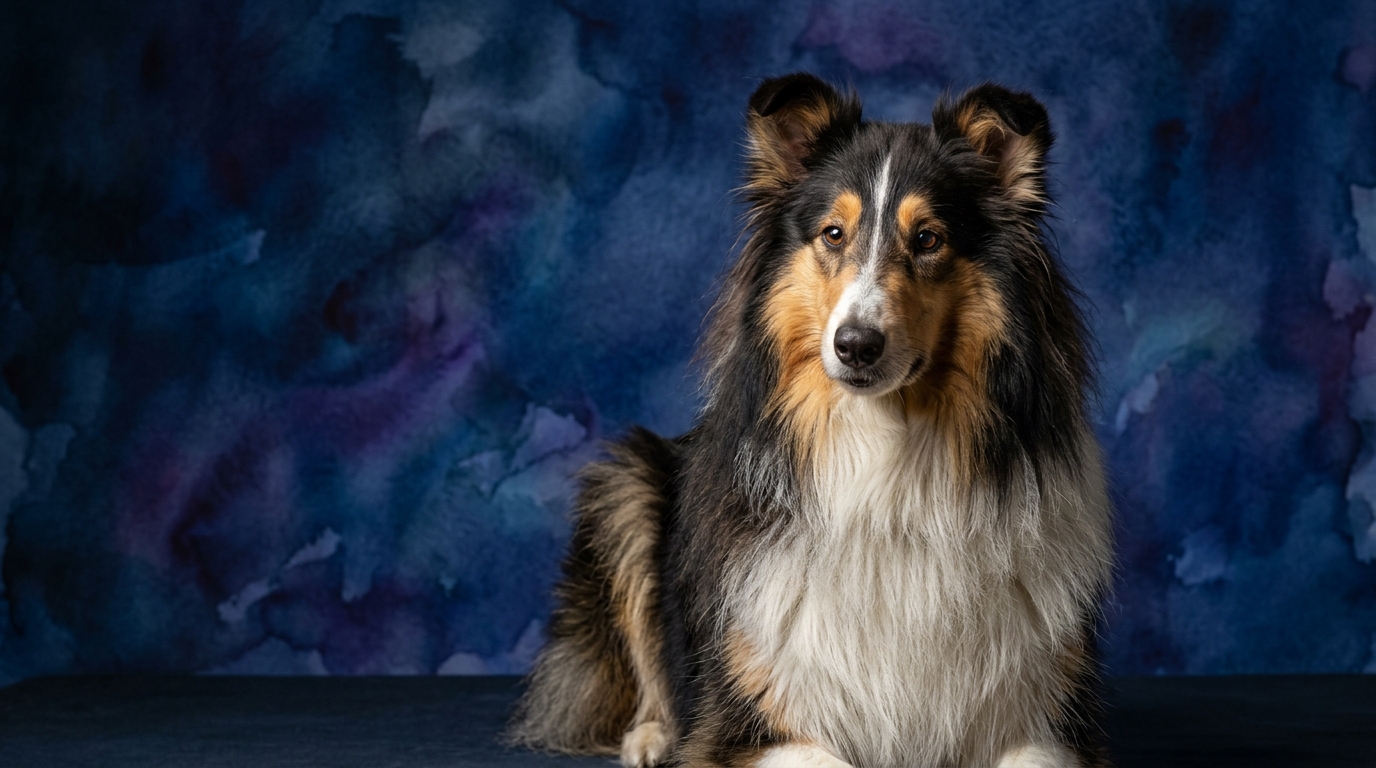

Side-by-Side IQ Profile
The Collie (Rough), ranking Coren #16, exhibits a cognitive profile tailored for complex herding tasks. Its problem-solving ability scores 4/5, indicating a strong capacity for navigating intricate situations and learning new concepts, while training speed also rates 4/5, reflecting efficient command execution. While social intelligence is 3/5 and instinctive drive 3/5, its standout trait is a perfect 5/5 memory, crucial for retaining patterns, commands, and livestock movements.
The Rhodesian Ridgeback, positioned at Coren rank #52, presents a different cognitive blueprint, reflecting its heritage as a big-game hunter. Across problem-solving, training speed, social intelligence, instinctive drive, and memory, it consistently scores 3/5, pointing to a capable, independently minded approach. This consistent rating suggests a self-reliant intelligence, with its instinctive drive specifically oriented towards tracking and holding large prey, demanding autonomy rather than constant human direction.
Where Collie (Rough) Wins Cognitively
The Collie (Rough)'s cognitive strengths shine particularly in areas demanding intricate learning and precise recall. Its 5/5 memory score means it excels at retaining complex sequences of commands, routines, and spatial information, making it adept at competitive obedience or intricate agility where remembering long patterns is key. Furthermore, its 4/5 problem-solving and training speed allow it to quickly grasp new concepts and adapt strategies in dynamic environments, such as herding where livestock behavior is unpredictable. This breed's capacity for rapid assimilation of human instruction and retention of learned behaviors sets it apart, making it a highly responsive partner in structured activities.
Where Rhodesian Ridgeback Wins Cognitively
While the Rhodesian Ridgeback's scores might appear lower on a scale designed for general trainability, its cognitive strengths lie in areas demanding independent decision-making and resilience, crucial for its original role tracking lions. Its consistent 3/5 across all categories suggests a robust, self-reliant intelligence rather than one focused on eager compliance. This breed excels in situations where it needs to assess a situation and act decisively without constant human intervention, relying on its own judgment and powerful prey drive, for example, finding efficient paths through varied terrain. Its cognitive 'win' is in its self-sufficiency and unwavering focus when engaged in tasks that align with its deep-seated instincts, requiring mental fortitude and independent thought in demanding environments.
Which is Easier to Train and Why
Based on our Pet IQ Lab metrics, the Collie (Rough) is generally easier to train, primarily due to its higher training speed (4/5) and superior memory (5/5). This breed's herding background has ingrained a strong desire to work cooperatively with humans, making it eager to learn and respond to cues, quickly associating commands with actions and retaining that learning over time. In contrast, the Rhodesian Ridgeback, with a training speed of 3/5 and memory of 3/5, requires a more patient and consistent approach. Their hound heritage fosters independence and a drive to follow scent trails, which can sometimes override a desire for human-directed tasks, meaning training often involves leveraging their innate drives and proving the value of compliance.
Which Suits Active Owners vs Relaxed Owners
The Collie (Rough) generally suits owners who enjoy active engagement and mental stimulation with their dog, thriving on consistent interaction, training sessions, and activities that challenge their intellect and utilize their problem-solving skills and excellent memory. Their true satisfaction comes from having a 'job' to do, whether it's learning new tricks or participating in dog sports, and a relaxed owner might find them becoming bored if their cognitive needs are not met. The Rhodesian Ridgeback, on the other hand, suits owners who are highly active and can provide substantial physical outlets, but also understand and respect a degree of canine independence. They require rigorous daily exercise, such as long runs or hikes, to remain content, and while they can be calm indoors, this only happens after their significant physical energy has been appropriately expended.
The Verdict
Choose the Collie (Rough) if you seek a highly trainable, mentally agile companion eager to learn and excel in structured activities, thriving on consistent cognitive engagement and partnership.
Opt for the Rhodesian Ridgeback if you are a highly active individual who appreciates an independent, physically robust dog capable of making its own decisions, and you are prepared to provide extensive physical exercise.
🧠 Find Your Pet's IQ Score
Our Pet IQ Lab assessment covers 25+ tests across 5 cognitive dimensions — personalized to your breed.
Take the Full IQ Test →Frequently Asked Questions
Is the Collie (Rough) truly smarter than the Rhodesian Ridgeback?
Our Pet IQ Lab data suggests the Collie (Rough) excels in specific cognitive areas like memory and training speed, which are often prioritized in human-centric measures of intelligence. The Rhodesian Ridgeback, however, possesses a robust, independent intelligence geared towards its unique historical role, making direct comparisons complex and dependent on the task at hand.
What kind of mental stimulation do these breeds need?
The Collie (Rough) thrives on varied mental challenges, including obedience training, puzzle toys, and learning new tricks, due to its high problem-solving and memory scores. The Rhodesian Ridgeback benefits from activities that engage its keen sense of smell and independent problem-solving, such as scent work, tracking, or exploring new environments during vigorous exercise.
Can a Rhodesian Ridgeback be a good family dog despite its independence?
Yes, a Rhodesian Ridgeback can be an excellent family dog, often forming strong bonds with its human pack, especially if properly socialized from a young age. Their independent nature means they may not always be as outwardly "eager to please" as some breeds, but they are generally loyal, protective, and can be quite affectionate with their families once their physical and mental needs are met.