Side-by-Side IQ Profile: A Cognitive Snapshot
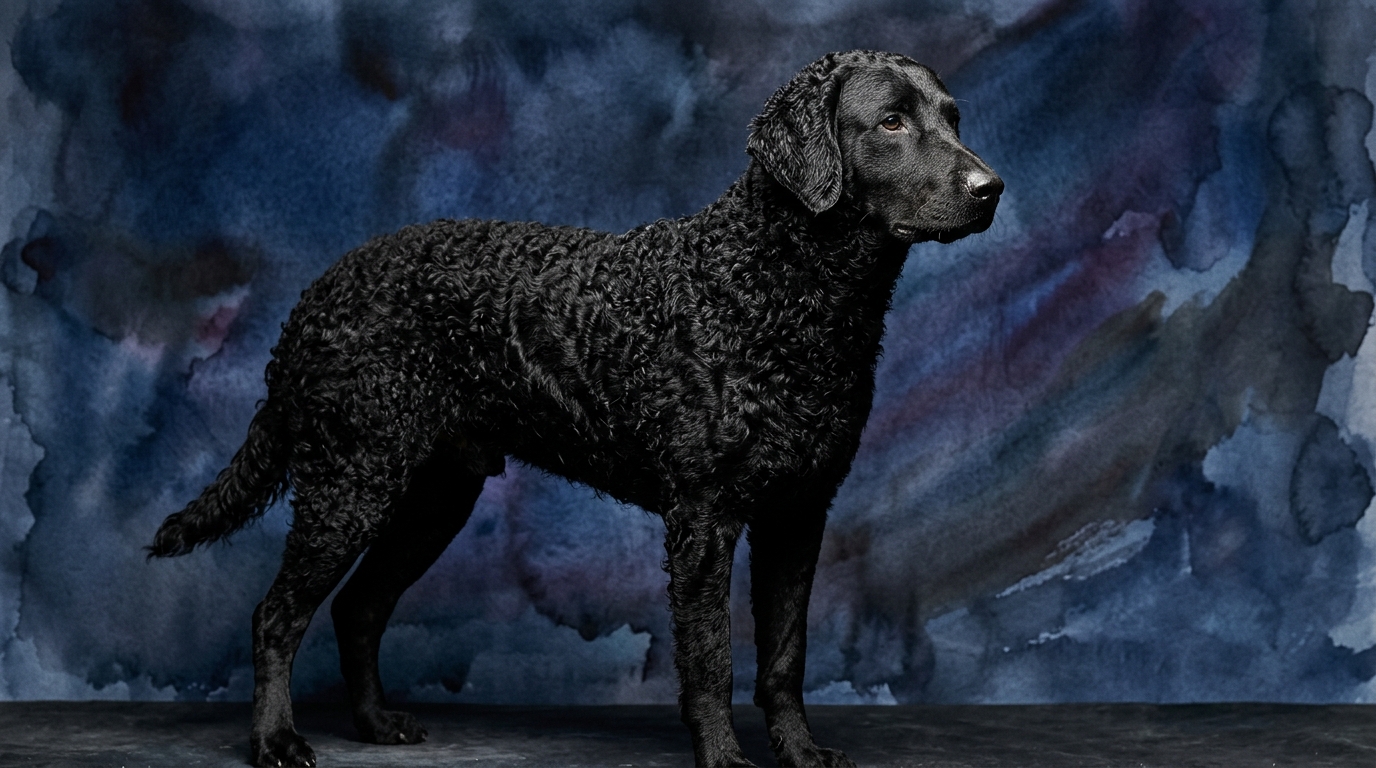
The Curly-Coated Retriever, a member of the Sporting group and ranked 41st by Coren, presents a balanced cognitive toolkit designed for its working heritage. Its Problem Solving is rated 3/5, indicating a moderate capacity for navigating complex situations and applying learned solutions, such as finding retrieved game or understanding multi-step tasks. Training Speed also sits at 3/5, suggesting they grasp new commands efficiently with consistent, positive reinforcement. Social Intelligence is 3/5, reflecting an ability to read human cues and adapt within social structures, forming strong, responsive bonds. Their Instinctive Drive, also 3/5, is geared towards purposeful activity like retrieving and active engagement. A notable strength is their Memory at 4/5, signifying a strong retention of learned information, routines, and past experiences over extended periods.
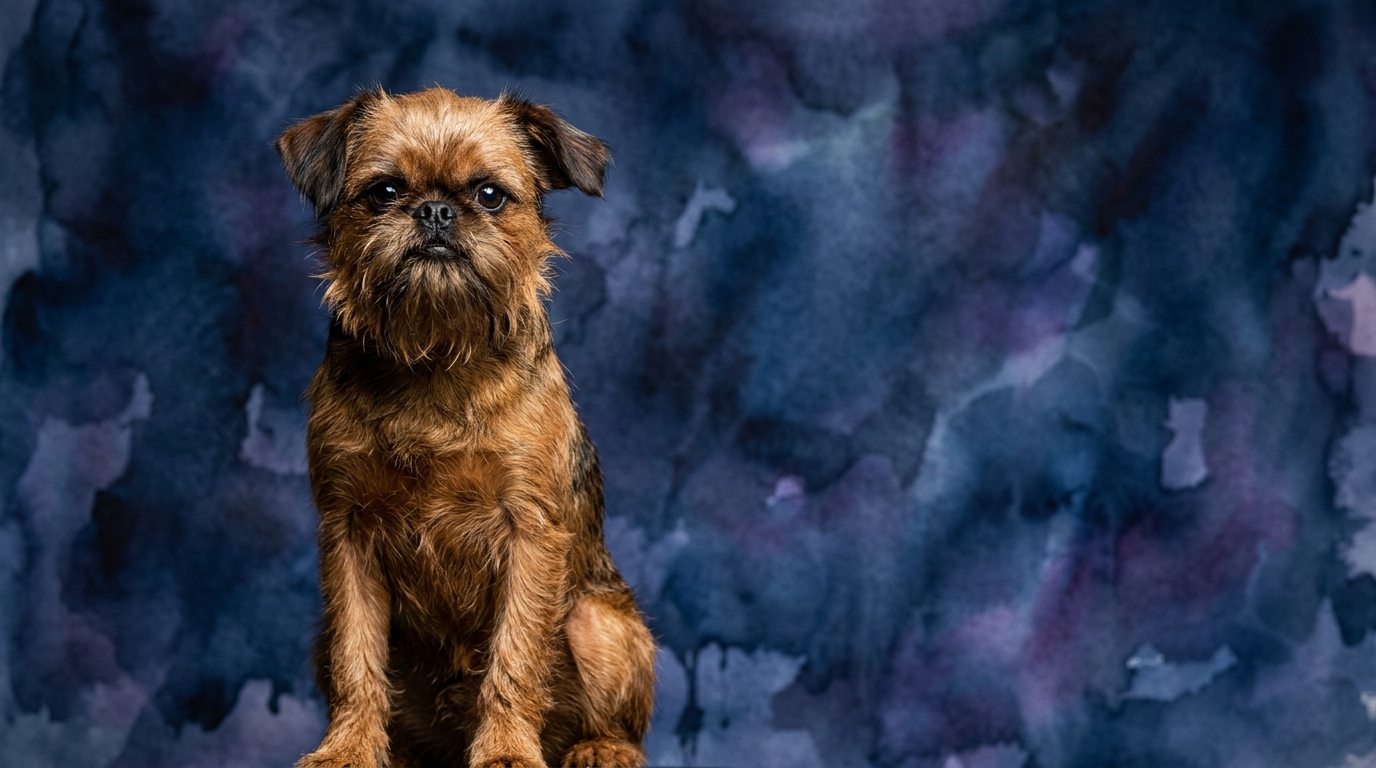
In contrast, the Brussels Griffon, a Toy breed not ranked by Coren, shares several similar cognitive scores, though their application differs due to their companionship role. Their Problem Solving is 3/5, often manifesting as clever ways to interact with their environment or solicit attention. Training Speed is 3/5, meaning they learn at a moderate pace, but their independent spirit or desire for comfort can sometimes influence immediate obedience. Social Intelligence is also 3/5, highlighting their adeptness at understanding human emotions and leveraging charm to achieve their aims. Instinctive Drive, at 3/5, is typically focused on close companionship, exploration of their immediate surroundings, and seeking comfort or play rather than a strong working purpose. Their Memory is 3/5, allowing them to retain daily routines and basic commands adequately, though perhaps without the depth for complex, long-term sequences seen in the Curly-Coated Retriever.
Where the Curly-Coated Retriever Wins Cognitively
The most distinct cognitive advantage for the Curly-Coated Retriever lies in its superior Memory, scoring 4/5 compared to the Brussels Griffon's 3/5. This enhanced recall means the Curly can retain complex sequences, multi-step commands, and past experiences with greater fidelity and for longer durations. For an owner, this translates into more consistent performance in learned tasks, better long-term recall of specific locations or objects, and an ability to build upon previous training sessions without requiring extensive review. For instance, a Curly is more likely to remember a nuanced retrieving pattern or a detailed agility course much longer than a Griffon, making them particularly adept for sustained working roles or advanced canine sports where consistent, long-term retention is paramount.
Where the Brussels Griffon Wins Cognitively
While direct numerical advantages are few, the Brussels Griffon's cognitive strengths shine in the nuanced application of its social intelligence (3/5) within a domestic context. Their moderate problem-solving (3/5) is often directed at understanding and influencing human behavior, enabling them to quickly discern routines, anticipate needs, and charmingly communicate their own desires. This specialized understanding of their human companions, combined with their compact size, makes them particularly adept at navigating complex social dynamics within a home, often appearing to instinctively "know" what their owner is thinking or feeling. Their intelligence is finely tuned to foster close human bonds and secure their place as cherished family members, often through subtle manipulation and perceptive observation.
Training Dynamics: Effort and Engagement
Both breeds share a 3/5 Training Speed, suggesting they grasp new concepts at a moderate pace. However, their underlying motivations and cognitive strengths lead to different training experiences. The Curly-Coated Retriever's superior memory (4/5) gives it an edge in retaining complex commands and sequences over time, reducing the need for constant repetition in advanced training. Its moderate instinctive drive (3/5) is inherently geared towards working cooperatively with a handler for a specific task, such as retrieving. This natural inclination to "do a job" often makes them more receptive to structured, goal-oriented training, thriving on the partnership and the challenge.
The Brussels Griffon, with its 3/5 memory, might require slightly more consistent reinforcement to solidify complex commands and ensure long-term recall. Its instinctive drive (3/5) is more focused on social interaction, attention-seeking, and comfort. While intelligent and eager to please their person for affection, this drive can sometimes translate into a charming but persistent desire for attention or an independent streak if not properly motivated. They might exhibit selective hearing if a more appealing activity, like cuddling or exploring, presents itself. Therefore, while both are trainable, the Curly often excels in complex, consistent task-based training due to its memory and work ethic, whereas the Griffon benefits from patient, positive reinforcement that leverages its desire for companionship and engagement.
Matching Lifestyles: Active vs. Relaxed Owners
For active owners seeking a canine partner for consistent training and outdoor adventures, the Curly-Coated Retriever is an excellent choice. Its moderate instinctive drive (3/5) for purposeful activity, combined with its robust physical capabilities and superior memory (4/5) for learning complex tasks, makes it ideal for those who enjoy engaging in dog sports like obedience, agility, or field trials. Curly-Coated Retrievers thrive on having a "job" and benefit significantly from regular mental and physical challenges, making them suitable companions for hiking, long walks, or participating in competitive events.
Conversely, the Brussels Griffon is better suited for more relaxed owners who prioritize companionship and indoor living. While capable of learning and enjoying interactive play, their strong focus on human companionship (instinctive drive 3/5 for social interaction) and adaptability to smaller living spaces make them ideal for those seeking a devoted, charming lap companion. Their moderate problem-solving (3/5) and social intelligence (3/5) mean they enjoy mental stimulation through puzzles and games, but their physical exercise needs are more modest. They excel in environments where their primary role is that of a cherished family member, often content with shorter walks and indoor engagement.
The Verdict
If you seek a capable, consistent partner for structured training, outdoor activities, and desire a dog that retains complex information well for sustained tasks, the Curly-Coated Retriever is an excellent match. Its robust build and superior memory make it ideal for an active lifestyle where it can utilize its working potential and engage in diverse challenges.
Opt for the Brussels Griffon if your lifestyle centers around companionship and you desire a charming, perceptive housemate adept at social interaction and comfortable in smaller living spaces. This breed thrives on close human bonds and can offer delightful, often comical, engagement without demanding extensive physical exertion, fitting perfectly into a more relaxed home environment.
🧠 Find Your Pet's IQ Score
Our Pet IQ Lab assessment covers 25+ tests across 5 cognitive dimensions — personalized to your breed.
Take the Full IQ Test →Frequently Asked Questions
Do Curly-Coated Retrievers and Brussels Griffons learn at the same pace?
Both breeds demonstrate a moderate training speed (3/5), meaning they grasp new commands without excessive repetition. However, the Curly-Coated Retriever's superior memory (4/5) often allows it to retain complex sequences and commands over longer periods, potentially making advanced training more efficient for them. The Griffon might require more consistent reinforcement for long-term recall of intricate tasks.
How do their problem-solving abilities differ in daily life?
With identical 3/5 problem-solving scores, both breeds can navigate everyday challenges. The Curly might apply this to figuring out how to retrieve a toy from a tricky spot or open a dog-proof gate, driven by its moderate instinctive drive for purposeful activity. The Griffon often uses its problem-solving for social manipulation, like figuring out how to get extra treats or attention from its human companions.
Is one breed more independent or more people-focused?
Both breeds score 3/5 in social intelligence, indicating a capacity for understanding human cues and forming bonds. The Brussels Griffon, as a toy breed, typically exhibits a more intense focus on human companionship and seeks constant interaction, often preferring to be physically close to its owner. The Curly-Coated Retriever, while affectionate, often displays a more independent streak rooted in its working heritage, capable of engaging in tasks with less direct supervision once trained.