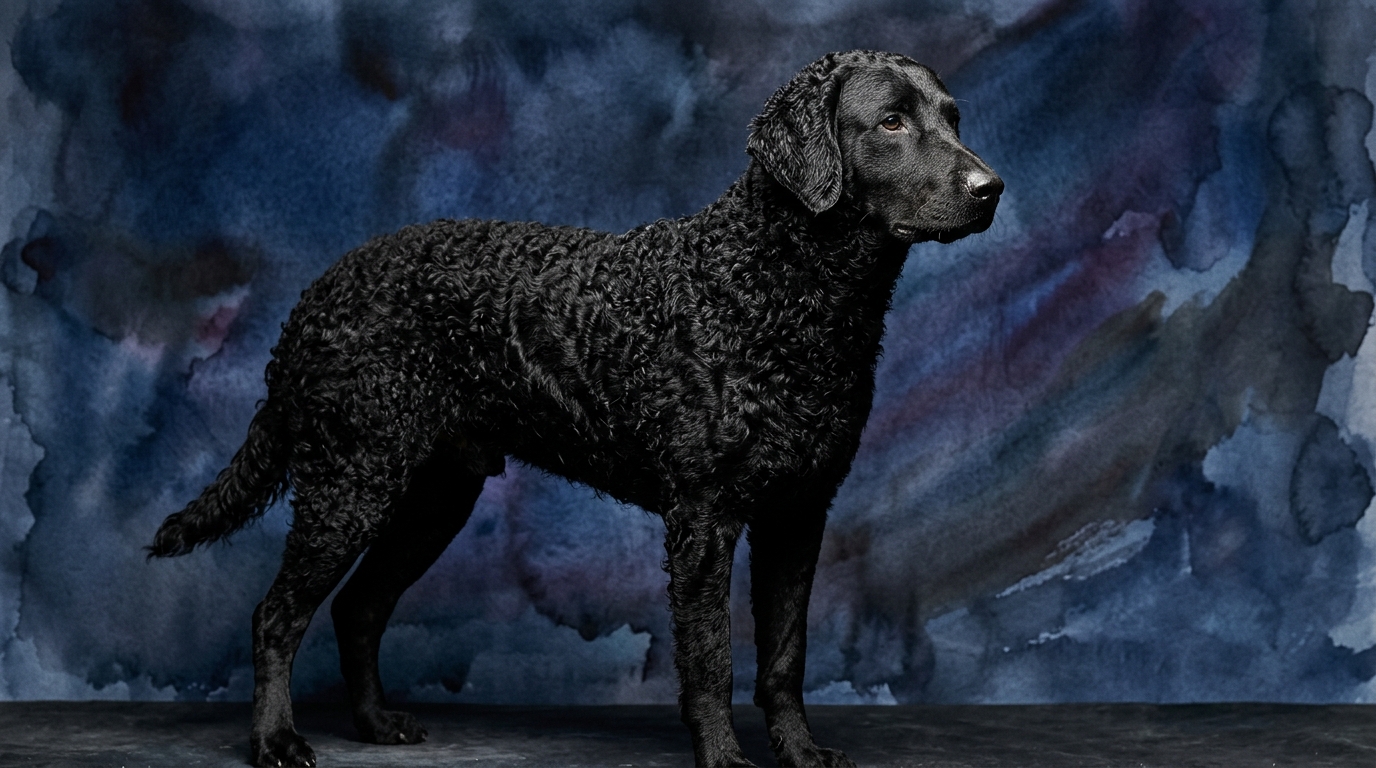
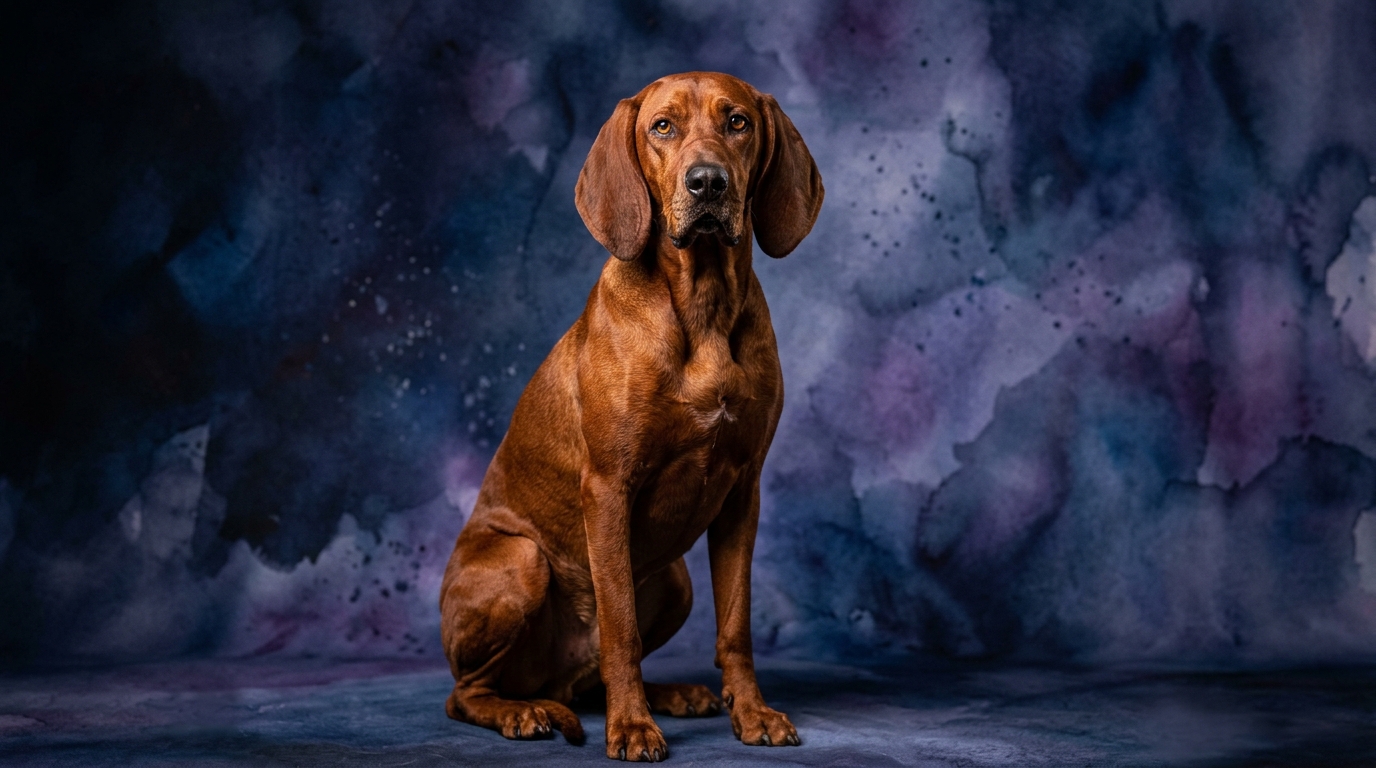
Side-by-Side IQ Profile: Curly-Coated Retriever vs. Redbone Coonhound
To understand the cognitive landscape of these two breeds, let's examine their individual IQ dimensions as assessed by The Cosmic Pet Pet IQ Lab.
**Curly-Coated Retriever (Sporting Group, Coren Rank #41):**
**Problem Solving (3/5):** This breed exhibits an average capacity for navigating novel situations and figuring out solutions independently. They can learn complex sequences for retrieving tasks but may require some guidance when encountering entirely new challenges.
**Training Speed (3/5):** Curly-Coats generally grasp new commands at a moderate pace. Their willingness to engage with their handlers, coupled with a desire to perform, makes them receptive, though consistency is key for solidifying new behaviors.
**Social Intelligence (3/5):** They possess an average understanding of human cues and social dynamics within their pack. They can form strong bonds and are generally responsive to their family's emotions, adapting their behavior accordingly.
**Instinctive Drive (3/5):** Their inherent drive to retrieve, often from water, is present but balanced. It's a focused drive that can be channeled effectively into various sporting activities and is not typically overwhelming in daily life.
**Memory (4/5):** A notable strength, Curly-Coated Retrievers demonstrate good retention of learned information, commands, and past experiences. This aids in recalling complex routines and remembering specific locations or individuals over time.
**Redbone Coonhound (Hound Group, Not Coren-Ranked):**
**Problem Solving (3/5):** Redbones show an average ability to tackle problems, often applying their keen senses to unravel environmental puzzles, particularly those related to scent. Their solutions are frequently practical and driven by their primary instincts.
**Training Speed (3/5):** New commands are learned at a moderate rate. However, their independent hound nature means they might choose to follow a compelling scent over a known command, requiring patient and consistent reinforcement to build strong compliance.
**Social Intelligence (3/5):** They exhibit an average capacity for understanding social cues, primarily within their close human family and pack. They are generally amiable and can read intentions, though their focus can often be external, on the environment.
**Instinctive Drive (3/5):** The Redbone's instinctive drive is heavily centered on scent tracking and pursuit. While rated 3/5, this drive is profound and can override other stimuli, making them incredibly persistent when on a trail.
**Memory (3/5):** Their memory is average, allowing them to recall basic commands and routines. They remember familiar people and places but might not retain complex sequences or detailed environmental layouts with the same precision as a breed with a higher memory score.
Where the Curly-Coated Retriever Excels Cognitively
The Curly-Coated Retriever's primary cognitive advantage lies in its superior memory, rated 4/5 compared to the Redbone Coonhound's 3/5. This enhanced recall significantly impacts their ability to master intricate retrieving patterns, remember multiple command sequences, and retain the nuances of competitive obedience routines. For example, a Curly-Coat can more readily recall the precise path to retrieve a specific dummy from a complex setup or remember a series of hand signals and verbal cues in a fluid sequence. This strong memory also contributes to their adaptability, as they can quickly learn and remember which behaviors are rewarded in different environments, allowing for more consistent performance across various contexts. Their placement at Coren Rank #41 further suggests an aptitude for understanding and executing human-directed tasks, indicating a specific cognitive orientation towards working cooperatively and remembering what is expected of them in structured environments. This makes them particularly adept at activities requiring a repertoire of learned behaviors, from agility to dock diving, where remembering complex courses and sequences is paramount.
Where the Redbone Coonhound Excels Cognitively
While the Redbone Coonhound shares identical scores with the Curly-Coated Retriever across most cognitive dimensions, its "win" is not in raw scores but in the specialized application and intensity of its instinctive drive and problem-solving. Rated 3/5 for both, the Redbone's problem-solving and instinctive drive are acutely honed for a very specific purpose: tracking and treeing game. Their cognitive strength lies in their unparalleled ability to interpret and follow intricate scent trails, a complex form of problem-solving that requires immense focus and environmental awareness. A Redbone can mentally map out a trail, differentiate between fresh and old scents, and persist through challenging terrains, demonstrating a form of cognitive resilience that is purpose-built. Their average problem-solving score, when applied to scent work, becomes extraordinary, as they efficiently process a vast amount of olfactory information to achieve their goal. This breed excels not by outscoring others in general cognitive tests, but by demonstrating a deep, specialized intelligence in a domain that few can match, showcasing a profound ability to use their senses and average problem-solving skills to navigate and dominate their ancestral work.
Which is Easier to Train and Why?
Despite both breeds having a training speed score of 3/5, the Curly-Coated Retriever is generally perceived as easier to train for general obedience and household manners due to fundamental behavioral differences. The Curly-Coat, as a Sporting dog, typically possesses a stronger desire to please its human companions and a lower intrinsic drive to operate independently. Their higher memory (4/5) also means they can retain commands and complex sequences more reliably over time, requiring fewer repetitions to solidify learning and making advanced training more accessible. When a Curly-Coat learns a 'sit-stay,' they are more likely to remember the duration and context of that command across different situations. In contrast, the Redbone Coonhound, a scent hound, is driven by an intense, often all-consuming, instinctive drive (3/5) to follow a compelling scent. While they can learn commands at an average pace, their independent nature means that a strong scent can easily override a learned behavior like recall or 'leave it.' Training a Redbone requires immense patience and creativity to make compliance more rewarding than the allure of the trail. Owners must contend with a dog whose primary motivation is often external and olfactory, making consistent, reliable obedience a more significant challenge compared to the generally more handler-focused Curly-Coated Retriever.
Which Suits Active Owners vs. Relaxed Owners?
Neither the Curly-Coated Retriever nor the Redbone Coonhound are suited for truly relaxed owners, as both require significant physical and mental engagement. However, the *type* of activity they thrive on differs. The Curly-Coated Retriever is an excellent match for active owners who enjoy diverse activities like hiking, swimming, competitive obedience, agility, or dock diving. Their balanced instinctive drive (3/5) and higher memory (4/5) mean they enjoy learning new skills and participating in handler-focused sports. They need regular exercise to prevent boredom, but their activities can be varied and involve close cooperation with their human. A Curly-Coat will happily retrieve a ball repeatedly or accompany an owner on a long run, enjoying the shared experience. The Redbone Coonhound, on the other hand, is ideal for very active owners who are prepared to embrace their dog's profound scenting drive. These dogs thrive on long, vigorous walks or runs where they can engage their noses, scent work, or even actual hunting. A secure, large yard is essential, as their 3/5 instinctive drive, when focused on scent, can lead them to follow a trail for miles, potentially ignoring boundaries. Owners who understand and enjoy working with a dog whose primary motivation is scent-driven, perhaps engaging in tracking sports or long exploratory hikes in safe, contained areas, will find a Redbone deeply fulfilling. While both are active, the Curly-Coat offers more versatility in cooperative activities, whereas the Redbone demands an outlet for its specialized, tenacious hound instincts.
The Verdict
Choose the Curly-Coated Retriever if you seek a cooperative companion with good memory for complex tasks, ideal for diverse dog sports and a strong desire to engage with their owner in varied activities. Their balanced drives and higher recall make them a versatile and rewarding partner for active families.
Opt for the Redbone Coonhound if you are a dedicated, active owner passionate about providing an outlet for profound scenting instincts, valuing a tenacious and independent companion for long outdoor adventures. Be prepared for a dog whose drive is intensely focused on the environment, requiring consistent, patient guidance.
🧠 Find Your Pet's IQ Score
Our Pet IQ Lab assessment covers 25+ tests across 5 cognitive dimensions — personalized to your breed.
Take the Full IQ Test →Frequently Asked Questions
Do Curly-Coated Retrievers and Redbone Coonhounds learn at the same speed?
Both breeds have a Training Speed score of 3/5, indicating an average learning pace for new commands. However, the Curly-Coated Retriever's higher memory and desire to please generally make them more consistent learners for obedience, while the Redbone Coonhound's strong independent scent drive can present unique training challenges despite their similar learning speed.
How does the Curly-Coated Retriever's Coren rank affect its intelligence comparison?
The Curly-Coated Retriever's Coren rank of #41 indicates a strong aptitude for obedience and working with humans, suggesting they generally understand and respond to commands effectively. While Redbone Coonhounds are not Coren-ranked, their intelligence is geared more towards independent problem-solving in scent-driven tasks rather than strict human-directed obedience, highlighting different cognitive strengths.
Which breed is better for a family with children, considering their social intelligence?
Both breeds score 3/5 in Social Intelligence, meaning they have an average capacity for understanding social cues. The Curly-Coated Retriever's generally more people-oriented nature and higher memory for house rules might make them slightly more adaptable in a family setting. Redbone Coonhounds are typically amiable but their strong independent drives mean they might require more consistent supervision and training around children, especially when a compelling scent is present.