
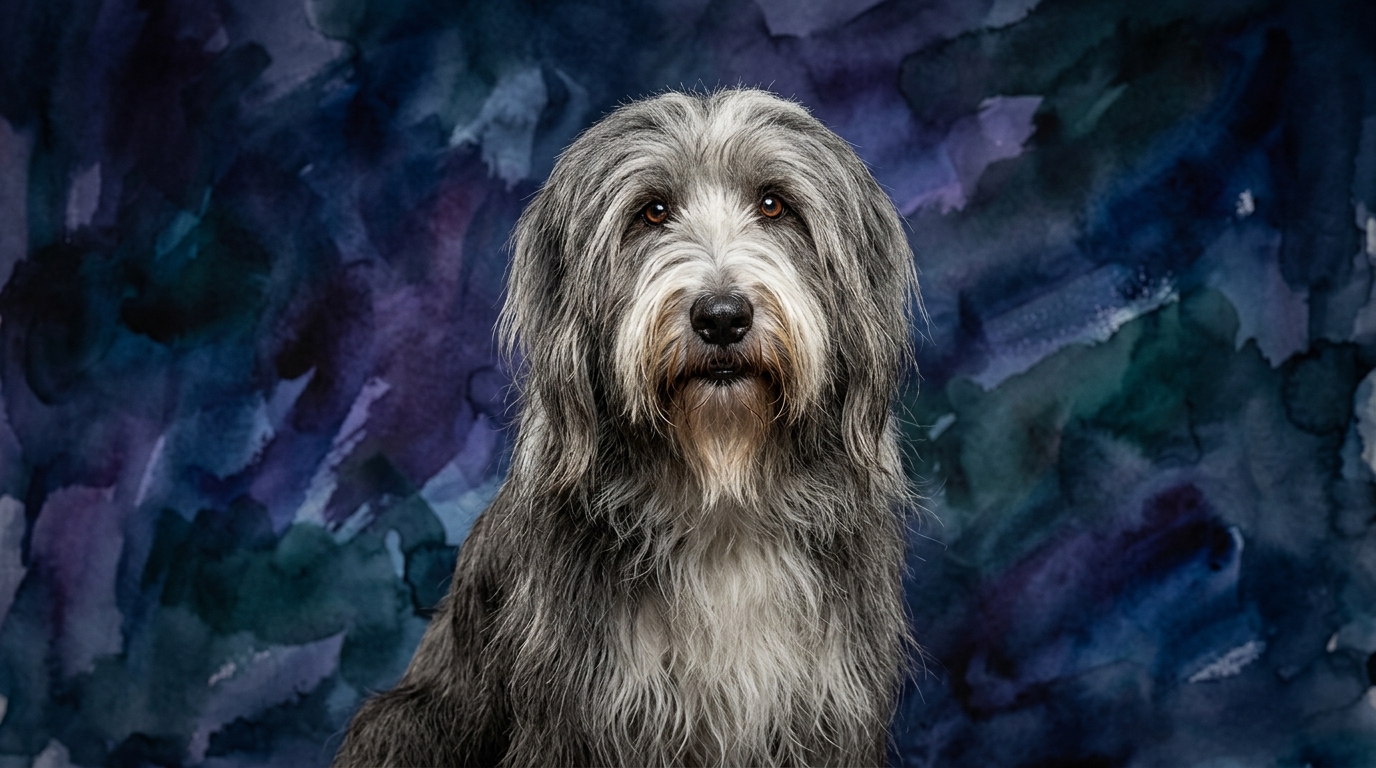
Side-by-Side Cognitive Profile
The Dachshund, ranking #49 in Coren's intelligence scale, presents a unique cognitive makeup. Their Problem Solving is rated 4/5, often manifesting as independent, tenacious pursuit of instinctual goals rather than handler-directed tasks. Training Speed is 2/5, indicating a need for high motivation and patience due to their self-directed focus. Social Intelligence stands at 3/5, capable of forming strong bonds but often prioritizing their own interests. Their Instinctive Drive is an exceptional 5/5, an exceptionally powerful innate urge for tracking and burrowing. Memory is 3/5, sufficient for routines but can be selective when instincts take over.
In contrast, the Bearded Collie, with a Coren rank of #34, shows a different cognitive emphasis. Their Problem Solving is also 4/5, but characterized by adaptable and creative approaches to tasks, often seeking human collaboration. Training Speed is 4/5, reflecting a strong desire to learn and cooperate with handlers. Social Intelligence is 3/5, showing good awareness of social cues from both humans and other animals. Instinctive Drive is 3/5, a moderate herding impulse that is generally amenable to redirection and training. Memory is 4/5, demonstrating excellent retention of commands, routines, and past experiences.
Where the Dachshund Excels Cognitively
The Dachshund's Instinctive Drive, rated 5/5, is unparalleled, granting them a singular focus on scent trails or subterranean exploration. This isn't mere physical endurance but a profound cognitive prioritization, allowing them to block out distractions when engaged in their primal 'work'. Their Problem Solving (4/5), while numerically matching the Collie's, is distinctly self-reliant; a Dachshund will independently strategize to achieve an instinctual goal, displaying remarkable ingenuity in overcoming obstacles without constant human guidance. This mental tenacity makes them formidable in tasks requiring intense, self-motivated persistence.
Where the Bearded Collie Shows Cognitive Superiority
The Bearded Collie's superior Training Speed (4/5 vs. the Dachshund's 2/5) stands out, reflecting a strong cognitive predisposition to absorb and execute new commands efficiently. This is coupled with a Memory score of 4/5, which means they retain complex sequences and lessons more reliably over time, building a robust behavioral repertoire. Their higher Coren rank (#34 vs. #49) further suggests a greater capacity for working obedience and a more fluid understanding of human directives, making them generally more biddable and adaptable to varied training scenarios.
Ease of Training: Behavioral Differences Revealed
The Bearded Collie is significantly easier to train due to its higher Training Speed (4/5) and Memory (4/5). They possess an inherent desire to work cooperatively with humans, quickly grasping new concepts and responding with enthusiasm to positive reinforcement. Their moderate Instinctive Drive (3/5) is more readily channeled into structured activities like obedience or agility, rather than causing significant distractions. This breed thrives on mental engagement through learning, making training a rewarding partnership.
Conversely, the Dachshund presents a greater training challenge. Their lower Training Speed (2/5) means commands require more repetition and creative motivation. Their exceptional Instinctive Drive (5/5) often overrides human instruction; a compelling scent or a perceived burrowing opportunity can make them temporarily "deaf" to commands. While their Problem Solving (4/5) is strong, it's often applied to their own agenda. Effective Dachshund training demands immense patience, consistency, and a deep understanding of their independent, scent-driven nature.
Matching Canine Companions to Owner Lifestyles
Active owners will find a highly compatible partner in the Bearded Collie. With their herding lineage, they possess considerable stamina and a cognitive need for regular, varied mental and physical stimulation. They excel in dog sports like agility, flyball, or advanced obedience, and thrive on long hikes or structured play sessions. An owner who can commit to daily rigorous exercise and engaging training will find the Bearded Collie a joyful and fulfilled companion, eager to participate in an active lifestyle.
For owners seeking a more relaxed pace, the Dachshund can be an excellent fit, though "relaxed" does not equate to sedentary. While their physical exercise needs are generally moderate, they require consistent mental engagement, often satisfied by scent games, puzzle toys, and short, frequent walks that allow for ample sniffing. Their independent nature means they don't demand constant interactive play but appreciate opportunities to explore their environment on their own terms. They suit owners who appreciate a dog with strong character and are content with less intense, but regular, engagement.
The Verdict
Choose a Dachshund if you value an independent, intensely driven companion with a singular focus on instinctual pursuits, and you are prepared for a training approach that prioritizes patience and understanding of their unique cognitive framework. They thrive with owners who appreciate their tenacity and self-reliance.
Opt for a Bearded Collie if you seek an enthusiastic, biddable partner eager to learn and engage in collaborative activities, and you can provide substantial daily mental and physical enrichment. They are ideal for active individuals who enjoy advanced training and a dog that thrives on working alongside them.
🧠 Find Your Pet's IQ Score
Our Pet IQ Lab assessment covers 25+ tests across 5 cognitive dimensions — personalized to your breed.
Take the Full IQ Test →Frequently Asked Questions
Are Dachshunds truly stubborn, or is it a misunderstanding of their intelligence?
Dachshunds aren't stubborn in a negative sense; their lower training speed (2/5) and strong instinctive drive (5/5) mean they prioritize their innate urges, like scent tracking, over human commands. Their problem-solving (4/5) is often self-directed, leading them to pursue their own interests with tenacious focus, which can be perceived as defiance.
Can a Bearded Collie's herding instinct be managed in a non-herding home?
Yes, a Bearded Collie's herding instinct (3/5) is generally manageable. It can be channeled into positive outlets like agility, rally obedience, or even specific herding games, rather than attempting to herd family members or other pets. Early socialization and consistent training are key to teaching appropriate behaviors.
Do both breeds require similar levels of mental stimulation?
While both breeds benefit from mental stimulation, the type differs. Dachshunds thrive on scent work and independent problem-solving related to their strong drives, while Bearded Collies, with their higher training speed and memory, prefer interactive challenges, learning new commands, and collaborative activities that engage their working intelligence.