
Side-by-Side IQ Profile: Poodle (Standard) vs. Dachshund
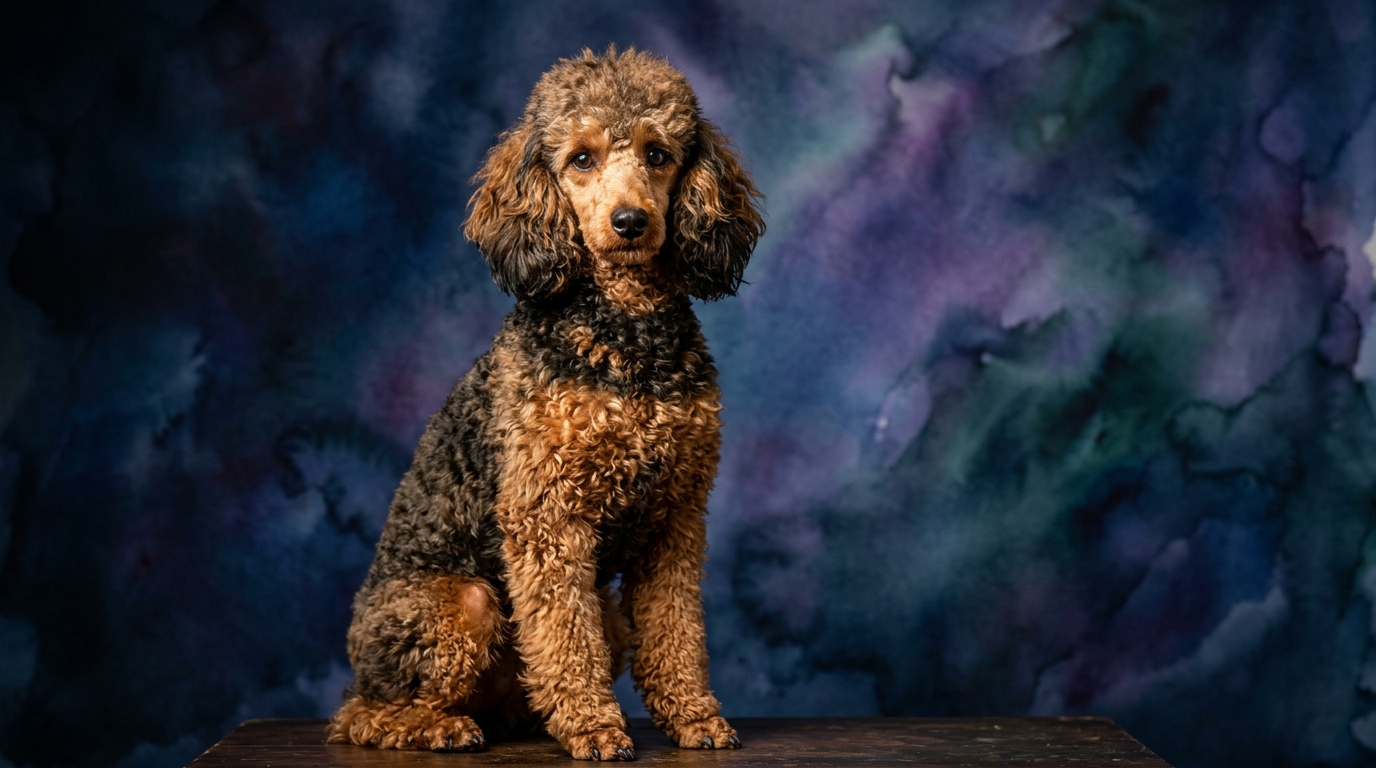
The Cosmic Pet Pet IQ Lab employs a comprehensive five-dimensional framework to assess canine intelligence, revealing nuanced differences between breeds. For the Poodle (Standard), ranked #2 on Coren's scale, its profile showcases a remarkable balance of cognitive strengths. Its Problem Solving is rated an exceptional 5/5, indicating a capacity to quickly analyze and resolve complex novel situations. Training Speed also scores a perfect 5/5, meaning new commands and behaviors are acquired with minimal repetition. Social Intelligence, a critical component for human-canine bonding, stands at 5/5, reflecting a deep understanding of human cues and emotional states. Its Instinctive Drive, while present, is a moderate 4/5, a remnant of its water retrieving heritage, allowing for adaptability. Finally, Memory is an outstanding 5/5, ensuring learned behaviors and associations are retained over long periods.
In contrast, the Dachshund, ranked #49 on Coren's scale, presents a profile geared towards its historical purpose. Its Problem Solving ability is a solid 4/5, demonstrating a capacity for independent thought, particularly when focused on a goal. However, its Training Speed is a more measured 2/5, suggesting a need for greater patience and consistency during instruction. Social Intelligence is rated 3/5, indicating an awareness of human interaction but often with an independent streak. Where the Dachshund truly shines is in its Instinctive Drive, an undeniable 5/5, reflecting its potent prey drive, scenting prowess, and burrowing tendencies. Its Memory is 3/5, sufficient for routines and reinforced commands, but perhaps less robust for extensive, varied learning.
Where Poodle (Standard) Wins Cognitively
The Standard Poodle's cognitive superiority is evident across multiple domains, making it a highly versatile learner. Its 5/5 Problem Solving means it excels at tasks requiring abstract thought, such as figuring out how to manipulate latches, untangle complicated leashes, or solve multi-step puzzle toys designed to hide treats. This breed can often anticipate sequences of events, learning the routines of its human companions with uncanny speed. The perfect 5/5 in Training Speed and Memory means a Poodle can master an extensive vocabulary of commands, learn complex agility courses, or even perform intricate trick routines with relative ease, retaining these skills long-term even with breaks in practice. Furthermore, its 5/5 Social Intelligence allows for sophisticated interpretation of human body language, tone of voice, and even subtle shifts in mood, enabling the Poodle to adapt its behavior to suit the social context, making it exceptionally responsive and attuned to its family's needs.
Where Dachshund Wins Cognitively
While the Poodle excels in broad-spectrum intelligence, the Dachshund's cognitive strengths are deeply specialized and formidable within their specific context. Its 5/5 Instinctive Drive is not merely a trait; it's a cognitive engine. This drive fuels its 4/5 Problem Solving, enabling it to exhibit incredible tenacity and ingenuity when pursuing a scent or attempting to reach a perceived 'prey.' A Dachshund might meticulously strategize how to tunnel under a fence, or relentlessly work to extract a toy from a tight space, demonstrating a single-minded focus that can override other stimuli. Their ability to track and follow complex scent trails, navigating varied terrains with unwavering determination, showcases a highly refined form of practical, sensory intelligence. This breed's independent nature, often perceived as stubbornness, is a cognitive advantage in a hunting scenario, allowing it to make autonomous decisions in the field rather than constantly seeking human direction.
Which Is Easier to Train and Why
Without question, the Poodle (Standard) presents a significantly easier training experience for most owners. Its 5/5 Training Speed means it grasps new commands with remarkable rapidity, often after just a few repetitions. Coupled with a 5/5 Social Intelligence, Poodles are inherently motivated to engage with and please their human companions, making them highly receptive to positive reinforcement. Their 5/5 Memory ensures that once a behavior is learned, it's rarely forgotten, leading to consistent performance. This combination results in a dog that not only learns quickly but also actively seeks to understand and comply with instructions, making advanced obedience and specialized tasks well within reach.
The Dachshund, with its 2/5 Training Speed and powerful 5/5 Instinctive Drive, offers a more challenging training journey. While capable of learning, their strong independent streak and preoccupation with scent or perceived prey often means they prioritize their own drives over human commands. They require an owner with exceptional patience, consistent methods, and a deep understanding of what truly motivates them – often high-value treats or engaging scent games rather than just social praise. Their 3/5 Social Intelligence means they might be less inclined to defer to human wishes if a compelling scent trail or digging opportunity presents itself, demanding more effort to maintain focus and compliance.
Which Suits Active Owners vs. Relaxed Owners
The Poodle (Standard) is an ideal match for active owners who are prepared to provide substantial mental stimulation alongside physical exercise. Their high Problem Solving and Social Intelligence mean they thrive on learning new tricks, participating in dog sports like agility, obedience, or rally, and engaging with complex puzzle toys. They require an owner who enjoys interactive play and consistent training, as their cognitive abilities need regular outlets to prevent boredom and potential behavioral issues. An owner who loves teaching and challenging their dog mentally will find the Standard Poodle an exceptionally rewarding companion.
The Dachshund, while possessing a strong drive, is generally more suited for owners who appreciate an independent spirit and can accommodate their specific instinctive needs rather than demanding constant high-energy, human-directed activity. While they enjoy walks, these are often exploratory sniffing expeditions driven by their powerful scenting abilities. Relaxed owners who are content with providing opportunities for 'hunting' games, secure digging areas (like a sandpit), and a comfortable lap for snuggling will find a happy companion. They don't necessarily require the same level of structured mental challenge as a Poodle, but they do need outlets for their inherent tunneling and tracking behaviors.
The Verdict
Choose the Poodle (Standard) if you seek a highly trainable, socially attuned companion eager to learn complex tasks and participate in diverse activities, offering a profoundly interactive cognitive experience.
Opt for the Dachshund if you appreciate an independent, tenacious spirit with specialized instinctive drives, and are prepared to engage with a dog whose intelligence is expressed through scent work, burrowing, and autonomous problem-solving.
🧠 Find Your Pet's IQ Score
Our Pet IQ Lab assessment covers 25+ tests across 5 cognitive dimensions — personalized to your breed.
Take the Full IQ Test →Frequently Asked Questions
Are Poodles adaptable to different living situations?
Yes, with their high Social Intelligence (5/5) and Problem Solving (5/5), Standard Poodles adapt well to various environments and family dynamics, thriving on consistent mental engagement and human interaction.
Does a Dachshund's strong Instinctive Drive make them 'stubborn'?
A Dachshund's powerful 5/5 Instinctive Drive often means they prioritize their natural urges like scent-tracking or digging over human commands, which can be perceived as stubbornness. It's a manifestation of their specialized cognitive focus, not a lack of capacity.
Are Dachshunds less capable of learning than Poodles?
Not necessarily less capable, but their learning style and motivations differ. While a Poodle excels in broad-spectrum, human-directed learning, a Dachshund's Problem Solving (4/5) and Memory (3/5) are highly effective within the context of their instinctive drives, making them proficient at tasks related to their original purpose.