
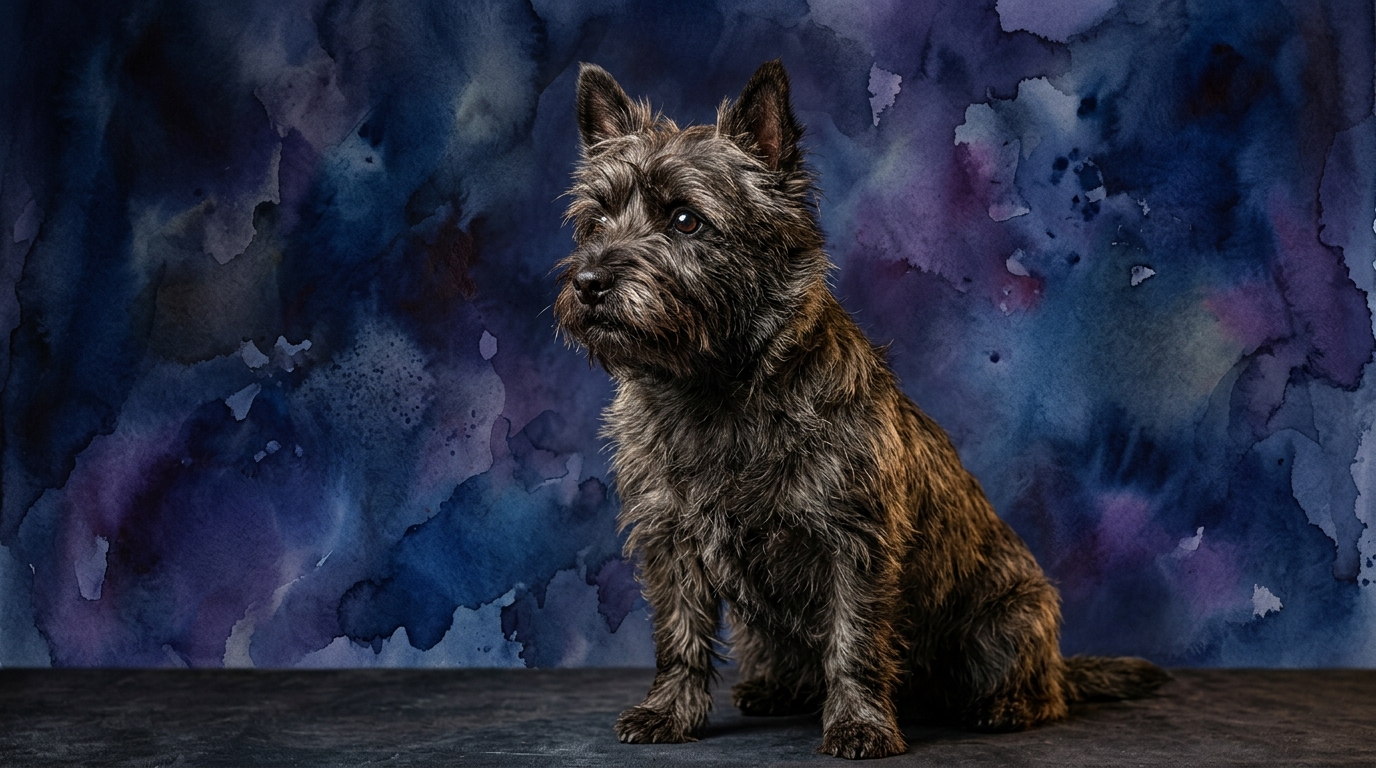
Side-by-Side IQ Profile: Dachshund vs. Cairn Terrier
The Cosmic Pet Pet IQ Lab meticulously assesses five key cognitive dimensions, revealing the unique mental architecture of each breed. For the Dachshund, a hound with a Coren rank of #49, its profile is distinctly shaped by its hunting heritage. Its Problem Solving is rated 4/5, demonstrating a focused ability to navigate challenges, particularly those involving scent or excavation. Training Speed stands at 2/5, indicating a more deliberate approach to learning new commands, often influenced by an independent streak. Social Intelligence is 3/5, meaning they can interpret human cues but often prioritize their own motivations. Their Instinctive Drive is an exceptional 5/5, a core strength in tracking and burrowing. Memory is 3/5, retaining information moderately well but sometimes overridden by powerful instincts.
In contrast, the Cairn Terrier, a terrier with a Coren rank of #35, presents a slightly different cognitive emphasis. Its Problem Solving also scores 4/5, reflecting a resourceful and adaptable intelligence in figuring out how to achieve goals. Training Speed is a commendable 4/5, showing a quicker grasp of new commands and routines. Social Intelligence is 3/5, much like the Dachshund, demonstrating an awareness of their environment and human interactions, yet maintaining a characteristic terrier self-direction. Instinctive Drive is 3/5, present but more moderate than the Dachshund's. Finally, Memory is 4/5, indicating a strong capacity for retaining learned behaviors and experiences over time.
Where the Dachshund Excels Cognitively
The Dachshund's cognitive triumphs are deeply ingrained in its historical purpose as a tenacious hunter of burrow-dwelling animals. Its most prominent strength lies in its **Instinctive Drive (5/5)**, which is not merely a physical impulse but a profound cognitive orientation. A Dachshund's brain is exquisitely tuned for scent detection and unwavering pursuit, allowing it to maintain an extraordinary focus on a scent trail, filtering out myriad distractions with remarkable efficiency. This sustained cognitive effort, propelled by primal instinct, enables them to solve intricate 'scent puzzles' that would easily confound other breeds. Their **Problem Solving (4/5)**, while numerically matching the Cairn Terrier, manifests uniquely. For a Dachshund, problem-solving often involves overcoming physical barriers or navigating complex, confined spaces to achieve a specific, instinct-driven objective, such as locating a hidden toy or a perceived burrow. This requires exceptional spatial reasoning within intricate environments, coupled with a relentless determination that is a hallmark of their breed. This single-minded dedication to their innate objectives represents a distinct cognitive advantage, showcasing an unparalleled tenacity in their chosen pursuits.
Where the Cairn Terrier Shows Cognitive Superiority
The Cairn Terrier demonstrates cognitive advantages that stem from its spirited and adaptable nature. Their **Training Speed (4/5)** is a clear differentiator, indicating a generally quicker ability to grasp and execute new commands and complex sequences compared to the Dachshund. This isn't just about rote learning; it reflects a more flexible cognitive processing and a greater responsiveness to human direction. Cairn Terriers often display genuine enjoyment in the learning process itself, making them enthusiastic participants in training sessions. Complementing this is their superior **Memory (4/5)**. Cairn Terriers possess a robust capacity for retaining a wider array of learned behaviors, commands, and associations over extended periods. This strong memory contributes significantly to their consistency and reliability once a behavior is established, often requiring less frequent reinforcement. Their **Problem Solving (4/5)**, while numerically equal to the Dachshund's, often exhibits more versatility. Cairns are adept at navigating novel situations, figuring out how to manipulate objects, or solving interactive puzzles not directly tied to a singular, intense instinct. This reflects a broader application of their intelligence, allowing them to adapt their thinking to diverse domestic and environmental challenges. Furthermore, their higher Coren rank (#35 vs. #49) implicitly suggests a greater aptitude for 'working and obedience intelligence,' indicating a cognitive makeup that generally facilitates more complex training and responsiveness in structured environments.
Ease of Training: Dachshund vs. Cairn Terrier
When evaluating ease of training, the **Cairn Terrier** generally offers a more straightforward experience for most owners. Their **Training Speed (4/5)** and **Memory (4/5)** are pivotal here. Cairn Terriers typically show a quicker understanding of commands and a greater retention of what they've learned. They often possess a keen desire to engage with their human companions and tend to be more responsive to positive reinforcement methods. For instance, a Cairn Terrier might master a 'stay' command in significantly fewer repetitions than a Dachshund, and retain that command reliably over time. Their inherent independence, while present, is usually balanced by an eagerness to participate and please, making them more amenable to structured lessons and diverse training approaches.
The **Dachshund**, conversely, often requires a more patient and nuanced approach to training. Their **Training Speed (2/5)** indicates a slower uptake of new commands, not due to a lack of capacity, but primarily because of their formidable **Instinctive Drive (5/5)** and independent spirit. A Dachshund’s powerful drive to follow a scent or pursue a perceived burrow can easily override a human command, especially in stimulating environments. For example, asking a Dachshund to 'come' when they've picked up an interesting scent might be a monumental challenge, as their brain is singularly focused on that olfactory input. Their memory (3/5) is moderate, but their strong instincts mean they may 'forget' a command if something more compelling captures their attention. Training a Dachshund demands exceptional consistency, engaging motivation, and an understanding that their primary cognitive focus often lies outside human-directed tasks. Owners must be prepared to work *with* their Dachshund's instincts, rather than against them, making the process more involved and requiring creative solutions.
Matching Breeds to Owner Lifestyles: Active vs. Relaxed
Understanding the cognitive profiles of the Dachshund and Cairn Terrier reveals distinct preferences for owner lifestyles. For **active owners**, both breeds can thrive, but their ideal activities diverge. The **Cairn Terrier**, with its adaptable problem-solving and quicker training speed, is well-suited to a variety of engaging activities. Owners who enjoy agility courses, advanced trick training, or exploring new hiking trails will find the Cairn Terrier a willing and enthusiastic partner. Their moderate instinctive drive means their energy can be channeled into diverse forms of mental and physical exercise, making them excellent companions for owners seeking a versatile, interactive dog. They relish opportunities to learn and apply their cognitive skills in different contexts, from puzzle toys to urban exploration.
The **Dachshund**, while not necessarily a marathon runner, requires an 'active' owner in a different sense: one who is active in channeling their intense **Instinctive Drive (5/5)**. Owners who appreciate and can provide structured outlets for scent work, tracking games, or even controlled digging opportunities will find the Dachshund immensely rewarding. A Dachshund thrives on mental engagement that taps into their profound olfactory abilities and persistence. Long, sniff-filled walks where they can investigate every scent are far more stimulating for a Dachshund than a brisk, human-paced jog. A 'relaxed' owner who cannot commit to these specific forms of mental and physical enrichment might find a Dachshund's unfulfilled drives manifesting as undesirable behaviors.
Conversely, for owners who might describe themselves as more **relaxed**, the nuances of each breed become even more critical. A truly relaxed owner might struggle with either breed if they underestimate the need for mental stimulation. However, the **Cairn Terrier's** higher training speed and adaptability might make them a slightly more manageable choice for an owner who, while relaxed about high-impact activities, is still committed to consistent, gentle training and providing varied mental enrichment through puzzle toys and short, engaging walks. Their memory (4/5) ensures that learned behaviors stick, reducing the need for constant reinforcement. The **Dachshund's** intense instinctive drive and lower training speed mean that a genuinely relaxed owner who isn't prepared for the consistent, creative effort required to manage and satisfy these drives could face significant challenges. Their independent nature and single-minded focus on scent can be overwhelming if not properly understood and channeled, making them less suited for an owner seeking a low-maintenance companion.
The Verdict
Choose the Dachshund if you appreciate and are prepared to channel a profound, independent hunting instinct, enjoy dedicated scent work or tracking activities, and have the patience for a training journey marked by charming stubbornness and deep loyalty.
Choose the Cairn Terrier if you seek a responsive, adaptable companion eager to learn a wide range of commands and tricks, who can provide varied mental and physical engagement, and prefer a dog with a generally quicker grasp of obedience.
🧠 Find Your Pet's IQ Score
Our Pet IQ Lab assessment covers 25+ tests across 5 cognitive dimensions — personalized to your breed.
Take the Full IQ Test →Frequently Asked Questions
Are Dachshunds stubborn because they aren't clever?
Not at all. Dachshunds are highly focused, particularly on their innate drives like scenting and burrowing. Their 'stubbornness' is often a manifestation of their strong instincts overriding human commands, indicating a different cognitive priority rather than a lack of intelligence.
Do Cairn Terriers need a lot of exercise to keep their minds engaged?
Cairn Terriers benefit from regular physical activity, but mental engagement is equally important for their bright minds. Activities like puzzle toys, learning new tricks, and exploring new environments are crucial for their cognitive well-being, keeping them stimulated and content.
How does Coren rank relate to these breeds' IQ scores?
Coren's rank primarily measures 'working and obedience intelligence'—how quickly a dog learns and obeys commands. The Cairn Terrier's higher rank (#35) aligns with its faster training speed and stronger memory, while the Dachshund's lower rank (#49) reflects its more independent, instinct-driven cognitive style.