
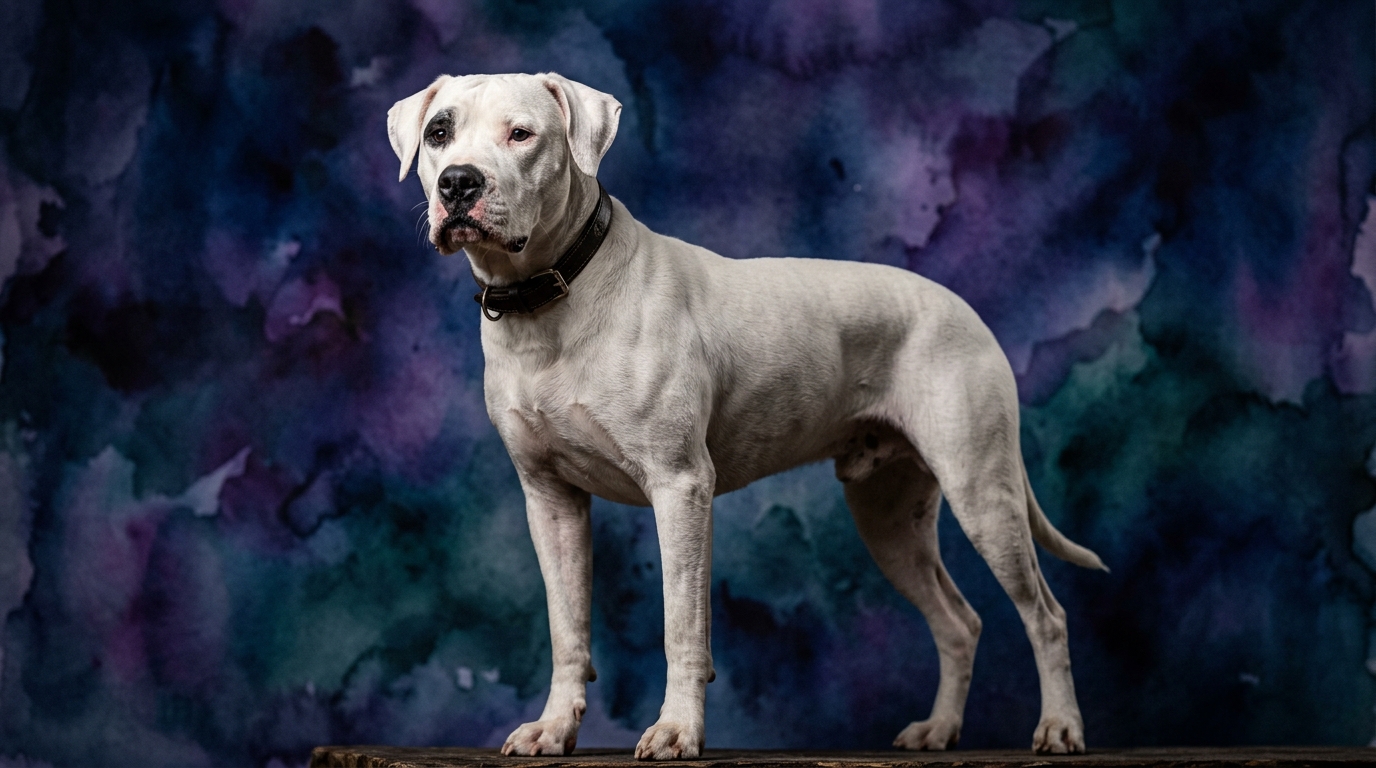
Side-by-Side IQ Profile: Dachshund vs. Dogo Argentino
Originating from Germany, the Dachshund was bred for independent hunting of burrow-dwelling prey, a heritage deeply influencing its cognitive makeup. Its Problem Solving score of 4/5 reflects a resourceful mind, adept at navigating complex environments to achieve a goal, often without direct human supervision. This breed's Training Speed is rated 2/5, indicating a strong independent streak that can translate into a challenge for obedience training, as their own agenda often takes precedence. Social Intelligence stands at 3/5, suggesting a moderate ability to interpret human cues, but perhaps less inclination to prioritize them over their own instincts. A striking 5/5 for Instinctive Drive highlights their profound prey drive and determination, a core part of their being. Finally, Memory at 3/5 suggests an average capacity for recall and learning patterns, but this is frequently overshadowed by their powerful instincts.
Hailing from Argentina, the Dogo Argentino was developed for hunting large game, requiring a blend of strength, courage, and controlled intelligence. Its Problem Solving ability scores 3/5, indicating a competent, focused approach to tasks, though perhaps less prone to the spontaneous, creative solutions seen in highly independent breeds. With a Training Speed of 3/5, Dogos are generally receptive to consistent guidance, eager to work alongside their handler, reflecting their working dog heritage. Their Social Intelligence also rates 3/5, meaning they possess a moderate understanding of human emotional states and intentions, often expressed through loyalty and protectiveness. The Instinctive Drive is 3/5, a balanced score that denotes a purposeful drive for their tasks but one that is generally more manageable and less overwhelming than the Dachshund's intense prey instinct. Memory, like the Dachshund, is rated 3/5, suggesting a solid, average capacity for retaining learned behaviors and routines.
Where the Dachshund Excels Cognitively
The Dachshund truly shines in its Problem Solving capacity and its formidable Instinctive Drive. With a 4/5 in Problem Solving compared to the Dogo Argentino's 3/5, the Dachshund demonstrates a superior aptitude for independent strategic thinking, particularly when it involves navigating obstacles or devising methods to reach a desired object or location. This isn't about solving complex puzzles for human entertainment, but rather an innate craftiness honed over centuries to outsmart burrowing animals. Their 5/5 Instinctive Drive is an unparalleled asset for their original purpose; this relentless determination to pursue and engage with prey, even in confined spaces, requires an incredible focus and cognitive stamina. While it can manifest as stubbornness in a domestic setting, this intense drive is a testament to a highly specialized cognitive function, allowing them to overcome physical challenges and mental fatigue in pursuit of their goal, a quality the Dogo Argentino's more balanced 3/5 drive doesn't match in sheer intensity.
Where the Dogo Argentino Holds a Cognitive Edge
The Dogo Argentino's cognitive strengths become apparent when considering attributes crucial for a cooperative working partner. Their Training Speed of 3/5 surpasses the Dachshund's 2/5, indicating a greater inherent willingness and capacity to absorb and execute commands. This difference is significant; a Dogo Argentino is generally more inclined to look to its handler for direction and respond predictably to consistent training, making them more pliable students. Furthermore, while their Instinctive Drive is numerically lower at 3/5, this balanced drive can be a cognitive advantage in a companion dog role. Unlike the Dachshund's singular, overwhelming prey drive, the Dogo's drive is more modulated, allowing for a broader range of focus and less distraction from environmental stimuli when engaged in tasks or social interactions. This means their powerful physical capabilities are guided by a more measured and controllable cognitive process, making them better suited for roles requiring precise, handler-directed action rather than autonomous pursuit. Their social intelligence, while rated the same, often manifests as a strong protective instinct and loyalty, requiring a nuanced understanding of social dynamics within their 'pack'.
Training Dynamics: Which Breed is Easier?
Based on their respective Training Speed scores, the Dogo Argentino (3/5) presents a more straightforward training experience than the Dachshund (2/5). The Dogo Argentino, bred to work closely with human hunters, possesses a foundational desire to cooperate and please its handler. This inherent receptiveness means they are generally quicker to grasp new commands and respond consistently, provided training is firm, fair, and positive. Their working background predisposes them to structure and purpose, making them eager participants in learning sessions. In contrast, the Dachshund's low Training Speed reflects its historical role as an independent hunter. They were expected to make their own decisions in the field, leading to a strong self-reliance and an often-cited "stubbornness" in modern training contexts. Their intense instinctive drive means they are easily distracted by scents or potential prey, often prioritizing these over human commands. Training a Dachshund demands exceptional patience, creativity, and a deep understanding of their hound nature, often requiring more repetition and varied motivational techniques to achieve consistent results compared to the more handler-focused Dogo.
Matching Breeds to Lifestyles: Active vs. Relaxed Owners
The choice between these two breeds for active versus relaxed owners hinges significantly on their physical needs and underlying cognitive drives. The Dogo Argentino is unequivocally suited for active owners. Their robust physique, working heritage, and moderate instinctive drive demand substantial daily exercise, including vigorous walks, runs, or structured play sessions. Cognitively, they thrive with mental stimulation that challenges their problem-solving and training speed, making them excellent partners for dog sports, advanced obedience, or even practical working tasks. Owners who enjoy an active outdoor lifestyle and are prepared to dedicate significant time to physical and mental engagement will find a Dogo Argentino a rewarding companion. The Dachshund, while small, is not necessarily for the "relaxed" owner in the traditional sense of a sedentary lap dog. Their powerful instinctive drive and problem-solving acumen mean they require consistent mental engagement and opportunities to "hunt" (even if it's just scent games in the backyard). While their exercise needs are less intense than a Dogo's, they are active explorers who enjoy short bursts of vigorous activity and digging. They are better suited for owners who appreciate a dog's independent spirit and are willing to engage their clever minds with puzzle toys, scent work, and consistent, albeit challenging, training. A truly relaxed owner might find the Dachshund's tenacious drive for exploration and occasional vocalizations more demanding than anticipated.
The Verdict
Choose the Dachshund if you appreciate a clever, independent spirit with a strong drive for exploration and are prepared for a rewarding, albeit challenging, training journey focused on channeling their tenacious instincts.
Opt for the Dogo Argentino if you lead an active lifestyle, seek a powerful yet cooperative companion for outdoor adventures and structured training, and are ready to provide consistent leadership and extensive physical outlets.
🧠 Find Your Pet's IQ Score
Our Pet IQ Lab assessment covers 25+ tests across 5 cognitive dimensions — personalized to your breed.
Take the Full IQ Test →Frequently Asked Questions
Is the Dachshund's high instinctive drive a problem for pet owners?
The Dachshund's 5/5 instinctive drive, primarily for hunting, can manifest as a strong prey drive towards small animals or a persistent desire to dig. While not inherently "problematic," it requires owners to provide appropriate outlets and consistent management to prevent undesirable behaviors, such as chasing squirrels or digging up the garden.
How does the Dogo Argentino's social intelligence impact its family role?
The Dogo Argentino's 3/5 social intelligence often translates into a strong loyalty and protective instinct towards its family, making them dedicated guardians. This requires early and consistent socialization to ensure they differentiate between welcome guests and perceived threats, fostering appropriate social behaviors.
Can a Dachshund and a Dogo Argentino live together peacefully given their different drives?
While possible with careful introduction and supervision, their differing drives, especially the Dachshund's high prey drive and the Dogo's protective nature, could pose challenges. Success depends heavily on individual temperaments, extensive socialization, and experienced owners who can manage their distinct needs and interactions.