
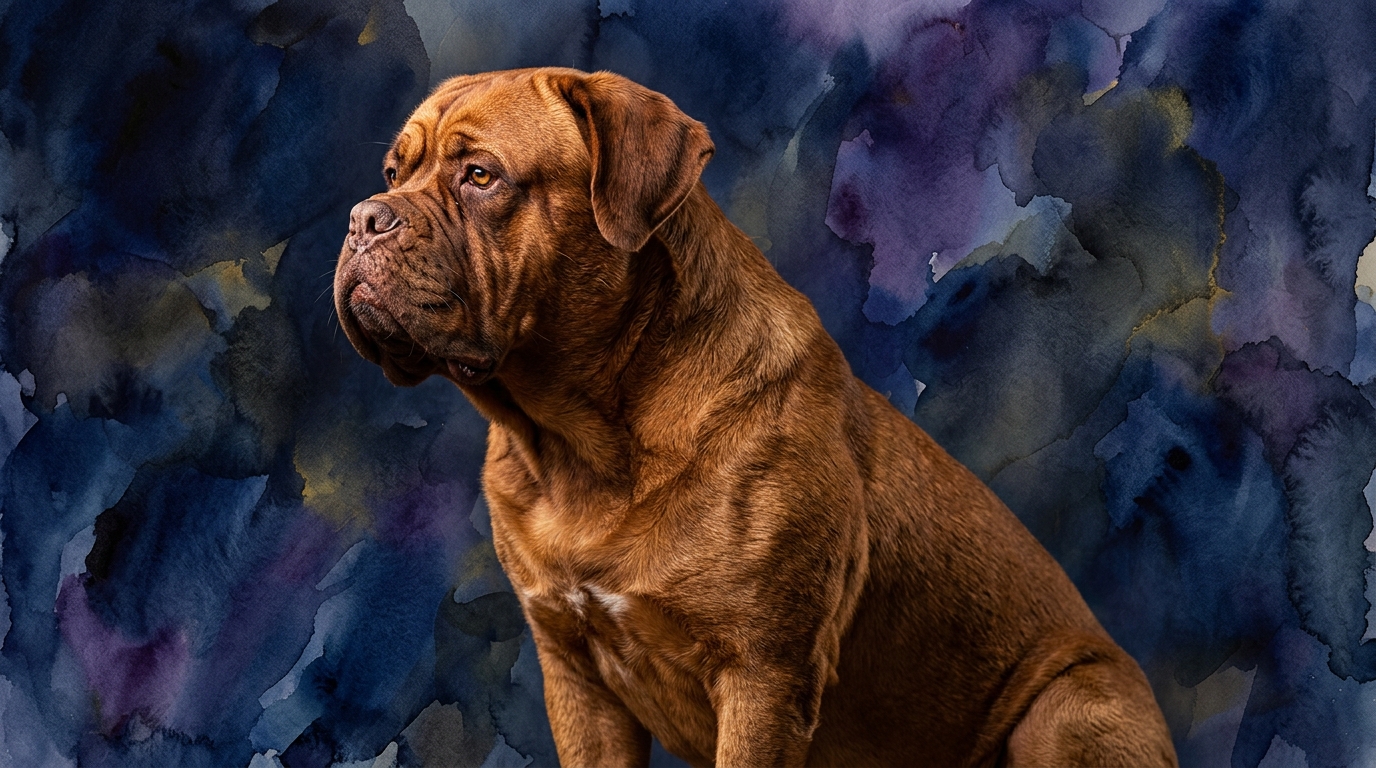
Side-by-Side Cognitive Profiles: Dachshund vs. Dogue de Bordeaux
At The Cosmic Pet Pet IQ Lab, we delve beyond superficial observations to understand the specific cognitive strengths and challenges of each breed. For the Dachshund, a hound originally bred for badger hunting, its profile reveals a fascinating blend of sharp wit and independent will. Its Problem Solving is rated at 4/5, indicating a high capacity for figuring out solutions to environmental puzzles, particularly when motivated by instinct or reward. Training Speed, however, stands at 2/5, reflecting a selective obedience often attributed to its independent working heritage. Social Intelligence is 3/5, meaning they can read human cues but often prioritize their own agenda. Their Instinctive Drive is a powerful 5/5, showcasing an intense focus on scent work and tunneling. Memory is a solid 3/5, allowing them to retain routines and experiences adequately.
The Dogue de Bordeaux, a robust working breed with a history spanning ancient Rome, presents a different cognitive blueprint. Its Problem Solving ability is rated at 3/5, suggesting competence in navigating daily challenges without the same intricate strategic thinking seen in the Dachshund. Training Speed is 3/5, indicating a moderate pace of learning and responsiveness to consistent guidance. Social Intelligence also registers at 3/5, signifying a capacity for forming strong bonds and understanding human intentions. The Instinctive Drive for the Dogue de Bordeaux is 3/5, encompassing its protective and guarding instincts rather than a strong prey drive. Memory, like its Dachshund counterpart, is 3/5, enabling it to recall learned behaviors and familiar faces effectively.
Where the Dachshund Excels Cognitively
The Dachshund's cognitive superiority primarily shines in two key areas: Problem Solving and Instinctive Drive. Their 4/5 rating in Problem Solving is a testament to their heritage as solo hunters. These dogs are adept at devising creative strategies to achieve their goals, whether it's figuring out how to open a cabinet to access treats or navigating a complex scent trail. This isn't about blind obedience, but an innate ability to assess a situation and independently formulate a plan to overcome obstacles. This tenacity and mental agility make them captivating companions for owners who appreciate a dog with a strong, independent mind.
Furthermore, the Dachshund's 5/5 Instinctive Drive is a cognitive powerhouse. While it can manifest as a challenging independence during training, it represents an unparalleled focus and dedication to tasks linked to their primal purpose. This intense drive means they can concentrate for extended periods on a scent or a perceived 'hunt,' demonstrating a singular mental channel that few other breeds possess. Owners who channel this drive into constructive activities like scent work or earthdog trials will discover a dog capable of remarkable, focused mental effort.
Cognitive Strengths of the Dogue de Bordeaux
The Dogue de Bordeaux, while not possessing the same intense problem-solving drive as the Dachshund, demonstrates its cognitive strengths in areas that foster a more harmonious human-canine partnership, particularly in its Training Speed and overall emotional stability. Their 3/5 Training Speed indicates a greater general willingness to learn and respond to commands compared to the Dachshund's 2/5. This moderate pace is often coupled with a desire to please their family, making them more receptive to consistent, positive reinforcement and structured learning environments. Their working dog background means they appreciate having a 'job' and a clear understanding of expectations, which translates into a more cooperative learner.
Beyond specific metrics, the Dogue de Bordeaux's cognitive profile often translates into a more emotionally steady presence. While both breeds share a 3/5 Social Intelligence, the Dogue's temperament typically leads to a calmer, more measured response in various social scenarios. This steadiness is a cognitive advantage for owners seeking a predictable and composed companion, less prone to the reactive bursts or single-minded pursuits that can characterize the highly driven Dachshund. Their capacity for calm observation and thoughtful interaction contributes to their role as devoted family protectors.
Training Dynamics: Which Breed is More Amenable?
When it comes to ease of training, the Dogue de Bordeaux generally presents a more straightforward path. Their 3/5 Training Speed, coupled with a moderate 3/5 Instinctive Drive, means they are typically more focused on their handler and less distracted by independent urges. Dogue de Bordeaux thrive on consistency and positive reinforcement, often showing a clear desire to understand and comply with commands. Their working breed heritage means they appreciate structure and purpose, making them receptive to learning and incorporating new behaviors into their routine. They are less likely to question a command or divert their attention to a self-appointed 'mission,' making foundational obedience a more predictable process.
The Dachshund, conversely, poses a greater training challenge, largely due to its 2/5 Training Speed and formidable 5/5 Instinctive Drive. Bred to hunt independently, they possess a strong sense of self-reliance and a tendency to make their own decisions. This translates into selective hearing when a more interesting scent or burrowing opportunity arises. Training a Dachshund requires immense patience, creativity, and high-value rewards to consistently capture and hold their attention. Owners must understand that they are working with a dog whose cognitive makeup prioritizes its ancient hunting instincts over immediate human directives, necessitating a highly engaging and consistent approach to achieve reliable obedience.
Matching Canine Cognition to Owner Lifestyles
For owners seeking an active, mentally engaging companion, the Dachshund offers a unique blend of needs. While not requiring extensive physical exertion like a large sporting breed, their intense 5/5 Instinctive Drive and 4/5 Problem Solving demand significant mental stimulation. A 'relaxed' owner who neglects to provide outlets for these cognitive strengths will likely find themselves with a bored and potentially destructive Dachshund who invents its own 'problems' to solve (like digging up the yard or redecorating furniture). Owners who enjoy interactive puzzle toys, scent work, short 'hunting' games, and consistent, engaging training methods will find the Dachshund a rewarding and intellectually stimulating companion.
The Dogue de Bordeaux, with its moderate 3/5 Instinctive Drive and Training Speed, generally suits owners who appreciate a more relaxed, yet structured, lifestyle. These dogs are not high-energy athletes but require regular, moderate exercise to stay healthy and mentally balanced. A relaxed owner who provides consistent routines, gentle but firm guidance, and daily walks will find a loyal and composed companion. While they don't possess the intense independent drive of a Dachshund, they still benefit from mental enrichment like basic obedience refreshers, puzzle feeders, and calm exploration of new environments. They thrive in a home where they feel like a valued, integrated family member with a clear understanding of their role and expectations.
The Verdict
Choose the Dachshund if you appreciate a dog with strong independent thought and a tenacious spirit, and are prepared to engage their keen problem-solving skills and intense instinctive drives through consistent, creative training and mental stimulation.
Choose the Dogue de Bordeaux if you seek a loyal, stable companion who is generally more amenable to training and thrives on a consistent routine, and you can provide firm, gentle guidance and moderate physical activity.
🧠 Find Your Pet's IQ Score
Our Pet IQ Lab assessment covers 25+ tests across 5 cognitive dimensions — personalized to your breed.
Take the Full IQ Test →Frequently Asked Questions
Are Dachshunds stubborn?
Dachshunds often exhibit a strong will and independent nature, which can be interpreted as stubbornness during training. Their high instinctive drive means they prioritize their own impulses, requiring patience and highly motivating rewards to capture their attention and cooperation.
Do Dogue de Bordeaux require a lot of mental stimulation?
While not as intensely driven by prey instincts as some breeds, Dogue de Bordeaux benefit significantly from regular mental engagement. Consistent training, puzzle toys, and new experiences keep their minds active and prevent boredom, contributing to a well-adjusted temperament.
How does Coren rank relate to these IQ metrics?
Coren's ranking primarily assesses 'working intelligence' or obedience. The Dachshund's #49 rank reflects their independent nature, which can make obedience training slower. The Dogue de Bordeaux, while unranked by Coren, demonstrates moderate training speed, suggesting a more cooperative disposition compared to the Dachshund.