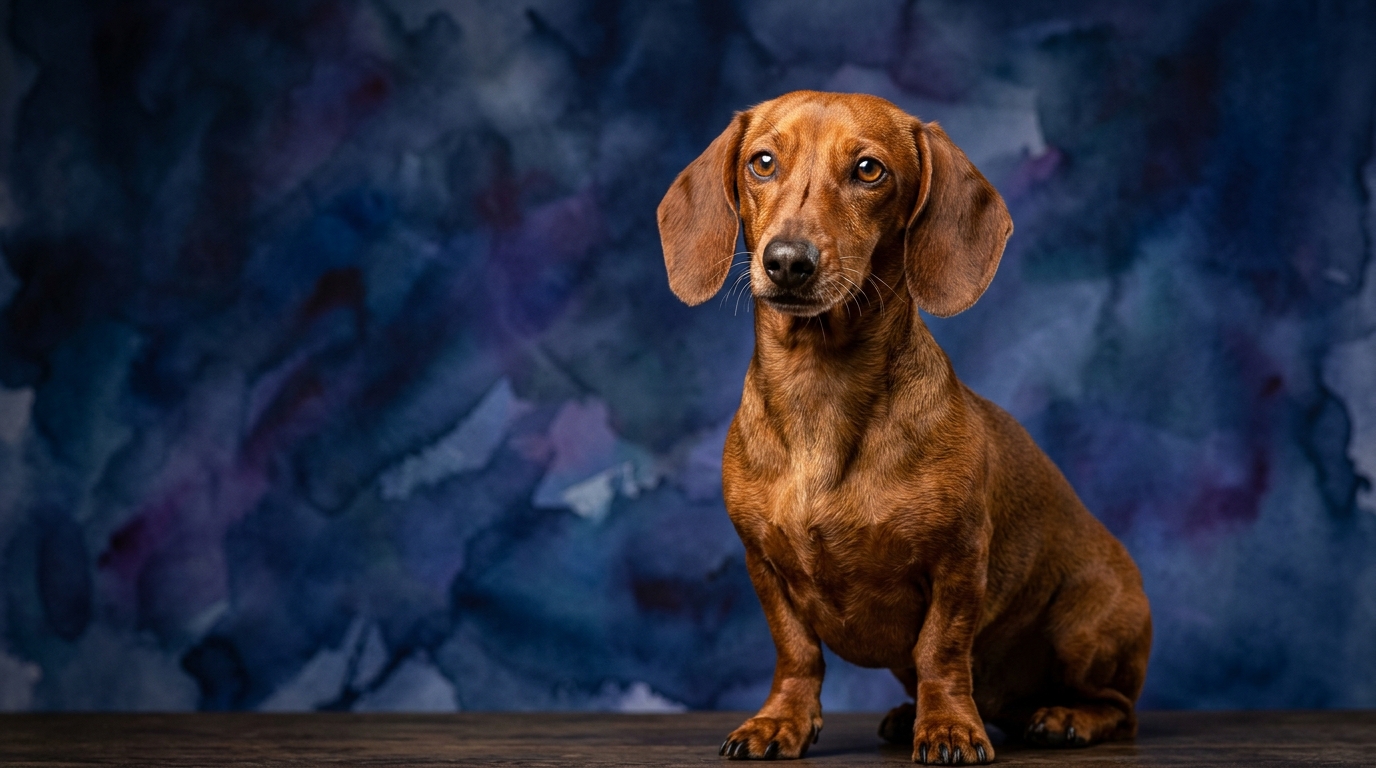

Side-by-Side Cognitive Profiles
The Cosmic Pet Pet IQ Lab employs a multi-dimensional approach to evaluating canine intelligence, moving beyond simple obedience to encompass a range of cognitive functions. For the Dachshund, a breed historically developed for hunting badgers, its profile reveals a Problem Solving score of 4/5, indicating a strong capacity for independent thought and overcoming obstacles. However, its Training Speed is rated 2/5, reflecting a certain independence and a focus on its own agenda rather than immediate human directives. Social Intelligence stands at 3/5, suggesting a moderate adaptability in social contexts, while its Instinctive Drive is a commanding 5/5, a testament to its deep-seated prey drive and tracking abilities. Memory is assessed at 3/5, solidifying its practical intelligence. Notably, the Dachshund holds a Coren rank of #49 among working and obedience breeds, a position often influenced by its strong independent streak rather than a lack of cognitive capacity.
In contrast, the English Toy Spaniel, a breed refined over centuries for royal companionship, presents a more balanced, albeit different, cognitive blueprint. Its Problem Solving ability scores 3/5, indicating a moderate capacity for navigating new challenges. Training Speed is rated 3/5, suggesting a more cooperative and responsive nature compared to the Dachshund, aligning with its role as a devoted companion. Social Intelligence also registers 3/5, reflecting its suitability for close human interaction. Its Instinctive Drive is 3/5, a significantly lower score than the Dachshund, indicating less emphasis on primal hunting behaviors and more on social engagement. Memory is consistent at 3/5. The English Toy Spaniel is not typically featured in Coren's rankings, which often highlight breeds with strong working and obedience aptitudes, further underscoring its distinct purpose and cognitive leanings.
Where the Dachshund Excels Cognitively
The Dachshund's cognitive strengths lie profoundly in its Problem Solving (4/5) and Instinctive Drive (5/5). These scores are not arbitrary; they are deeply rooted in its original purpose as a fearless hunter of burrow-dwelling animals. A Dachshund faced with a scent trail or a perceived challenge will exhibit remarkable tenacity and independent thought. They are adept at strategizing how to get to a desired object, even if it requires digging, maneuvering around obstacles, or figuring out complex routes. This isn't just brute force; it's a form of practical intelligence, where the dog must assess a situation and apply its physical and mental resources to achieve a goal. Their high instinctive drive means they are incredibly focused and persistent once their natural urges are engaged, whether it's tracking a squirrel or finding a hidden treat. This intense focus, while sometimes challenging for owners, is a hallmark of their specific cognitive brilliance.
Where the English Toy Spaniel Shines Cognitively
While the English Toy Spaniel may not boast the Dachshund's intense problem-solving for independent tasks, its cognitive profile shines in areas that prioritize adaptability and cooperative learning. Its Training Speed of 3/5, compared to the Dachshund's 2/5, indicates a greater willingness to engage with human instruction and a quicker grasp of new commands. This responsiveness stems from its centuries-long role as a companion animal, where attentiveness to human cues was paramount. Their moderate Instinctive Drive (3/5) means they are less likely to be distracted by primal urges, allowing for greater focus during training sessions. The English Toy Spaniel's cognitive strength lies in its capacity for gentle interaction and its ability to integrate seamlessly into a human household, learning routines and responding to social nuances with a calm and eager-to-please demeanor, making them excellent candidates for cooperative learning experiences.
Training Dynamics: Dachshund vs. English Toy Spaniel
When it comes to ease of training, the English Toy Spaniel generally presents a more straightforward experience than the Dachshund, a difference directly reflected in their Training Speed scores. The Dachshund's 2/5 for Training Speed is a direct consequence of its powerful Instinctive Drive (5/5) and independent problem-solving nature. These dogs were bred to work alone, making their own decisions underground, which translates into a strong-willed personality. They understand commands but often weigh them against their own desires, such as following an intriguing scent or pursuing a perceived prey. Training a Dachshund requires immense patience, consistency, and highly motivating rewards to convince them that complying with human directives is more rewarding than their independent pursuits. Owners often describe them as 'stubborn,' but it's more accurately a manifestation of their deeply ingrained cognitive independence.
Conversely, the English Toy Spaniel's 3/5 Training Speed is indicative of a breed that is typically more biddable and eager to please. Bred for companionship, these dogs thrive on human interaction and approval. Their moderate Instinctive Drive (3/5) means fewer distractions from ingrained hunting behaviors, allowing them to focus more readily on their owner's instructions. They respond well to positive reinforcement and gentle methods, often learning new commands with relative ease and maintaining a desire to cooperate. While they may not excel in complex, independent problem-solving tasks, their strength lies in their willingness to engage in cooperative learning, making them a more forgiving and generally less challenging breed for novice trainers seeking a responsive companion.
Matching Breeds to Lifestyles: Active vs. Relaxed Owners
The distinct cognitive profiles of the Dachshund and the English Toy Spaniel make them suitable for very different owner lifestyles. An owner who thrives on engaging a dog's independent spirit and providing outlets for strong instinctive drives would find a rewarding partnership with a Dachshund. These dogs aren't necessarily for owners seeking extreme physical activity, but rather those who appreciate mental stimulation, scent work, and problem-solving games. Their high instinctive drive means they need consistent engagement to prevent boredom, which can manifest as digging or vocalization. Owners who are prepared for a dog with a persistent personality, who enjoys training challenges, and can manage a strong-willed companion will find the Dachshund a fascinating and devoted partner.
The English Toy Spaniel, with its balanced cognitive scores and lower instinctive drive, is an ideal match for more relaxed owners who prioritize companionship and a calm home environment. These dogs are content with moderate physical activity, preferring gentle walks and indoor play to strenuous outdoor adventures. Their higher training speed and social intelligence mean they integrate smoothly into family life, thriving on close human connection and providing a soothing presence. Owners seeking a devoted lap companion, who appreciates a dog that is generally responsive to training and enjoys quiet evenings, will find the English Toy Spaniel's gentle and affectionate nature to be a perfect fit. They are less prone to independent problem-solving that might lead to mischief and are more focused on their human's presence.
The Verdict
Choose the Dachshund if you appreciate a tenacious, independent thinker with a strong will, desiring to engage in stimulating activities like scent work and valuing a distinct personality over effortless obedience.
Opt for the English Toy Spaniel if you seek a gentle, responsive companion who thrives on human connection, offering a more pliable training experience and a calm, affectionate presence in the home.
🧠 Find Your Pet's IQ Score
Our Pet IQ Lab assessment covers 25+ tests across 5 cognitive dimensions — personalized to your breed.
Take the Full IQ Test →Frequently Asked Questions
Are Dachshunds stubborn because they aren't smart?
No, their perceived 'stubbornness' often stems from their strong instinctive drive and independent problem-solving abilities, crucial for their original hunting purpose. They prioritize their own impulses and a fascinating scent, rather than a lack of understanding human commands.
How does a dog's Coren rank relate to its IQ scores?
Coren's ranking primarily assesses 'working and obedience intelligence,' which correlates strongly with training speed and willingness to comply. Breeds with high instinctive drives, like the Dachshund, might have lower Coren ranks if their drives make them less biddable, even if their independent problem-solving is high.
Can an English Toy Spaniel be trained for more complex tasks?
While their problem-solving score is moderate, their balanced training speed and social intelligence mean they are capable of learning a wide range of tasks. Their focus might be on cooperative activities and tricks that involve human interaction, rather than independent problem-solving like a Dachshund might excel at.