
Side-by-Side IQ Profile: Dachshund
The Dachshund, ranking #49 on the Coren intelligence scale, presents a unique cognitive blueprint. Their Problem Solving ability stands at an impressive 4/5, reflecting a keen, often tenacious, capacity to navigate complex environments or devise strategies to achieve a desired outcome, particularly when a scent trail or hidden 'prey' is involved. This breed exhibits a Training Speed of 2/5, indicating that while capable of learning, their independent nature and strong instincts often mean a slower acquisition of new commands, requiring consistent, patient instruction. Social Intelligence is rated 3/5; they form deep bonds with their inner circle and can interpret human emotions, yet they might appear reserved or even aloof with strangers, prioritizing their familial connections. Their Instinctive Drive is a remarkable 5/5, a testament to their heritage as badger hunters, manifesting as an intense focus on scent work, digging, and pursuit. Finally, their Memory is solid at 3/5, enabling them to recall learned behaviors and routines effectively, though perhaps not with the precision of breeds excelling in intricate obedience tasks.
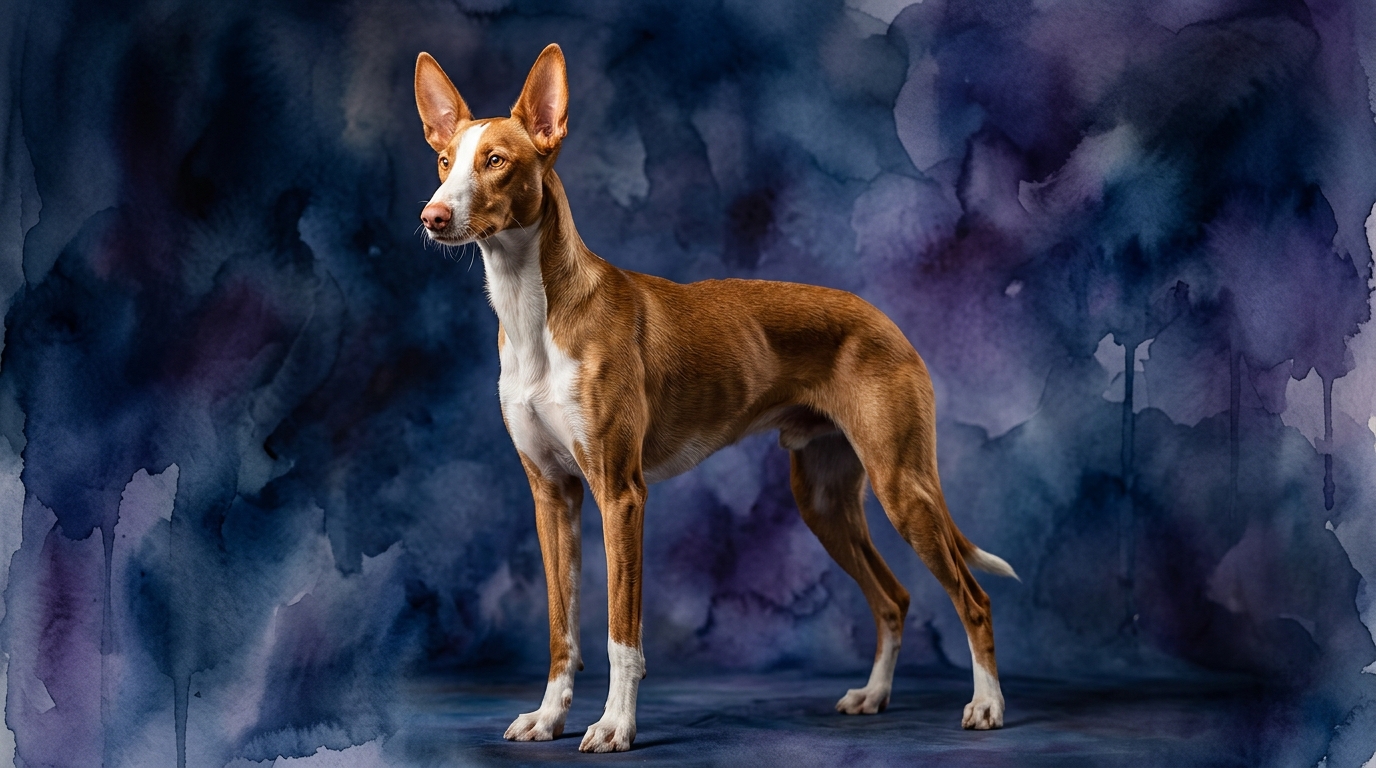
Side-by-Side IQ Profile: Ibizan Hound
The elegant Ibizan Hound, positioned at #53 on the Coren scale, offers a contrasting cognitive profile. Their Problem Solving score is 3/5, suggesting a practical intelligence focused on efficient movement and quick decision-making during a hunt, rather than elaborate strategic planning. With a Training Speed of 3/5, they generally learn new tasks at a moderate pace, showing a cooperative spirit that, while not always eager-to-please, is more amenable than some other hounds. Their Social Intelligence also sits at 3/5, indicating they are capable of forming strong, affectionate relationships with their family and understanding social cues, though they often maintain a quiet dignity and can be somewhat reserved around newcomers. The Ibizan's Instinctive Drive is 3/5, primarily centered on their exceptional sight-hunting abilities; they are driven to chase and pursue fast-moving objects, but typically lack the persistent burrowing or intense scent-tracking of their Dachshund counterparts. Their Memory, like the Dachshund's, is rated 3/5, allowing them to retain training and experiences, contributing to their overall adaptability.
Where the Dachshund Wins Cognitively
The Dachshund's cognitive strengths shine particularly bright in areas demanding persistence and clever, independent thought. Their Problem Solving score of 4/5, compared to the Ibizan Hound's 3/5, means they are adept at figuring out intricate puzzles, whether it’s how to access a forbidden treat or tunnel under a fence. This isn't just about simple logic; it's about a deep-seated resourcefulness, a determination to overcome obstacles through strategic, often unconventional, means. They excel at 'thinking outside the box' if the box is preventing them from their goal, demonstrating a sophisticated form of instrumental learning.
Furthermore, the Dachshund’s Instinctive Drive, an unparalleled 5/5 against the Ibizan’s 3/5, represents a cognitive advantage in focused, sustained effort. This isn't merely a physical impulse; it's a powerful mental engine that drives them to concentrate intensely on a scent trail, to dig with relentless purpose, or to pursue a perceived quarry with singular dedication. This profound intrinsic motivation allows them to maintain focus on a task far longer than many breeds, showcasing a cognitive tenacity that is truly remarkable, even if it sometimes conflicts with human directives.
Where the Ibizan Hound Wins Cognitively
While the Dachshund excels in persistent problem-solving, the Ibizan Hound demonstrates a distinct cognitive edge in areas of responsiveness and balanced drive. Their Training Speed, rated 3/5 compared to the Dachshund's 2/5, indicates a greater receptivity to learning new commands and routines. This isn't to say they are always eager-to-please, but their independence is often tempered with a willingness to engage and cooperate, making the process of teaching new behaviors generally smoother and more predictable. They absorb lessons with a steadier pace, reflecting a cognitive flexibility that allows them to integrate new information more readily.
The Ibizan Hound’s more moderate Instinctive Drive (3/5) also presents a cognitive advantage in adaptability and broad environmental engagement. While still possessing a strong prey drive, it is typically less all-consuming than a Dachshund's. This allows them to allocate cognitive resources more broadly, observing their surroundings with a keen eye for movement and reacting with swift, decisive action. Their problem-solving, though rated lower, is often expressed through rapid assessment and agile execution in open spaces, demonstrating a different, equally effective, form of practical intelligence focused on immediate environmental navigation rather than intricate, burrowing strategies.
Which is Easier to Train and Why
When it comes to ease of training, the Ibizan Hound generally presents a more straightforward experience than the Dachshund. The Ibizan’s Training Speed of 3/5, coupled with their moderate Instinctive Drive, means they are typically more amenable to instruction. While they retain a sighthound's characteristic independence and may not perform tricks purely for human approval, they are often receptive to clear, consistent training methods, especially when positive reinforcement is employed. Their cognitive makeup allows them to process and integrate new commands with reasonable efficiency, leading to a smoother learning curve for both dog and owner.
In contrast, the Dachshund’s Training Speed of 2/5 is significantly impacted by their extraordinary Instinctive Drive (5/5) and high Problem Solving (4/5). These traits, while admirable, can translate into what many owners perceive as stubbornness. A Dachshund is often busy 'thinking' about its own agenda – a fascinating scent, a potential digging spot, or how to outsmart a barrier – making it challenging to redirect their attention to human-initiated commands. Their strong will means that training often involves a battle of wits and requires exceptional patience, creativity, and unwavering consistency to override deeply ingrained behavioral patterns and convince them that your command is more rewarding than their independent pursuits.
Which Suits Active Owners vs Relaxed Owners
For owners seeking a companion that thrives on consistent, vigorous activity, the Ibizan Hound is the clear choice. These elegant sighthounds are built for speed and endurance, and their cognitive and physical well-being is intrinsically linked to regular opportunities for running and exploring in secure, expansive environments. Their moderate instinctive drive means they need an outlet for chasing and bursts of energy, making them ideal for individuals or families who embrace an active outdoor lifestyle, perhaps enjoying hiking, lure coursing, or long runs where their physical prowess and keen observational intelligence can be fully expressed.
The Dachshund, while not a sedentary breed, suits a different type of owner. Their compact size might suggest a relaxed companion, but their robust cognitive profile demands significant mental engagement. While they enjoy lounging, their high problem-solving skills and intense instinctive drive require owners to be proactive in providing outlets for their intelligence, through puzzle toys, scent games, or consistent training. They are better suited for owners who can provide bursts of activity and regular mental stimulation, managing their strong drive and clever antics, rather than those seeking a truly 'relaxed' companion in terms of mental demands or behavioral supervision.
The Verdict
Opt for a Dachshund if you appreciate a clever, tenacious companion with a formidable personality, ready to engage in mental games and requiring dedicated management of their powerful instincts.
Select an Ibizan Hound if you lead an active lifestyle, can provide ample space for running, and value a graceful, somewhat independent companion that is generally more cooperative in training.
🧠 Find Your Pet's IQ Score
Our Pet IQ Lab assessment covers 25+ tests across 5 cognitive dimensions — personalized to your breed.
Take the Full IQ Test →Frequently Asked Questions
Are Dachshunds difficult to train due to their intelligence?
Dachshunds are not difficult to train because they lack intelligence; rather, their significant problem-solving skills and intense instinctive drive mean they often have their own agenda. This can make training challenging, as it requires consistent, positive reinforcement to guide their strong will and redirect their focus from innate pursuits.
How much exercise does an Ibizan Hound need to stay mentally stimulated?
Ibizan Hounds require substantial physical exercise, primarily opportunities to run freely in a safe, fenced area, which also provides mental stimulation by allowing them to engage their sighthound instincts. Beyond physical activity, they benefit from consistent training and interactive play to keep their minds engaged, preventing boredom.
Do these breeds get along well with other pets?
Both breeds can coexist with other pets, especially if socialized from a young age, but their respective drives need consideration. Dachshunds have a strong prey drive towards small animals, while Ibizan Hounds are sighthounds with a drive to chase, so supervision and careful introductions are crucial for harmony.