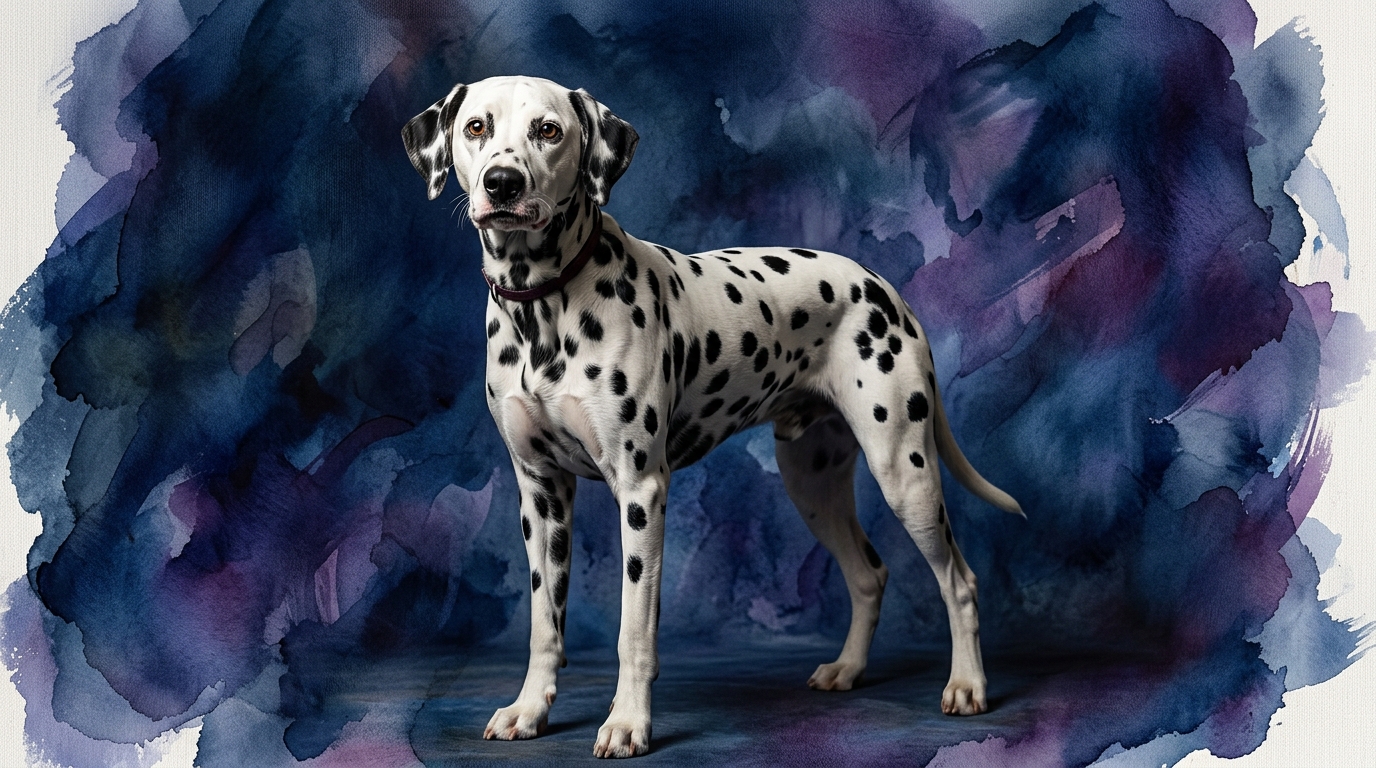

Side-by-Side IQ Profile: Dissecting Cognitive Dimensions
The Cosmic Pet Pet IQ Lab employs five key dimensions to evaluate canine intelligence: Problem Solving, Training Speed, Social Intelligence, Instinctive Drive, and Memory. While both the Dalmatian, a Non-Sporting breed ranked #39 by Coren, and the Working breed Dogo Argentino exhibit their own unique mental architectures, a closer look at these scores reveals their specific aptitudes.
For **Problem Solving**, both breeds score 3/5. This indicates a moderate capacity for navigating novel situations and figuring out solutions independently. A Dalmatian might apply this to creatively accessing a forbidden treat or finding new routes on a walk, often driven by curiosity. A Dogo Argentino, while possessing the same score, might direct this aptitude towards assessing environmental changes or strategizing during a perceived threat, albeit within a more focused, purpose-driven context.
Regarding **Training Speed**, both breeds again register 3/5. This suggests that neither dog is inherently a quick study, requiring consistent, clear, and engaging methods to internalize commands and behaviors. Dalmatians can sometimes be perceived as stubborn if not sufficiently motivated, while Dogos demand firm, confident leadership and a clear understanding of the 'why' behind a task.
**Social Intelligence** is where the first notable difference appears: the Dalmatian scores 4/5, while the Dogo Argentino scores 3/5. The Dalmatian's higher score reflects a greater capacity for understanding human social cues, intentions, and emotional states, making them more attuned to nuanced interactions within a family or social group. Their history as carriage dogs required them to work closely with humans and horses, fostering this sensitivity. The Dogo Argentino's 3/5 indicates a functional social understanding, primarily focused on their immediate family unit, often with a more direct and less subtle interpretation of social signals, prioritizing loyalty and protection.
In terms of **Instinctive Drive**, the Dalmatian scores 4/5, surpassing the Dogo Argentino's 3/5. For Dalmatians, this high drive manifests as sustained energy, endurance, and a persistent focus on tasks, particularly those involving movement or repetitive actions. Their historical role running alongside carriages demanded immense stamina and a consistent desire to work. The Dogo Argentino's 3/5 drive, while lower numerically, is intensely focused and purposeful, geared towards specific tasks like hunting large game or protecting territory. It's a drive characterized by bursts of powerful, single-minded determination rather than continuous, generalized endurance.
Finally, for **Memory**, the Dalmatian again holds an advantage with a score of 4/5 compared to the Dogo Argentino's 3/5. This suggests Dalmatians generally retain commands, routines, and past experiences with greater consistency and for longer durations. They are more likely to recall complex sequences or remember specific interactions over time. The Dogo Argentino's memory, while perfectly adequate for learning essential commands and recognizing familiar individuals and places, may be less inclined towards the recall of a wide variety of less critical stimuli.
Where Dalmatian Wins Cognitively
The Dalmatian's cognitive strengths primarily lie in their superior Social Intelligence and Memory. Their 4/5 Social Intelligence means they are often more perceptive of human moods and subtle cues, making them potentially more adaptable to varied social interactions and family dynamics. This can translate to a dog that seems to 'read' its owner better, anticipating needs or reacting appropriately to emotional shifts. This sensitivity, combined with their 4/5 Memory, allows them to learn complex routines and remember a broader range of commands, leading to more consistent responses over time once training is established. Their higher Instinctive Drive (4/5) also contributes to their cognitive wins, as it fuels their sustained engagement in activities, making them excellent partners for endurance sports or long, varied training sessions where focus is key.
Where Dogo Argentino Wins Cognitively
While the Dogo Argentino's raw scores might appear lower in some areas, their cognitive wins are deeply embedded in their specialized purpose and the intensity of their focus. Their 3/5 Problem Solving, when combined with their powerful instinctive drive (3/5, but intensely directed), makes them formidable in situations requiring decisive action and assessment of their environment, particularly concerning protection or tracking. Their intelligence shines in their unwavering determination and ability to compartmentalize tasks. For instance, a Dogo's problem-solving might be acutely honed to identify and respond to perceived threats, demonstrating a strategic assessment rather than generalized curiosity. Their lower Social Intelligence (3/5) might be interpreted as a strength in its directness; they are less distracted by social nuances and more focused on their primary role of guardianship, making them highly reliable in their designated duties once properly trained and socialized.
Which is Easier to Train and Why
Given that both breeds score 3/5 for Training Speed, neither the Dalmatian nor the Dogo Argentino can be definitively labeled as 'easy' to train. However, their differing cognitive profiles suggest distinct approaches and potential challenges. The Dalmatian's higher Social Intelligence (4/5) and Memory (4/5) can be advantageous; they are more likely to pick up on subtle training cues and remember what they've learned over time. This means they might respond well to positive reinforcement and varied training exercises that keep them mentally engaged. However, their high Instinctive Drive (4/5) and moderate Problem Solving (3/5) can also lead to an independent streak or boredom if training isn't consistently stimulating and fun, requiring a trainer to be creative and engaging to maintain focus.
The Dogo Argentino, with a 3/5 across the board for Problem Solving, Training Speed, Social Intelligence, Instinctive Drive, and Memory, requires a very different training philosophy. Their training demands clarity, consistency, and a strong, confident leader. Their lower Social Intelligence means they may not respond as readily to nuanced cues, necessitating direct and unambiguous commands. Their powerful, focused instinctive drive requires channeling, not suppression; training must provide a clear purpose and structure to their actions. While they may not learn a wide array of tricks quickly, they can excel at specific, task-oriented training, such as protection work or advanced obedience, when given clear direction and motivation. Therefore, neither is easier; they simply require different pedagogical strategies, with the Dalmatian benefiting from engagement and variety, and the Dogo from structure and purpose.
Which Suits Active Owners vs. Relaxed Owners
Neither the Dalmatian nor the Dogo Argentino are suitable companions for relaxed or sedentary owners; both require significant commitment to physical and mental activity. The Dalmatian, with its 4/5 Instinctive Drive and historical role as a carriage dog, possesses immense stamina and needs extensive daily exercise. This includes long runs, energetic play, and engaging mental stimulation to prevent boredom and destructive behaviors. Owners who enjoy running, hiking, or canine sports like agility will find a Dalmatian a willing and capable partner, thriving on varied and sustained activity.
The Dogo Argentino also demands an active lifestyle, but the nature of that activity often differs. Their 3/5 Instinctive Drive is intensely purposeful, requiring rigorous physical exercise that aligns with their powerful build and hunting heritage. This might include long, brisk walks, structured training sessions, or activities that allow them to expend energy in a focused manner. While they don't have the same endurance as a Dalmatian, they need activities that challenge their strength and focus. Owners must be prepared to provide consistent, disciplined exercise and mental engagement that channels their protective instincts appropriately. Both breeds demand active engagement, but the Dalmatian thrives on sustained endurance and varied tasks, while the Dogo benefits from structured, purposeful physical and mental work.
The Verdict: When to Choose Each
The Verdict
Choose a Dalmatian if you are an active owner seeking a socially attuned, perceptive companion who thrives on varied activities, consistent engagement, and can appreciate a dog with a strong memory and sustained drive for endurance.
Opt for a Dogo Argentino if you are an experienced, confident owner prepared to provide clear leadership, structured training, and channel a powerful, focused instinctive drive into appropriate outlets, valuing a devoted and purposeful guardian.
🧠 Find Your Pet's IQ Score
Our Pet IQ Lab assessment covers 25+ tests across 5 cognitive dimensions — personalized to your breed.
Take the Full IQ Test →Frequently Asked Questions
Do Dalmatians and Dogo Argentinos learn at the same pace?
Both breeds score 3/5 for Training Speed, indicating they learn at a moderate pace. However, the Dalmatian's higher Social Intelligence and Memory might make them appear to pick up on nuanced cues more readily, while the Dogo requires more direct and consistent instruction to internalize commands.
Which breed is more adaptable to different living situations?
The Dalmatian's higher Social Intelligence (4/5) generally makes them more adaptable to varied social settings and family dynamics, provided their significant exercise needs are met. The Dogo Argentino, while adaptable to their family, often thrives best in a stable, structured environment where their protective instincts can be managed consistently.
How do their social intelligence scores impact family life?
A Dalmatian's 4/5 Social Intelligence means they are often more sensitive to family moods and social cues, potentially leading to more harmonious and responsive interactions within the household. The Dogo Argentino's 3/5 score suggests their social interactions are typically more direct and primarily focused on their immediate family unit, prioritizing loyalty and protection over nuanced social engagement.