Side-by-Side Cognitive Profiles
To understand the unique mental landscapes of the Dalmatian and the Entlebucher Mountain Dog, we evaluate them across five key cognitive dimensions. These scores, based on observed breed tendencies, offer a nuanced perspective on their intellectual strengths and how they interact with the world.
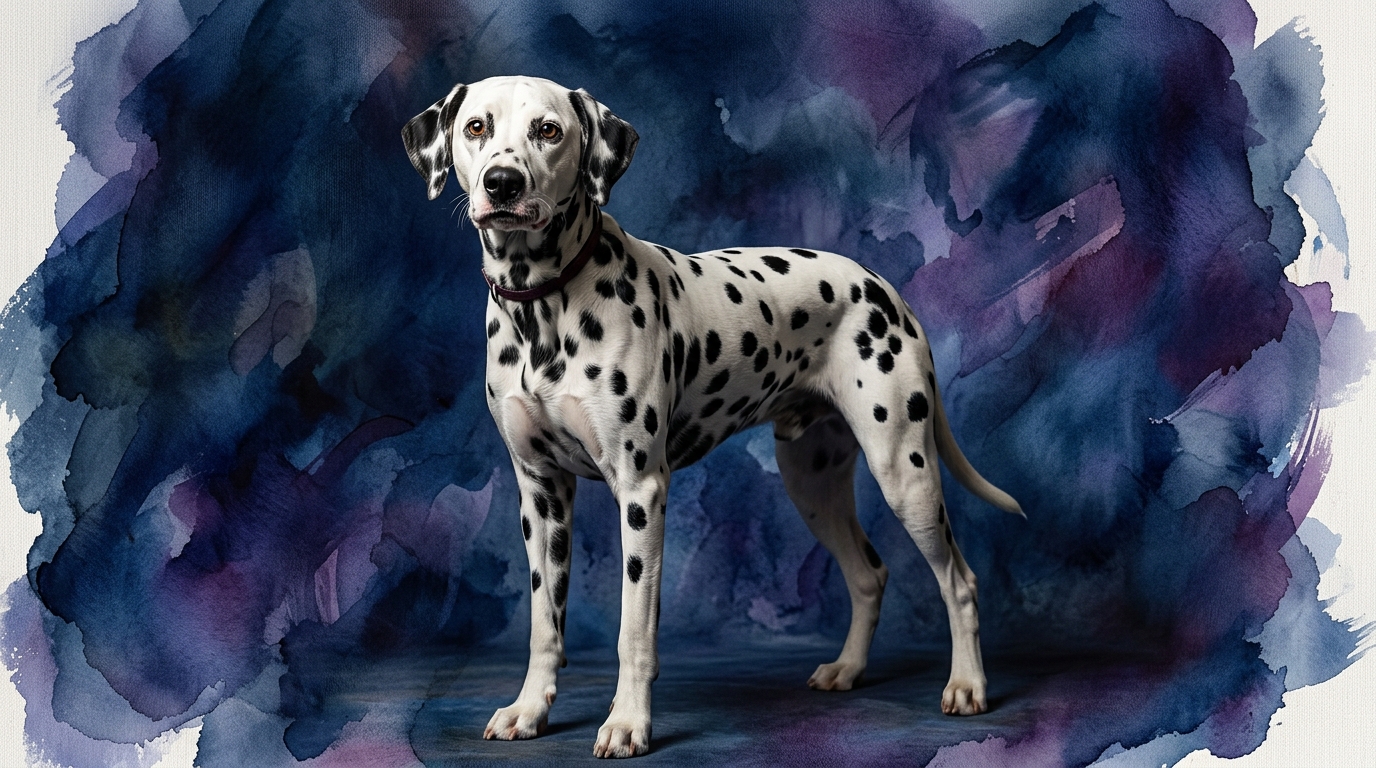
The Dalmatian, a breed historically associated with coaches and circuses, demonstrates a problem-solving capacity of 3/5, indicating they can navigate moderately complex challenges but may not always seek the most innovative solutions. Their training speed is also 3/5, suggesting a steady learning pace that benefits from engaging methods. Where Dalmatians truly stand out is in their social intelligence (4/5), showing a deep attunement to human emotions and social cues. Their instinctive drive (4/5) is pronounced, reflecting a strong desire for purpose and activity, while their memory (4/5) allows for excellent recall of routines and experiences.
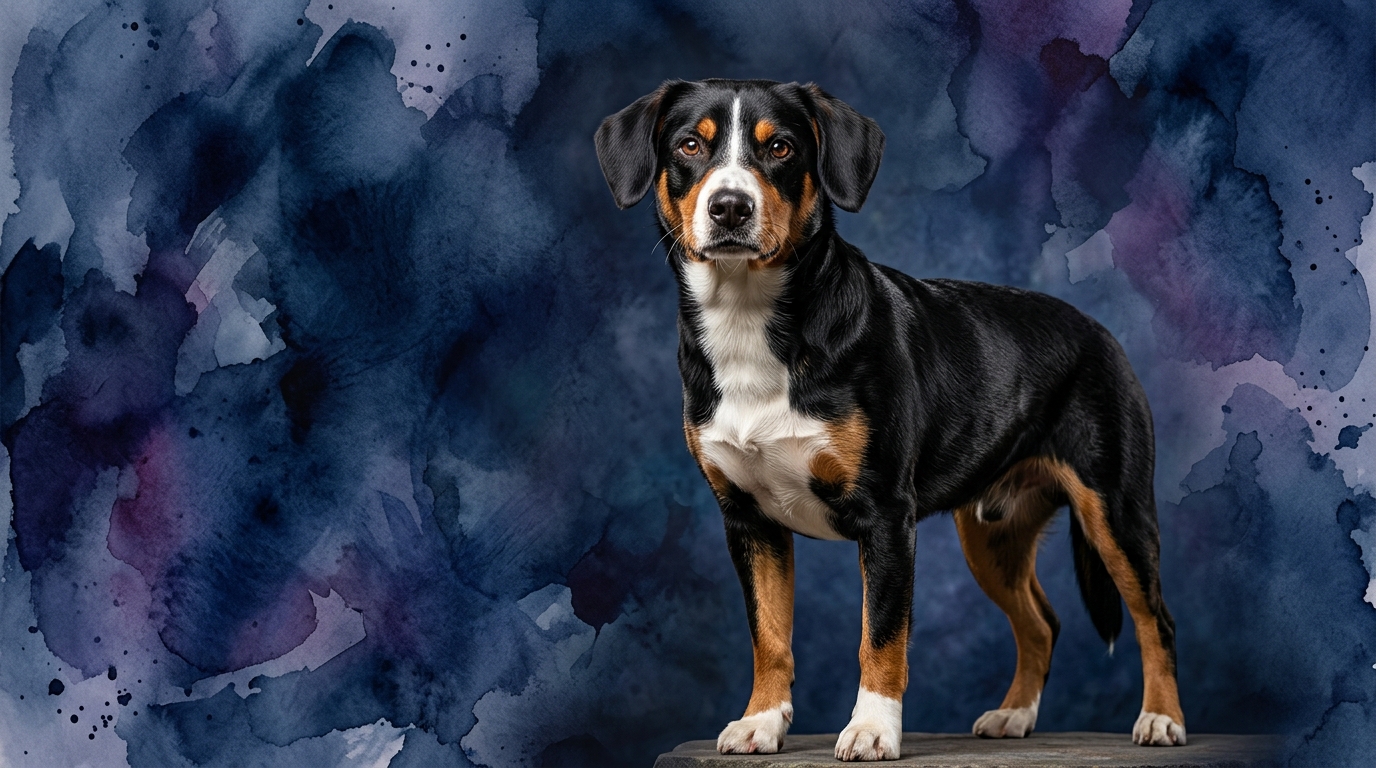
The Entlebucher Mountain Dog, a robust herding breed from Switzerland, shares a problem-solving score of 3/5, often approaching tasks with a practical, learned strategy rather than novel invention. Their training speed is also 3/5, meaning they absorb new commands effectively with clear, consistent instruction. Their social intelligence is rated 3/5, indicating a sufficient understanding of social dynamics, though perhaps with a more reserved emotional expression. An instinctive drive of 3/5 points to a moderate but persistent need for purposeful activity, stemming from their working heritage. Finally, their memory score of 3/5 suggests adequate retention, building effectively through consistent reinforcement over time.
Where the Dalmatian Wins Cognitively
The Dalmatian's cognitive advantages primarily manifest in their superior social intelligence and memory. With a social intelligence score of 4/5 compared to the Entlebucher's 3/5, Dalmatians often exhibit a remarkable perceptiveness regarding human moods and family dynamics. They are adept at picking up on subtle non-verbal cues, which can lead to a more intuitive and responsive companionship. This heightened social awareness means they frequently seek to be an integral part of family life, often mirroring the emotional climate of their household.
Their memory, also rated 4/5 against the Entlebucher's 3/5, allows Dalmatians to retain complex routines and established boundaries with considerable reliability. Once a Dalmatian has learned a specific behavior or a sequence of actions, it tends to be deeply ingrained. This strong recall can be a significant asset in long-term obedience training and in maintaining household rules, provided initial lessons are clear and consistent. This memory also extends to remembering past interactions, both positive and negative, influencing their future responses to people and situations.
Furthermore, the Dalmatian’s stronger instinctive drive (4/5 versus 3/5 for the Entlebucher) translates into a more pronounced eagerness for engagement and a defined 'job.' This drive, when appropriately channeled through activities like running, agility, or obedience, makes them dedicated and enthusiastic partners. For owners seeking a dog with an unwavering commitment to shared activities, the Dalmatian's cognitive profile in these areas presents a distinct advantage.
Where the Entlebucher Mountain Dog Wins Cognitively
While the Entlebucher Mountain Dog's scores in problem-solving and training speed match the Dalmatian's, their cognitive strengths often lie in the *application* of these abilities, rooted deeply in their herding heritage. Entlebuchers bring a distinct practical focus to their cognitive approach, excelling in situations that demand methodical execution and focused attention. Their problem-solving, while rated 3/5, is often characterized by a calm persistence and a preference for learned, effective strategies over spontaneous innovation, which can be invaluable in structured working environments.
The Entlebucher’s instinctive drive, at 3/5, while lower than the Dalmatian’s, can be considered a cognitive win for specific types of owners. This moderate drive often means they possess a substantial desire for purposeful activity without the relentless intensity seen in some higher-drive breeds. It implies a more manageable level of energy for consistent engagement, making them highly capable working companions who can sustain focus on tasks without becoming easily overstimulated or demanding constant, high-octane entertainment.
Moreover, their social intelligence, rated at 3/5, often translates into a self-possessed and less overtly expressive demeanor. While they form deep bonds with their families, Entlebuchers tend to exhibit a robust independence in their thinking. This cognitive trait can be advantageous for owners who appreciate a dog capable of making sound, if sometimes self-directed, decisions within established boundaries, and who may not require a companion that constantly seeks emotional validation or responds with acute sensitivity to every human nuance. Their steadfastness and clear-headedness in tasks make them reliable partners.
Which Is Easier to Train and Why
Both Dalmatians and Entlebucher Mountain Dogs share a 'training speed' rating of 3/5, yet their distinct cognitive profiles mean that successful training approaches differ significantly. Dalmatians, with their 4/5 social intelligence and memory, often learn rapidly when training leverages their desire for connection and their ability to recall complex sequences. They are attuned to their handler's emotions, meaning enthusiastic praise can greatly expedite learning, but perceived frustration can equally hinder progress. Their strong instinctive drive (4/5) means that while they are highly motivated to participate in activities, this drive also necessitates consistent mental and physical engagement to prevent boredom from leading to self-directed, less desirable behaviors. Training a Dalmatian often benefits from making it a collaborative, engaging experience that taps into their perceptiveness and desire for interaction.
Entlebuchers, also at 3/5 for training speed, respond best to clear, structured commands and a strong sense of purpose. Their herding background means they appreciate defined tasks and boundaries, and their 3/5 instinctive drive, while substantial, is often more focused on directed, purposeful work. They are less likely to be swayed by subtle emotional cues from their handler, preferring direct, unambiguous communication. Their slightly lower social intelligence (3/5) means they might not seek constant validation in the same way as a Dalmatian, making them less prone to 'cuddle for forgiveness' tactics and more reliant on the consistency and fairness of the training regimen itself. For an owner who values a dog that understands and executes a job with methodical precision, the Entlebucher’s grounded nature can be very rewarding, provided the training is firm, consistent, and provides clear direction.
Suitability for Active vs. Relaxed Owners
It's important to clarify that neither the Dalmatian nor the Entlebucher Mountain Dog is truly suited for a 'relaxed' owner in the sense of minimal daily activity. Both breeds possess significant working heritage and require substantial engagement. The distinction lies more in the *intensity* and *type* of activity they thrive on.
Dalmatians, with their 4/5 instinctive drive and historical role as coach dogs, are ideal for genuinely active owners. These are individuals who enjoy sustained, vigorous exercise such as long-distance running, hiking, or participation in dog sports like agility, flyball, or canicross. A Dalmatian needs a clear purpose and ample physical and mental outlets; without sufficient engagement, their considerable energy and perceptive mind can lead to restless and inventive, often undesirable, behaviors. Their high social intelligence also means they want to be actively involved in family adventures, not just observers.
Entlebucher Mountain Dogs, while also requiring active owners, might be a better fit for those whose activity preferences lean towards structured, purposeful work or long, exploring walks rather than relentless speed. Their 3/5 instinctive drive is substantial enough to demand daily engagement, such as extensive hikes, scent work, advanced obedience, or even practical herding exercises that tap into their natural instincts. They are excellent companions for owners who enjoy consistent, outdoor adventures and value a dog that approaches tasks with focus and determination. While they appreciate family presence, their social intelligence (3/5) suggests they might tolerate a bit more independent downtime or less constant emotional reciprocity than a Dalmatian, fitting well with owners who enjoy a dog with a robust, self-possessed character.
The Verdict
Choose the Dalmatian if you seek a highly perceptive, socially attuned companion for vigorous, sustained activities, and appreciate a dog with strong memory for routines and experiences.
Choose the Entlebucher Mountain Dog if you prefer a purposeful, methodical partner for structured outdoor activities and value a dog with a robust, independent working mindset.
🧠 Find Your Pet's IQ Score
Our Pet IQ Lab assessment covers 25+ tests across 5 cognitive dimensions — personalized to your breed.
Take the Full IQ Test →Frequently Asked Questions
Are Dalmatians good family dogs?
Dalmatians often bond deeply with their families due to their 4/5 social intelligence, making them perceptive companions. They thrive in active households that can provide consistent engagement and mental stimulation, integrating well into family life.
Do Entlebucher Mountain Dogs bark a lot?
Entlebucher Mountain Dogs, with their herding instincts, can be vocal as watchdogs, alerting to perceived threats or strangers. Consistent training and socialization from an early age are crucial to manage their alert barking tendencies effectively.
What kind of mental exercise do these breeds need?
Dalmatians benefit from puzzle toys and advanced obedience to challenge their memory and problem-solving, alongside physical exertion. Entlebuchers excel with scent work, agility, and task-oriented training that engages their herding instincts and methodical approach.