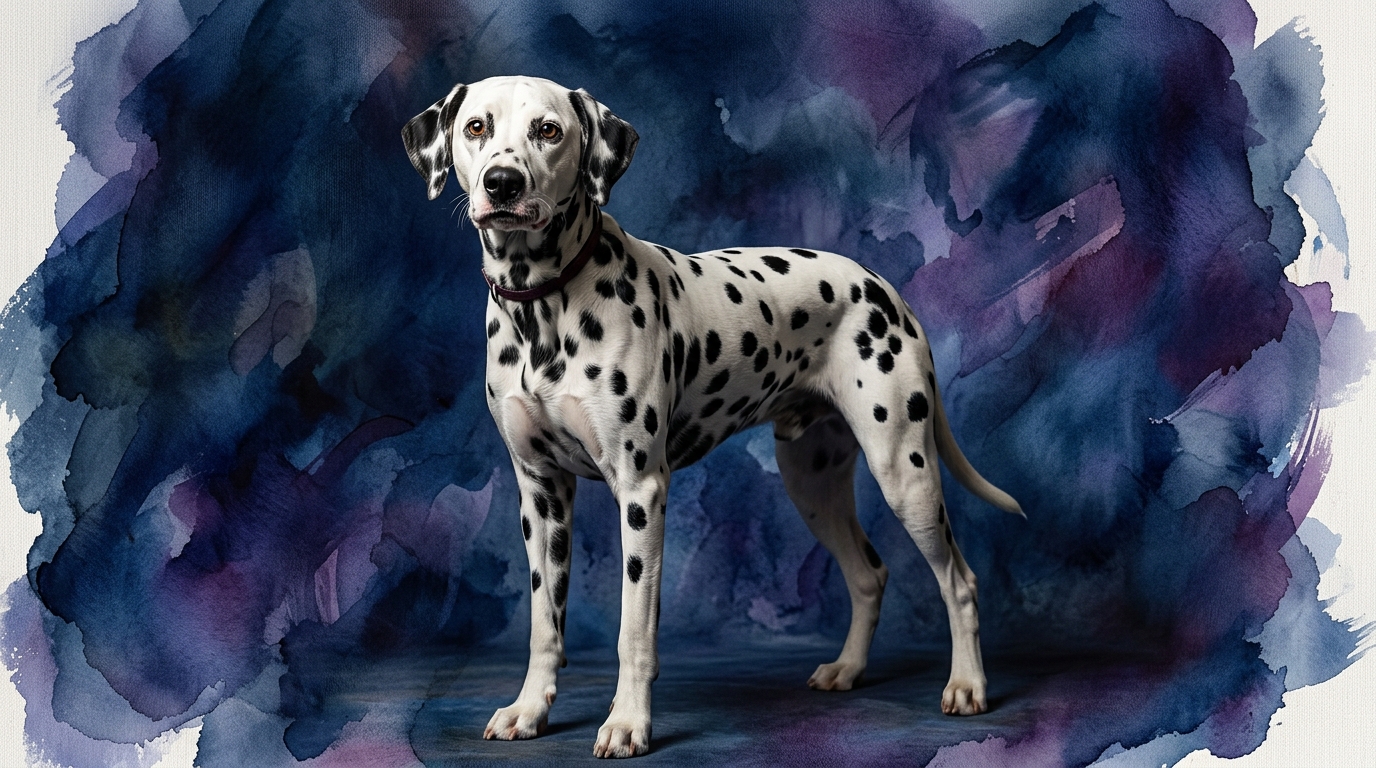

The Cosmic Pet Pet IQ Lab: Dalmatian vs. Saint Bernard Cognitive Profiles
At The Cosmic Pet Pet IQ Lab, we analyze canine intelligence across five key dimensions, providing a comprehensive understanding of each breed's unique cognitive landscape. For the Dalmatian, a breed from the Non-Sporting Group, their Coren rank of #39 positions them above average in working and obedience intelligence, suggesting a solid foundation for trainability and understanding. Their problem-solving ability is rated 3/5, indicating a moderate capacity to navigate novel challenges and adapt with guidance, often relying on learned patterns. Training speed for Dalmatians is also 3/5; they pick up new commands at a steady pace, thriving with consistent and engaging methods to maintain their focus. Where they truly shine is in social intelligence, scoring 4/5, demonstrating a keen perception of human cues and social dynamics, which fosters strong bonds. Their instinctive drive, rated 4/5, reflects their historical role as coach dogs, manifesting as a strong need for activity and purpose. Finally, their memory is robust at 4/5, allowing them to retain learned behaviors and experiences over time, which greatly aids in long-term training and recall.
The Saint Bernard, a distinguished member of the Working Group, holds a Coren rank of #65, placing them in the average category for working and obedience intelligence. Their cognitive profile presents a different set of strengths and areas requiring patience. Like the Dalmatian, their problem-solving capacity is 3/5, showing a moderate ability to figure out solutions, though they may prefer established routines and take more time to process complex tasks. Their training speed, however, is 2/5, meaning new commands and behaviors demand significant repetition and a patient approach. Despite this, their social intelligence matches the Dalmatian at 4/5, showcasing a profound awareness of human emotions and family dynamics, which underpins their deeply empathetic connections. The Saint Bernard's most defining cognitive trait is its exceptional instinctive drive, scoring a perfect 5/5. Rooted in their history as alpine rescue dogs, this manifests as a powerful desire to protect, assist, and connect, often accompanied by an impressive sense of purpose. Their memory is rated 3/5, indicating they retain important lessons and relationships but might need more frequent refreshers for less practiced commands.
Where the Dalmatian's Mind Shines
The Dalmatian's cognitive edge largely rests in its combination of efficient memory and a balanced, adaptable instinctive drive, paired with respectable training speed. With a memory score of 4/5, they are adept at retaining sequences of commands and routines, making advanced obedience or trick training more fluid once the initial concept is grasped. This strong recall allows them to build a broad repertoire of learned behaviors over time, minimizing the need for constant reteaching. Their training speed of 3/5, while not the fastest, ensures a steady progression through curricula without excessive repetition, provided training remains consistent and engaging. This efficiency allows owners to introduce more varied challenges and activities. Furthermore, their instinctive drive, rated 4/5, is channeled into active engagement and participation, making them eager partners in structured activities like agility, rally, or canine freestyle. This adaptability allows them to excel in diverse roles where a quick recall of varied commands and the ability to generalize learned behaviors to new situations are crucial. They are often quicker to pick up on subtle cues and adjust their actions accordingly, reflecting their problem-solving and memory working in dynamic tandem.
Unpacking the Saint Bernard's Cognitive Strengths
The Saint Bernard's profound strength lies in its exceptional instinctive drive, rated 5/5, coupled with its robust social intelligence. This breed's entire cognitive framework is deeply rooted in its historical purpose: search and rescue in treacherous alpine conditions. This manifests as an unparalleled innate ability to sense distress, navigate challenging environments, and demonstrate unwavering loyalty and protective instincts towards their human companions. While their training speed (2/5) and memory (3/5) are more moderate, their powerful drive means that when a task aligns with their inherent purpose or involves protecting their family, their focus and determination are formidable. For instance, a Saint Bernard might be slower to learn a complex agility course, but their internal compass and drive to 'help' or 'find' can be astonishing in real-world scenarios, such as locating a lost family member. Their social intelligence, matching the Dalmatian at 4/5, ensures this powerful drive is directed with empathy and a keen understanding of human needs, making them incredibly intuitive and gentle giants in family settings. They process the emotional states of their human companions with remarkable accuracy, often responding with a comforting presence or a watchful eye, embodying their role as a devoted protector and confidant.
Trainability: A Tale of Two Paces
When considering ease of training, the Dalmatian generally presents a more straightforward path for the average owner. Their training speed of 3/5, combined with a 4/5 memory, means they absorb and retain commands with reasonable efficiency. They respond well to positive reinforcement, short, engaging sessions, and consistent methods, progressing through basic and intermediate obedience relatively smoothly. Dalmatians possess a spirited nature and a good attention span when engaged, allowing for productive training sessions that build on previous successes. Owners will find that once a concept is understood, it tends to stick, thanks to their solid memory. In contrast, the Saint Bernard, with a training speed of 2/5 and a memory of 3/5, requires a significantly more patient and persistent approach. While they are eager to please their human companions due to their high social intelligence, their processing speed for new information is slower. Owners should anticipate more repetition, shorter training bursts to prevent mental fatigue, and longer overall training periods to solidify commands. This isn't a lack of willingness, but rather a difference in cognitive processing; Saint Bernards need concepts broken down into smaller, more digestible steps and repeated consistently over time to integrate them into their behavioral repertoire. Distractions can also be a greater challenge for the Saint Bernard during learning phases, necessitating calm, focused environments for optimal learning.
Matching Minds to Lifestyles: Active vs. Relaxed Owners
The Dalmatian, with its 4/5 instinctive drive and balanced cognitive profile, is an ideal match for active owners who relish regular engagement and structured activities. Their historical role as coach dogs means they thrive on purpose and movement, possessing an inherent stamina and desire for participation. Owners who enjoy running, hiking, or participating in dog sports like agility, flyball, or advanced obedience will find a willing and energetic partner in a Dalmatian. Their cognitive capacity supports learning complex routines and responding quickly in dynamic environments, making them suitable for competitive endeavors. A Dalmatian needs consistent mental and physical stimulation to prevent boredom and channel its innate energy constructively, lest it be directed towards less desirable behaviors. Conversely, the Saint Bernard, despite its immense physical size, is better suited for more relaxed owners who appreciate a steadfast, gentle companion rather than a high-energy activity partner. While they require daily walks and outdoor time to maintain health, their activity needs are less intense and more focused on companionship than a Dalmatian's. Their 5/5 instinctive drive, focused on caretaking and presence, aligns perfectly with owners seeking a loyal, empathetic family member who is content with a moderate pace of life. Their lower training speed also means less pressure for rapid learning, allowing for a more relaxed, relationship-focused training journey where consistency and patience are prioritized over speed.
The Verdict: Choosing Your Canine Companion
The Verdict
Choose a Dalmatian if you seek an active, engaging partner for diverse activities, valuing a quicker learner with a strong memory and adaptable drive for structured play and training challenges. They thrive with owners who provide consistent mental and physical stimulation.
Opt for a Saint Bernard if your lifestyle is more relaxed, prioritizing an empathetic, loyal companion with a powerful protective instinct and a gentle, patient demeanor, understanding their training requires dedication and a calm approach.
🧠 Find Your Pet's IQ Score
Our Pet IQ Lab assessment covers 25+ tests across 5 cognitive dimensions — personalized to your breed.
Take the Full IQ Test →Frequently Asked Questions
Are Dalmatians difficult to train due to their energy?
Dalmatians have a moderate training speed (3/5) and a strong memory (4/5), making them quite trainable with consistent, positive reinforcement. Their energy (instinctive drive 4/5) needs to be channeled through regular exercise and mental stimulation to maintain focus during training sessions, but they respond well to engaging activities.
Do Saint Bernards truly have a 'slow' intelligence?
Saint Bernards possess a different cognitive processing speed, with a training speed of 2/5, meaning they learn new commands more slowly than many breeds. However, their social intelligence (4/5) and exceptional instinctive drive (5/5) for protection and empathy mean they are deeply perceptive and purpose-driven, just requiring more patience in formal training.
Which breed is better with children based on their IQ profiles?
Both breeds score 4/5 in social intelligence, indicating a strong capacity to understand and interact with human family members, including children. Saint Bernards' powerful instinctive drive (5/5) often translates into a gentle, protective nature towards children, while Dalmatians, with their active drive, thrive in families that can provide consistent engagement and boundaries for their spirited play.