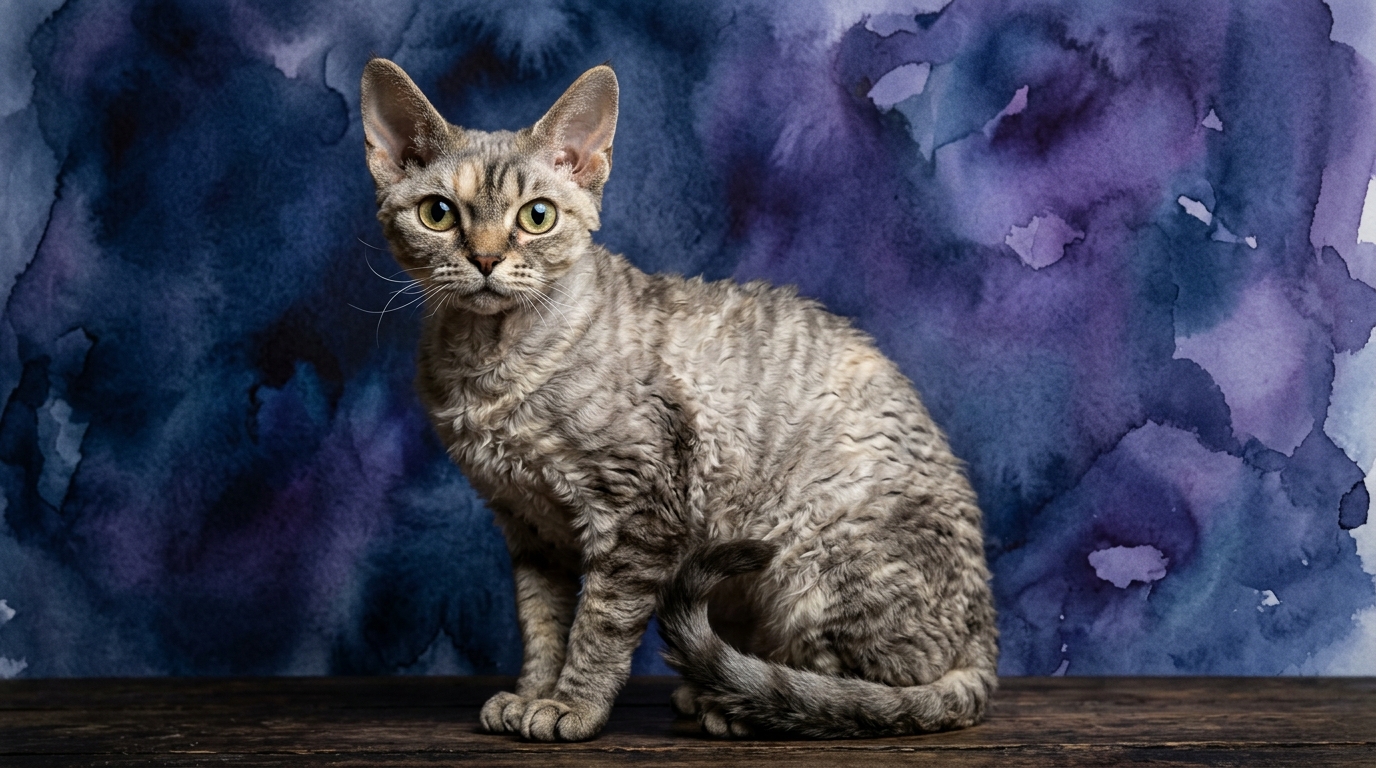
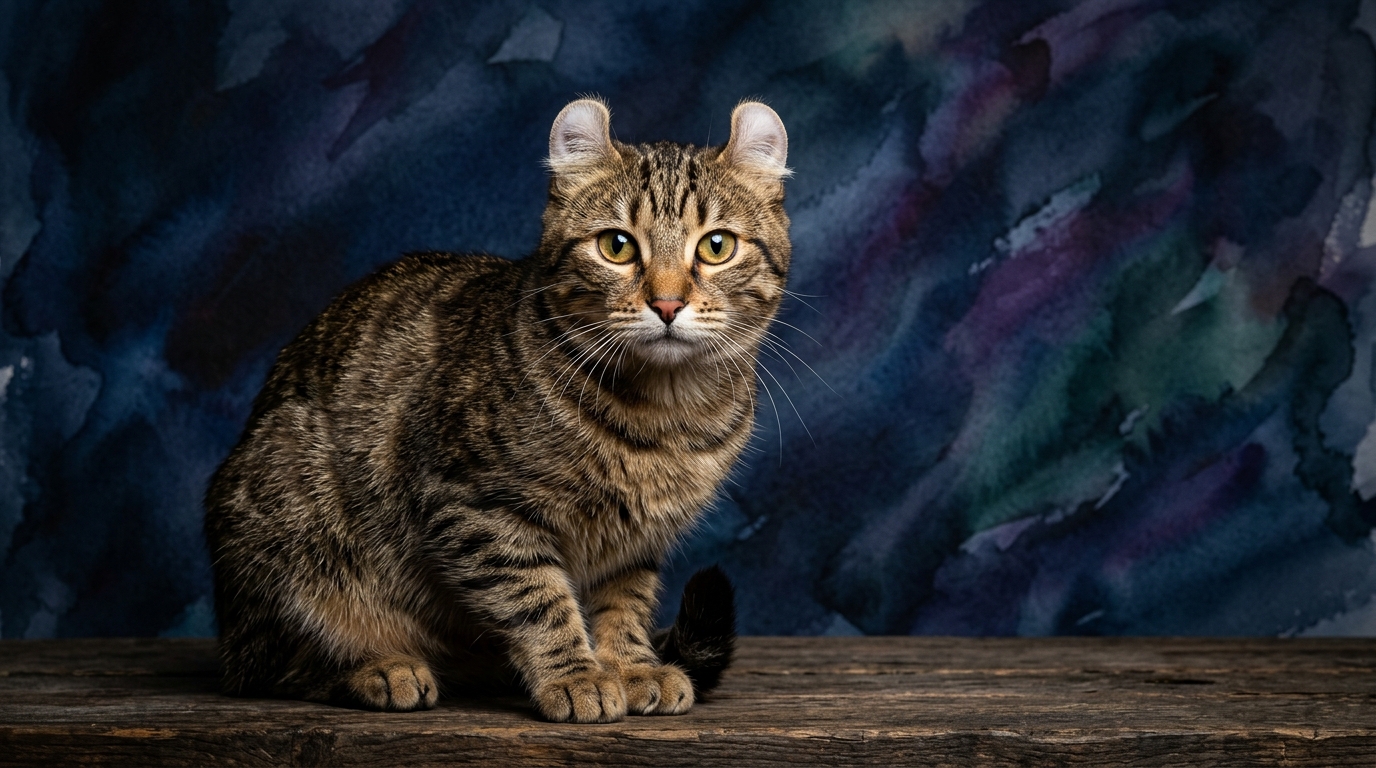
Side-by-Side IQ Profile: Devon Rex vs. American Curl
The Cosmic Pet Pet IQ Lab employs five distinct dimensions to map feline intelligence, offering a granular view into their cognitive landscapes. For the Devon Rex, problem-solving registers at a robust 4 out of 5, indicating a cat adept at navigating complex situations, often figuring out how to open doors, manipulate puzzle toys, or strategize for desired outcomes. Their training speed is exceptional, earning a perfect 5 out of 5, signifying a remarkable ability to grasp new commands and routines with minimal repetition. Social intelligence, also at a 5 out of 5, highlights their profound capacity to read and respond to human emotions, forming deep, empathic connections and adapting fluidly to household dynamics. An instinctive drive of 3 out of 5 suggests a moderate engagement with hunting behaviors, enjoying interactive play without an overwhelming predatory focus, while their memory, at 4 out of 5, allows them to retain routines, specific interactions, and learned behaviors over extended periods.
In contrast, the American Curl presents a more uniformly balanced cognitive profile. Their problem-solving ability scores 3 out of 5, meaning they are capable of navigating challenges but may approach them with less intricate strategy, often relying on more direct or trial-and-error methods to achieve their goals. Training speed is also rated 3 out of 5, indicating a steady learning pace that benefits significantly from consistent reinforcement and patient guidance. Social intelligence, at 3 out of 5, describes a friendly and adaptable cat that enjoys companionship and family life, readily integrating into their environment, though perhaps without the intense, nuanced emotional attunement seen in the Rex. Their instinctive drive is comparable to the Devon Rex at 3 out of 5, showing a similar enjoyment of interactive play that simulates hunting without being overly consuming. Finally, memory for the American Curl is rated 3 out of 5, allowing them to recall familiar routines, faces, and basic learned behaviors effectively, maintaining a stable understanding of their world.
Where the Devon Rex Wins Cognitively
The Devon Rex consistently demonstrates cognitive advantages across several key dimensions, setting them apart as particularly sharp feline thinkers. Their superior problem-solving (4/5) means they are not just curious, but genuinely analytical; a Devon Rex might systematically test various methods to open a treat-dispensing puzzle, rather than merely batting at it randomly. This aptitude extends to their environment, where they might quickly discern the mechanism behind a childproof lock or learn to open specific types of cabinet doors to access desired items. Coupled with their perfect training speed (5/5), this breed can master multi-step commands and intricate tricks with remarkable swiftness, often requiring only a few repetitions to solidify a new behavior. Owners frequently report their Devon Rex learning to fetch, walk on a leash, or even perform complex sequences of actions on cue. Their profound social intelligence (5/5) allows them to pick up on subtle human emotional shifts, often offering comfort or seeking engagement precisely when it's most needed, demonstrating an almost intuitive understanding of their human companions' moods. This keen awareness facilitates a deeper, more reciprocal bond, making them incredibly responsive to social cues. Furthermore, their 4/5 memory ensures that these learned skills, social interactions, and environmental strategies are retained for extended periods, meaning a trick learned months ago can often be recalled with minimal prompting, and a forgotten routine can be reinstated quickly. This strong memory also contributes to their ability to recognize and greet individuals they haven't seen in a long time with genuine familiarity.
Where the American Curl Wins Cognitively
While the American Curl's individual cognitive scores may not reach the peak levels of the Devon Rex, their balanced profile of 3 out of 5 across problem-solving, training speed, social intelligence, and memory presents its own unique advantages, creating a remarkably stable and adaptable companion. Their moderate problem-solving (3/5) means they are less likely to engage in mischievous, complex schemes to outsmart their owners for forbidden treats or adventures; instead, they approach challenges with a more straightforward, less disruptive curiosity. This makes them generally easier to manage within a household, as they are less inclined to develop intricate strategies for opening cabinets or escaping enclosures. Their steady training speed (3/5) ensures that while they may not pick up new commands instantaneously, they are consistently capable learners who, with patient and positive reinforcement, reliably integrate new behaviors into their repertoire. This predictability can be a significant 'win' for owners who prefer a more gradual and consistent learning journey, rather than the rapid, sometimes overwhelming, pace of a quicker learner. The American Curl's social intelligence (3/5) fosters a friendly, affectionate, and consistently good-natured disposition without the potential for intense emotional demands or sensitivities that can sometimes accompany higher social scores. They are reliably sociable and welcoming to guests, adaptable to new environments, and content with a steady flow of interaction, making them excellent family pets that don't require constant, intense engagement to feel fulfilled. Their 3/5 memory supports a consistent understanding of household routines and familiar faces, contributing to their reputation as stable, easygoing cats who thrive on a predictable environment. This combination of traits means the American Curl 'wins' by offering a wonderfully consistent, low-drama cognitive experience, perfectly suited for owners seeking a harmonious and predictable feline presence.
Which is Easier to Train and Why
Without question, the Devon Rex emerges as the significantly easier cat to train, a direct result of their perfect 5/5 training speed and robust 4/5 memory. Their cognitive wiring allows them to make rapid associations between commands, actions, and rewards. A Devon Rex can often learn a new trick or command within just a few short training sessions, absorbing complex sequences with an almost intuitive understanding. For instance, teaching a Devon Rex to "sit" or "stay" might involve only a handful of repetitions before the behavior is reliably offered. This speed is further bolstered by their high social intelligence (5/5), which makes them exceptionally attuned to human cues, body language, and vocal inflections, allowing them to interpret and respond to training signals more accurately. They genuinely enjoy the interactive process of learning with their human companions, often viewing training as a stimulating game rather than a chore. Their strong memory ensures that once a behavior is learned, it is retained effectively, requiring minimal refreshers.
In contrast, while the American Curl is certainly trainable, their 3/5 training speed and 3/5 memory mean the process requires more patience and consistency. An American Curl will learn, but at a more deliberate pace. Teaching them "sit" might take more sessions and repetitions compared to a Devon Rex, and consistency in cues and rewards is paramount to solidify the learning. They are less likely to spontaneously offer new behaviors or pick up on subtle signals without explicit reinforcement. Their moderate social intelligence means they are responsive to their owners, but perhaps less driven by the intricate social nuances that motivate a Devon Rex. Training an American Curl is a rewarding experience, but owners should be prepared for a steadier, more incremental progression, relying on positive reinforcement and clear, repetitive instruction to build a strong foundation of learned behaviors.
Which Suits Active Owners vs. Relaxed Owners
For the active owner seeking a feline companion who thrives on engagement and mental stimulation, the Devon Rex is an ideal match. Their high problem-solving (4/5) and social intelligence (5/5) mean they require regular opportunities to flex their cognitive muscles. They are not content to simply observe; they want to participate, explore, and interact. An active owner can engage a Devon Rex with complex puzzle feeders, teach them a wide array of tricks, introduce them to leash walking, or even integrate them into family outings. This breed flourishes when given varied mental challenges and consistent, meaningful social interaction. A Devon Rex left without sufficient stimulation might invent their own "puzzles," potentially leading to mischievous behaviors like opening cabinets or exploring forbidden spaces out of sheer boredom. They are playful, curious, and demand a dynamic environment that caters to their sharp minds and affectionate nature.
Conversely, the American Curl is exceptionally well-suited for the relaxed owner who appreciates a gentle, adaptable, and consistently friendly presence without intense demands for constant mental engagement. Their balanced cognitive profile, with 3/5 scores across most dimensions, means they are content with a moderate level of interaction and stimulation. A relaxed owner can provide regular playtime with wand toys or laser pointers, offer comfortable spots for observation, and enjoy their affectionate presence without feeling the pressure to constantly invent new challenges. American Curls are known for their easygoing nature and their ability to fit seamlessly into various household rhythms, adapting well to quieter environments. While they enjoy interaction and affection, they are less prone to developing destructive behaviors or becoming overly demanding if not constantly stimulated. They are happy to curl up for a nap, observe the world from a sunny window, and offer a comforting, predictable companionship that perfectly complements a more relaxed lifestyle.
The Verdict
Choose the Devon Rex if you are an owner who delights in an intellectually engaging and highly interactive feline companion, eager to participate in complex training, puzzle-solving, and deep social bonds.
Opt for the American Curl if you prefer a consistently amiable, adaptable cat with a balanced cognitive profile, content with a steady routine and moderate, affectionate engagement.
🧠 Find Your Pet's IQ Score
Our Pet IQ Lab assessment covers 25+ tests across 5 cognitive dimensions — personalized to your breed.
Take the Full IQ Test →Frequently Asked Questions
Do Devon Rex cats need more mental stimulation than American Curls?
Yes, generally. With higher scores in problem-solving and social intelligence, Devon Rex cats thrive on more complex puzzle toys, training sessions, and interactive play to prevent boredom and keep their sharp minds engaged.
Are American Curls less social than Devon Rex cats?
Not necessarily "less social," but their social intelligence is rated as more moderate (3/5 compared to 5/5 for Devon Rex). American Curls are friendly and adaptable, enjoying companionship, but perhaps not with the same intense, nuanced emotional attunement and demand for constant interaction as a Devon Rex.
Can an American Curl learn tricks like a Devon Rex?
An American Curl can certainly learn tricks, but their training speed (3/5 compared to 5/5 for Devon Rex) means it will typically require more patience, repetition, and consistent positive reinforcement. They will learn at a steadier pace rather than with the rapid acquisition seen in a Devon Rex.