A Side-by-Side Look at Feline Cognition
The Cosmic Pet Pet IQ Lab employs a comprehensive five-dimensional framework to assess feline cognitive abilities: Problem Solving, Training Speed, Social Intelligence, Instinctive Drive, and Memory. These dimensions provide a nuanced understanding of how different breeds perceive, learn, and interact with their world, moving beyond generic labels to offer specific insights into their mental faculties.
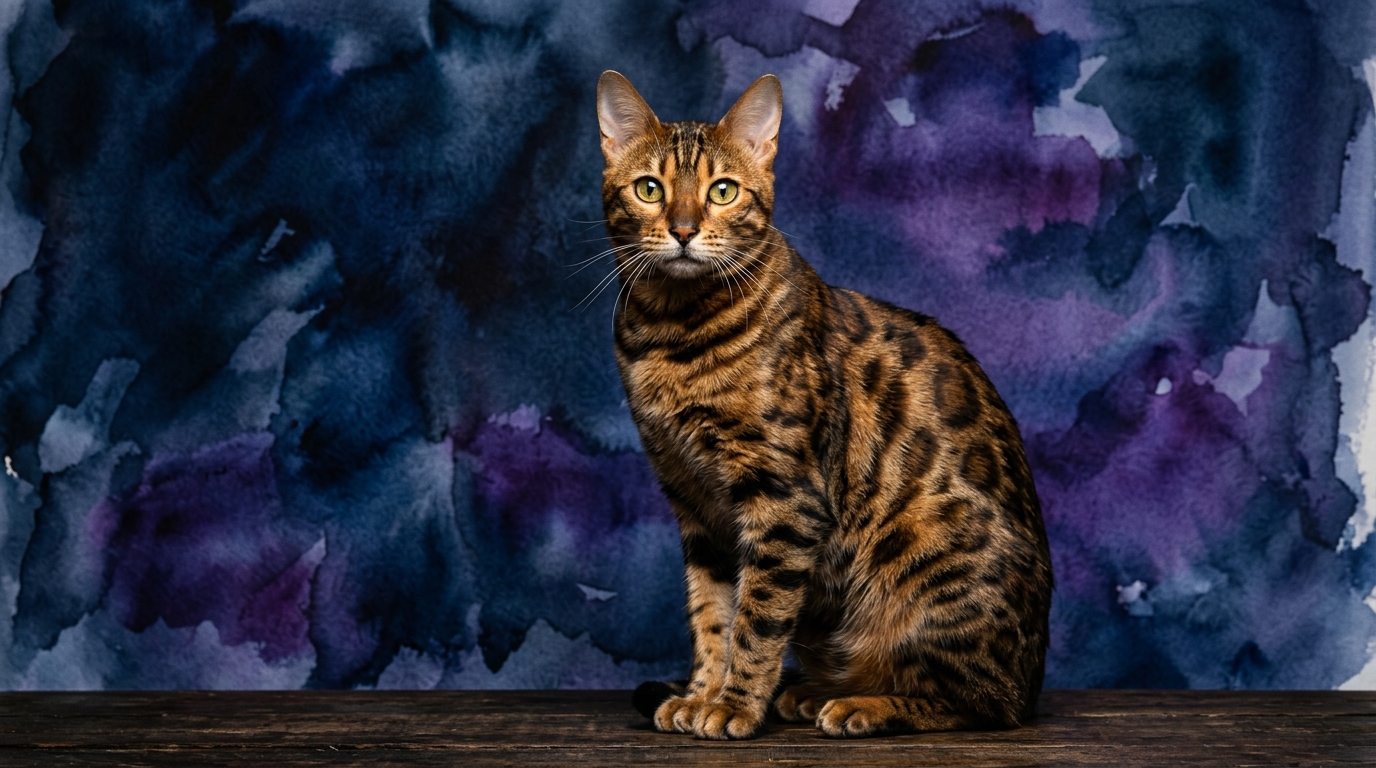
The Bengal cat presents a cognitive profile marked by exceptional mental prowess: Problem Solving 5/5, Training Speed 4/5, Social Intelligence 4/5, Instinctive Drive 5/5, and Memory 5/5. This suggests a cat that is not only adept at navigating complex situations and remembering intricate details but also possesses a robust natural curiosity and drive to engage with its surroundings, though perhaps with a slightly independent streak in social settings.
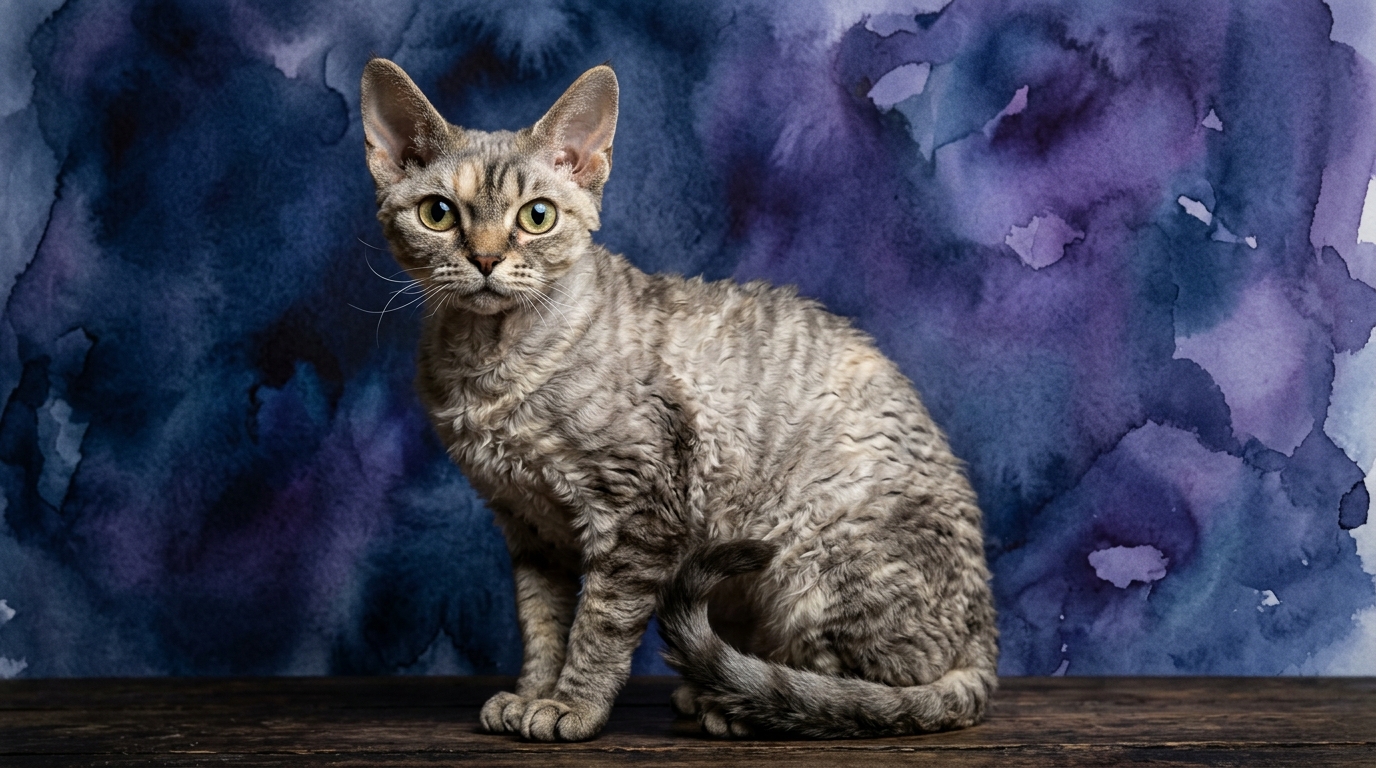
In contrast, the Devon Rex showcases a different set of cognitive strengths: Problem Solving 4/5, Training Speed 5/5, Social Intelligence 5/5, Instinctive Drive 3/5, and Memory 4/5. This profile indicates a feline highly attuned to social cues and remarkably quick to learn, thriving on interaction. While still capable of solving challenges, their drive is less about primal exploration and more about companionship, with a solid capacity for recall.
Where the Bengal's Mind Excels
The Bengal’s 5/5 score in Problem Solving and Memory stands out, indicating a cat that actively seeks to understand and manipulate its environment. Owners often observe Bengals meticulously figuring out how to open child-proof cabinets, manipulate complex puzzle feeders, or even operate door handles. Their superior memory means they not only solve these challenges but also retain the solutions, applying them consistently over time, making them adept at navigating their home’s intricacies and remembering routines or object locations with remarkable precision.
Complementing these scores is their 5/5 Instinctive Drive, which fuels their cognitive exploration. This isn't merely about hunting; it manifests as an intense curiosity and a profound need to engage with stimuli. A Bengal’s powerful instincts encourage them to investigate every new scent, sound, or object, driving their problem-solving efforts and providing constant mental stimulation. This translates into a cat that is always observing, learning, and interacting with its surroundings on a deep, exploratory level.
The Cognitive Strengths of the Devon Rex
The Devon Rex shines with a 5/5 in Social Intelligence and Training Speed. Their profound social acumen means they are acutely sensitive to human emotions, vocal tones, and body language, often forming deep, empathetic bonds with their caregivers. This allows them to anticipate needs and respond to subtle cues, making them highly interactive companions who genuinely thrive on connection and shared experiences.
Their rapid Training Speed is a direct reflection of this social responsiveness. A Devon Rex can pick up new commands, house rules, or even complex tricks with surprising swiftness, often eager to participate in training sessions as a form of bonding. Their ability to quickly adapt to new routines or environments, coupled with their strong memory (4/5), means they integrate seamlessly into a household, learning what is expected of them and remembering it reliably, often preferring to learn collaboratively rather than through independent trial and error.
Training Dynamics: Bengal's Drive vs. Devon Rex's Receptiveness
When it comes to training, the Bengal’s 4/5 Training Speed suggests they are certainly capable learners, but their independent problem-solving and powerful instinctive drive (5/5) mean they might require different approaches. Bengals often respond best to training that incorporates their natural curiosity and desire for challenge, such as clicker training for complex sequences or 'hunting' for treats. Their strong memory (5/5) ensures that once a behavior is learned, it is deeply ingrained, but the initial motivation might need to tap into their exploratory nature.
The Devon Rex, with its 5/5 Training Speed, often appears to learn commands and routines with greater alacrity. Their high social intelligence (5/5) makes them intrinsically motivated by positive human interaction and praise, eager to perform behaviors that strengthen their bond with their owner. They thrive on clear, consistent communication and positive reinforcement, often showing a keen desire to please and participate in shared activities, making them highly receptive to training from an early age.
The contrast in Instinctive Drive also influences training. A Bengal's intense 5/5 drive means training can serve as an essential outlet for their energy, channeling their natural inclinations into structured activities. For the Devon Rex, with a 3/5 instinctive drive, training might be less about satisfying a primal urge and more about engaging in a cherished social activity. This often results in a less demanding training process, as their motivation stems from connection rather than an insatiable need to explore or 'hunt' for mental stimulation.
Lifestyle Match: Active Explorers vs. Affectionate Companions
For owners with an active lifestyle, the Bengal cat is an ideal match. Their 5/5 Problem Solving, 5/5 Instinctive Drive, and 5/5 Memory mean they require substantial mental and physical engagement. These cats thrive in environments where they can explore, climb, play with interactive puzzle toys, and even learn to walk on a leash. An owner prepared to dedicate time to providing varied enrichment, consistent play, and intellectual challenges will find a Bengal to be a captivating and deeply rewarding companion, constantly seeking new experiences and challenges to conquer.
Conversely, the Devon Rex is perfectly suited for owners seeking a more relaxed yet deeply affectionate companion. Their 5/5 Social Intelligence and lower 3/5 Instinctive Drive indicate a cat that prioritizes human companionship and comfort over intense exploration. While they enjoy play and can be trained, their primary need is to be close to their people, offering devoted affection and participating in daily life as a cherished family member. Their 4/5 Problem Solving ensures they are not without wit, but they may be less inclined to invent elaborate forms of mischief, fitting seamlessly into a home valuing warmth and connection.
The Verdict
Choose a Bengal if you seek a highly engaged, intellectually demanding feline companion who thrives on complex puzzles, extensive play, and an environment that caters to their profound curiosity and powerful instincts.
Opt for a Devon Rex if your ideal companion is a socially adept, quickly trainable cat who deeply values human interaction, adapts readily to routines, and offers devoted affection without the intense exploratory drive of some other breeds.
🧠 Find Your Pet's IQ Score
Our Pet IQ Lab assessment covers 25+ tests across 5 cognitive dimensions — personalized to your breed.
Take the Full IQ Test →Frequently Asked Questions
Do Bengals get along with other pets?
With their 4/5 social intelligence and strong instinctive drive, Bengals can coexist with other pets, especially if introduced thoughtfully and given ample individual attention and enrichment. Their predatory drive might require careful management around very small animals, but they can form bonds with larger, equally active companions.
Are Devon Rex cats good for first-time cat owners?
Yes, their 5/5 social intelligence and 5/5 training speed make Devon Rex cats generally excellent for first-time owners. They are eager to bond, quick to learn household rules, and less prone to intense instinctive behaviors that might challenge new owners, making them adaptable and relatively straightforward to integrate into a new home.
Which breed is more prone to mischief due to their intelligence?
The Bengal, with its 5/5 problem-solving and 5/5 instinctive drive, is more likely to engage in 'mischief' by figuring out how to open doors, access forbidden areas, or manipulate objects to their advantage. This stems from their profound cognitive drive to explore and solve environmental puzzles, rather than malice.