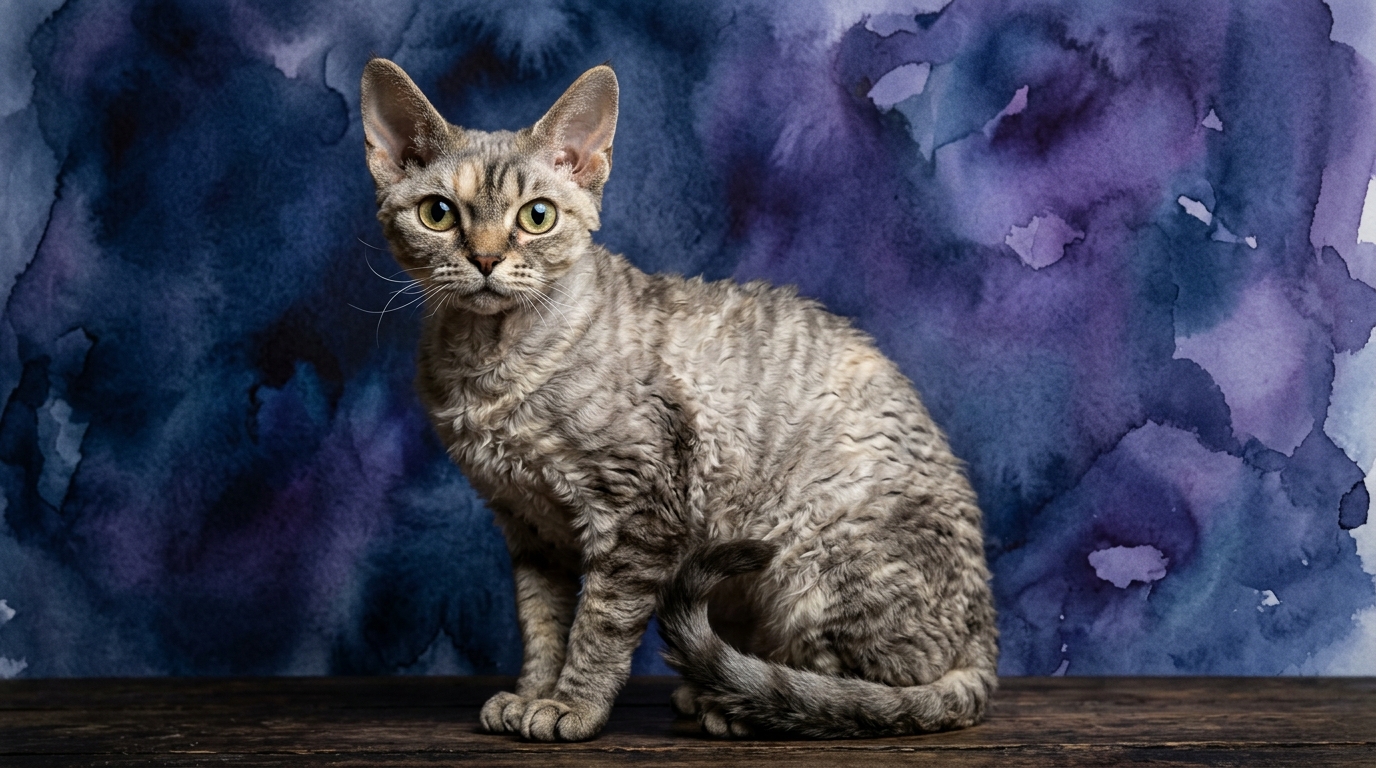
Devon Rex at a glance
| IQ Rank / Score | 21/25 |
|---|---|
| Trainability | ★★★★★ (5/5) |
| Social Intelligence | ★★★★★ (5/5) |
| Lifespan | 12-16 years |
| Shedding | Low to moderate |
| Exercise Needs | Moderate (20-40 min play/day) |
| Origin | England (Devon) |
Meet the Devon Rex: A Pixie with a Purpose
Originating from the county of Devon in England in the late 1950s, the Devon Rex is instantly recognizable by its large ears, elfin face, and distinctively soft, wavy coat caused by a unique genetic mutation. Their slender yet muscular build belies a spirit brimming with curiosity and an almost impish charm. More than just their striking appearance, it's the Devon Rex's extraordinary personality and intellect that truly sets them apart, captivating anyone fortunate enough to share their home with one. These small cats aren't content to merely coexist; they actively participate in family life, often seeking out laps, shoulders, or even a spot under the covers, solidifying their reputation as devoted companions.
Unlike many cat breeds that might tolerate human interaction, the Devon Rex actively seeks it, demonstrating an unparalleled affinity for companionship. Their communicative chirps and purrs, combined with an almost dog-like devotion, make them incredibly engaging pets. This strong desire for interaction is a cornerstone of their intelligence profile, highlighting a deep social drive that fuels their learning and problem-solving abilities within a human household setting.
The Brain Behind the Curl: Devon Rex Intelligence Profile
At The Cosmic Pet's Pet IQ Lab, we evaluate feline intelligence across several key dimensions, providing a granular look at how breeds like the Devon Rex truly shine. For the Devon Rex, their profile paints a picture of exceptional cognitive prowess. Their Problem Solving capability rates at an impressive 4/5, indicating a strong capacity to figure out puzzles, navigate complex environments, and even open cabinets that were thought to be cat-proof. This isn't just random luck; it’s a deliberate analysis of situations and the application of learned behaviors to achieve desired outcomes.
When it comes to Training Speed, the Devon Rex truly stands out with a perfect 5/5 score. This remarkable aptitude means they grasp new commands and routines with astonishing quickness, often picking up new tricks in just a few dedicated sessions. Their eagerness to please and strong bond with their human companions significantly accelerate the learning process. This isn't just about simple commands; Devon Rex are one of the few cat breeds that can be reliably trained to do agility courses. They walk on leashes, respond to their name consistently, and have been documented learning up to 20 different commands, showcasing a level of teachability that rivals many dog breeds.
Their Social Intelligence also reaches the top tier at 5/5. This reflects their deep understanding of human cues, emotions, and social structures within a household. They don't just react to you; they interact, showing empathy, seeking comfort, and even initiating games. This high social IQ makes them incredibly adaptable to various family dynamics and excellent communicators of their needs and desires. While their Instinctive Drive is a moderate 3/5, meaning they possess natural hunting instincts but can be easily redirected, their Memory scores a solid 4/5, ensuring that once they learn a trick or remember a routine, it sticks with them for the long term. This combination of traits solidifies their reputation as the 'alien of cat intelligence' – a feline truly in a league of its own.
Unlocking Their Potential: Training a Devon Rex
Leveraging the Devon Rex's high intelligence and eager-to-please nature can open up a world of engaging activities. Their exceptional training speed means that positive reinforcement techniques, such as clicker training and treat rewards, yield rapid and impressive results. Start with basic commands like 'sit' or 'stay', and you'll quickly see their capacity for more complex behaviors. Consistency is key, but with a Devon Rex, patience often pays off faster than you might expect with other felines.
Beyond formal training, their problem-solving skills thrive on enrichment. Puzzle toys that require manipulation to dispense treats are excellent for keeping their minds sharp and engaged. Rotational access to different types of toys can prevent boredom and encourage continued exploration. Their innate curiosity and desire for interaction mean they often enjoy interactive play sessions, whether it's chasing a laser pointer, batting at a feather wand, or even playing fetch – a behavior many associate more with canines than felines. Providing these outlets ensures a well-adjusted and mentally stimulated Devon Rex.
Living with a Devon Rex: More Than Just a Pet
Bringing a Devon Rex into your home means welcoming a vibrant, active, and deeply affectionate family member who will challenge your perceptions of what a cat can be. Their constant desire for interaction means they thrive in environments where they receive ample attention and playtime. They are not a breed content to be left alone for long periods; a Devon Rex craves companionship, often forming strong bonds with every member of the household, including other pets. Their social nature means they often do well in multi-pet households, provided introductions are handled carefully.
Their low shedding, thanks to their unique coat, makes them a popular choice for some allergy sufferers, though no cat is truly hypoallergenic. Regular ear cleaning and occasional bathing are part of their grooming routine. Ultimately, the Devon Rex offers an experience far removed from the stereotypical independent cat; they are a constant source of amusement, comfort, and intelligent interaction, ready to engage with the world on their own wonderfully quirky terms.
3 At-Home Tests to Measure Your Devon Rex's IQ
These tests are adapted from peer-reviewed ethology research. No equipment is needed beyond items you have at home. Run each test 5–10 times for reliable results.
The Myth: "Cats with unusual physical features are just novelty breeds with no extra intelligence."
✅ The Devon Rex elegantly debunks this notion, proving that distinctive appearances can indeed come hand-in-hand with equally distinctive and profound intellectual capabilities. Their 'pixie' face and curly coat are direct results of genetic mutations that, far from being just a novelty, are part of a larger genetic blueprint that also influences their outgoing personality, problem-solving prowess, and exceptional trainability, making them anything but a superficial breed. In fact, their unique appearance is often a visual cue to their unique and engaging temperament and sharp mind.
Devon Rex vs. Similar Breeds
🧠 What's Your Cat's IQ Score?
Our full Pet IQ Lab assessment includes 12+ tests across 5 cognitive dimensions, calibrated for Devon Rexs specifically.
Take the Full IQ Test →Frequently Asked Questions
How smart is a Devon Rex?
Our Pet IQ Lab framework scores cognition across five dimensions (max 25). The Devon Rex totals 21/25 — very high for a domestic cat. The full article breaks down each dimension with at-home tests.
Are Devon Rexs easy to train?
Devon Rexs learn new cues very quickly — often in 5-15 repetitions. They score 5/5 on Training Speed in our breed profile.
Are Devon Rexs good with children and other pets?
Yes — their Social Intelligence rates 5/5 in our Pet IQ Lab framework. With early socialization and supervised play, most Devon Rexs integrate well into families with respectful children and other pets.
Do Devon Rexs need a lot of mental stimulation?
Absolutely. With Problem Solving 4/5 and Instinctive Drive 3/5, Devon Rexs need daily mental work — puzzle feeders, scent games, training sessions, or interactive wand toys — to avoid boredom.
How much exercise does a Devon Rex need?
Devon Rexs do well with 20-40 minutes of interactive play plus a few short training moments.
How good is a Devon Rex's memory?
Devon Rexs score 4/5 on memory. They remember routines, hiding spots, and learned cues for months, sometimes years.
What is the typical lifespan of a Devon Rex?
Most Devon Rexs live 12-16 years with good veterinary care, quality diet, and indoor living.
The Devon Rex isn't just a cat with an unusual look; it's a testament to the diverse and often underestimated intelligence within the feline world, proving that some cats are truly built to bond, learn, and astonish. Embrace the 'poodle cat' into your life, and prepare to have your perceptions of feline capabilities delightfully shattered.