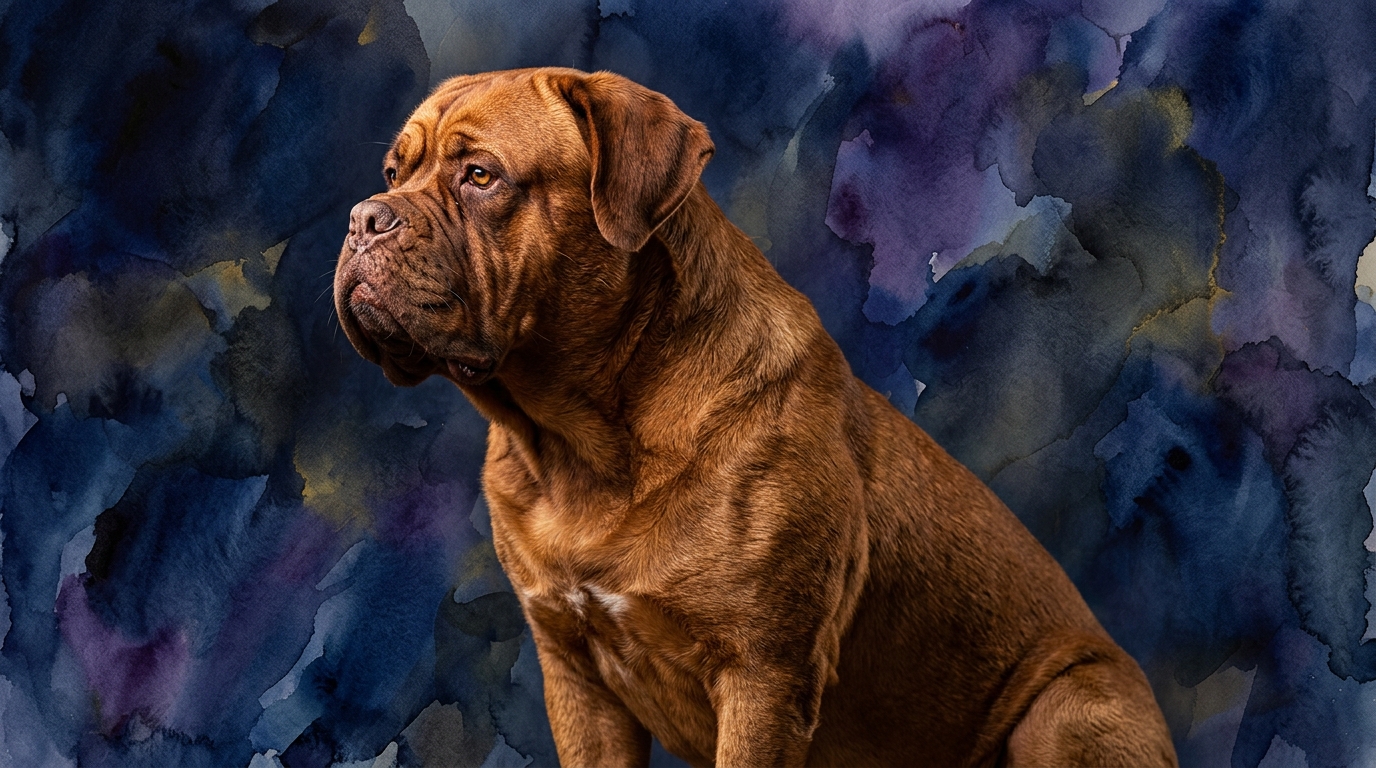
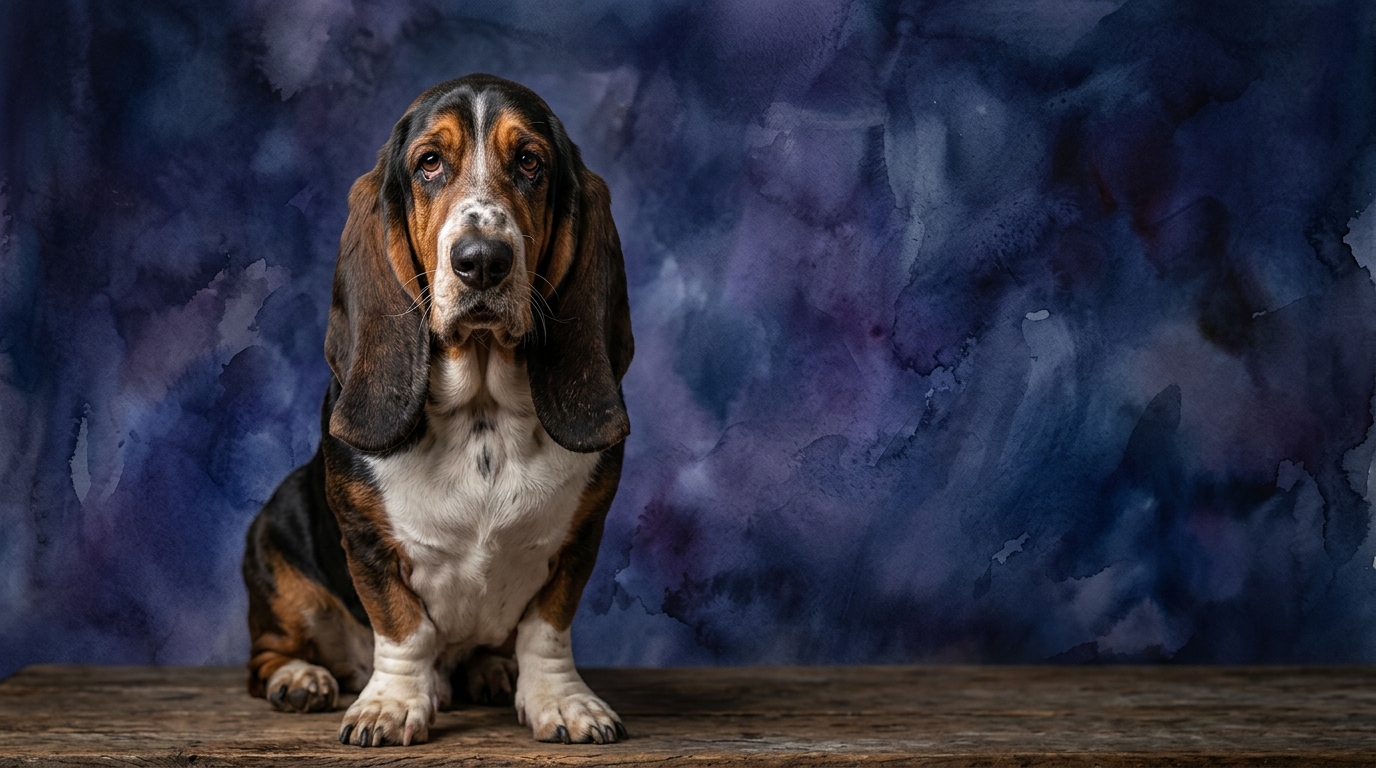
Side-by-Side IQ Profile: Unpacking Identical Scores
The Cosmic Pet Pet IQ Lab assigns both the Dogue de Bordeaux and the Basset Hound a score of 3/5 across Problem Solving, Training Speed, Social Intelligence, Instinctive Drive, and Memory. While these numbers are identical, their manifestation within each breed's unique biology and historical purpose paints a distinct picture of their cognitive strengths and approaches.
**Problem Solving (3/5):** For the Dogue de Bordeaux, this score reflects their practical problem-solving, such as navigating complex physical spaces or assessing situations to protect their family. Their solutions are often direct and physically oriented, driven by their protective instincts or a desire to fulfill a perceived task within their environment. For the Basset Hound, problem-solving at 3/5 highlights their methodical approach to scent puzzles. They excel at persistently deciphering intricate scent trails, piecing together faint odours to follow a path, demonstrating focused sensory deduction rather than brute force.
**Training Speed (3/5):** A moderate training speed for the Dogue de Bordeaux indicates they learn commands at a reasonable pace, but require consistent, engaging methods. Their substantial presence and occasional independent streak mean training success hinges on a confident handler who establishes clear expectations and positive reinforcement. This score means Basset Hounds grasp commands moderately, but their powerful, independent scent drive often competes for attention. They understand instructions, yet their inclination to follow an aroma can make them appear unresponsive, necessitating patient, distraction-managed training.
**Social Intelligence (3/5):** The Dogue de Bordeaux's 3/5 social intelligence manifests as a discerning understanding of their family unit and a cautious approach to strangers. They are adept at reading trusted humans' moods, offering comfort or protection, but maintain clear social boundaries with outsiders due to their protective nature. A 3/5 in social intelligence for the Basset Hound points to their generally amiable and tolerant disposition. They navigate interactions with humans and other animals well, often seeking companionship and demonstrating a capacity for peaceful coexistence within diverse households.
**Instinctive Drive (3/5):** The Dogue de Bordeaux's 3/5 instinctive drive is rooted in guarding and protection, manifesting as strong territoriality and a readiness to defend their domain. This focused, purposeful drive requires constructive outlets like structured training or designated "watch" duties. For the Basset Hound, a 3/5 instinctive drive is almost exclusively dedicated to their olfactory prowess. Their world is scent-defined, leading to unwavering determination to follow trails, often making them singularly focused and recall-resistant in stimulating environments.
**Memory (3/5):** The Dogue de Bordeaux's 3/5 memory ensures retention of routines, commands, and recognition of familiar faces and places. This contributes to their reliability as guardians and companions, allowing them to anticipate household rhythms and remember interactions, solidifying bonds. A 3/5 memory for the Basset Hound is evident in their ability to recall intricate scent trails and routines. However, immediate environmental engagement with new scents can sometimes temporarily override command recall, appearing as forgetfulness rather than true memory lapse.
Where the Dogue de Bordeaux Wins Cognitively
The Dogue de Bordeaux demonstrates a cognitive edge in areas requiring direct, purposeful action and the interpretation of social dynamics for protection. Their problem-solving, while rated 3/5, is often geared towards practical, physical solutions in their environment, such as strategically positioning themselves to monitor activity or navigating obstacles to reach a perceived threat. This ability to assess and act decisively, coupled with their strong memory for routines and hierarchy, gives them an advantage in roles demanding vigilance and a clear understanding of their place within a structured household. Their social intelligence, though similar in score, leans towards a more discerning protective understanding of their immediate family, making them acutely aware of who belongs and who does not.
Where the Basset Hound Wins Cognitively
The Basset Hound truly shines in the realm of sustained sensory processing and detailed environmental mapping through scent. Their 3/5 problem-solving and memory scores, when applied to their instinctive drive, translate into an unparalleled ability to follow and interpret complex olfactory information over long distances and varied terrains. This focused persistence, often appearing as stubbornness, is a testament to their cognitive strength in a very specific domain. They excel at piecing together a "story" from smells, demonstrating an intricate form of deduction that bypasses visual cues, allowing them to solve the puzzle of a lost trail with remarkable tenacity. Their social intelligence, while also 3/5, is geared towards maintaining amiable relationships within a diverse group, showcasing a peaceful and adaptable understanding of social dynamics.
Which is Easier to Train and Why
Despite both breeds scoring 3/5 in training speed, the Dogue de Bordeaux is generally perceived as easier to train for obedience and household manners, given a committed and consistent owner. Their working dog background means they often thrive on structure and a clear understanding of their role, and their social intelligence allows them to deeply bond with and respect their handler's authority. While they can be strong-willed, once motivated and given clear expectations, they tend to comply. Their memory for commands and routines, combined with a desire to please their trusted human, generally makes them more responsive to formal training cues.
The Basset Hound, while perfectly capable of learning, presents a different kind of training challenge due to their overwhelming instinctive drive. Their primary focus is often on the world of scent, making them easily distracted and less inclined to break off from an interesting trail to obey a command. Training a Basset requires immense patience, creativity, and a deep understanding of their scent-driven nature. Recall, in particular, can be a lifelong endeavor, as the allure of a captivating smell often overrides even the most well-learned command. Their independent problem-solving around scent means they don't always see the "point" of a human command when a more compelling natural pursuit is available.
Which Suits Active Owners vs. Relaxed Owners
The Dogue de Bordeaux, despite its imposing size, can be surprisingly adaptable to both active and more relaxed owners, provided their fundamental needs for mental stimulation and moderate physical activity are met. Active owners who enjoy structured walks, training sessions, or even canine sports like weight pulling will find the Dogue de Bordeaux a willing participant, channeling their instinctive drive and physical prowess. However, for relaxed owners, a Dogue de Bordeaux can also be a calm, devoted companion indoors, content with a few focused walks a day and plenty of family time, as long as their protective instincts are managed through early socialization and consistent training. They require owners who are firm, consistent, and understand the nuances of a working breed.
The Basset Hound, on the other hand, is generally better suited for relaxed owners who appreciate their laid-back demeanor indoors but are prepared for their bursts of exploratory energy outdoors. While they are not hyperactive, their strong instinctive drive means they need opportunities to engage their noses. This might involve leisurely, scent-focused walks in a securely fenced area or engaging in scent work games. Owners who expect a jogging partner will be disappointed, but those who enjoy slow, meandering explorations of the olfactory world, or simply a calm, affectionate companion on the couch, will find a perfect match. They thrive with owners who are patient with their independence and understand their unique priorities.
The Verdict
Opt for the Dogue de Bordeaux if you seek a loyal, protective companion who thrives on structure, respects a confident leader, and offers discerning vigilance. This breed is ideal for owners prepared to provide consistent training and channel their protective instincts into purposeful activities.
Select the Basset Hound if you appreciate an amiable, independent companion with a profound connection to the world of scent, valuing their calm indoor presence and unique approach to exploration. This breed suits patient owners who understand their strong instinctive drive and enjoy leisurely, scent-focused adventures.
🧠 Find Your Pet's IQ Score
Our Pet IQ Lab assessment covers 25+ tests across 5 cognitive dimensions — personalized to your breed.
Take the Full IQ Test →Frequently Asked Questions
Do Dogue de Bordeauxs make good family dogs?
Yes, with proper socialization and training, Dogue de Bordeauxs can be devoted and gentle family members. Their social intelligence allows them to bond deeply with their family, though their protective instincts mean they may be reserved with strangers and require supervision with very young children due to their size.
Are Basset Hounds difficult to train because of their independence?
Basset Hounds are not difficult to train in terms of their capacity to learn, but their strong scent drive makes them easily distracted and often appear independent. Training requires patience, consistency, and highly motivating rewards, especially in environments where their nose can lead them astray.
How much exercise do these breeds need daily?
A Dogue de Bordeaux typically needs moderate exercise, including daily structured walks and mental stimulation, around 45-60 minutes total. Basset Hounds also need daily exercise, often in the form of leisurely, scent-focused walks totaling 30-60 minutes, with opportunities to explore safely in a fenced area.