Side-by-Side Cognitive Profiles
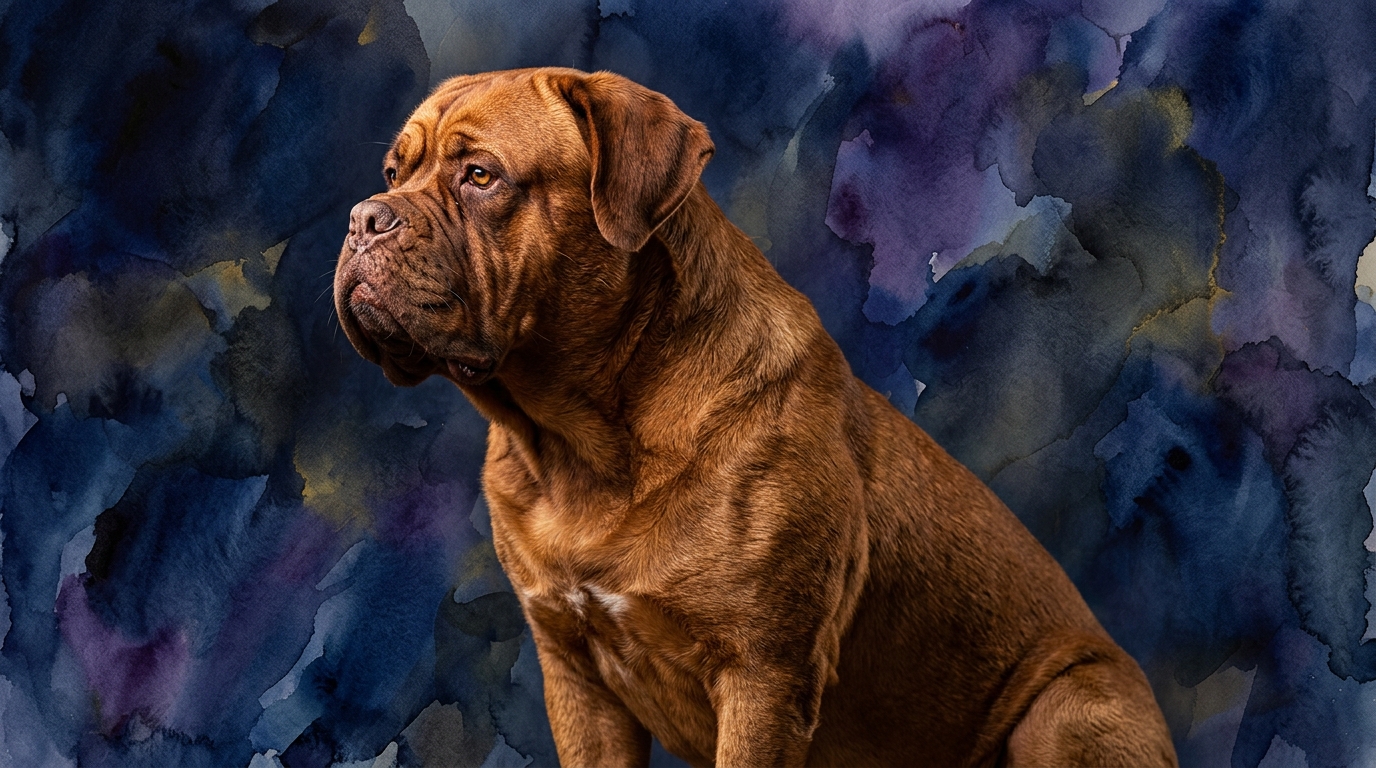
The Dogue de Bordeaux, a robust guardian from the Working Group, presents a balanced cognitive profile according to The Cosmic Pet IQ Lab. Their Problem Solving is rated 3 out of 5, indicating a capacity for tackling straightforward challenges, often with a methodical approach reflecting their historical roles. Training Speed also sits at 3/5, suggesting they absorb new commands at a steady pace, requiring consistent and patient instruction. Social Intelligence, at 3/5, points to an adequate understanding of human cues and social dynamics within their established family unit, though perhaps less inclined towards complex social navigation with strangers. Their Instinctive Drive, also 3/5, reflects a moderate inherent motivation for tasks, often tied to protection or companionship. Finally, their Memory, at 3/5, implies they retain information and routines reliably over time, forming lasting associations with experiences and commands.
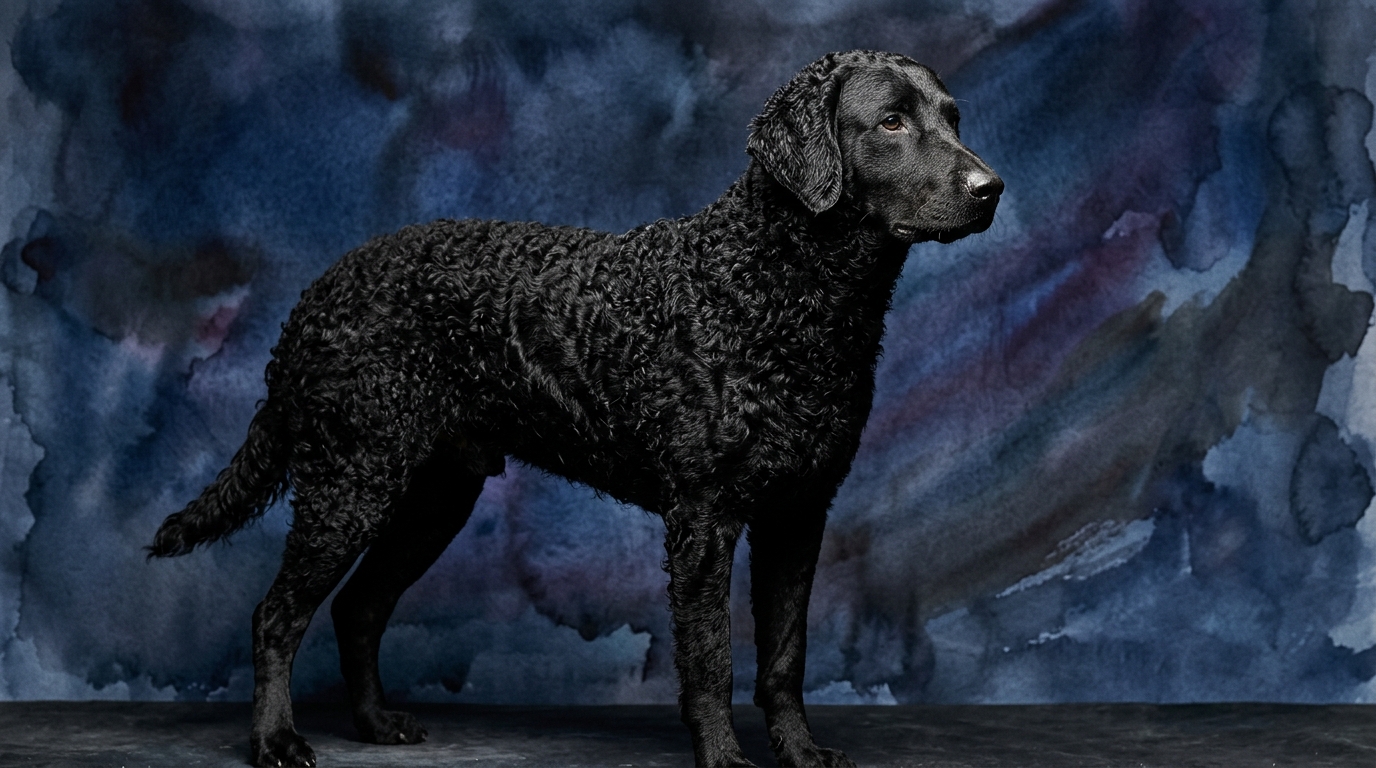
Hailing from the Sporting Group, the Curly-Coated Retriever shares many numerical similarities with the Dogue de Bordeaux but with a critical distinction. Their Problem Solving is rated 3/5, indicating a practical intelligence suited for retrieving tasks and adapting to environmental changes, often employing a resourceful approach. Training Speed, at 3/5, means they learn at a consistent rate, benefiting from engaging and varied training methods to maintain focus. Social Intelligence, also 3/5, suggests they possess a solid grasp of social cues, often displaying an affable yet discerning nature typical of a retriever. Their Instinctive Drive, 3/5, is geared towards their ancestral retrieving and working roles, manifesting as a desire to engage in purposeful activities. The notable difference lies in their Memory, which scores 4/5. This higher rating suggests a superior ability to recall complex sequences, past experiences, and learned behaviors, making them particularly adept at retaining extensive training repertoires and remembering detailed instructions over long periods.
Where the Dogue de Bordeaux Wins Cognitively
While many IQ dimensions appear numerically identical, the Dogue de Bordeaux's cognitive strengths often manifest through its inherent breed purpose, particularly in areas requiring a steady, resolute application of its 3/5 Problem Solving and Instinctive Drive. As a working breed, their problem-solving isn't about rapid, agile adaptation like a retriever, but rather a deliberate, often physically-oriented approach to tasks. Imagine a Dogue de Bordeaux assessing a perceived threat or a barrier: their solution might involve a patient, persistent presence or a powerful, direct interaction, rather than a clever circumvention. Their 3/5 Instinctive Drive, rooted in guarding and companionship, translates into a steadfast dedication to their perceived role, which can make them exceptionally reliable within their sphere of influence. This drive isn't for retrieving; it's for oversight and protection, applying their moderate intelligence to maintain order and security, often with a calm, watchful demeanor. Their 3/5 Social Intelligence, while not excelling in broad social circles, shines within their family, where they form deep, understanding bonds, often anticipating needs or moods through subtle cues from their trusted humans. This focused social aptitude, combined with their moderate memory, allows them to build a robust mental map of their family's habits and preferences, enabling them to be incredibly attuned companions in their specific environment.
Where the Curly-Coated Retriever Wins Cognitively
The Curly-Coated Retriever's primary cognitive advantage lies in its superior Memory, rated 4/5 compared to the Dogue de Bordeaux's 3/5. This enhanced recall ability significantly impacts their capacity for complex learning and task retention. A 4/5 memory means they can hold onto a wider array of commands, retrieve intricate sequences of actions, and recall specific locations or scents with greater precision and for longer durations. This is crucial for a Sporting breed, where remembering multiple fall locations for birds, intricate hand signals, or complex obedience routines is paramount. Their 3/5 Problem Solving, while numerically similar, operates within a different context; it's often applied to practical, environmental challenges like navigating varied terrain to retrieve an object or figuring out how to access a desired toy, demonstrating resourcefulness rather than brute force. Paired with their 3/5 Instinctive Drive, which is oriented towards purposeful activity and collaboration, their problem-solving becomes more about efficient task completion. Furthermore, their Coren ranking of #41, while not directly from The Cosmic Pet IQ Lab, suggests a broader capacity for understanding and obeying new commands, indicating an aptitude for working collaboratively and responding effectively to human instruction that complements their strong memory. This blend allows them to excel in dynamic situations where quick learning and reliable recall are essential.
Which Is Easier to Train and Why
When considering ease of training, the Curly-Coated Retriever generally presents a more straightforward path for the average owner, primarily due to their superior Memory rating of 4/5 and their Sporting Group heritage. A higher memory score means they are better equipped to retain a vast repertoire of commands and understand complex multi-step instructions, reducing the need for constant repetition. Their 3/5 Training Speed, while numerically matching the Dogue de Bordeaux, is synergized by their strong recall, allowing new concepts to build upon previously learned ones more effectively. Their instinctive drive, geared towards working alongside humans in retrieving tasks, often translates to a higher eagerness to please and engage in training sessions, especially when positive reinforcement and variety are employed. In contrast, the Dogue de Bordeaux, with a 3/5 Memory and 3/5 Training Speed, requires a more consistent, patient, and often more physically grounded approach. While capable learners, their retention might necessitate more frequent refreshers, and their problem-solving, while effective, isn't always about quickly adapting to human-imposed rules but rather about applying their own logic to situations. Their working breed nature means training must often appeal to their protective or companion instincts, making them respond best to clear boundaries and a strong, fair leader, rather than just the excitement of a game. Real behavioral differences include the Curly-Coated Retriever's inclination to 'figure things out' in a task-oriented manner versus the Dogue de Bordeaux's more ponderous, self-assured approach that might require more motivation to comply if the task doesn't align with their inherent purpose.
Which Suits Active Owners vs. Relaxed Owners
For active owners seeking a canine partner for adventures and regular engagement, the Curly-Coated Retriever is generally the more fitting choice. Their Sporting Group background means they thrive on purposeful activity, whether it's long hikes, swimming, or participating in dog sports like agility or obedience trials. Their 3/5 Instinctive Drive, when channeled into physical and mental challenges, keeps them content and well-behaved. They possess the stamina and mental fortitude to keep pace with an owner who enjoys outdoor pursuits and regular training. Conversely, the Dogue de Bordeaux, while capable of bursts of activity, is fundamentally better suited for relaxed owners who appreciate a more sedate, yet watchful, companion. Their moderate 3/5 Instinctive Drive is not geared towards high-energy tasks but rather towards maintaining a presence and offering companionship. They enjoy leisurely walks, supervised outdoor time, and being close to their family. While they require consistent training and mental stimulation, their overall energy needs are lower, making them excellent companions for those who prefer a calm home environment and less strenuous daily exercise routines. Their imposing size means their activities, even if less frequent, should still be deliberate and well-managed.
The Verdict
Choose the Dogue de Bordeaux if you seek a calm, steadfast companion whose moderate intelligence is best applied to guarding and deep family bonding within a relaxed home environment.
Opt for the Curly-Coated Retriever if you are an active owner desiring a resourceful, highly trainable partner with superior memory for complex tasks and a strong drive for purposeful activity.
🧠 Find Your Pet's IQ Score
Our Pet IQ Lab assessment covers 25+ tests across 5 cognitive dimensions — personalized to your breed.
Take the Full IQ Test →Frequently Asked Questions
Does the Coren ranking truly reflect a breed's overall intelligence?
The Coren ranking primarily measures 'working and obedience intelligence,' focusing on how quickly a dog learns and obeys human commands, and is one specific aspect of canine cognition. It provides insight into trainability and responsiveness but doesn't fully encompass other dimensions like problem-solving, social intelligence, or instinctive drives. The Cosmic Pet IQ Lab offers a broader perspective by breaking down intelligence into these distinct categories.
Can a Dogue de Bordeaux be trained for complex tasks despite its 3/5 memory?
Yes, a Dogue de Bordeaux can certainly be trained for complex tasks, though it might require more consistent repetition and patience due to its 3/5 memory rating. Their 3/5 problem-solving and social intelligence mean they can learn, but an owner will need to ensure training is engaging, reinforced regularly, and tied to their natural inclinations, such as protection or companionship. Training success often hinges on the owner's commitment and understanding of the breed's specific learning style.
How does the Curly-Coated Retriever's 4/5 memory benefit an owner?
A Curly-Coated Retriever's 4/5 memory is a significant advantage for owners, allowing them to retain a wider range of commands, remember complex sequences, and recall information over longer periods. This translates to more efficient training, the ability to learn advanced skills, and a reliable partner in activities like dog sports or field work, where consistent recall of learned behaviors is crucial. It means less time spent re-teaching and more time enjoying advanced interactions.