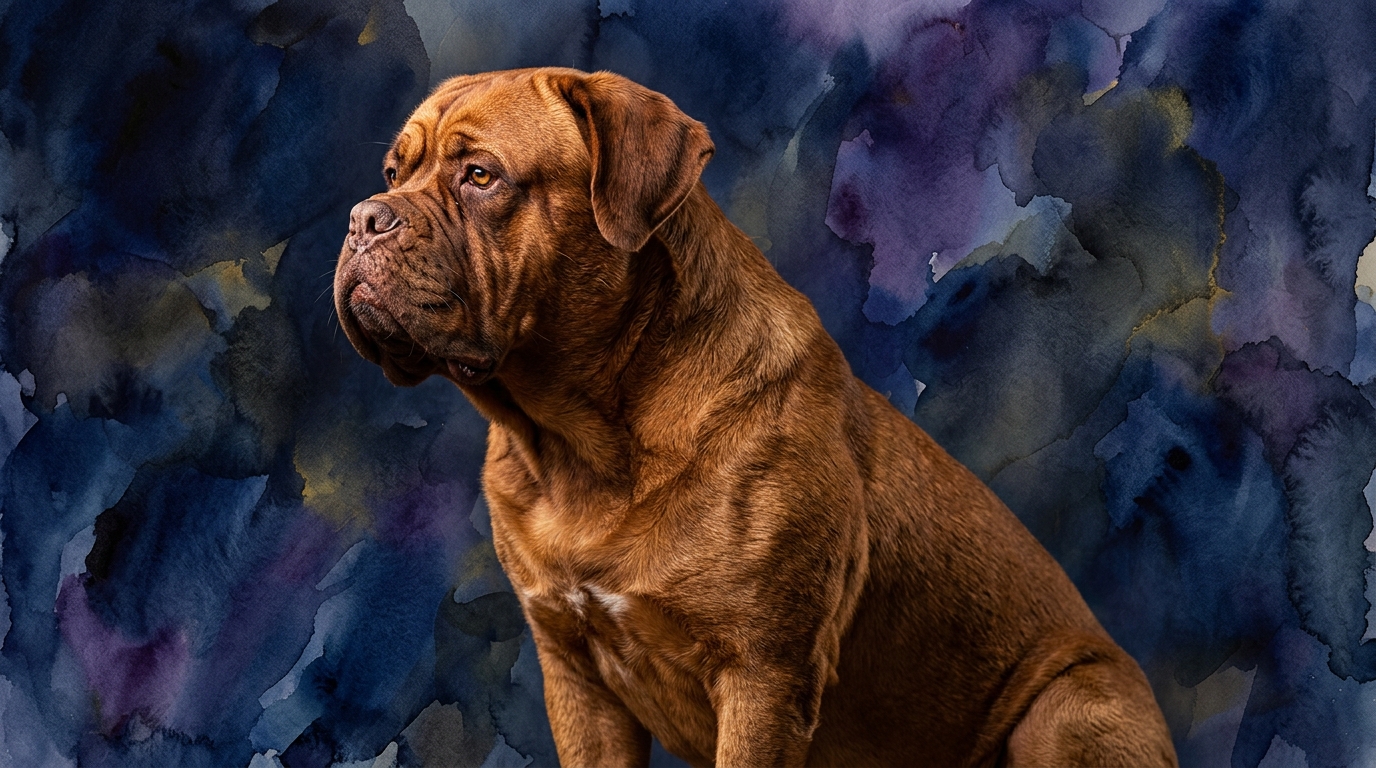
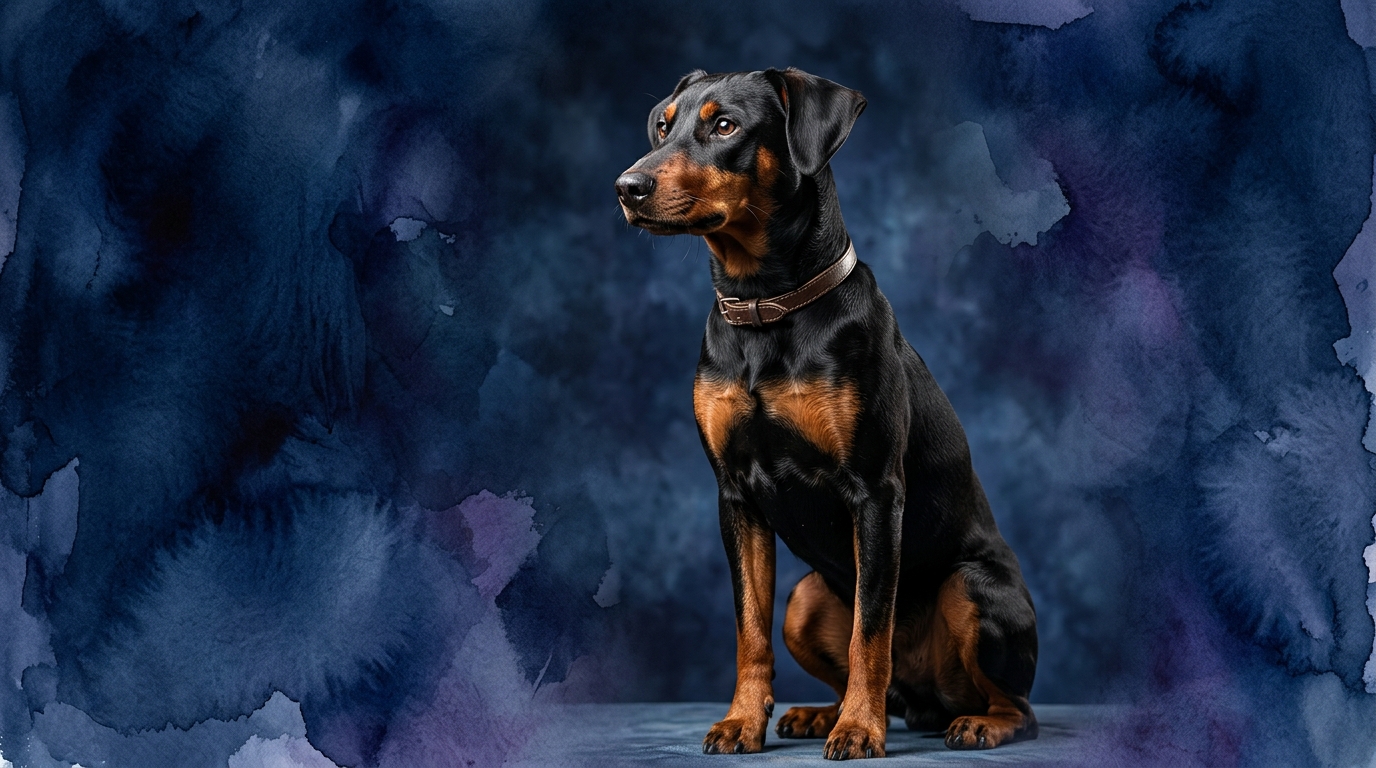
Side-by-Side Cognitive Profile: Dogue de Bordeaux vs. German Pinscher
The Cosmic Pet Pet IQ Lab assesses canine intelligence across five key dimensions, with both the Dogue de Bordeaux and the German Pinscher registering a uniform 3/5 score in each category. While these scores are numerically identical, the practical manifestation of these cognitive abilities is distinct, shaped by each breed's unique history, physique, and temperament.
For the **Dogue de Bordeaux**, their **problem-solving** at 3/5 often manifests in practical, protective ways, such as assessing unfamiliar situations or figuring out how to best position themselves to guard their family. They approach challenges with a thoughtful, sometimes ponderous, deliberation rather than frantic attempts. A 3/5 **training speed** indicates a capacity to learn new commands and routines at a moderate pace, responding well to consistent, patient methods, though their sheer size and independent streak mean lessons need reinforcement with positive motivation and clear expectations. With a 3/5 in **social intelligence**, these dogs are adept at understanding human moods and family dynamics, forming deep bonds with their chosen people, often displaying calm empathy and a stable presence. Their 3/5 **instinctive drive** is rooted in their historical role as guardians and companions, evident in a natural protective inclination and a desire to be close to their family, focusing less on prey pursuit and more on territorial awareness. Finally, a 3/5 **memory** ensures the Dogue de Bordeaux retains learned behaviors and associations effectively over time, contributing to their consistency in behavior and their ability to anticipate daily events.
Conversely, the **German Pinscher's** 3/5 **problem-solving** is often expressed through their quick thinking and adaptability, particularly in navigating environments or devising ways to access interesting objects. They tend to be resourceful, approaching challenges with a blend of curiosity and determination, often experimenting with different solutions. Also rated 3/5 for **training speed**, the German Pinscher learns at a moderate pace, but their inherent zest for life and keen observational skills can make training engaging. They thrive on variety and mental stimulation, responding best to trainers who can keep sessions fresh and rewarding, preventing boredom. A 3/5 **social intelligence** translates to a keen awareness of their surroundings and the emotions of their immediate family, often being quite attuned to their owner's emotional state and demonstrative in affection, while remaining vigilant with strangers. Their 3/5 **instinctive drive** is strongly tied to their heritage as versatile farm dogs, including vermin control, manifesting as a pronounced prey drive, a desire to patrol, and an energetic curiosity about their environment. With a 3/5 **memory**, German Pinschers recall commands, routines, and experiences well, which is crucial for their consistent performance in various activities, making them reliable partners once a behavior is firmly established.
Where the Dogue de Bordeaux Wins Cognitively
While both breeds share a 3/5 rating across all cognitive dimensions, the Dogue de Bordeaux's substantial physical presence and historical role shape how its cognitive abilities are applied, often giving it a contextual advantage in certain scenarios. For problem-solving, their deliberate nature means they excel at situations requiring calm assessment rather than rapid reaction. When a Dogue de Bordeaux encounters an unfamiliar person or object, its 3/5 problem-solving manifests as a careful evaluation of the situation, often choosing a measured, non-reactive response unless a clear threat is perceived. This thoughtful approach can be particularly beneficial in guardian roles, where a steady demeanor is prized over impulsivity.
Their social intelligence, also at 3/5, often translates into a profound, unwavering loyalty and a deep understanding of their primary family's emotional states. They are excellent at providing a comforting, stable presence, intuitively sensing when their human needs quiet companionship. This empathetic connection, combined with their imposing size, means they can provide a unique sense of security and emotional support, making them particularly adept at discerning and responding to the subtle cues within their family unit, offering a quiet, reassuring presence without demanding constant attention.
Where the German Pinscher Wins Cognitively
Conversely, the German Pinscher's cognitive strengths, also uniformly rated 3/5, shine in different arenas, largely influenced by their agile build and historical purpose. Their problem-solving, though rated the same, tends to be more dynamic and hands-on. A German Pinscher will often use its quick wits and physical dexterity to explore, manipulate objects, or figure out how to navigate complex spaces, reflecting a practical, inquisitive approach to challenges. This might involve strategizing how to reach a toy tucked under furniture or figuring out a new game that requires agility and mental mapping.
Their 3/5 instinctive drive is a significant asset in activities requiring focus and tenacity, like scent work or agility courses. This drive manifests as a persistent determination to pursue a goal, whether it's tracking a scent or mastering an obstacle, making them highly engaged participants in active pursuits. Furthermore, their training speed, while numerically identical, is often complemented by their high energy and desire for engagement, allowing for varied and exciting training routines that leverage their natural athleticism and sharp attention, making them quick to generalize learned behaviors across different environments and tasks.
Training Dynamics: Dogue de Bordeaux vs. German Pinscher
Evaluating ease of training requires looking beyond just the 'training speed' score, as both breeds are rated 3/5. The Dogue de Bordeaux, despite its moderate learning pace, can present unique training considerations due to its sheer size and physical strength. While they are generally eager to please their loved ones, their independent streak means consistency and firm, yet gentle, leadership are paramount. Their physical power dictates that early leash training and impulse control are not just beneficial but necessary for managing a large adult dog. A Dogue de Bordeaux might be slower to physically respond to a command like 'down' simply due to its body mass, requiring more physical guidance initially and patience for physical compliance.
The German Pinscher, with its equivalent 3/5 training speed, offers a different set of challenges and advantages. Their spirited nature and high energy levels mean they require mental engagement to prevent boredom and destructive behaviors. While they learn quickly, their enthusiasm can sometimes lead to impulsivity or a tendency to test boundaries. Training a German Pinscher often means keeping sessions short, varied, and highly rewarding to maintain their focus, leveraging their desire for interaction. Their smaller size makes physical handling easier, but their quickness demands a trainer who can keep pace mentally and physically to channel their vigor effectively. Therefore, neither is inherently 'easier'; the Dogue de Bordeaux benefits from patient, strength-aware training, while the German Pinscher thrives with engaging, high-energy methods that channel their inherent vivacity.
Lifestyle Fit: Active vs. Relaxed Owners
The choice between a Dogue de Bordeaux and a German Pinscher largely hinges on an owner's lifestyle and their capacity to meet differing needs, despite both having a 3/5 instinctive drive. The Dogue de Bordeaux, while a large and powerful breed, often fits well with more relaxed owners who appreciate a calm, settled presence indoors. Their exercise requirements are moderate; daily walks and some yard time are usually sufficient to keep them content, though they certainly enjoy more vigorous activities when offered. Their 3/5 instinctive drive is expressed more as a desire for companionship and territorial awareness than a relentless need for constant physical exertion.
They are content to lounge alongside their family, making them excellent companions for those who enjoy a quieter home life but still value regular, structured outdoor activity. Conversely, the German Pinscher is an ideal match for active owners. Their 3/5 instinctive drive translates into a significant need for both physical exercise and mental stimulation. They thrive on activities like hiking, running, agility, or extensive play sessions. Owners who enjoy engaging in dog sports, long walks, or have the time to provide consistent interactive play and training will find the German Pinscher an enthusiastic partner. Their energetic nature means a relaxed owner might struggle to meet their needs, potentially leading to boredom and undesirable behaviors if their high drive is not adequately channeled.
The Verdict
Choose the Dogue de Bordeaux if you seek a steadfast, thoughtful companion whose cognitive strengths lie in calm assessment and deep family bonding, and whose exercise needs are moderate, fitting a more relaxed home environment.
Opt for the German Pinscher if you desire an agile, spirited partner whose cognitive abilities shine in dynamic problem-solving and tenacious engagement, and who thrives with active owners capable of providing consistent mental and physical challenges.
🧠 Find Your Pet's IQ Score
Our Pet IQ Lab assessment covers 25+ tests across 5 cognitive dimensions — personalized to your breed.
Take the Full IQ Test →Frequently Asked Questions
Do Dogue de Bordeaux and German Pinschers learn at the same speed?
Both breeds are rated 3/5 for training speed, indicating they learn at a moderate pace. However, the Dogue de Bordeaux's size means training often requires more emphasis on physical control, while the German Pinscher's high energy benefits from varied, engaging sessions to maintain focus.
How do their problem-solving skills differ despite having the same IQ score?
While both are rated 3/5 for problem-solving, the Dogue de Bordeaux tends to approach challenges with deliberate assessment, suitable for guardian roles. The German Pinscher, in contrast, applies its problem-solving more dynamically, using quick wits and agility to explore and manipulate its environment.
Which breed is more affectionate or socially intelligent?
Both breeds have a 3/5 social intelligence rating. The Dogue de Bordeaux typically expresses this as calm empathy and deep, stable loyalty to its family. The German Pinscher shows its social intelligence through keen awareness of its surroundings and family emotions, often being demonstrative and vigilant.