
Side-by-Side IQ Profile
The Cosmic Pet IQ Lab assesses five crucial dimensions of canine intelligence, offering a nuanced perspective beyond simple obedience. For both the Dogue de Bordeaux and the Miniature Bull Terrier, all five dimensions register a 3/5, indicating a solid, functional cognitive capacity. However, the *expression* of this capacity differs significantly between these two distinct breeds, influenced by their historical roles and inherent temperaments.
The Dogue de Bordeaux approaches challenges with a deliberate, often physically oriented thought process, excelling at assessing territorial boundaries or identifying perceived threats within their environment. Their solutions tend to be robust and focused on maintaining order rather than intricate manipulation. This breed learns steadily, absorbing commands with a thoughtful pace when motivated by positive reinforcement and a strong bond, requiring consistent, patient repetition. Exhibiting a deep attunement to their immediate family, the Dogue often displays a nuanced understanding of their owner's emotional states, while being discerning with strangers, preferring observation over immediate engagement. Their inherent drives are strongly rooted in guardianship and loyalty, manifesting as a protective instinct towards their home and people, translating into a watchful, composed presence. Dogues possess a reliable memory for routines, established boundaries, and the individuals they trust, retaining both positive training experiences and past negative encounters.
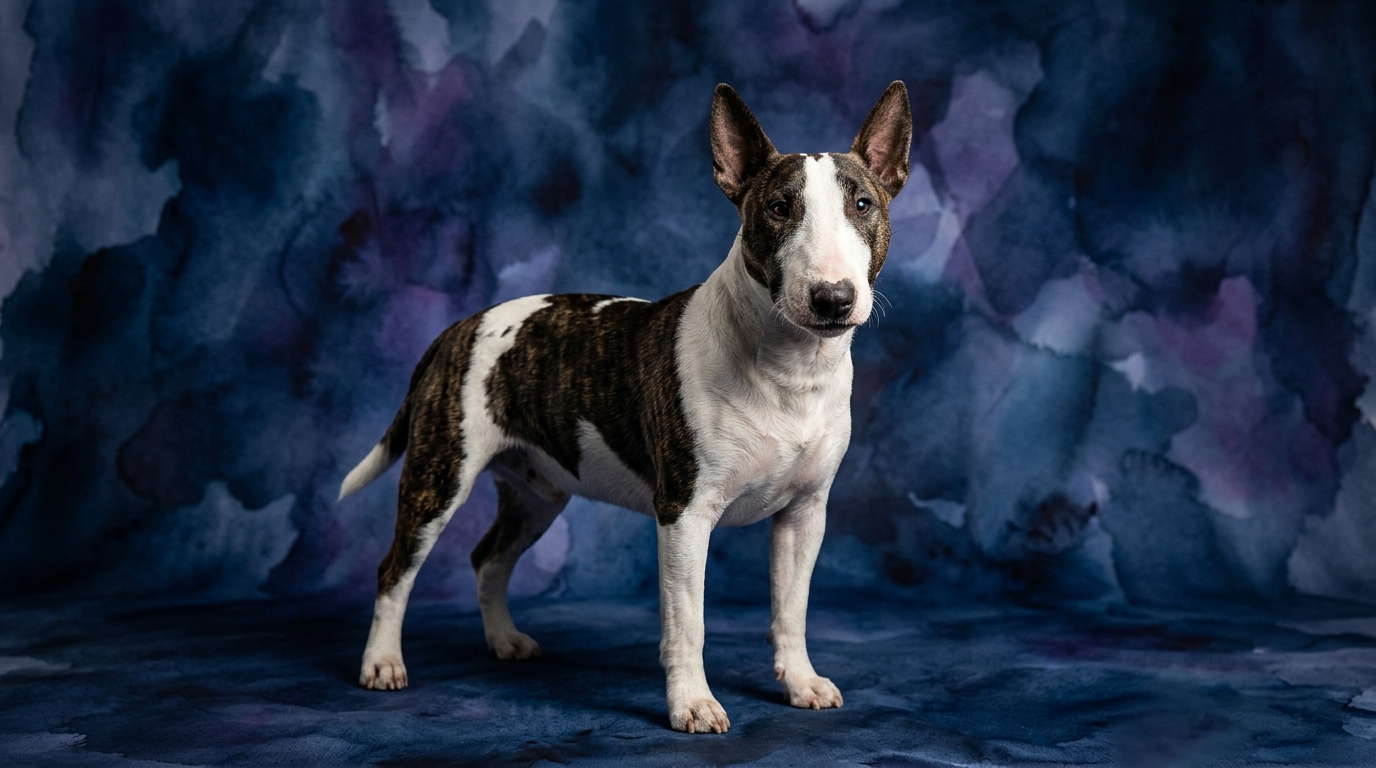
Conversely, the Miniature Bull Terrier tackles problems with tenacious energy and an independent spirit, often finding unconventional ways to achieve their goals, whether it’s figuring out a puzzle toy or reaching a coveted item. Their solutions can be creative, persistent, and sometimes involve a degree of stubborn determination. This breed learns effectively when engaged, responding well to playful, varied training sessions that prevent boredom; however, their independent streak means they might choose whether or not to comply based on current interest. Miniature Bull Terriers are often boisterous and affectionate with their inner circle, displaying a straightforward, sometimes less subtle, understanding of social cues, occasionally overlooking personal space in their enthusiasm. Their drives are characteristic of the terrier group, encompassing a robust prey drive, a penchant for digging, and an enduring persistence in pursuing their interests, manifesting as focused energy directed towards exploration. Mini Bull Terriers demonstrate a good memory for learned commands, preferred play patterns, and the locations of interesting scents or objects, recalling both enjoyable interactions and less pleasant experiences.
Where Dogue de Bordeaux Wins Cognitively
The Dogue de Bordeaux, despite sharing a 3/5 score, demonstrates particular strengths in scenarios requiring calm, deliberate assessment and protective judgment. Their problem-solving, for instance, leans towards evaluating potential threats to their home or family, where a methodical approach to deterrence is more valuable than quick, physical intervention. This manifests as an astute ability to gauge unfamiliar situations, often choosing a watchful stance over immediate confrontation, making them adept at passive guardianship. Furthermore, their social intelligence, while rated 3/5, shines in its depth of understanding human emotional nuances within their trusted circle; a Dogue is often remarkably perceptive of their owner's moods, offering quiet companionship or subtle reassurance without needing explicit cues. This capacity for empathetic connection, combined with their stable memory for established relationships and routines, allows them to serve as remarkably consistent and intuitive family companions, predicting needs and maintaining household harmony with a dignified presence.
Where Miniature Bull Terrier Wins Cognitively
Conversely, the Miniature Bull Terrier’s cognitive strengths emerge in contexts demanding tenacity, independent thought, and a spirited approach to challenges, even with identical 3/5 scores. Their problem-solving ability, while rated 3/5, is distinctly characterized by a persistent and often creative drive to overcome obstacles, whether it's outsmarting a puzzle toy designed for larger breeds or navigating complex environments to reach a desired object. This inventiveness stems from their terrier heritage, fostering a 'never give up' attitude that translates into effective, if sometimes unconventional, solutions. Their instinctive drive, also 3/5, fuels a tireless curiosity and a robust prey drive that, when channeled appropriately, makes them excellent participants in dog sports requiring focus and determination. This combination of independent thought and relentless pursuit allows them to excel in activities that might overwhelm a more sedate breed, making them uniquely suited for owners who appreciate a dog with a spirited, self-directed approach to life's adventures.
Which Is Easier to Train and Why
Determining which breed is 'easier' to train is less about raw intellectual capacity and more about managing inherent temperaments, especially with both scoring 3/5 in Training Speed. The Dogue de Bordeaux typically responds best to a calm, consistent approach that builds on their natural desire to please their trusted human. Their training speed, while moderate, benefits from clear, repetitive instructions delivered with patience, as they are less prone to impulsive disobedience once a command is understood and accepted. However, their physical size and guardian instincts mean that early and thorough socialization is crucial to ensure their innate protectiveness is well-managed. The Miniature Bull Terrier, on the other hand, presents a different training dynamic. While equally capable of learning, their terrier persistence and independent spirit mean training sessions must be highly engaging, varied, and fun to hold their attention. They can quickly become bored or decide a command isn't worth their effort if not presented in an exciting manner. Their innate prey drive can also be a significant distraction, requiring focused effort to maintain engagement during outdoor training. Therefore, while both learn at a moderate pace, the Dogue de Bordeaux generally requires more physical management and consistent reinforcement of boundaries, whereas the Miniature Bull Terrier demands more creativity, wit, and adaptability from their trainer to keep them mentally stimulated and compliant.
Which Suits Active Owners vs. Relaxed Owners
The Dogue de Bordeaux typically aligns better with relaxed owners who appreciate a calm, steadfast companion and are prepared for a dog with lower but significant exercise needs. Their ideal lifestyle involves a secure home environment, predictable routines, and owners who value a loyal, protective presence more than high-octane activities. While they enjoy walks and moderate play, their large size and lower energy output mean they are content with a comfortable space to observe their surroundings and be close to their family. Conversely, the Miniature Bull Terrier is a better fit for active owners who thrive on engagement and can provide consistent mental and physical stimulation. Their energetic demeanor and strong instinctive drives mean they require regular, varied exercise, puzzle toys, and interactive play to prevent boredom and channel their zest for life positively. Owners who enjoy dog sports, long adventurous walks, or have the time for frequent, engaging training sessions will find the Mini Bull Terrier a rewarding and spirited companion.
The Verdict
For those seeking a stoic, deeply loyal companion who offers a comforting, protective presence and appreciates a steady routine, the Dogue de Bordeaux is an exceptional choice.
If your lifestyle is more energetic, valuing a tenacious, playful, and independently spirited dog who thrives on mental engagement and varied activities, the Miniature Bull Terrier will be a vibrant addition.
🧠 Find Your Pet's IQ Score
Our Pet IQ Lab assessment covers 25+ tests across 5 cognitive dimensions — personalized to your breed.
Take the Full IQ Test →Frequently Asked Questions
Are Dogue de Bordeaux good with children?
Yes, when properly socialized and raised with children, Dogue de Bordeaux can be very gentle and protective, often displaying a patient and tolerant demeanor. Their calm nature typically makes them good family companions, but supervision is always advised with any large breed.
Do Miniature Bull Terriers bark a lot?
Miniature Bull Terriers can be vocal, barking to alert their owners, express excitement, or when bored. Consistent training from a young age is crucial to manage excessive barking, ensuring they learn appropriate times and reasons to vocalize.
How much exercise does a Dogue de Bordeaux need?
A Dogue de Bordeaux requires moderate daily exercise, typically consisting of a couple of leisurely walks or supervised outdoor play sessions totaling 30-60 minutes. Over-exercising them, especially when young, should be avoided due to their large growth plates.