
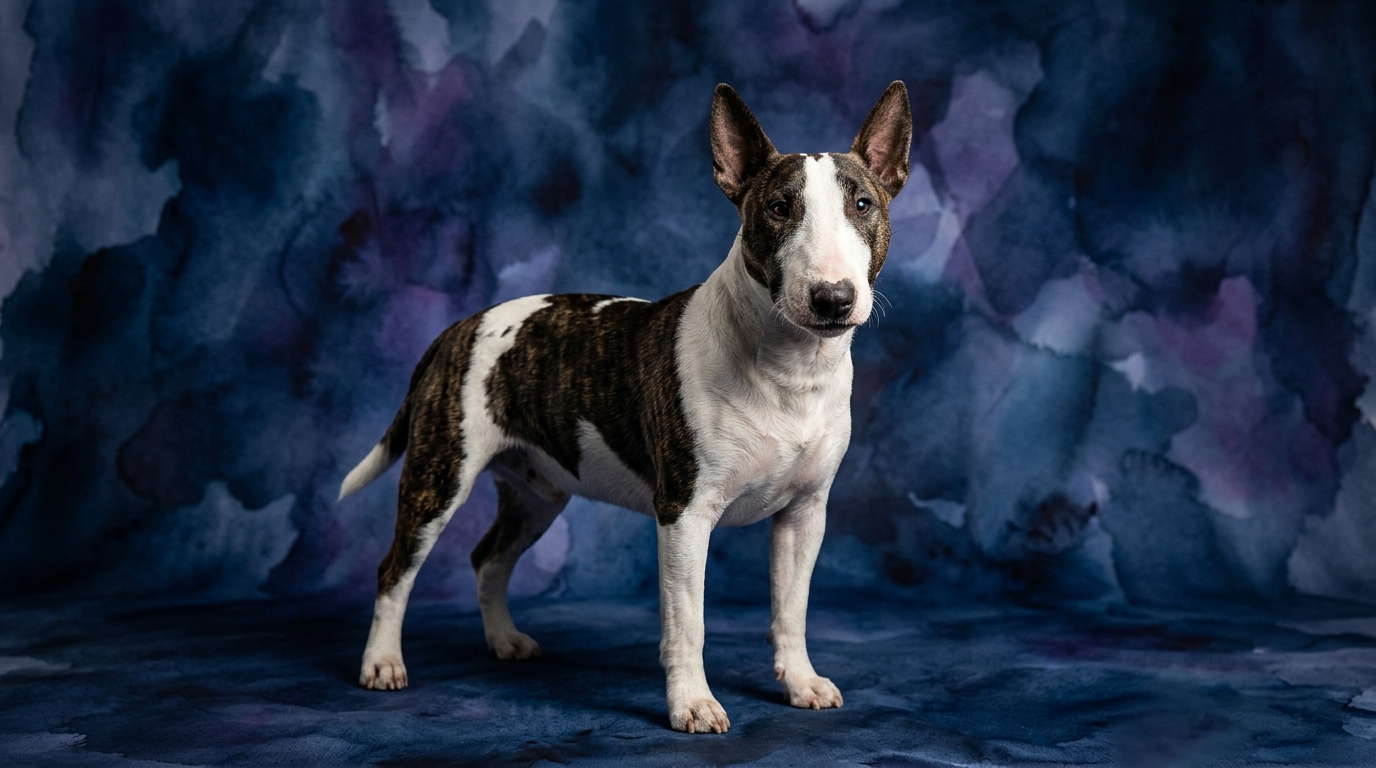
Side-by-Side IQ Profile: German Shepherd vs. Miniature Bull Terrier
The German Shepherd, ranked #3 by Coren, presents a formidable cognitive profile across all dimensions. Their Problem Solving is rated 5/5, indicating an exceptional aptitude for dissecting complex situations, devising strategies, and executing multi-step solutions. This breed's cognitive framework allows them to grasp new concepts rapidly and apply learned behaviors to novel challenges, making them adept at tasks requiring foresight and planning. Training Speed is also 5/5; their capacity for rapid learning is unparalleled, allowing them to internalize commands and routines with minimal repetition, translating into an efficient training process. Social Intelligence stands at 5/5, meaning they possess a profound understanding of social dynamics, excelling at interpreting human cues, body language, and vocal inflections, which enables seamless integration into various environments. Their Instinctive Drive is a powerful 5/5, manifesting as an intrinsic motivation for purpose-driven work, channeling their energy and focus into productive outlets. Finally, Memory is 5/5, demonstrating impressive long-term retention of commands, experiences, and learned associations, forming a robust foundation for advanced training.
The Miniature Bull Terrier, while not Coren-ranked, showcases a distinct cognitive makeup, with scores of 3/5 across all five dimensions. Their Problem Solving is rated 3/5; they approach challenges with a moderate degree of analytical thought, often relying on persistence and a trial-and-error method rather than complex strategic planning. While capable, it may take more time and a less direct route compared to breeds with higher scores. Training Speed is 3/5, indicating a moderate learning curve where they often require more repetition and patience during training sessions; their independent nature can sometimes manifest as selective hearing, needing consistent and engaging methods. Social Intelligence is 3/5; they interpret social cues adequately but may not possess the same nuanced understanding as more socially attuned breeds, forming strong bonds within their family but perhaps interpreting broader social signals less expansively. Their Instinctive Drive is 3/5, present but often manifesting as a strong, independent will rather than a desire for structured, collaborative work, requiring specific motivators to channel their energy. Memory is 3/5; they possess a functional memory, retaining commands and experiences over time, though perhaps not with the same intricate detail or speed of recall as breeds with higher scores, with consistent reinforcement being key.
Where the German Shepherd Excels Cognitively
The German Shepherd's cognitive strengths are evident across the board, particularly in their capacity for intricate task execution. Their 5/5 problem-solving ability allows them to excel in roles requiring independent decision-making, such as navigating complex search patterns or discerning threats in dynamic environments. Coupled with a 5/5 training speed, they absorb multi-stage commands rapidly, translating into efficient performance in fields like obedience, agility, and protection work. Their exceptional social intelligence (5/5) means they not only understand commands but also anticipate human intentions, responding to subtle shifts in tone or body language. This profound connection enables seamless teamwork, making them adept at assisting individuals with disabilities or working alongside law enforcement. Furthermore, their powerful instinctive drive (5/5) isn't merely boundless energy; it's a deep-seated motivation to engage with purpose, driving them to persist through challenges. Their impeccable memory (5/5) ensures that once a lesson is learned or an experience gained, it is retained and readily applied, fostering a cumulative learning process that builds a vast repertoire of skills.
Where the Miniature Bull Terrier Demonstrates Unique Cognitive Strengths
While the Miniature Bull Terrier's scores might appear lower in direct comparison, their cognitive profile presents a distinct set of strengths valuable in different contexts. Their 3/5 problem-solving score reflects a tenacious, sometimes unconventional approach to challenges; they might not follow a textbook solution but will often find a way through sheer determination and repeated effort. This breed isn't easily discouraged, often displaying a resolute focus on a task once engaged, a trait that can be a cognitive advantage in specific scenarios requiring sustained, independent effort. Their instinctive drive (3/5), though not geared towards collaborative work in the same manner as a herding breed, fuels their spirited personality and a desire for engaging, often physical, pursuits. This drive, when channeled appropriately, can make them formidable in activities requiring single-minded focus, like certain earthdog trials or lure coursing. Their social intelligence (3/5) fosters deep, though perhaps selective, bonds within their immediate family, demonstrating a loyalty that is unwavering, even if their interpretation of broader social cues is less expansive. They offer a specific kind of companionship rooted in robust character and an engaging, sometimes mischievous, perspective.
Ease of Training: German Shepherd vs. Miniature Bull Terrier
Based on their respective IQ profiles, the German Shepherd is demonstrably easier to train. Their 5/5 training speed signifies an innate eagerness to learn and a rapid absorption of new information. This breed's high problem-solving capacity means they quickly grasp the 'why' behind a command, enabling them to generalize behaviors and apply them consistently. Their 5/5 social intelligence allows them to keenly interpret a trainer's subtle cues, minimizing miscommunication and fostering a fluent dialogue. Behavioral differences underscore this; German Shepherds typically seek to please and excel in structured environments, readily offering desired behaviors. In contrast, the Miniature Bull Terrier's 3/5 training speed suggests a need for more patience and creative engagement. Their moderate problem-solving and social intelligence scores mean they might require more repetitions to solidify learning and may not always prioritize handler directives over their own independent impulses. Their characteristic terrier tenacity, while admirable, can translate into a stubborn streak during training, where they might question the necessity of a task or choose to follow their own agenda, requiring a trainer to be particularly consistent, motivating, and firm without being harsh.
Matching Breeds to Owner Lifestyles
The German Shepherd, with its uniformly high cognitive scores and intense instinctive drive (5/5), is best suited for active owners who can provide consistent mental and physical engagement. These owners thrive on structured activities like advanced obedience, protection sports, agility, or working roles where the dog's problem-solving and drive can be fully utilized. A German Shepherd with a less active owner risks becoming bored and potentially developing undesirable behaviors due to unmet cognitive and physical needs. Conversely, the Miniature Bull Terrier, possessing moderate scores across the board (3/5), aligns well with owners who appreciate a spirited companion but might not seek the same level of rigorous, structured work. While they are energetic and enjoy play, their instinctive drive is more often self-directed rather than task-oriented, meaning they can thrive with varied daily exercise, engaging games, and consistent but less intensive mental challenges. They suit owners who appreciate their independent streak and can provide a balance of activity and relaxed companionship, without the constant demand for intricate tasks that a German Shepherd requires.
The Verdict
Opt for a German Shepherd if you seek a highly trainable, versatile working partner eager for complex tasks and deep collaboration, thriving on consistent mental and physical engagement.
Select a Miniature Bull Terrier if you desire a spirited, independent companion with a charming personality, valuing a unique bond over strict obedience and continuous structured work.
🧠 Find Your Pet's IQ Score
Our Pet IQ Lab assessment covers 25+ tests across 5 cognitive dimensions — personalized to your breed.
Take the Full IQ Test →Frequently Asked Questions
Are German Shepherds always easy to train?
While German Shepherds possess a 5/5 training speed, 'easy' is relative; they require consistent, skilled guidance and mental stimulation to channel their formidable intelligence and drive effectively. Without proper direction, their problem-solving skills might be applied to behaviors owners don't appreciate.
What makes Miniature Bull Terriers challenging to train?
Miniature Bull Terriers, with their 3/5 training speed and independent nature, can be challenging because they often require more repetition, creative motivation, and a patient approach. Their strong will means they might not always see the immediate benefit of a command, preferring to follow their own instincts.
Do Miniature Bull Terriers need less exercise than German Shepherds?
Miniature Bull Terriers have a moderate instinctive drive (3/5) compared to the German Shepherd's 5/5, suggesting their exercise needs might be less intense in terms of structured work. However, they are still energetic dogs requiring regular physical activity and engaging play to remain content and well-adjusted.