
Side-by-Side IQ Profile: Deconstructing Canine Cognition
While both the Dogue de Bordeaux and the Pekingese register a consistent 3/5 across our five cognitive dimensions, the application and expression of these scores diverge significantly, shaped by their breed-specific evolution. This isn't about one being “smarter” in an absolute sense, but rather how their cognitive tools are specialized.
The Dogue de Bordeaux demonstrates a deliberate, often physically oriented approach to problem-solving. This might involve assessing a spatial challenge to patrol its territory effectively or determining the most direct path to intervene if it perceives a threat to its family. Their solutions tend to be robust and direct, reflecting their protective nature.
Training a Dogue de Bordeaux requires consistency and understanding of their independent, sometimes stoic temperament. They are capable learners, particularly when tasks are meaningful and reinforce their bond with their handler, but their learning curve is steady rather than rapid, often requiring patient, positive reinforcement.
These mastiffs possess a nuanced understanding of social hierarchies and family dynamics within their home. They are adept at reading their owner's emotional states and identifying perceived intruders or potential threats, often exhibiting a reserved wariness towards strangers until deemed safe by their trusted humans.
The Dogue de Bordeaux's instinctive drive is profoundly rooted in guardianship and protection. They exhibit a strong territorial instinct and a deep-seated desire to defend their family and property, manifesting as watchful observation and a readiness to act if their perceived boundaries are challenged.
Their memory serves them well in recalling specific individuals, routines, and past experiences, particularly those related to their protective duties. They remember who belongs and who doesn't, and consistent training commands are retained effectively over time, contributing to their reliability.
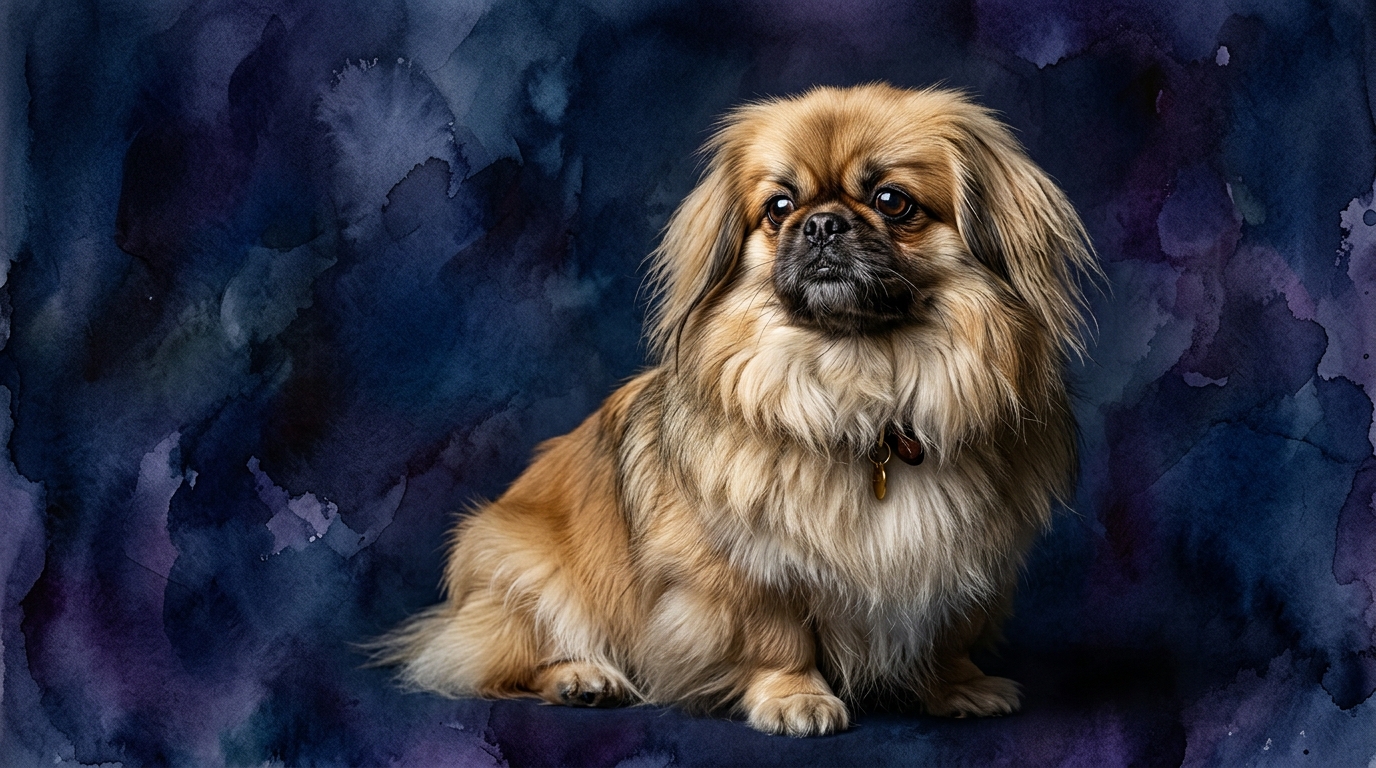
A Pekingese's problem-solving often centers on navigating their immediate environment for comfort, attention, or resources. This could involve figuring out how to get onto a favorite high perch, locating a hidden treat, or employing charming tactics to solicit a desired interaction from their human companions. Their solutions are often clever and self-serving.
The Pekingese can learn commands and routines, but their strong-willed and often independent nature means their training speed is highly contingent on motivation. They will learn quickly if the reward is appealing (e.g., a favored treat, a lap cuddle) but may become resistant or “selective” if a task seems unappealing or inconvenient.
These small dogs are masters of social manipulation within their human family. They possess an acute ability to read their owner's moods and exploit subtle cues to gain comfort, attention, or a preferred position on the sofa. Their social acumen is geared towards ensuring their own well-being and privileged status.
The Pekingese's primary instinctive drive is towards companionship and maintaining their position as a cherished family member. While they can be surprisingly territorial for their size, their core drive is about securing comfort, closeness, and attention from their chosen humans, often exhibiting a regal self-assurance.
A Pekingese has a good memory for established routines, the locations of their favorite resting spots, and who provides the best treats or snuggles. They retain lessons, especially those that consistently lead to positive outcomes for them, such as the exact time for dinner or the pathway to their owner's lap.
Where Dogue de Bordeaux Wins Cognitively
The Dogue de Bordeaux excels in cognitive areas demanding physical presence, deliberate judgment, and a strong sense of responsibility. Their problem-solving, while not necessarily quick, is often robust and practical for tasks requiring physical intervention or strategic assessment of a situation, such as determining the best way to block an entryway or position themselves to observe a large area. Their social intelligence is particularly strong in discerning genuine threats versus benign visitors, a critical aspect of their protective role. This cognitive strength translates into a dependable, watchful companion who processes information with a weighty seriousness appropriate for their guarding heritage.
Where Pekingese Wins Cognitively
The Pekingese demonstrates a unique cognitive advantage in navigating complex social dynamics within a home environment and employing subtle strategies to achieve their desires. Their problem-solving is often refined, focused on influencing human behavior to secure comfort or attention, such as knowing precisely when to offer a soft nudge or a charming glance. Their social intelligence is a fine-tuned instrument for emotional manipulation, allowing them to read and respond to human moods with uncanny accuracy to ensure their own pampered status. This breed's cognitive strengths lie in their ability to subtly orchestrate their environment and human companions to their benefit, making them exceptionally astute at domestic politics.
Which is Easier to Train and Why
Determining “easier” is subjective, as both breeds present unique training considerations stemming from their core motivations. The Dogue de Bordeaux, with its drive for purposeful work and a desire to please its family, can be a willing student, especially when training is consistent and uses positive reinforcement. Their steady learning speed means they absorb commands reliably, though their independent streak requires patience and clear leadership. They respond well to task-oriented training that aligns with their protective instincts.
The Pekingese, conversely, can be more challenging due for their strong-willed nature and preference for personal comfort over strict obedience. While they are capable of learning, their “training speed” is often dictated by their perceived benefit. If a command doesn't immediately yield a desirable outcome (like a treat or a cuddle), they may choose to ignore it. Training a Pekingese often involves a delicate balance of charm, high-value rewards, and a good sense of humor, as they are masters at selective hearing. Consistency is paramount, but so is understanding that their primary motivation is often their own comfort and attention.
Which Suits Active Owners vs. Relaxed Owners
The Dogue de Bordeaux, despite its placid demeanor indoors, is better suited for moderately active owners who appreciate a dog capable of purposeful outdoor engagement. While not requiring marathon runs, they benefit from regular, structured walks and mental stimulation that taps into their protective instincts, like scent work or basic obedience drills. Their sheer size and need for deliberate exercise mean they are not ideal for entirely sedentary lifestyles, thriving with owners who can provide consistent, steady activity and mental engagement.
The Pekingese, on the other hand, is an ideal companion for relaxed owners. Their exercise needs are minimal, satisfied with short daily strolls or indoor play. They are perfectly content to spend most of their day napping on a comfortable cushion or observing the world from a lap. Their cognitive strengths are best appreciated by owners who enjoy a close, affectionate bond and are amused by their subtle manipulative charm, rather than seeking a highly active or task-oriented canine partner.
The Verdict
Choose the Dogue de Bordeaux if you seek a steadfast, protective companion who processes the world with deliberate judgment and whose loyalty is expressed through watchful guardianship and a desire for purposeful engagement.
Choose the Pekingese if you desire a charming, independent companion who excels in navigating social nuances for comfort and attention, and whose cognitive strengths shine in a more relaxed, indoor-centric lifestyle.
🧠 Find Your Pet's IQ Score
Our Pet IQ Lab assessment covers 25+ tests across 5 cognitive dimensions — personalized to your breed.
Take the Full IQ Test →Frequently Asked Questions
Are Dogue de Bordeaux dogs difficult to train due to their size?
While their size adds a physical dimension to training, the Dogue de Bordeaux's 3/5 training speed rating indicates they are capable learners with consistent, positive reinforcement. Their deliberate nature means patience is key, and early socialization is crucial for managing their protective instincts.
Do Pekingese dogs make good guard dogs because of their territoriality?
Pekingese can be quite territorial for their size, often barking at perceived threats or strangers, which can serve as an alert system. However, their physical capabilities are limited, so while they may deter small animals or alert owners, they are not suited for the protective duties of a true guard dog like the Dogue de Bordeaux.
How do the problem-solving skills differ given both are 3/5?
The difference lies in application: the Dogue de Bordeaux's problem-solving is often physical and protection-oriented, assessing environmental threats or navigating obstacles. The Pekingese applies its problem-solving more to social situations and personal comfort, figuring out how to get attention, find the best sunbeam, or manipulate human interactions.