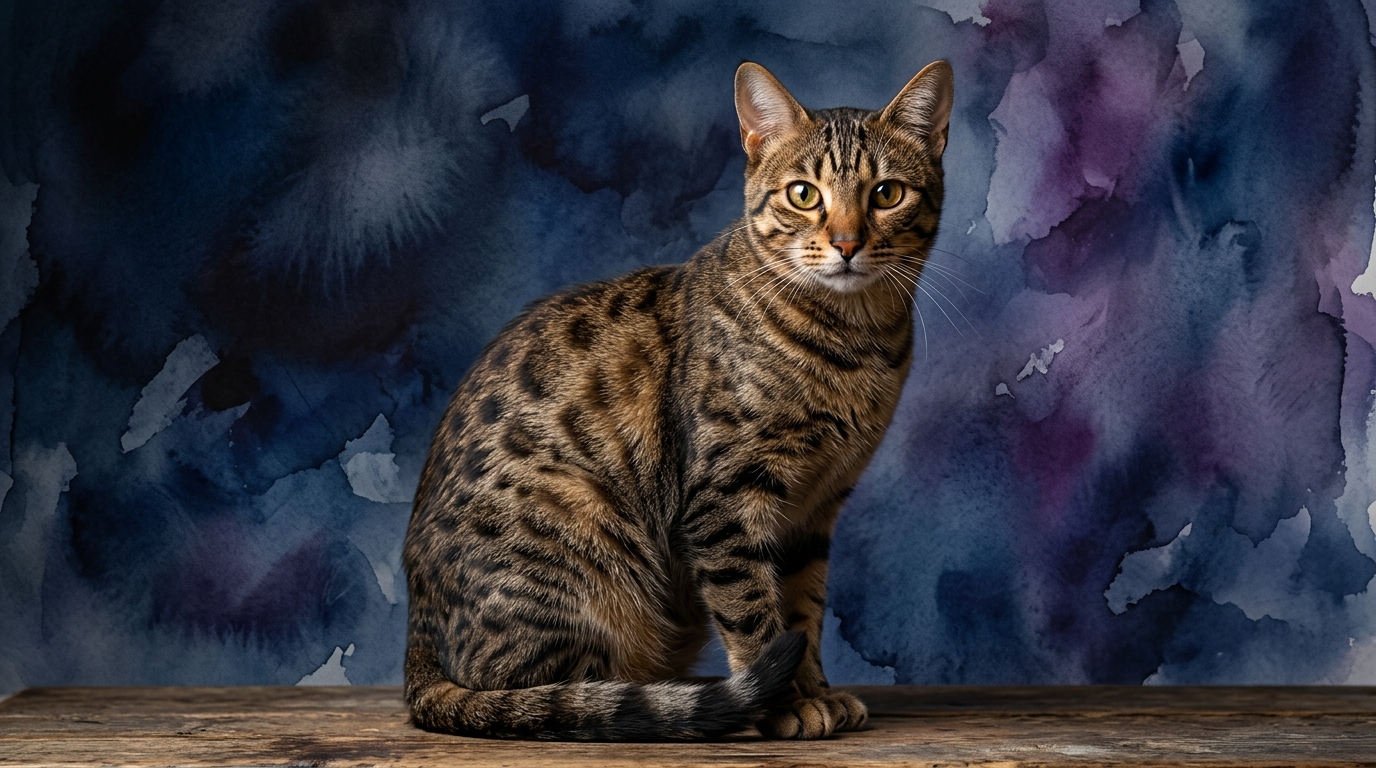
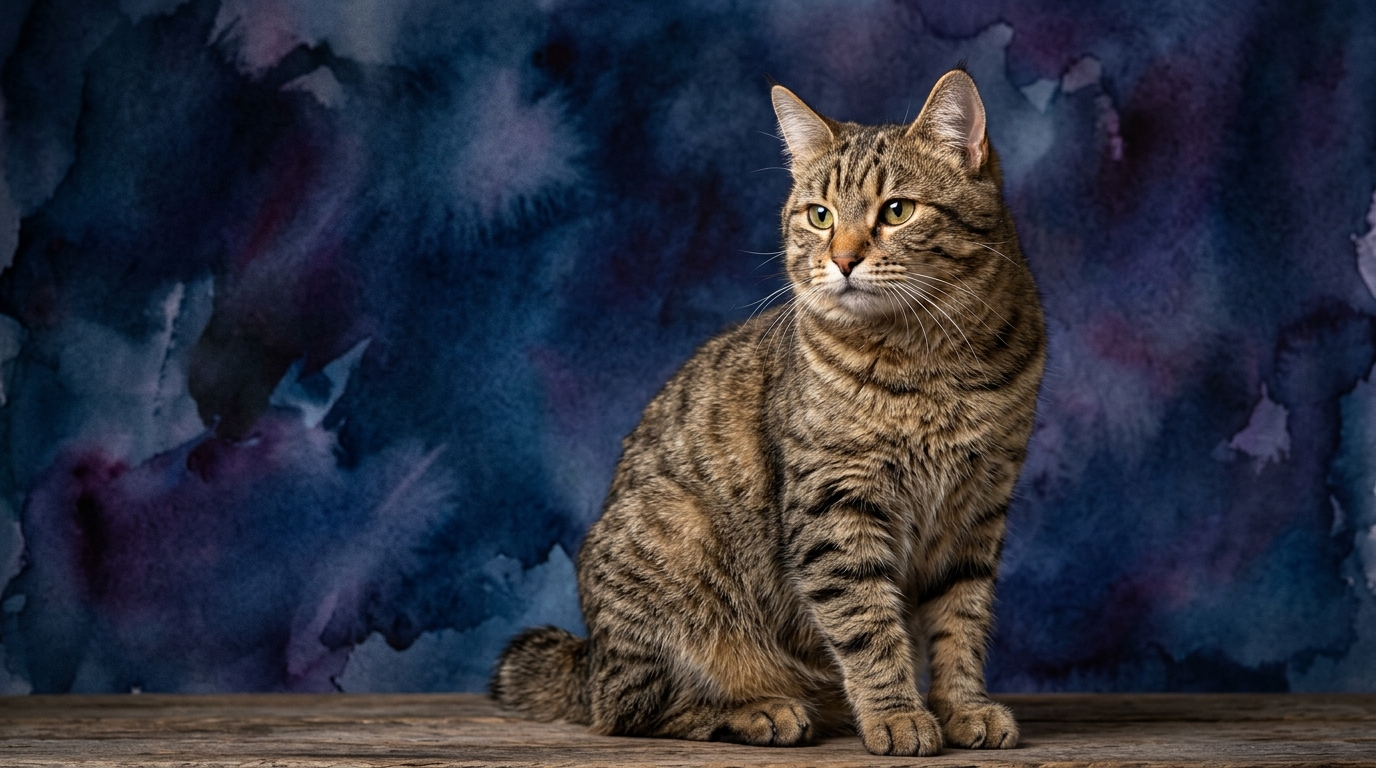
Side-by-Side IQ Profile: Egyptian Mau vs. Pixiebob
The Cosmic Pet Pet IQ Lab assesses feline intelligence across five crucial dimensions, and both the Egyptian Mau and the Pixiebob consistently score a 3 out of 5 in each category. This identical scoring suggests a comparable baseline capacity for mental engagement, yet the manifestation of these cognitive abilities often differs due to their unique breed characteristics and historical predispositions.
Problem Solving (3/5): The Egyptian Mau demonstrates a 3 out of 5 in problem-solving through its keen observational capacity and agile physical application. This manifests in their ability to strategically approach puzzle toys, figure out how to access high perches, or even manipulate simple latches when highly motivated, often with a hunter's precision and focus on environmental mastery. The Pixiebob, also scoring 3 out of 5, approaches problem-solving with a curious, often hands-on methodology. They are known to investigate novel objects and situations thoroughly, displaying a capability to learn by trial and error, which can be seen in their knack for discovering how to open cabinets or retrieve hidden toys, often driven by a desire for interactive engagement.
Training Speed (3/5): A 3 out of 5 in training speed indicates the Egyptian Mau can learn commands and routines at a respectable pace, particularly when positive reinforcement and engaging methods are employed. Their independent streak means training sessions must be kept stimulating and rewarding, as they are less inclined to perform purely for human approval, but will readily learn if it aligns with their interests, like play or treats. Mirroring the Mau with a 3 out of 5, the Pixiebob's training speed is notable, often enhanced by their 'dog-like' willingness to cooperate and eagerness to please. They typically respond well to clicker training and positive reinforcement, quickly grasping complex commands, leash training, and even fetch, with their social motivation often making the training process feel highly collaborative.
Social Intelligence (3/5): With a 3 out of 5, the Egyptian Mau exhibits discerning social intelligence, forming deep, often exclusive bonds with a select few family members. They are highly perceptive to the moods and routines of their chosen humans, offering comfort or seeking interaction based on subtle cues, but can be reserved or wary with strangers, preferring to observe from a distance. Also scoring 3 out of 5, the Pixiebob displays a broader, more adaptable social intelligence. They integrate seamlessly into family life, often enjoying the company of children and other pets, and are generally more outgoing with new people than many cat breeds, with their capacity to understand and respond to human emotions making them highly interactive companions.
Instinctive Drive (3/5): A 3 out of 5 in instinctive drive highlights the Egyptian Mau's robust and refined predatory instincts. They are natural hunters, possessing exceptional agility, speed, and focus, which translates into a strong desire for interactive play that mimics hunting, making them highly engaged with feather wands and laser pointers. Also at 3 out of 5, the Pixiebob's instinctive drive is pronounced, often manifesting as a keen interest in chasing and retrieving. While possessing a strong prey drive, it frequently translates into playful behaviors like carrying toys, playing fetch, and actively patrolling their territory, with their instincts often expressed in ways highly compatible with domestic interaction.
Memory (3/5): Scoring 3 out of 5, the Egyptian Mau possesses a solid memory for routines, favored people, and specific locations within their environment. They recall where treats are stored, remember past interactions (both positive and negative), and can navigate complex home layouts with ease, which contributes to their consistent habits and preferences. With a 3 out of 5, the Pixiebob also demonstrates a reliable memory, particularly for learned commands, established routines, and the identities of family members. They remember their favorite hiding spots for toys and can recall specific sequences of events, which aids in their training and adaptability to new situations, supporting their consistent engagement with their environment and humans.
Where the Egyptian Mau Excels Cognitively
While both breeds share similar cognitive scores, the Egyptian Mau often exhibits a nuanced edge in applying its problem-solving and instinctive drive within a highly dynamic physical environment. Their historical role as agile hunters has honed a cognitive style focused on precise observation, rapid decision-making, and elegant physical execution. This means a Mau might more quickly assess the optimal, least energy-intensive path to a high perch or devise a complex strategy to 'trap' a laser pointer dot behind furniture, demonstrating an intrinsic understanding of spatial dynamics and predatory tactics that feels exceptionally sharp and self-directed. Their problem-solving often carries a distinct, independent flair, less reliant on human prompting, showcasing a powerful blend of physical and mental agility.
Where the Pixiebob Shines Cognitively
The Pixiebob, conversely, often shines in cognitive areas related to social adaptability and collaborative engagement, even with matching scores. Their 'dog-like' temperament translates into a superior capacity for understanding complex human social cues and integrating into diverse household dynamics with remarkable ease. A Pixiebob might more readily interpret subtle shifts in human tone or body language, adjusting its behavior to seek interaction or offer comfort in a highly responsive manner. Their problem-solving and memory, while equally scored, often manifest through a greater willingness to participate in structured, human-led activities, suggesting a cognitive preference for collaborative learning and a more pronounced desire to 'work' alongside their owners, making them exceptionally responsive to joint ventures and shared experiences.
Training Experience: Mau's Independence vs. Pixiebob's Cooperation
Given both breeds score 3 out of 5 in training speed, the *experience* of training can differ significantly due to their underlying temperaments. The Pixiebob often feels 'easier' to train for many owners because of its inherent biddability and desire to please. Their social intelligence and eagerness to participate in human-led activities mean they are often highly motivated by praise and interaction, making them quick to pick up tricks, leash manners, and even complex commands like fetch. Their consistent engagement simplifies the process, making it feel less like 'teaching' and more like 'collaborating' with a willing partner.
The Egyptian Mau, while equally capable of learning at a respectable pace, requires a more nuanced approach. Their independent spirit means training must be intrinsically rewarding for them, often through play or food. They might learn just as quickly, but their motivation is less about pleasing the owner and more about achieving their own goals or enjoying the activity itself. This requires a trainer to be highly creative, patient, and consistent, ensuring the Mau sees the value in the learned behavior on its own terms, rather than simply seeking approval. Owners must tap into the Mau's natural instincts and intellectual curiosity to foster a successful training relationship.
Matching Feline Intelligence to Owner Lifestyles
Both the Egyptian Mau and the Pixiebob are energetic breeds that thrive with active engagement, making neither truly suited for owners seeking a purely 'relaxed' companion. However, the *type* of activity they prefer can guide an owner's choice. An Egyptian Mau is ideal for an active owner who appreciates a cat with a robust predatory drive and a need for vigorous, interactive play that stimulates their hunting instincts. These owners should enjoy providing ample opportunities for climbing, chasing, and puzzle-solving, often through independent play or dedicated one-on-one sessions that cater to the Mau's agility and observational skills. They will thrive with an owner who can consistently provide an enriching environment that respects their independent, yet deeply affectionate, nature.
A Pixiebob, while equally active, suits owners who desire a more integrated, 'dog-like' companion for shared activities. These owners might enjoy leash walking, teaching complex tricks, or engaging in extended games of fetch. Their adaptability and social nature mean they thrive when included in family adventures and appreciate structured activities that allow them to 'work' alongside their humans, offering a highly interactive and engaging partnership beyond simple play. They are excellent for owners who want a feline that actively participates in diverse family life and enjoys a strong, collaborative bond.
The Verdict
Choose the Egyptian Mau if you appreciate a cat with elegant independence, a sharp, self-directed intellect, and a profound, agile predatory drive, thriving on sophisticated, enriching play that challenges their keen observation skills.
Opt for the Pixiebob if you seek a highly adaptable, socially integrated feline companion that enjoys collaborative activities, learns readily with an eager-to-please attitude, and offers a 'dog-like' loyalty and engagement.
🧠 Find Your Pet's IQ Score
Our Pet IQ Lab assessment covers 25+ tests across 5 cognitive dimensions — personalized to your breed.
Take the Full IQ Test →Frequently Asked Questions
Do Egyptian Maus get along with other pets?
Egyptian Maus can coexist with other pets, especially if introduced thoughtfully and at a young age. Their discerning social intelligence means they may form strong bonds with certain animal companions, but they often prefer the company of their chosen humans and can be reserved with new animal additions, requiring patience during integration.
Are Pixiebobs good family cats with children?
Yes, Pixiebobs generally make excellent family cats and are known for their patience and gentle nature with children. Their adaptable social intelligence allows them to integrate well into busy households, often enjoying interactive play and becoming cherished, highly interactive members of the family unit.
What kind of mental stimulation do these breeds need?
Both breeds require significant mental stimulation to thrive. Egyptian Maus benefit from puzzle feeders, interactive hunting toys, and vertical climbing spaces to engage their problem-solving and instinctive drive. Pixiebobs enjoy learning new tricks, playing fetch, and going for supervised leash walks, leveraging their training speed and social intelligence for collaborative engagement and activity.