
Side-by-Side Cognitive Profiles
The English Cocker Spaniel, a Sporting group member, holds a Coren rank of #18, indicating a notable capacity for obedience and working intelligence. Its cognitive profile includes a Problem Solving score of 4/5, reflecting a solid ability to navigate novel situations and figure out solutions. Training Speed is also high at 4/5, suggesting it learns new commands and routines with efficiency. Its Social Intelligence stands at 3/5, indicating a reasonable aptitude for understanding human cues and social dynamics, while its Instinctive Drive is 3/5, balanced but present. A standout feature is its Memory, scoring an impressive 5/5, pointing to excellent retention of learned behaviors and experiences.
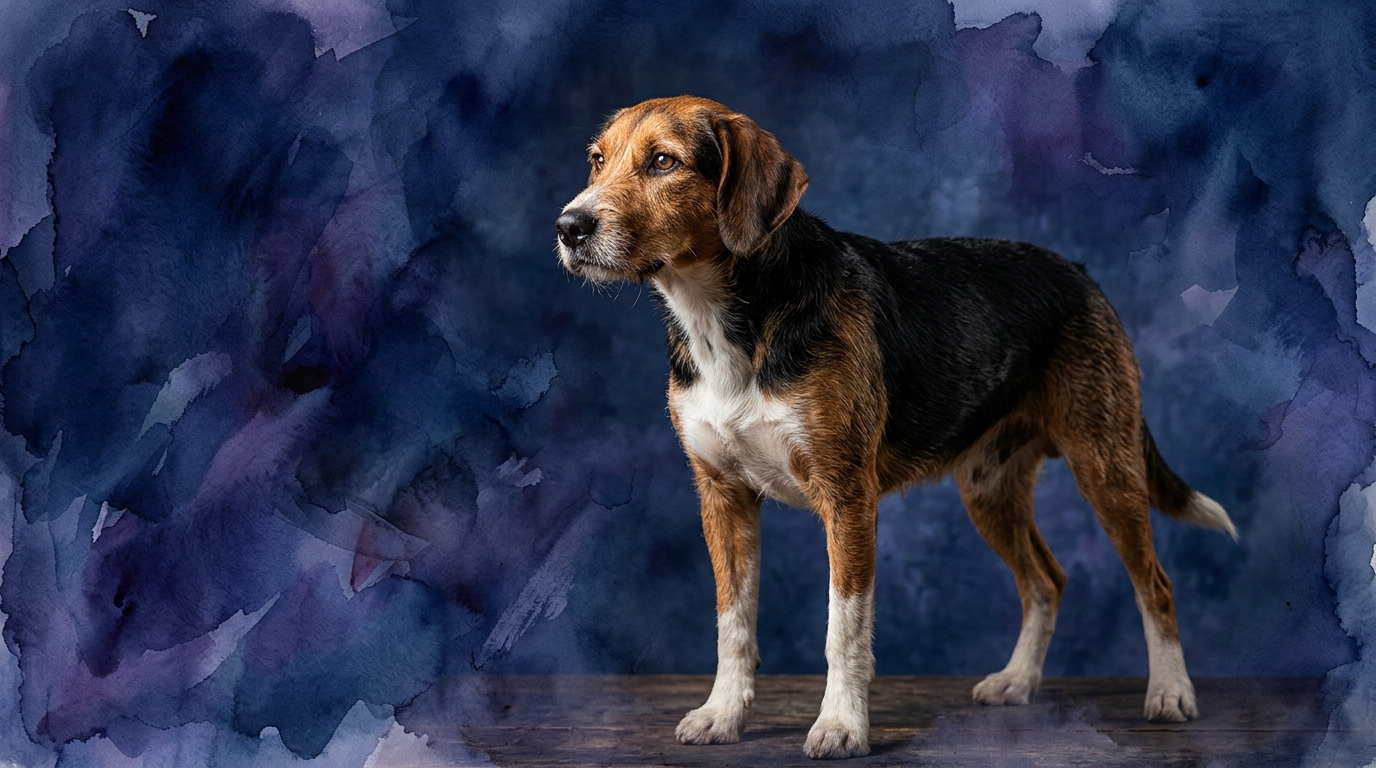
In contrast, the Harrier, a member of the Hound group, is not Coren-ranked, which is common for breeds whose primary intelligence is deeply rooted in specialized instinctive behaviors rather than general obedience. The Harrier's cognitive scores are consistently moderate: Problem Solving is 3/5, suggesting a practical, but not overly complex, approach to challenges. Training Speed is 3/5, meaning it learns at a steady pace but might require more repetition than some peers. Social Intelligence is 3/5, indicating a similar capacity for social understanding as the Cocker Spaniel. Its Instinctive Drive is also 3/5, reflecting its strong, inherent motivation for scent work. Memory scores 3/5, suggesting a functional but not exceptional recall of events and training.
Where the English Cocker Spaniel Excels Cognitively
The English Cocker Spaniel's cognitive blueprint truly shines in areas demanding quick learning and robust recall. Its 4/5 Training Speed means it tends to grasp new commands and complex sequences relatively quickly, often requiring fewer repetitions to solidify a new behavior. This accelerated learning curve allows for a broader range of training opportunities, from advanced obedience to intricate dog sports, where rapid assimilation of rules and cues is paramount. Owners will often find these dogs pick up on household routines and expectations with minimal prompting, making integration into family life smoother.
Perhaps its most striking cognitive strength is its 5/5 Memory. This superior recall extends beyond basic commands to encompass specific locations, individuals, and past experiences. An English Cocker Spaniel can remember intricate routes, the location of hidden toys, or even the nuanced body language of familiar people over extended periods. This exceptional memory contributes significantly to its trainability and its ability to perform complex tasks reliably, such as retrieving specific items or following multi-step instructions, making it a highly responsive and reliable companion in varied environments.
Harrier's Unique Cognitive Strengths
While the Harrier's cognitive scores are generally moderate, its unique strengths lie in the steadfast application of its instinctive intelligence, particularly in its primary role as a scent hound. Its 3/5 Instinctive Drive, while numerically equal to the Cocker Spaniel, manifests differently: it’s an enduring, unwavering focus on scent trails. This isn't about solving complex puzzles in a human-centric way, but about a highly specialized, persistent form of problem-solving centered entirely on olfactory information. A Harrier demonstrates a relentless determination to follow a scent, often ignoring distractions that would deter other breeds. This single-minded pursuit, while sometimes challenging for owners, is a profound cognitive strength for its intended purpose.
The Harrier's 3/5 Problem Solving, though not top-tier, is practical and robust within its field. When faced with a broken scent trail or an obstacle in pursuit, a Harrier employs a methodical, trial-and-error approach, using its nose to re-establish the path rather than relying on abstract reasoning. This resilience and independence in working through challenges, driven by its powerful instincts, represent a distinct form of functional intelligence. Its moderate Social Intelligence and Memory contribute to a dog that can operate effectively both independently in the field and as a companion, balancing its innate drive with an awareness of its environment.
Training Ease: English Cocker Spaniel vs. Harrier
When it comes to ease of training, the English Cocker Spaniel generally presents a more straightforward experience for most owners. Its 4/5 Training Speed and 5/5 Memory mean it learns and retains commands rapidly. They typically possess a strong desire to please their handlers, making them highly receptive to positive reinforcement. Their ability to quickly associate actions with rewards, coupled with their excellent recall, translates into a dog that can master a wide array of obedience commands, tricks, and specialized tasks with relative ease. This responsiveness makes them adaptable to various training methodologies and environments, from basic house manners to competitive dog sports.
The Harrier, with its 3/5 Training Speed and 3/5 Memory, along with its strong, independent scent drive, can be more challenging to train. While capable of learning, Harriers often require more patience, consistency, and repetition to solidify behaviors. Their deep-seated instinct to follow a scent can frequently override human commands, especially in stimulating outdoor environments. This means an owner might find themselves competing with an intriguing smell for their dog's attention, making reliable recall and off-leash obedience a significant undertaking. Training a Harrier often involves creative methods to channel its natural drives into desired behaviors, focusing on engagement and making training more rewarding than any passing scent.
Suitability for Active vs. Relaxed Owners
The English Cocker Spaniel, while an active Sporting dog, possesses a cognitive flexibility that allows it to adapt to a range of owner lifestyles, leaning towards the active but with capacity for downtime. Its moderate instinctive drive (3/5) means it thrives on regular exercise, mental stimulation, and participation in family activities. However, its high trainability and strong desire for companionship mean it can also settle well indoors after sufficient engagement, making it suitable for active owners who also appreciate periods of relaxation and indoor bonding. They are generally eager to participate in whatever their family is doing, from long walks to cuddling on the couch, provided their energy needs are met.
The Harrier is decidedly a breed for active owners, and specifically those who understand and can cater to its profound need for strenuous physical activity and mental engagement through scent work. Its robust physical stamina and potent instinctive drive (3/5) demand extensive daily exercise, ideally involving opportunities for off-leash running in secure areas or structured scent games. A Harrier left without adequate outlets for its energy and instincts can become restless and potentially destructive. Relaxed owners, or those unable to commit to significant daily activity and mental stimulation tailored to its hound nature, would likely find a Harrier to be a challenging companion. They thrive with owners who embrace an outdoor, active lifestyle and can provide consistent, engaging activities that tap into their natural hunting heritage.
The Verdict: Choosing Your Companion
The Verdict
Choose the English Cocker Spaniel if you seek a highly trainable, responsive, and adaptable companion eager to engage in diverse activities and bond closely with its family. Its excellent memory and quick learning make it a rewarding choice for various training pursuits and active households.
Opt for the Harrier if you are an experienced, highly active owner who appreciates an independent, resilient dog with a powerful scent drive and the stamina for extensive outdoor adventures. Be prepared to dedicate significant time to exercise and channel its natural instincts effectively.
🧠 Find Your Pet's IQ Score
Our Pet IQ Lab assessment covers 25+ tests across 5 cognitive dimensions — personalized to your breed.
Take the Full IQ Test →Frequently Asked Questions
How does the Coren rank apply to these breeds?
The Coren rank primarily assesses working and obedience intelligence, which the English Cocker Spaniel's #18 rank reflects in its high training speed and memory. The Harrier, as a specialized hound, is not Coren-ranked because its intelligence is more geared towards instinctive scent work rather than general obedience, which doesn't fit the ranking criteria as directly.
Can a Harrier be trained effectively despite its lower training speed score?
Yes, a Harrier can be trained effectively, but it typically requires more patience, consistency, and a deep understanding of its independent, scent-driven nature. Training methods that incorporate its natural instincts, such as scent work or tracking games, are often highly successful in engaging a Harrier and making training a positive experience, albeit potentially slower than with a Cocker Spaniel.
Which breed is better for a family with children?
Both breeds can be suitable for families with children, but the English Cocker Spaniel's higher social intelligence and desire to please often make it a more naturally adaptable and responsive family companion. A Harrier can be good with children but requires more supervision and consistent training to manage its energy and strong instincts, ensuring harmonious interactions within a family setting.