
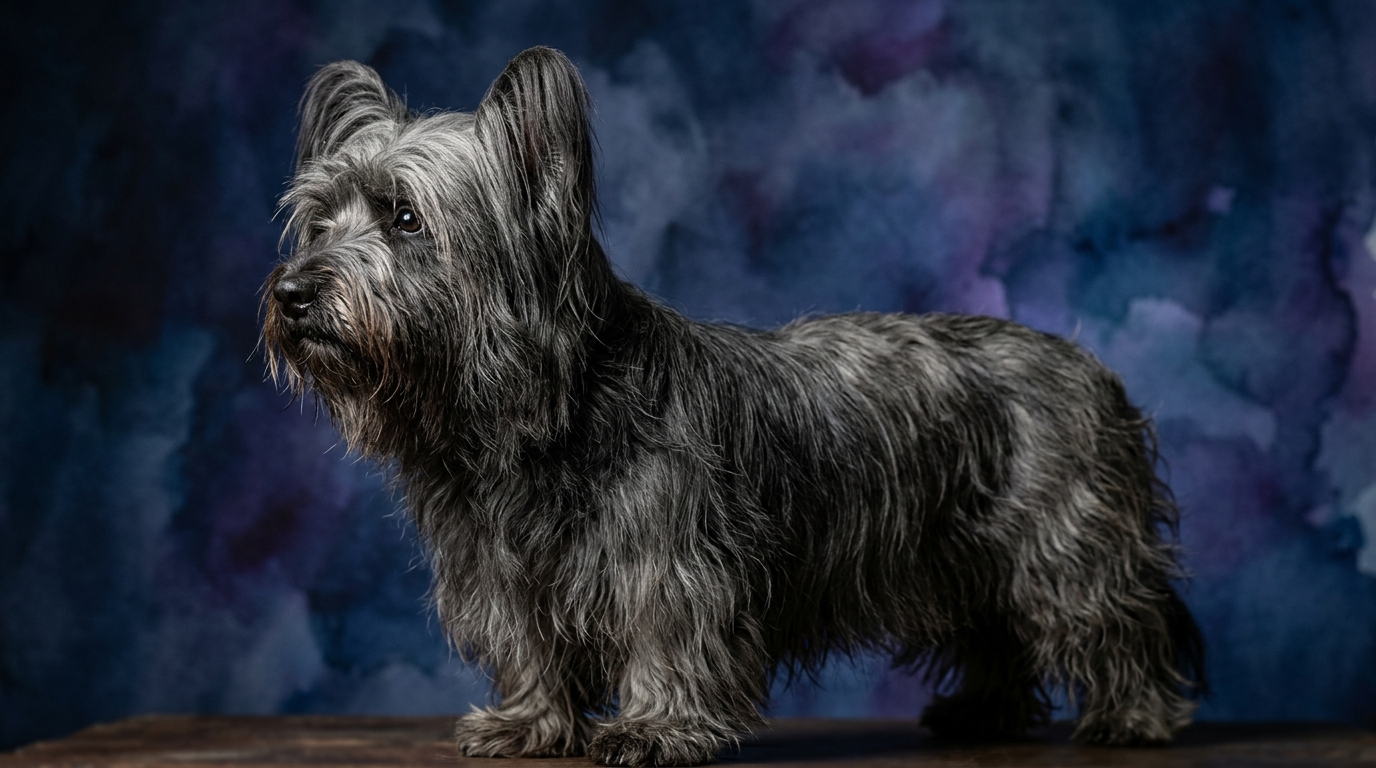
Side-by-Side IQ Profile: English Cocker Spaniel vs. Skye Terrier
The English Cocker Spaniel, a Sporting Group member, stands at Coren rank #18, indicating strong working obedience. Their Problem Solving is rated 4/5, suggesting an ability to navigate novel situations and figure out solutions of moderate complexity. Training Speed also sits at 4/5, meaning they grasp new commands and routines relatively quickly, often needing fewer repetitions. Social Intelligence is 3/5, reflecting a balanced ability to understand human cues and social dynamics, neither overly dependent nor excessively aloof. Their Instinctive Drive is 3/5, showcasing a moderate drive for hunting and retrieving from their gundog heritage. A standout trait is their Memory, rated at an impressive 5/5, allowing them exceptional recall of complex sequences, past experiences, and learned behaviors.
The Skye Terrier, hailing from the Terrier Group, does not appear on Coren's traditional ranking, which often favors breeds with high obedience scores. Their Problem Solving is rated 3/5, indicating an ability to solve straightforward challenges, often with a persistent, independent approach characteristic of terriers. Training Speed is also 3/5, meaning they learn new tasks at a steady pace, but might require more consistent reinforcement due to their independent streak. Social Intelligence is 3/5, similar to the Cocker, suggesting they are observant of their human companions but tend to be more reserved with strangers. Their Instinctive Drive is 3/5, reflecting their original purpose as tenacious hunters of vermin, showcasing determination and focus when pursuing a goal. Memory is rated 3/5, indicating a solid ability to recall information, but perhaps not with the same detailed retention as breeds scoring higher in this dimension.
Where the English Cocker Spaniel Wins Cognitively
The English Cocker Spaniel clearly shines in areas demanding rapid learning and robust recall. Their 4/5 rating in Training Speed means they absorb new commands and multi-step tasks with fewer repetitions compared to many breeds. This isn't just about simple obedience; it extends to complex activities like agility courses or scent work where sequences of actions must be learned and executed precisely. Coupled with an exceptional 5/5 Memory, the English Cocker Spaniel can retain a vast repertoire of commands, routines, and experiences over long periods, making them highly reliable companions in structured environments. Their problem-solving at 4/5 often manifests as a cooperative effort, working with their human partners to achieve a goal, rather than solely relying on independent trial and error. This cognitive profile makes them particularly adept at tasks requiring precision and a strong working partnership.
Where the Skye Terrier Wins Cognitively
While the Skye Terrier's scores are generally lower or equal to the English Cocker Spaniel, "winning" for a Skye Terrier lies in the *nature* of its intelligence and how it aligns with specific roles. Their 3/5 in Problem Solving, while numerically lower, reflects a distinct terrier approach: independent, persistent, and often self-directed. When faced with a challenge, a Skye Terrier is less likely to look to its human for immediate guidance and more inclined to figure it out through tenacious effort, which was crucial for their original purpose of flushing out burrowing animals. This independence, combined with a 3/5 Instinctive Drive, means they possess a focused determination that can be a cognitive advantage in specific scenarios, such as tracking a scent or guarding their territory. Their 3/5 Social Intelligence can also be seen as a win for owners who prefer a dog that is discerning and loyal to its immediate family, rather than overtly gregarious with everyone it meets, offering a more reserved and dignified companionship.
Which Is Easier to Train and Why
Without question, the English Cocker Spaniel is generally easier to train, primarily due to their superior Training Speed (4/5) and Memory (5/5), combined with a cooperative temperament. As sporting dogs, they were bred to work closely with humans, responding to commands and signals in the field. This lineage fosters an inherent desire to please and a high motivation for interaction and rewards, making them highly receptive to instruction. Their exceptional memory allows them to quickly solidify learned behaviors, requiring fewer refreshers. In contrast, the Skye Terrier, with 3/5 in Training Speed and Memory, and a strong independent streak rooted in its terrier heritage, often presents a greater training challenge. Skye Terriers were bred to think for themselves, making independent decisions to pursue prey. This means they can be more stubborn, requiring greater patience, consistency, and creative motivation from their trainer. While they are capable of learning, their progress might be slower, and their inclination to follow their own instincts can sometimes override a command if not thoroughly reinforced.
Which Suits Active Owners vs. Relaxed Owners
The English Cocker Spaniel, with its moderate Instinctive Drive (3/5) and a history of active work, is an excellent fit for moderately active owners. They thrive on regular exercise, which includes daily walks, playtime, and engaging in activities like fetch, scent work, or even dog sports. Their cooperative nature and cognitive capacity for learning make them ideal partners for owners who enjoy training sessions and want a dog to participate in various activities. While they also appreciate downtime, their mental and physical stimulation needs are significant enough that a sedentary lifestyle would likely lead to boredom and potential behavioral issues.
The Skye Terrier, while not a couch potato, generally suits owners with a more relaxed activity preference, provided their mental stimulation needs are met. Their Instinctive Drive (3/5) is present, but their exercise requirements are typically less intense than many sporting breeds. Daily walks and some opportunities for sniffing and exploring are usually sufficient. They are known for being calm indoors and can be content to lounge nearby, making them suitable for apartment living or homes with less sprawling outdoor space. However, their independent problem-solving nature means they still benefit from mental challenges, such as puzzle toys or short, engaging training sessions, to prevent boredom. Owners who appreciate a dog that is loyal and present but doesn't demand constant vigorous activity will find a good match in the Skye Terrier.
The Verdict
The English Cocker Spaniel is an ideal choice for owners who desire an engaged, cooperative, and highly trainable dog capable of excelling in various activities and forming a strong, responsive partnership. Their quick learning and impressive memory make them a joy to train and an adaptable companion for moderately active households.
The Skye Terrier is better suited for individuals or families who appreciate a more independent, dignified, and loyal companion with a charming, reserved personality, requiring consistent, patient training but less intense physical exercise. They thrive with owners who understand and respect their unique terrier tenacity and discerning social nature.
🧠 Find Your Pet's IQ Score
Our Pet IQ Lab assessment covers 25+ tests across 5 cognitive dimensions — personalized to your breed.
Take the Full IQ Test →Frequently Asked Questions
Is the English Cocker Spaniel a good choice for first-time dog owners?
Yes, their cooperative temperament, eagerness to learn, and relatively high trainability (4/5 Training Speed) make them a suitable option for first-time owners who are committed to consistent training and providing adequate physical and mental stimulation. Their social intelligence (3/5) allows them to adapt well to family life.
Do Skye Terriers require extensive grooming due to their long coats?
Yes, Skye Terriers have a distinctive double coat that requires regular grooming to prevent matting and maintain its health and appearance. While they don't shed excessively, weekly brushing is essential, and professional grooming might be needed periodically to keep their coat in top condition.
How do the social intelligence scores (3/5 for both) translate into their interactions with strangers?
While both breeds score 3/5, their expression of social intelligence differs; English Cocker Spaniels tend to be more generally friendly and outgoing after an initial assessment, showing their cooperative nature. Skye Terriers, however, are typically more reserved and discerning with strangers, preferring to observe from a distance and bond deeply with their immediate family, reflecting their independent temperament.