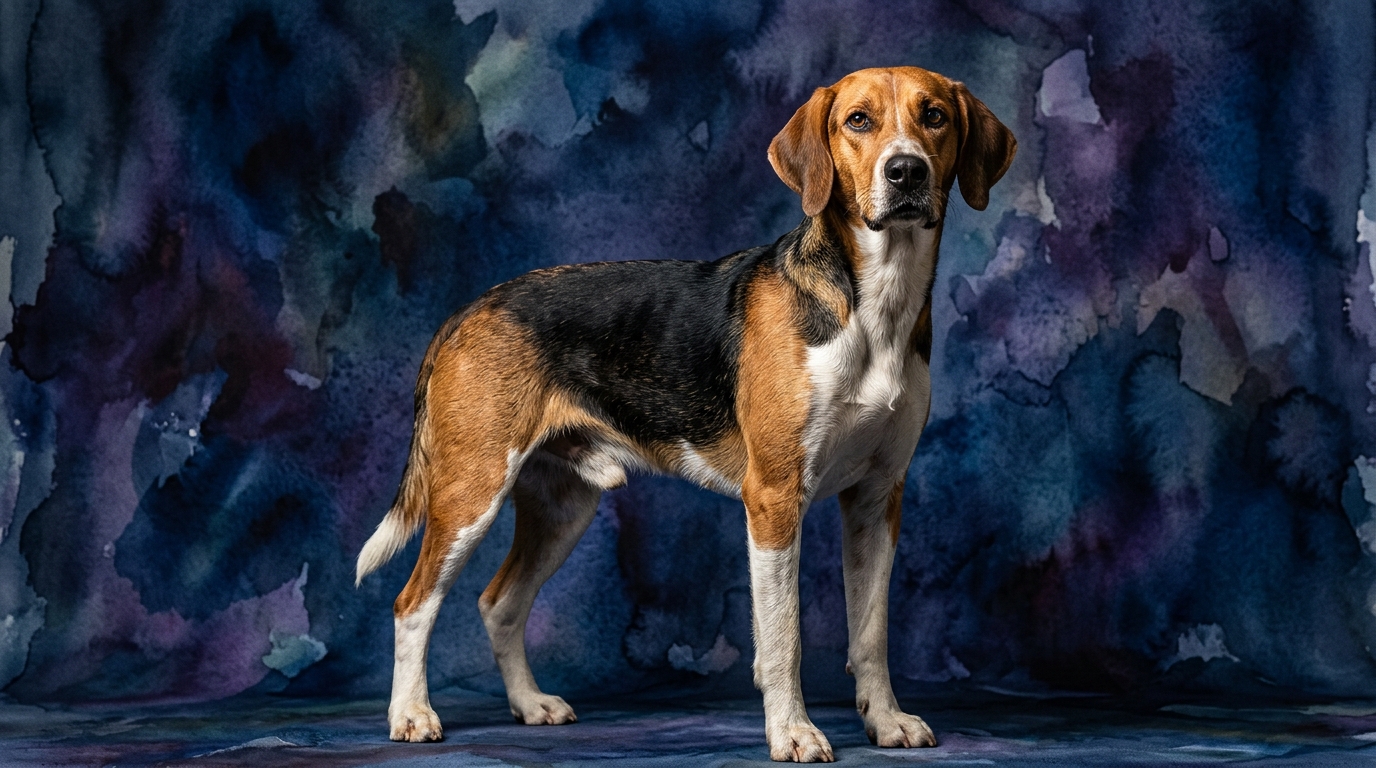

Side-by-Side IQ Profile: English Foxhound vs. Italian Greyhound
The Cosmic Pet Pet IQ Lab assigns both the English Foxhound and the Italian Greyhound a consistent score of 3/5 across all five measured cognitive dimensions. While these numerical ratings are identical, the practical expression of these abilities is shaped profoundly by each breed's historical role and inherent temperament. Understanding this nuanced manifestation is key to appreciating their distinct mental landscapes.
For the **English Foxhound**, a 3/5 in **Problem Solving** indicates a practical, task-oriented approach to challenges. Their problem-solving typically manifests in navigating complex terrain while tracking scent, requiring persistence and spatial reasoning to overcome physical obstacles related to their primary drive. A 3/5 in **Training Speed** suggests they are capable learners, though not exceptionally quick; their intense focus on environmental stimuli, particularly scent, can make consistent attention to handler directives a measured process, requiring repetition and high-value rewards. With a 3/5 in **Social Intelligence**, they demonstrate good social awareness within their pack, understanding hierarchies and cues, with interactions often functional and revolving around cooperation in a group context rather than seeking constant individual affirmation. Their 3/5 **Instinctive Drive** is foundational, highlighting a deep predisposition for scent work, tracking, and endurance; this persistent, single-minded focus can override other stimuli, making them effective at their purpose but requiring management. Finally, a 3/5 in **Memory** implies good retention of routes, scents, and established routines, crucial for their hunting role, serving complex pathways and specific smells over time rather than intricate social nuances.
Turning to the **Italian Greyhound**, their 3/5 for **Problem Solving** suggests a blend of curiosity and practicality in solving problems, often centered on immediate comfort, security, and social needs. They might excel at figuring out how to get to a cozy spot or manipulate humans for attention, using agility and charm. A 3/5 in **Training Speed** indicates learning capability, but their delicate nature and independent streak require patience and positive reinforcement; while quick to grasp concepts, their motivation is tied to comfort and affection, making training sensitive to perceived effort. Their 3/5 in **Social Intelligence** manifests as a strong aptitude for bonding with their core family, attuned to moods and routines; their social intelligence is geared towards intimate connections, understanding subtle cues to maintain harmony within their immediate circle. The 3/5 **Instinctive Drive** points to a deep-seated sighthound prey drive, expressed as immediate, explosive pursuit of moving objects; it requires secure environments to prevent bolting after perceived prey, differing from sustained tracking. For **Memory**, a 3/5 means they remember routines, people, and pleasant or unpleasant experiences effectively, with their memory serving their comfort and social navigation within the home environment, recalling favorite spots or preferred interactions.
Where the English Foxhound Wins Cognitively
Despite both breeds scoring a 3/5 in Problem Solving and Instinctive Drive, the English Foxhound exhibits a cognitive edge in scenarios demanding sustained, independent focus on an external stimulus, particularly scent. Their robust build and unwavering commitment to a trail mean they can methodically work through environmental puzzles, such as navigating varied terrain or bypassing obstacles, to achieve a scent-driven objective over extended periods. This persistence, ingrained through generations of selective breeding, translates to a steadfast determination in overcoming challenges that might deter a less driven breed, even if the initial cognitive spark is similar. Their memory for complex routes and scent profiles also gives them an advantage in tasks requiring long-term spatial and olfactory recall in dynamic outdoor settings.
Where the Italian Greyhound Wins Cognitively
Conversely, the Italian Greyhound's cognitive strengths, while also rated 3/5, shine brightest in the realm of nuanced social interaction and comfort-seeking problem-solving within a domestic sphere. Their Social Intelligence, though numerically identical, allows for a more subtle attunement to human emotional states and routines, enabling them to 'read' their family members with remarkable sensitivity and adapt their behavior to elicit desired responses — often affection or warmth. Their Problem Solving might manifest in ingenious ways to secure the best sunbeam, a prime lap spot, or a favorite blanket, demonstrating a practical intelligence geared towards maximizing personal comfort and minimizing discomfort, often leveraging their agility and charming demeanor. Their memory for pleasant routines and preferred human interactions often guides these domestic 'conquests'.
Which is Easier to Train, and Why?
When considering ease of training, the numerical parity of 3/5 in Training Speed between the English Foxhound and Italian Greyhound belies significant practical differences rooted in their distinct motivations and temperaments. The English Foxhound, while capable of learning, possesses a powerful instinctive drive for scent work that often competes directly with a handler's instructions. Their independent nature means they require a trainer who understands how to harness their drive, making training less about raw speed of acquisition and more about consistent, patient reinforcement in the face of strong environmental distractions. They learn best when training feels like a continuation of their natural instincts, such as tracking games, rather than arbitrary commands. Without adequate outlets for their drive, their perceived 'stubbornness' can make training feel protracted.
In contrast, the Italian Greyhound, also scoring 3/5, typically learns quickly when motivated by comfort, affection, or high-value treats, but their sensitive disposition means harsh methods are counterproductive and can lead to shutdown or avoidance. While they can be quick to grasp concepts, their training speed can be hampered by a short attention span, a desire for comfort over compliance, or a tendency to be easily startled. Their willingness to engage is often tied to the strength of their bond with their trainer and the perceived benefit to their immediate well-being. Therefore, while both require a thoughtful approach, the Italian Greyhound might feel 'easier' in a home setting due to their stronger desire for close companionship and their responsiveness to gentle, positive methods, provided the trainer can make learning intrinsically rewarding and comfortable.
Which Suits Active Owners vs. Relaxed Owners
The choice between these two breeds for active versus relaxed owners hinges less on their raw cognitive scores and more on the manifestation of their instinctive drives and physical needs. The English Foxhound, with its enduring 3/5 instinctive drive for tracking and its robust physical constitution, is an ideal companion for truly active owners. They thrive with extensive outdoor exercise, including long runs, hikes, or opportunities for scent work that engage both their body and their mind. Owners who lead an adventurous outdoor lifestyle and are prepared to manage a strong prey drive and independent nature will find a steadfast, tireless partner. Their cognitive strengths are best utilized when given a 'job' that aligns with their historical purpose.
Conversely, the Italian Greyhound, while possessing a 3/5 instinctive drive for chasing, expresses it in short, explosive bursts of speed rather than sustained endurance. Their delicate build and preference for warmth and comfort make them better suited for owners with a more relaxed lifestyle, particularly those who appreciate indoor companionship. They enjoy short, brisk walks or enclosed yard play, followed by ample time snuggled on a lap or under blankets. Their cognitive abilities are geared towards navigating a comfortable home environment and fostering deep, intimate bonds with their human family. Owners who prioritize quiet companionship, gentle play, and a devoted indoor presence will find the Italian Greyhound a perfect fit.
The Verdict
Choose the English Foxhound if you are an active, outdoor-oriented individual or family seeking a resilient, independent companion for extensive adventures and scent-based activities, prepared to manage their powerful natural drives.
Opt for the Italian Greyhound if you desire a sensitive, affectionate, and elegant indoor companion who thrives on close human connection, gentle play, and a comfortable, predictable home environment.
🧠 Find Your Pet's IQ Score
Our Pet IQ Lab assessment covers 25+ tests across 5 cognitive dimensions — personalized to your breed.
Take the Full IQ Test →Frequently Asked Questions
Do English Foxhounds or Italian Greyhounds bark more?
English Foxhounds tend to be more vocal, using their characteristic baying bark, especially when engaged in scent work or when alerting. Italian Greyhounds are typically quieter but can be prone to alert barking at novel sounds or visitors, or when seeking attention from their family.
Are either of these breeds good with children?
English Foxhounds can be good with older, respectful children who understand how to interact with a boisterous, independent dog and can keep up with their energy. Italian Greyhounds, being delicate, are generally better suited for homes with older, gentle children or no children, as their fragile bones can be easily injured during rough play.
How much exercise do English Foxhounds and Italian Greyhounds need?
English Foxhounds require significant daily exercise, often several hours of vigorous activity, ideally off-leash in a secure area or on long, fast-paced walks and runs. Italian Greyhounds need moderate exercise, consisting of short, brisk walks or play sessions in a securely fenced yard, followed by plenty of rest and indoor comfort.