
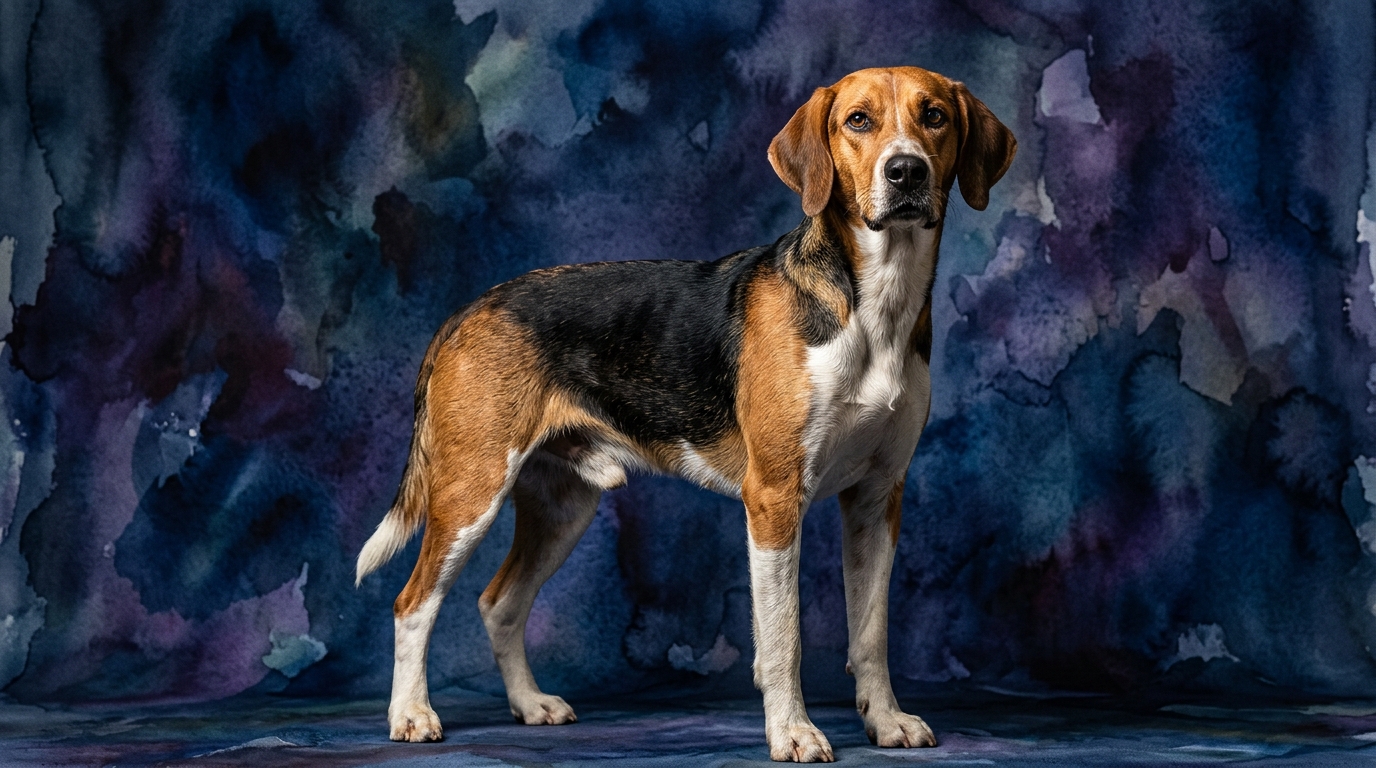
Side-by-Side IQ Profiles: A Cognitive Blueprint
Understanding a breed's cognitive strengths requires examining multiple dimensions. For the Standard Poodle, our analysis reveals a remarkably balanced and elevated profile across the board. They demonstrate a Problem Solving score of 5/5, indicating an exceptional capacity to navigate novel challenges and extrapolate solutions. Their Training Speed of 5/5 signifies a rapid grasp of new commands and concepts, often requiring fewer repetitions than many other breeds. Social Intelligence, also rated 5/5, highlights their profound attunement to human cues, emotions, and communication, making them highly responsive companions. An Instinctive Drive of 4/5 suggests a moderate yet manageable prey drive, often channeled into retrieving or active play rather than independent hunting. Finally, their Memory at 5/5 means they retain learned behaviors and routines with remarkable consistency over time.
The English Foxhound presents a profile more specialized towards its ancestral role. Their Problem Solving score of 3/5 reflects competence in navigating specific, often scent-related, challenges, but less generalization to abstract puzzles. A Training Speed of 3/5 indicates they are trainable, but often require more patience, consistency, and specific motivation to absorb new commands. Social Intelligence, rated 3/5, suggests they are generally amenable and pack-oriented, yet they might prioritize environmental stimuli, particularly scents, over direct human interaction in certain contexts. Their Instinctive Drive, scored 3/5, is specifically geared towards persistent tracking and pursuit, making them less inclined to switch tasks mid-scent. Memory, also 3/5, is effective for recalling scent trails and familiar routes, but perhaps less robust for complex sequences of human-directed tasks.
Where the Standard Poodle Excels Cognitively
The Standard Poodle's cognitive strengths lie in its exceptional adaptability and multi-faceted understanding. Their 5/5 Problem Solving score translates into a dog that can quickly figure out how to open child-proof latches, solve complex puzzle toys with minimal guidance, or devise new strategies to retrieve a toy stuck under furniture. This isn't just about brute force; it's about evaluating the situation and applying learned principles or creating new ones.
Furthermore, their 5/5 Training Speed and Social Intelligence combine to create a highly receptive learner. A Poodle often picks up multi-step commands like 'fetch the leash' or 'put your toys away' after only a few repetitions, demonstrating an intrinsic motivation to understand and cooperate. They are adept at reading subtle shifts in human body language or tone, allowing for nuanced communication and a proactive response to owner intentions, making them phenomenal partners in competitive obedience or service work where precision and attentiveness are paramount. Their 5/5 Memory ensures these complex learned behaviors are retained for years, even after periods of inactivity, making retraining a breeze.
Where the English Foxhound Excels Cognitively
While the English Foxhound's IQ scores may appear lower across the board, their cognitive prowess is deeply specialized and profoundly effective within their intended domain. Their 3/5 Problem Solving, for instance, isn't about solving abstract puzzles, but about relentlessly unraveling complex scent trails in varied terrains, often requiring intricate decision-making regarding wind direction, ground cover, and scent degradation. This is a form of problem-solving that few breeds can match for sheer endurance and focus.
The Foxhound's 3/5 Instinctive Drive is their crowning cognitive strength. It represents an unwavering commitment to a task once a scent is engaged. This isn't just a physical drive; it's a mental fortitude to remain engrossed in a single, prolonged sensory input, filtering out distractions and maintaining concentration for hours. Their Memory (3/5) is particularly potent for recalling the layout of a hunting ground or the specific nuances of a particular scent, allowing them to efficiently retrace or pick up an old trail. While they may not generalize learning as quickly as a Poodle, their ability to remember specific environmental cues and sustain mental effort on a singular, instinct-driven task is a unique cognitive win.
Training Dynamics: Poodle vs. Foxhound
When considering ease of training, the Standard Poodle holds a distinct advantage, primarily due to its elevated Training Speed (5/5), Problem Solving (5/5), and Social Intelligence (5/5). A Poodle actively seeks to understand what is being asked of them, often anticipating commands or offering behaviors to please their handler. They respond well to a wide range of positive reinforcement techniques, from food rewards to praise and play, and quickly generalize learned behaviors to new environments or situations. Their strong memory means once a command is learned, it's rarely forgotten, facilitating consistent performance.
The English Foxhound, with its 3/5 scores in these areas, presents a different training challenge. Their strong Instinctive Drive (3/5) for scent work means they are often more motivated by their nose than by human directives. Training them requires significant patience, consistency, and often, incorporating their natural scent drive into the training process. While they can learn commands, their focus may easily be diverted by an interesting smell, requiring the handler to maintain engagement through high-value rewards and compelling motivation. They might require many more repetitions to solidify a command and may not generalize as readily, meaning a behavior learned in the living room might need to be re-taught in the park.
Matching Breeds to Lifestyles: Active vs. Focused Owners
For owners seeking a versatile companion capable of engaging in a wide array of activities, from competitive dog sports like agility and obedience to nuanced assistance work, the Standard Poodle is an exceptional fit. Their high scores in Problem Solving, Training Speed, and Social Intelligence mean they thrive on varied mental stimulation and enjoy learning new things. They are suited for active owners who relish teaching complex tricks, engaging in interactive games, or simply having a dog that is highly responsive and adaptable to different social settings and routines. They can also adapt to slightly more relaxed owners, provided their significant need for mental engagement is met through puzzle toys, training sessions, and consistent interaction.
The English Foxhound, conversely, is best suited for owners whose definition of 'active' aligns with sustained, focused physical and mental exertion, particularly in outdoor environments. Their powerful Instinctive Drive and moderate Problem Solving skills are geared towards long-distance tracking and endurance. These dogs thrive with owners dedicated to providing extensive opportunities for scent work, long hikes, or participation in field trials. A 'relaxed' owner, in the sense of someone who prefers short walks and minimal structured activity, would likely find the Foxhound's energy levels and independent, scent-driven nature challenging. They require an owner who understands and respects their deeply ingrained drive and can provide consistent outlets for it.
The Verdict: When to Choose Each Breed
The Verdict
Choose the Standard Poodle if you seek a highly adaptable, responsive canine partner for varied mental challenges, complex training, and close social interaction. They excel in learning and retaining a broad repertoire of behaviors, fitting seamlessly into diverse family dynamics.
Opt for the English Foxhound if you are an owner dedicated to providing extensive, sustained outdoor activity, particularly involving scent work or long-distance exploration. They are best for those who appreciate a dog with independent drive and a singular focus on their natural instincts.
🧠 Find Your Pet's IQ Score
Our Pet IQ Lab assessment covers 25+ tests across 5 cognitive dimensions — personalized to your breed.
Take the Full IQ Test →Frequently Asked Questions
Can an English Foxhound be a good family pet despite its lower IQ scores?
Absolutely. The English Foxhound's IQ scores reflect specialization, not a lack of capacity for companionship. They can be loyal, affectionate family members, especially if their energy needs and instinctual drives are consistently met with appropriate outlets. Their social intelligence allows them to bond well within a 'pack' environment, which includes their human family.
Do Standard Poodles require a lot of mental stimulation?
Yes, Standard Poodles require significant mental stimulation due to their high Problem Solving, Training Speed, and Memory scores. Without engaging activities like training, puzzle toys, or interactive play, they can become bored, which may lead to undesirable behaviors. Consistent mental exercise is as crucial as physical activity for their well-being.
How does an English Foxhound's instinctive drive impact daily life?
An English Foxhound's strong instinctive drive means they are highly motivated by scent and have a tendency to follow their nose, often tuning out human calls. This necessitates a secure, fenced yard, and leash training is paramount for outdoor excursions. Owners must be prepared to manage this drive through consistent training and by providing appropriate, safe outlets for their tracking instincts.