
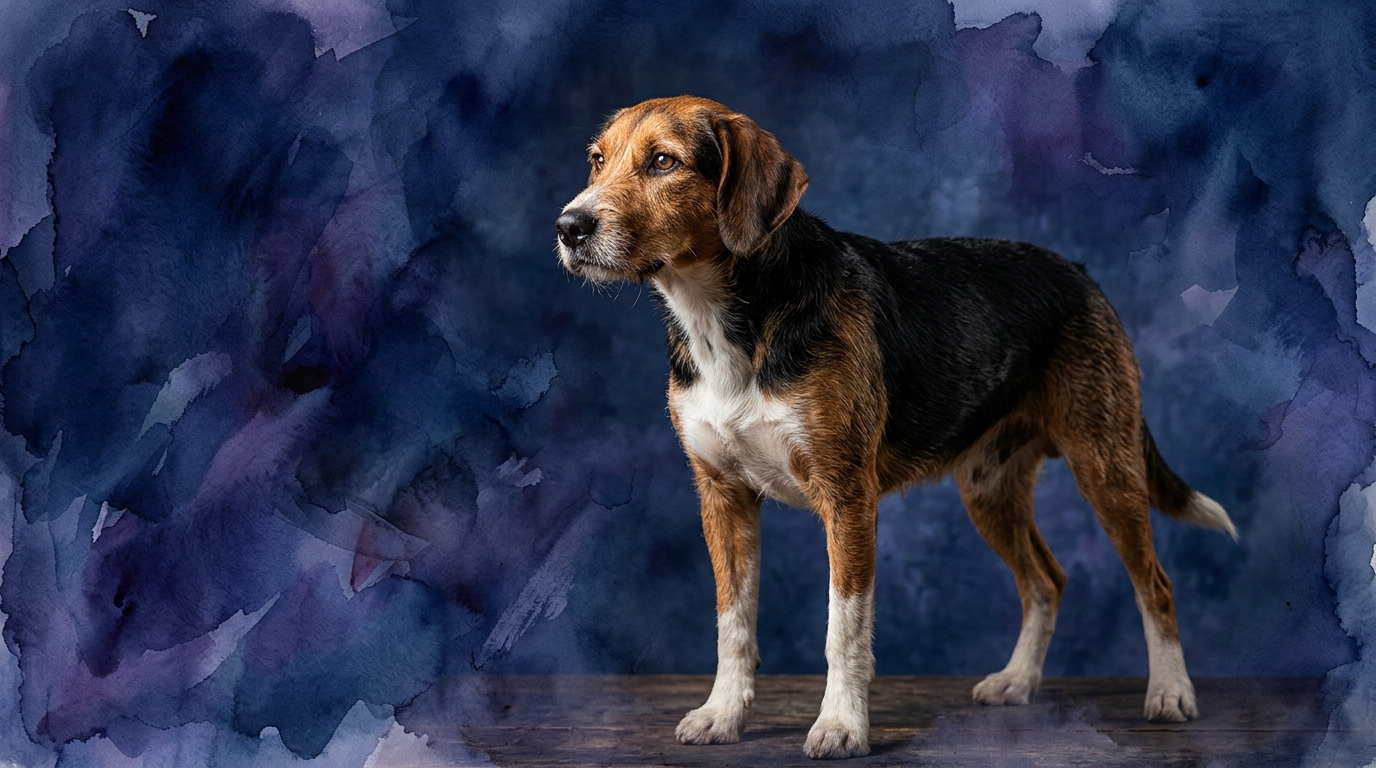
Side-by-Side IQ Profile: English Setter vs. Harrier
The Cosmic Pet Pet IQ Lab provides a detailed framework for understanding canine cognition across five key dimensions. For the English Setter, a Sporting Group member ranked #37 by Coren, its profile highlights a Problem Solving score of 4/5, indicating a strong capacity for independent thought and adaptive decision-making, particularly valuable in varied hunting scenarios. Its Training Speed, also at 4/5, suggests a quick grasp of new commands and an eagerness to learn from a respected handler. Social Intelligence stands at 3/5, reflecting an amiable nature but with a degree of independence rather than constant focus on human cues. An Instinctive Drive of 3/5 points to a focused, yet balanced, drive for scent work and pointing game, while its Memory, at 4/5, ensures excellent retention of learned behaviors and routines.
Conversely, the Harrier, a dedicated Hound Group member not featured in Coren's rankings, presents a distinct cognitive blueprint. Its Problem Solving score of 3/5 indicates a capability for overcoming challenges, though often relying more on persistence and instinct, especially when tracking. Training Speed is also 3/5, signifying a steady learning pace, although their independent hound spirit can sometimes make them appear less compliant if a captivating scent intervenes. Social Intelligence mirrors the Setter at 3/5; Harriers are sociable within their 'pack,' but their primary focus during work often gravitates towards the trail rather than subtle handler cues. An Instinctive Drive of 3/5 denotes a strong, unwavering commitment to scent trailing and pursuit, characteristic of a pack hound, which can sometimes overshadow other motivations. Finally, their Memory at 3/5 suggests solid recall for established routines and familiar trails, perhaps less for complex sequences of commands compared to breeds with higher training speed scores.
Where the English Setter Excels Cognitively
The English Setter’s cognitive strengths shine in areas requiring adaptability and a collaborative learning approach. Its superior Problem Solving score of 4/5, compared to the Harrier’s 3/5, suggests a greater capacity for flexible thinking and navigating novel situations independently, especially when traditional methods fail. This makes them adept at adjusting to changing environmental factors or unexpected game behavior in the field.
Furthermore, the English Setter's 4/5 in Training Speed gives it a distinct advantage in acquiring and retaining new skills. They typically pick up complex commands and routines more rapidly, displaying a keen attentiveness to their handler's instructions. This faster acquisition is further bolstered by their 4/5 Memory score, ensuring that once a lesson is learned, it is retained consistently across different environments and over time, facilitating advanced training and reliability in varied contexts.
Where the Harrier Demonstrates Unique Aptitudes
While the Harrier's numerical scores might not surpass the Setter's, its cognitive profile is optimally tuned for its specialized historical role. The Harrier’s 3/5 Instinctive Drive, though numerically equal, manifests as an unwavering, almost singular focus on scent tracking and relentless pursuit. This drive is the engine behind their impressive endurance and determination, making them supremely effective in their traditional role as pack hounds. Their problem-solving and memory, while scoring 3/5, are finely calibrated to support this primary instinct, allowing them to decipher complex scent trails with remarkable persistence.
Moreover, the Harrier's 3/5 Social Intelligence, while seemingly on par, holds a nuanced distinction. It is often geared towards robust pack cooperation among other canines, a vital trait for working effectively in a group. This understanding of canine social dynamics and hierarchical structures within a hunting pack is a specialized form of social cognition, allowing them to coordinate efforts and maintain cohesion during a long chase, which differs from the Setter's more handler-centric social focus.
Training Dynamics: Which Breed is Easier to Guide?
When it comes to ease of training, the English Setter generally presents a smoother path for owners. Their 4/5 Training Speed and 4/5 Problem Solving capacity mean they are typically more receptive to new commands and keen to engage in structured learning sessions. They often possess a desire to work in tandem with their handler, readily picking up complex sequences and demonstrating consistent recall due to their strong memory. This makes them suitable for various canine sports and advanced obedience work, provided their physical and mental needs are met.
The Harrier, with its 3/5 Training Speed and dominant Instinctive Drive, can be more challenging to train. Their independent hound nature means they are often more inclined to follow a captivating scent than a verbal command, requiring immense patience and unwavering consistency from their owner. Training a Harrier demands understanding their powerful drive and channeling it into productive activities. Success often comes from motivation techniques that leverage their natural instincts, making training an ongoing exercise in partnership rather than simple compliance.
Matching Breeds to Owner Lifestyles
Both the English Setter and the Harrier demand active owners, but their specific needs diverge. The English Setter, a sporting breed, requires regular, vigorous exercise that engages both its body and mind. Activities like field trials, long hikes, or scent work that utilize their pointing and retrieving instincts are ideal. While they possess an active drive, they also appreciate comfortable downtime indoors and form deep bonds with their families, making them suitable for active owners who also value a devoted companion.
The Harrier, with its relentless hound drive, is unequivocally suited for highly active owners. These dogs thrive on extensive daily exercise, particularly opportunities to run and explore scents in a secure environment. A truly relaxed or sedentary owner would find a Harrier a mismatch, as their innate drive for pursuit, if not adequately channeled, can lead to restlessness, destructive behaviors, or a tendency to roam. They need consistent, engaging activity that satisfies their pack-hunting heritage, making them excellent companions for runners, hikers, or those involved in canine scent work.
The Verdict
For owners seeking a companion that learns quickly, enjoys collaborative work, and offers a balance of athletic activity and affectionate companionship, the English Setter’s adaptable cognitive profile is a strong match.
Opt for a Harrier if you are an experienced owner prepared to channel a powerful, independent scent-hound drive into consistent, engaging activities, appreciating their determined spirit and pack-oriented social dynamics.
🧠 Find Your Pet's IQ Score
Our Pet IQ Lab assessment covers 25+ tests across 5 cognitive dimensions — personalized to your breed.
Take the Full IQ Test →Frequently Asked Questions
How does the English Setter's Coren rank of #37 relate to its IQ profile?
Stanley Coren's ranking primarily assesses 'working and obedience intelligence,' which aligns well with the English Setter's 4/5 scores in Training Speed and Problem Solving. This indicates a breed that generally responds well to instruction and can apply learned behaviors effectively in various contexts.
Does the Harrier's 'Not Coren-ranked' status imply a lack of intelligence?
Not at all. Many hound breeds, including the Harrier, are not highly ranked by Coren because his criteria emphasize compliance and quick learning of human commands, which can sometimes conflict with a hound's independent, scent-driven work ethic. Their intelligence is highly specialized for tracking and endurance, making them profoundly capable in their specific domain.
How do their 'Instinctive Drive' scores of 3/5 manifest differently in daily life?
For the English Setter, a 3/5 drive might mean an eagerness to participate in scent games or pointing drills, balanced with a desire to settle indoors after activity. For the Harrier, the same 3/5 often translates to an almost singular focus on scent, leading them to follow their nose relentlessly outdoors, potentially making recall challenging if not meticulously trained.