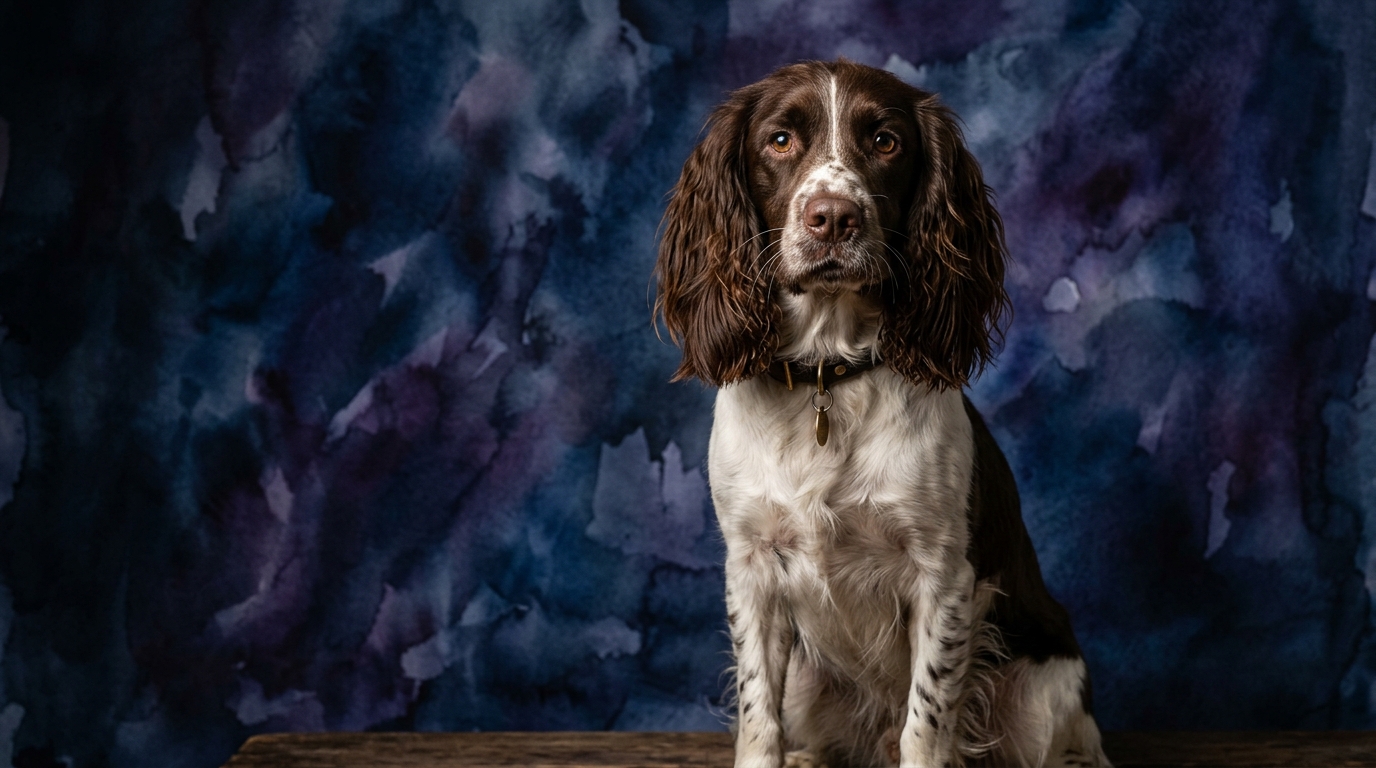

Side-by-Side IQ Profile: English Springer Spaniel vs. Basset Hound
The Cosmic Pet Pet IQ Lab provides a robust framework for understanding canine cognition across five key dimensions. Let's examine how the English Springer Spaniel and the Basset Hound measure up, highlighting their inherent cognitive strengths and predispositions.
For the English Springer Spaniel (Coren rank #13), their profile reflects a highly capable and responsive companion. Their Problem Solving is rated 4/5, indicating a strong capacity for figuring out novel situations, adapting strategies, and learning through observation. They quickly grasp complex tasks, like navigating obstacles or understanding multi-step commands. Training Speed is an exceptional 5/5, showcasing an intrinsic eagerness to learn new commands and routines swiftly, aided by their focus on human direction. Social Intelligence stands at 4/5, meaning they are adept at reading human cues, understanding intentions, and forming strong bonds, often attuned to their family's emotional states. Their Instinctive Drive is a powerful 5/5, particularly for flushing game and retrieving, which translates into sustained focus and energy for interactive games and structured tasks. Finally, Memory is 4/5, demonstrating robust recall of learned commands, routines, and specific locations, allowing for advanced skill retention.
In contrast, the Basset Hound (Coren rank #71) exhibits a different, more specialized cognitive blueprint. Their Problem Solving is 3/5; while not incapable, they approach problems with a more deliberate, independent style, often prioritizing their primary instinct: scenting. They might take longer to generalize solutions beyond their immediate olfactory interests. Training Speed is 3/5, indicating they learn at a moderate pace, often requiring more repetition and patience. Their independent nature and focus on scent stimuli can make them less immediately receptive to command-based training. Social Intelligence is 3/5; these hounds display moderate social attunement, being affectionate but not always driven to interpret subtle human cues. Their interactions are generally calm and amiable rather than highly responsive. Instinctive Drive is 3/5, but this rating is overwhelmingly centered on their exceptional sense of smell. This specific drive is incredibly powerful and persistent, guiding much of their behavior and often overriding other stimuli. Memory is 3/5; Basset Hounds have a moderate memory for commands and routines, with recall being less instantaneous or consistent, especially with scent distractions, though they remember people and home well.
Where the English Springer Spaniel Wins Cognitively
The English Springer Spaniel consistently demonstrates superior cognitive flexibility and responsiveness. Their problem-solving (4/5) indicates a breed that actively seeks solutions and adapts quickly to new challenges, whether it’s figuring out a puzzle toy or navigating an agility course. This contrasts with the Basset's more linear, scent-driven approach. Furthermore, the English Springer Spaniel’s 5/5 training speed is a clear advantage, reflecting an intrinsic motivation to engage with and learn from their human companions. This rapid assimilation of behaviors stems from their high social intelligence (4/5), enabling them to readily interpret human intentions and cues. Their powerful instinctive drive (5/5) isn't just about hunting; it fuels their desire for purpose and activity, making them eager participants in structured tasks. This breed's robust memory (4/5) ensures that once a lesson is learned, it tends to stick, allowing for progressive skill development and reliable performance in various contexts. The English Springer Spaniel excels in tasks requiring focused attention, rapid learning, and collaborative effort with a human partner.
Where the Basset Hound Wins Cognitively
While the Basset Hound's general cognitive scores might appear moderate, their true strength lies in a highly specialized form of intelligence: olfactory processing and sustained tracking. Their instinctive drive, rated 3/5, is profoundly hyper-focused on scent, making them unparalleled in their ability to follow a trail for extended periods with unwavering determination. This isn't a broad "drive" but an almost obsessive dedication to a scent. Their problem-solving (3/5), though rated moderately, often manifests as persistent, methodical deduction when confronted with a complex scent puzzle, where they meticulously work through environmental data that other breeds simply miss. A Basset Hound's memory (3/5) might not be for complex obedience sequences, but it is exceptionally strong for scent associations, remembering specific odors and the paths they followed days or even weeks later. Their social intelligence (3/5) is expressed in a calm, amiable manner, allowing them to coexist peacefully and often charmingly, without the constant need for high-intensity interaction. The Basset Hound's cognitive prowess is about depth in one area—scent—rather than breadth across many, allowing them to process and interpret a world of olfactory information that remains invisible to most other canines.
Which is Easier to Train and Why
Without question, the English Springer Spaniel is considerably easier to train than the Basset Hound, a difference rooted in fundamental behavioral predispositions. The English Springer Spaniel's exceptional training speed (5/5) stems from their inherent eagerness to please and their strong focus on human interaction. They thrive on having a job to do and are highly motivated by praise and positive reinforcement, making them quick to respond to commands and eager to repeat desired actions. Their social intelligence (4/5) allows them to pick up on subtle cues from their trainer, anticipating expectations and adapting their behavior accordingly. This breed's high instinctive drive (5/5) is channeled into working cooperatively, seeking out tasks, and maintaining focus during training sessions.
In contrast, the Basset Hound's training speed (3/5) is more moderate, largely due to their independent nature and a profound reliance on their olfactory senses. A Basset's mind is often captivated by an intriguing scent on the ground, making it incredibly challenging to hold their attention when a compelling odor overrides human commands. Their instinctive drive (3/5), while powerful for scent work, often conflicts with obedience training because it directs them away from the trainer and towards a perceived trail. This independent problem-solving (3/5) means they might prefer to figure things out on their own terms, rather than immediately complying with a human directive, leading to a more patient and persistent training approach being necessary for the Basset Hound.
Which Suits Active Owners vs. Relaxed Owners
The English Springer Spaniel is an ideal match for active owners who relish engaging their dog in a variety of physical and mental pursuits. Their high instinctive drive (5/5) and robust energy levels demand regular, vigorous exercise, such as long hikes, runs, or sustained games of fetch. These dogs thrive when given a “job,” whether it's participating in dog sports like agility or obedience, or simply being a dedicated companion on outdoor adventures. Owners who enjoy training and want a highly responsive, cooperative canine partner will find the English Springer Spaniel's problem-solving (4/5) and training speed (5/5) incredibly rewarding, allowing for the development of advanced skills and a strong working bond.
Conversely, the Basset Hound is perfectly suited for more relaxed owners who appreciate a calm, amiable presence and are prepared for a different kind of engagement. While they do require daily walks to satisfy their natural inclination to sniff and explore, these walks are typically at a leisurely pace, allowing them ample time to investigate every intriguing scent. Their moderate instinctive drive (3/5) means they are generally content with less intense physical activity, preferring comfortable lounging indoors after their sniff-fari. Owners who are patient with training, understand the Basset's independent nature, and find charm in their deliberate pace will appreciate this breed. They excel as devoted, low-key companions who bring a quiet joy to the home, provided their olfactory needs are met with consistent, scent-rich outings.
The Verdict
Choose an English Springer Spaniel if you seek an intelligent, cooperative partner for active pursuits and enjoy engaging in consistent training and mental challenges. They will thrive in a home that offers ample opportunities for structured activities and shared adventures.
Opt for a Basset Hound if you desire a calm, affectionate companion who brings quiet joy and unique charm, and you appreciate their independent, scent-driven nature. Be prepared for patient training and leisurely, exploratory walks.
🧠 Find Your Pet's IQ Score
Our Pet IQ Lab assessment covers 25+ tests across 5 cognitive dimensions — personalized to your breed.
Take the Full IQ Test →Frequently Asked Questions
Are English Springer Spaniels good with children?
Yes, English Springer Spaniels are generally excellent with children. Their social intelligence and playful nature make them patient and tolerant companions, often eager to join in family activities, though supervision is always advised with any dog and child.
Do Basset Hounds bark a lot?
Basset Hounds are known for their distinctive baying, which they use to alert owners or when on a scent trail. While not constant barkers, their bay can be loud and persistent when they have something to communicate, or when lonely, so it's a sound to become accustomed to.
How much exercise does an English Springer Spaniel need daily?
English Springer Spaniels require a significant amount of daily exercise, typically 60-90 minutes of vigorous activity. This can include brisk walks, runs, fetch, or mental stimulation through training and dog sports, crucial for their physical and mental well-being.