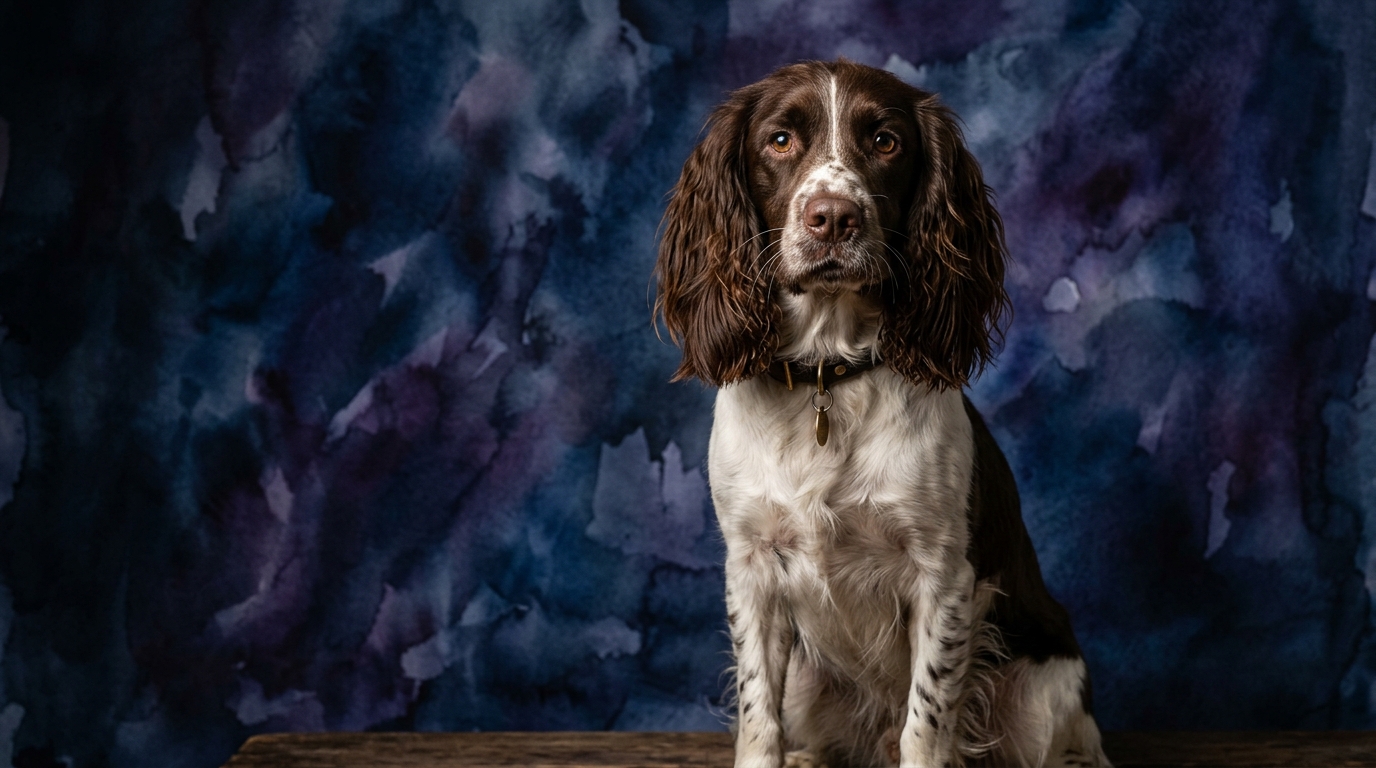

Side-by-Side IQ Profile: English Springer Spaniel vs. Bullmastiff
The English Springer Spaniel, a Sporting Group member, consistently ranks high in canine intelligence, holding Coren’s #13 spot. Our IQ assessment further breaks down their cognitive strengths:
Problem Solving (4/5): This breed exhibits a strong aptitude for navigating complex environments and figuring out solutions independently, whether locating hidden game or understanding multi-step commands. Their cognitive flexibility allows them to adapt quickly to new challenges.
Training Speed (5/5): English Springer Spaniels are exceptionally quick learners, grasping new commands and routines with remarkable efficiency. Their eagerness to please, combined with their sharp memory, makes them highly responsive to instruction.
Social Intelligence (4/5): They possess a keen understanding of human cues and emotional states, allowing them to form deep bonds and integrate smoothly into family dynamics. This awareness translates to effective communication and cooperation.
Instinctive Drive (5/5): Their innate drive for retrieving and working is exceptionally high, powering their focus and endurance in tasks. This powerful instinct is a core component of their cognitive makeup, directing much of their energy and attention.
Memory (4/5): With a robust memory, English Springer Spaniels retain learned behaviors, routes, and associations for extended periods. This strong recall supports their advanced training and ability to perform complex sequences.
The Bullmastiff, a Working Group member, occupies Coren’s #69 rank, indicating a different, yet equally purposeful, cognitive makeup:
Problem Solving (3/5): Bullmastiffs demonstrate a moderate capacity for problem-solving, capable of learning routines and addressing straightforward issues. While not as prone to independent strategizing as some breeds, they can navigate familiar situations effectively.
Training Speed (3/5): They learn at a steady pace, requiring consistent and patient reinforcement to integrate new commands. Their progress is reliable but not instantaneous, reflecting a thoughtful rather than rapid acquisition of skills.
Social Intelligence (3/5): This breed displays a solid understanding of their human companions, forming strong, loyal bonds. Their social awareness is geared towards protection and companionship within their established family unit, often showing a reserved demeanor with strangers.
Instinctive Drive (3/5): Bullmastiffs possess a moderate instinctive drive, primarily focused on guarding and protecting their territory and family. This drive is deliberate and measured, less about high-energy work and more about watchful vigilance.
Memory (3/5): Their memory is reliable for routines and key associations, allowing them to remember their training and family members. While they retain information well, their recall might not be as immediate or detailed as breeds with higher scores.
Where the English Springer Spaniel Wins Cognitively
The English Springer Spaniel excels in areas demanding rapid cognitive processing and sustained engagement. Their superior Training Speed (5/5) means they absorb new commands and complex sequences with remarkable alacrity, often anticipating their handler's next move. This is significantly supported by their high Instinctive Drive (5/5), which fuels their enthusiasm for tasks and makes them tireless participants in learning. Their Problem Solving (4/5) edge means they are more likely to independently figure out novel situations or adapt a learned behavior to a slightly different context, rather than relying solely on direct instruction. Furthermore, their strong Memory (4/5) ensures that once a lesson is learned, it is retained effectively, allowing for impressive retention of vast repertoires of commands and tricks over time. This combination makes them particularly adept at intricate obedience, agility, and field work, where quick thinking and reliable recall are paramount.
Where the Bullmastiff Wins Cognitively
While the Bullmastiff's scores suggest a different cognitive profile, their strengths lie in a steadier, more deliberate approach that aligns perfectly with their historical role. Their moderate Instinctive Drive (3/5) ensures they are not perpetually seeking high-octane activities, allowing them to be calm and composed guardians. Their Social Intelligence (3/5), though not outwardly effusive, is deeply rooted in loyalty and protective instincts towards their immediate family, manifesting as a discerning awareness of their trusted circle. This measured social understanding, combined with their Problem Solving (3/5), means they are capable of assessing perceived threats with a calm deliberation rather than reacting impulsively. For owners seeking a companion whose cognitive energy is channeled into watchful presence and unwavering devotion, rather than constant mental gymnastics, the Bullmastiff's profile offers a distinct advantage. Their less frantic cognitive pace can translate into a more placid and predictable household member.
Which is Easier to Train and Why
Without question, the English Springer Spaniel presents a significantly easier training experience due to its exceptional cognitive attributes. Their Training Speed of 5/5 means they pick up new concepts and commands almost effortlessly, often requiring fewer repetitions than the Bullmastiff's 3/5. This rapid learning is amplified by their powerful Instinctive Drive (5/5), which translates into a strong desire to work alongside their human companions and perform tasks. They possess a natural eagerness to engage, making positive reinforcement highly effective and motivations readily apparent. In contrast, the Bullmastiff's moderate Training Speed (3/5) necessitates a more patient, consistent approach, often requiring more time and repetition for concepts to solidify. Their Instinctive Drive (3/5) is less about performing complex tasks and more about watchful presence, meaning trainers must work harder to find and maintain engagement for obedience exercises. For the Springer, training is often a joyful collaboration; for the Bullmastiff, it's a steady, deliberate process built on trust and repetition.
Which Suits Active Owners vs. Relaxed Owners
The choice between these two breeds clearly delineates between active and relaxed lifestyles. The English Springer Spaniel, with its high Instinctive Drive (5/5) and robust Problem Solving (4/5) and Memory (4/5), thrives on constant engagement, physical activity, and mental challenges. They are ideal companions for owners who enjoy hiking, running, dog sports like agility or retrieving, and who are prepared to dedicate significant time to training and interactive play. Their cognitive profile demands an outlet for their abundant energy and keen intellect, making them unsuitable for sedentary households. Conversely, the Bullmastiff's more moderate Instinctive Drive (3/5) and Problem Solving (3/5) capacity make it a better fit for relaxed owners. While they still require regular exercise for health, their need for intense mental stimulation and constant activity is considerably lower. They are content with steady walks and a comfortable spot by their family, offering a calm, watchful presence that suits a quieter home environment where a guardian's steady nature is appreciated over a working dog's relentless drive.
The Verdict
Choose the English Springer Spaniel if your lifestyle is active, you seek a highly trainable companion for sports or complex tasks, and you can provide consistent mental and physical stimulation.
Opt for the Bullmastiff if you desire a loyal, steady guardian with a calm demeanor, prefer a more relaxed pace, and appreciate a dog whose primary cognitive focus is devoted companionship and watchful presence.
🧠 Find Your Pet's IQ Score
Our Pet IQ Lab assessment covers 25+ tests across 5 cognitive dimensions — personalized to your breed.
Take the Full IQ Test →Frequently Asked Questions
Does the Bullmastiff's lower IQ score mean it cannot be trained effectively?
Not at all; the Bullmastiff can be trained effectively, but it requires more patience and consistency due to its moderate training speed. Their loyalty and desire to please their family mean they will learn, just at a more deliberate pace.
How does the English Springer Spaniel's high instinctive drive manifest in daily life?
Its high instinctive drive means a strong urge to retrieve, explore, and work, often leading to a need for ample physical exercise and mental tasks like scent work or fetch to keep them content. Without proper outlets, this drive can lead to boredom and potentially destructive behaviors.
Is a Bullmastiff's guarding instinct primarily an innate cognitive trait or learned behavior?
A Bullmastiff's guarding instinct is largely an innate cognitive trait, rooted in their breed history and moderate instinctive drive for protection. While training can refine and direct this behavior, the underlying watchful vigilance is a fundamental aspect of their temperament and social intelligence.