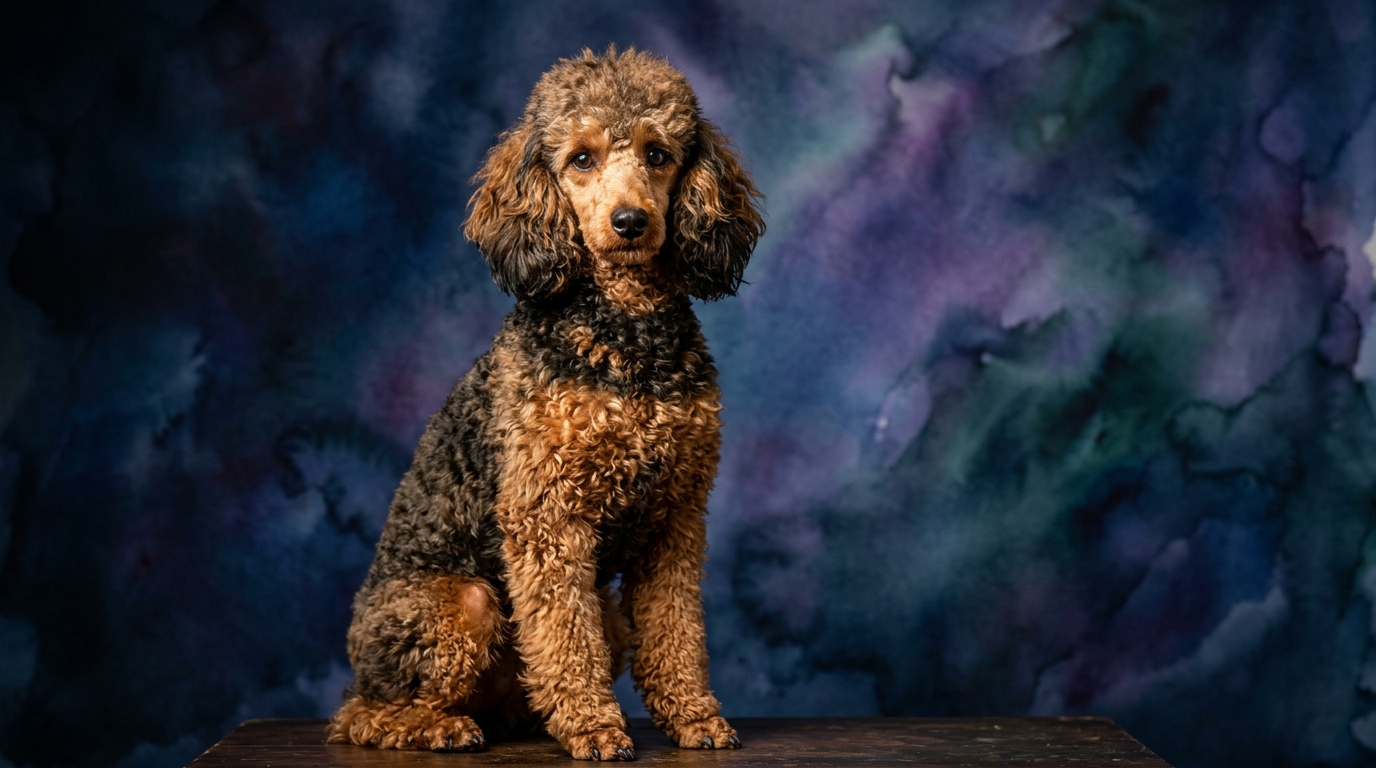
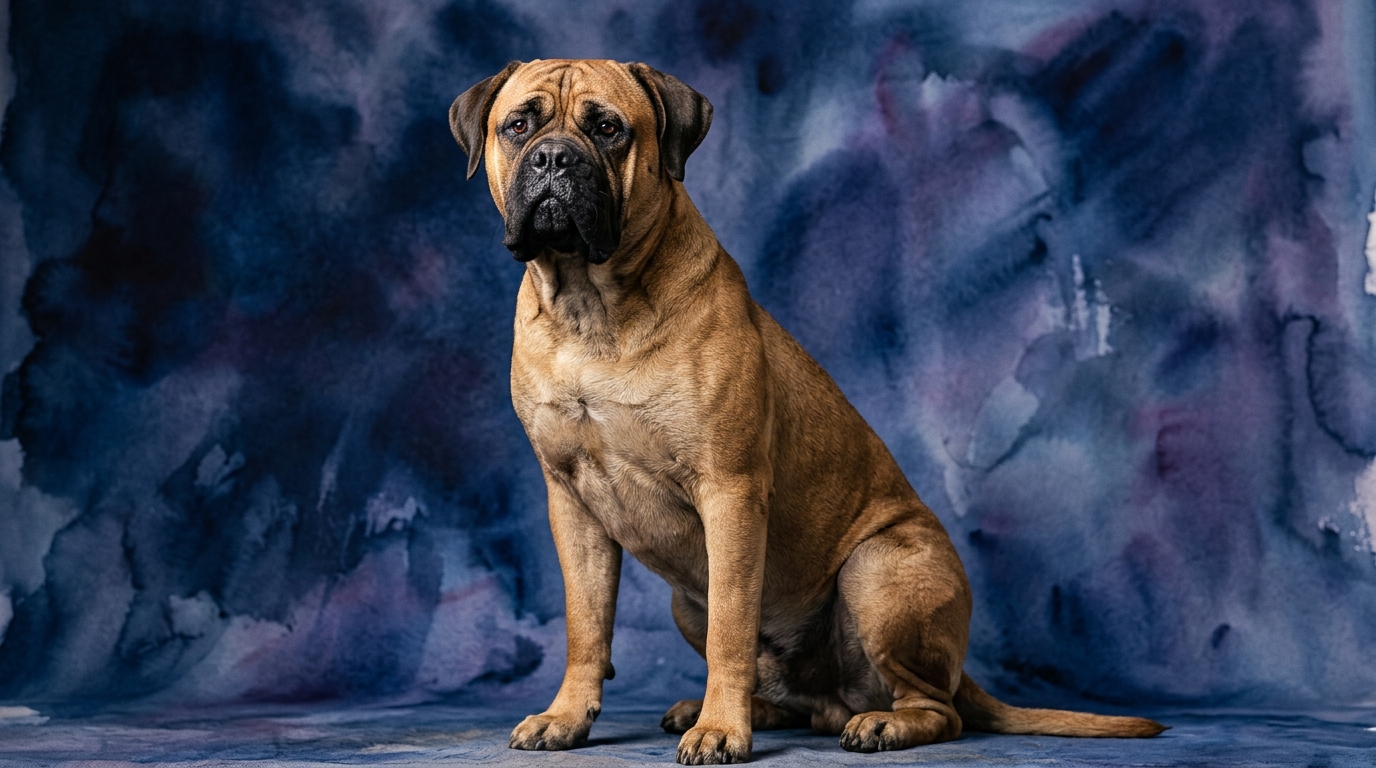
Side-by-Side IQ Profile: Poodle (Standard) vs. Bullmastiff
The Cosmic Pet Pet IQ Lab employs a five-dimensional cognitive framework to assess canine intelligence, offering a detailed look at how each breed processes information and interacts with its world. Understanding these individual scores provides clarity beyond general perceptions.
For the Poodle (Standard), scoring 5/5 in Problem Solving indicates an exceptional capacity for novel task comprehension, quickly figuring out complex puzzles or adapting strategies to overcome environmental obstacles. Their 5/5 Training Speed signifies rapid acquisition of new commands and routines, often grasping concepts in just a few repetitions with eager retention. A 5/5 in Social Intelligence means they excel at understanding human cues, emotions, and social structures, making them highly attuned companions. Their Instinctive Drive, rated 4/5, points to a well-developed set of inherent aptitudes, particularly for retrieving and water work, which is typically channeled and refined by their superior cognitive abilities. Finally, a 5/5 in Memory highlights outstanding recall of learned commands, past experiences, and specific individuals, contributing to long-term retention of complex behaviors.
In contrast, the Bullmastiff presents a different cognitive landscape. Their Problem Solving score of 3/5 suggests a more deliberate, methodical approach to new challenges, often requiring clear, consistent guidance rather than independent deduction. A 3/5 Training Speed indicates a moderate learning curve, where new commands are acquired steadily but demand more consistent practice and patience. Their Social Intelligence at 3/5 reflects a focused awareness, primarily attuned to their immediate family and perceived threats, rather than broadly interpreting complex social nuances. The 3/5 Instinctive Drive manifests as a strong protective instinct and desire for companionship, rather than a high prey drive or complex working behaviors, making it manageable. Lastly, a 3/5 in Memory means functional recall for established routines, commands, and familiar people, but perhaps less precision for intricate or infrequent instructions, emphasizing the need for consistent practice.
Where the Poodle (Standard) Wins Cognitively
The Standard Poodle's cognitive profile showcases several standout strengths. Its top-tier Problem Solving (5/5) means a Poodle can independently strategize to open latches, retrieve specific items on command from a cluttered space, or even learn complex sequences of actions without each step being explicitly taught. This breed often demonstrates an uncanny ability to deduce solutions to multi-step challenges with minimal human intervention.
The Poodle’s 5/5 Training Speed allows for the rapid acquisition of not just basic obedience but also intricate dog sports like agility, competitive obedience, or even service dog tasks requiring a vast repertoire of behaviors learned quickly. They absorb information with remarkable efficiency, making advanced training a fluid and rewarding experience. Furthermore, a Poodle's 5/5 Social Intelligence translates to an acute sensitivity to human emotional states; they might offer comfort during distress or adjust their play intensity based on subtle human cues, demonstrating a profound empathic connection. Their 5/5 Memory ensures that these complex skills and social understandings are not fleeting but are retained over long periods, making their training efficient and their companionship consistently responsive.
Where the Bullmastiff Wins Cognitively
While the Bullmastiff's scores across the board are moderate, their cognitive profile presents unique strengths that are valuable in specific contexts. Their Problem Solving, rated 3/5, often translates into a steady, thoughtful approach rather than impulsive action, which can be advantageous in roles requiring calm stability. They are less likely to overthink or become anxious in novel situations, preferring to observe and process before reacting, which contributes to their composed demeanor.
The Bullmastiff's 3/5 Instinctive Drive, focused largely on guardianship and companionship, means they possess a reliable, unwavering loyalty without the intense, often challenging, demands of a high-drive working breed. This focused drive creates a predictable, stable companion whose protective instincts are often well-modulated and directed primarily towards their family. Their 3/5 Social Intelligence, though not broadly expressive, fosters a deep, singular bond with their primary family, manifesting as an observant, steadfast presence. They excel at understanding the specific needs and rhythms of their immediate human pack, providing a focused, unwavering companionship that doesn't seek constant complex interaction. This breed's cognitive make-up lends itself to a profound sense of duty and a deliberate nature, making them exceptionally reliable in their core roles and less prone to distraction by peripheral stimuli.
Which Is Easier to Train and Why?
The Standard Poodle is distinctly easier to train, a direct result of its 5/5 Training Speed and 5/5 Problem Solving. They grasp concepts rapidly, requiring significantly fewer repetitions to solidify a command, and are more likely to offer solutions independently when faced with a new task. This means a Poodle can learn complex chains of commands, adapt to new training scenarios quickly, and generalize learned behaviors to different contexts with minimal prompting. For instance, teaching a Poodle to retrieve a specific item by name from another room might take a handful of dedicated sessions, showcasing their efficiency.
Bullmastiffs, with 3/5 scores in these same areas, require a more patient, consistent, and repetitive training approach. They learn through established patterns and clear, unambiguous instructions, thriving on routine and predictability. While certainly trainable, their learning pace is more deliberate, and trainers must be prepared to reinforce behaviors consistently over time. They are less inclined to independently figure out complex tasks but become very reliable once a skill is thoroughly ingrained, highlighting the importance of foundational, consistent training methods.
Which Suits Active Owners vs. Relaxed Owners?
For active owners seeking a dynamic and intellectually engaged canine partner, the Standard Poodle is an ideal match. Their 5/5 Problem Solving, 5/5 Training Speed, and 4/5 Instinctive Drive mean they thrive on consistent mental and physical engagement. Owners who enjoy dog sports like agility, competitive obedience trials, advanced trick training, or even service work will find a Poodle's cognitive capacity incredibly rewarding. They require varied enrichment and consistent intellectual stimulation to prevent boredom, which can manifest as undesirable behaviors if their minds are not adequately challenged.
Conversely, the Bullmastiff suits owners seeking a more laid-back, yet dedicated, companion. Their 3/5 scores across the board indicate a lower demand for constant mental puzzles or high-intensity training sessions. They appreciate a predictable routine, comfortable companionship, and moderate, consistent exercise. While they undoubtedly benefit from training, it's more about establishing clear boundaries and solid basic obedience rather than mastering intricate tasks or complex problem-solving. Their focused social intelligence and moderate instinctive drive make them content with being a steadfast family member rather than a canine athlete, thriving in a home that values a calm, protective presence.
The Verdict
If you're an owner eager for an intellectually engaged partner, ready to explore complex training, dog sports, or service work, and appreciate a highly responsive, adaptable companion, the Standard Poodle is an excellent choice. Their rapid learning and deep social understanding make them incredibly versatile and rewarding for those who can meet their cognitive needs.
Opt for a Bullmastiff if you seek a loyal, protective, and calm companion who thrives on routine and clear expectations within a family setting. They are best for owners who appreciate a steadfast presence and are prepared for consistent, patient training, rather than seeking a dog for high-octane mental challenges.
🧠 Find Your Pet's IQ Score
Our Pet IQ Lab assessment covers 25+ tests across 5 cognitive dimensions — personalized to your breed.
Take the Full IQ Test →Frequently Asked Questions
Does a Bullmastiff's moderate IQ score mean it's not trainable?
Absolutely not. A Bullmastiff is certainly trainable, but they require more patience and consistency in their training methods. Their 3/5 training speed means they learn steadily, and once a command is ingrained, they are very reliable in their learned behaviors.
Can a Standard Poodle be a good family dog, given its high intelligence?
Yes, Poodles make excellent family dogs due to their high social intelligence (5/5) and adaptability. Their cognitive capacity means they thrive on interaction and learning, which can be positively channeled within a family environment, making them engaging and responsive companions.
How does instinctive drive differ between these two breeds?
The Standard Poodle's 4/5 instinctive drive often manifests as a strong aptitude for retrieving and water work, reflecting its historical purpose. The Bullmastiff's 3/5 instinctive drive is more focused on protection and companionship, leading to a steadfast loyalty and a generally lower prey drive.