
Side-by-Side IQ Profile: English Springer Spaniel vs. Cavalier King Charles Spaniel
The Cosmic Pet Pet IQ Lab provides a detailed breakdown of canine cognitive dimensions, offering a clear lens through which to compare these two beloved spaniel breeds. Understanding these specific profiles illuminates their inherent aptitudes and tendencies.
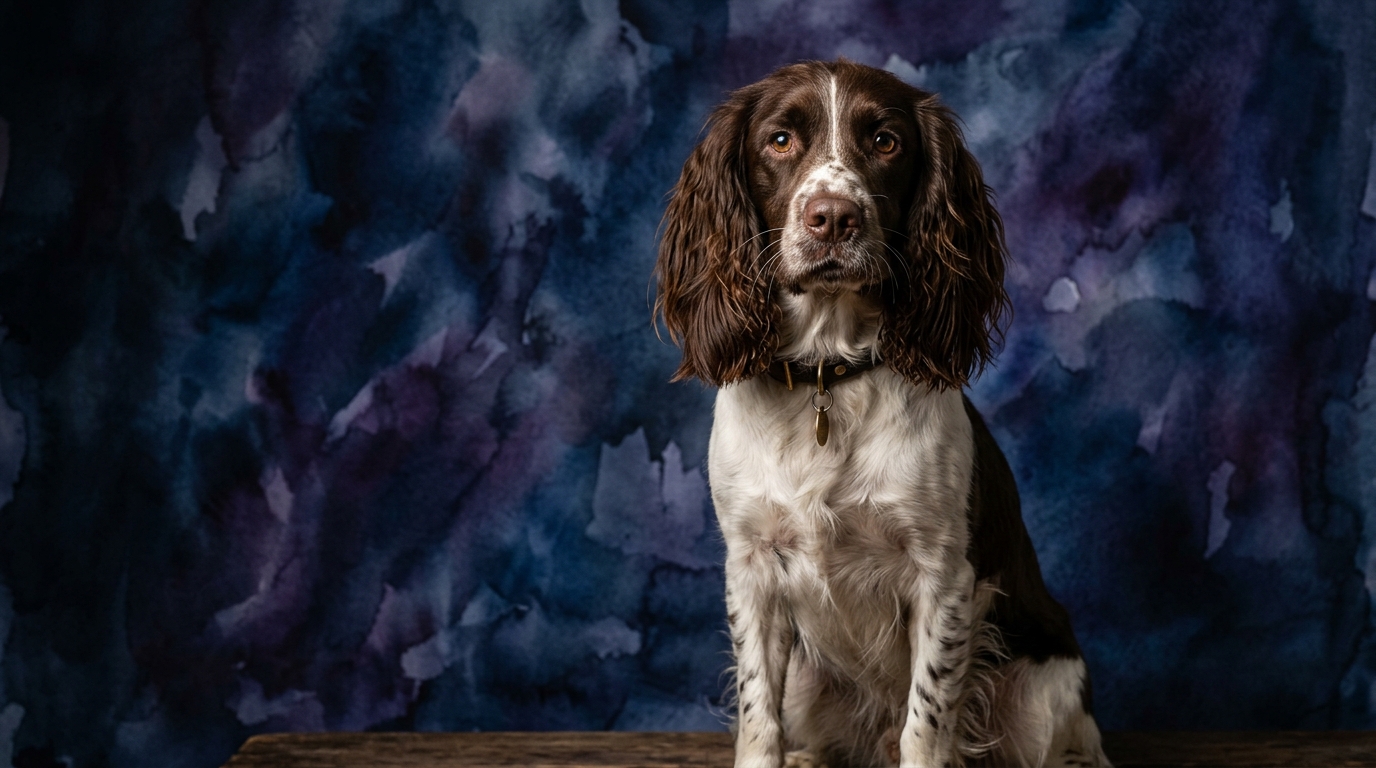
English Springer Spaniel: Ranked #13 by Coren, indicating rapid command acquisition and high obedience. Their Problem Solving (4/5) is evident in their ability to independently navigate complex outdoor scenarios, such as tracking game or adapting retrieval strategies. Training Speed (5/5) is a hallmark, reflecting their eagerness and capacity to quickly master new tasks and multi-step commands. Social Intelligence (4/5) focuses on cooperation and understanding handler cues within a working partnership. Instinctive Drive (5/5) is exceptionally strong, manifesting as a deep-seated desire for hunting, scent work, and active engagement. Memory (4/5) supports their ability to recall complex routes, learned behaviors, and scent patterns crucial for their demanding roles.
Cavalier King Charles Spaniel: Ranked #44 by Coren, suggesting more repetitions are needed for command mastery. Their Problem Solving (3/5) is moderate; they often prefer human intervention over independent tactical thinking in puzzles. Training Speed (3/5) is slower, requiring consistent, patient, and positive reinforcement, as their motivation is often tied to affection rather than task completion. Social Intelligence (5/5) is their standout trait, enabling them to read human emotions and social cues with exceptional empathy, forming profound bonds. Instinctive Drive (3/5) is low, primarily geared towards companionship rather than strenuous hunting or intense activity. Memory (3/5) is functional for routines and comfort-related experiences but less robust for intricate command sequences.
Where the English Springer Spaniel Excels Cognitively
The English Springer Spaniel's cognitive strengths are rooted in their working heritage, honed over centuries for demanding fieldwork. Their superior Problem Solving (4/5) truly shines in dynamic environments, enabling them to independently navigate varied terrains, locate hidden objects, or adapt strategies during complex scent work. This isn't just following orders; it's active, adaptive thinking in real-time.
Their exceptional Instinctive Drive (5/5) means they are intrinsically motivated by the pursuit of tasks like tracking and retrieving, making them relentless and focused learners. This deep-seated drive fuels their engagement and provides a powerful internal reward system. Furthermore, their rapid Training Speed (5/5) allows them to quickly assimilate intricate multi-step commands and advanced obedience routines. A Springer can learn complex sequences in significantly fewer repetitions than many other breeds, demonstrating a remarkable capacity for associative learning and retention, especially in a working context.
Where the Cavalier King Charles Spaniel Excels Cognitively
In contrast, the Cavalier King Charles Spaniel's cognitive brilliance lies in their unparalleled Social Intelligence (5/5). They possess an extraordinary capacity to read and respond to human emotions, often sensing subtle shifts in an owner's mood and offering comfort without needing explicit cues. This deep, intuitive understanding of social dynamics allows them to form exceptionally strong, empathetic bonds with their human companions.
While their problem-solving and training speed scores are lower, their social acuity means they excel at tasks involving nuanced interaction and emotional support. They are masters at subtly communicating needs and desires through gentle eye contact or soft nudges, making them incredibly effective at soliciting attention or providing solace. Their memory, while not geared towards complex sequences, is highly effective for remembering comforting routines and the specific people who provide security, reinforcing their cherished social connections and enhancing their role as devoted companions.
Which Is Easier to Train and Why
When evaluating ease of training for owners seeking high levels of obedience and task performance, the English Springer Spaniel generally offers a more direct and rewarding path. Their Training Speed (5/5) is a significant asset, as they absorb new commands quickly and possess a strong desire to please and engage in structured activities. This eagerness stems from their powerful Instinctive Drive (5/5) to work alongside a human partner, making them highly receptive to direction and consistent in their responses.
Real behavioral differences manifest in their focus and persistence: a Springer will typically maintain attention on a training task for longer periods, driven by the challenge and the prospect of a reward, whether it's a successful retrieve or handler praise. They thrive on clear structure and consistent expectations, learning complex chains of behavior and intricate commands with relative ease, often eager for the next lesson.
The Cavalier King Charles Spaniel, while certainly trainable, presents a different set of considerations for owners. Their Training Speed (3/5) indicates that they require more patience and repetition to master commands. Their primary motivation isn't complex task completion but rather social connection and comfort. While they are eager to please their beloved humans, their attention span for repetitive drills can be shorter, and they may be more easily distracted by opportunities for cuddles or a comfortable nap.
Behavioral differences include a tendency to use their Social Intelligence (5/5) to charm their way out of rigorous training rather than powering through a difficult command. They respond best to positive reinforcement, gentle guidance, and training sessions that feel more like engaging playtime than strict work. Consistency is vital, but the approach must be softer, focusing on building a positive association with learning rather than demanding unwavering focus on a task.
Which Suits Active Owners vs. Relaxed Owners
For owners with an active lifestyle, the English Springer Spaniel is an almost ideal match. Their profound Instinctive Drive (5/5) and robust physical capabilities mean they thrive on daily adventures, whether it's long hikes, trail running, or engaging in canine sports like agility, flyball, or scent work. An active owner can fully harness the Springer's Problem Solving (4/5) and Memory (4/5) in activities that challenge both their body and mind, such as complex retrieve games or navigating obstacle courses.
They require a significant outlet for their boundless energy and mental stimulation; without it, their innate drives can lead to restless or destructive behaviors. They are true partners for exploration, always ready for the next outdoor challenge, making them perfect companions for individuals or families who spend considerable time outdoors and enjoy a dog that can keep pace.
Conversely, the Cavalier King Charles Spaniel is exquisitely suited for more relaxed owners who prioritize companionship and comfort above intense activity. Their lower Instinctive Drive (3/5) means they are content with moderate daily walks and enjoy ample downtime, often preferring to be curled up on a lap or nestled beside their human on the sofa.
Their exceptional Social Intelligence (5/5) makes them superb emotional support animals and devoted family companions, perfectly happy to share quiet moments or gentle play. They are not demanding in terms of strenuous physical activity or intense mental challenges, finding their joy in simply being present with their people. For individuals or families who prefer a calm home environment and desire a dog whose primary role is a loving, empathetic presence, the Cavalier offers an unparalleled fit.
The Verdict
Choose an English Springer Spaniel if you seek an active, engaged partner for outdoor adventures and enjoy the process of training a highly capable working dog for complex tasks and sports. Their drive and problem-solving make them ideal for owners who can provide consistent mental and physical challenges.
Opt for a Cavalier King Charles Spaniel if your priority is a devoted, empathetic companion who thrives on close human connection and requires moderate exercise, fitting seamlessly into a more relaxed home environment. Their social intelligence offers unparalleled emotional support and gentle companionship.
🧠 Find Your Pet's IQ Score
Our Pet IQ Lab assessment covers 25+ tests across 5 cognitive dimensions — personalized to your breed.
Take the Full IQ Test →Frequently Asked Questions
Are English Springer Spaniels good family dogs?
Yes, English Springer Spaniels can be excellent family dogs, especially for active families who can provide ample exercise and mental stimulation. Their social intelligence allows them to form strong bonds, and their eagerness to please makes them responsive to family training and activities. They thrive when included in family adventures and given a 'job' to do.
Do Cavalier King Charles Spaniels bark a lot?
Cavalier King Charles Spaniels are not typically excessive barkers, but they will bark to alert their owners to visitors or unusual sounds. Their strong social intelligence means they often use barks for communication, but with proper training, their vocalizations can be managed. They usually prefer quiet companionship.
Which spaniel is better for apartment living?
The Cavalier King Charles Spaniel is generally better suited for apartment living due to their lower exercise requirements and calm indoor demeanor. While English Springer Spaniels can adapt to apartments with dedicated, extensive daily exercise, Cavaliers are content with shorter walks and thrive in smaller spaces as long as they have their human companions nearby.