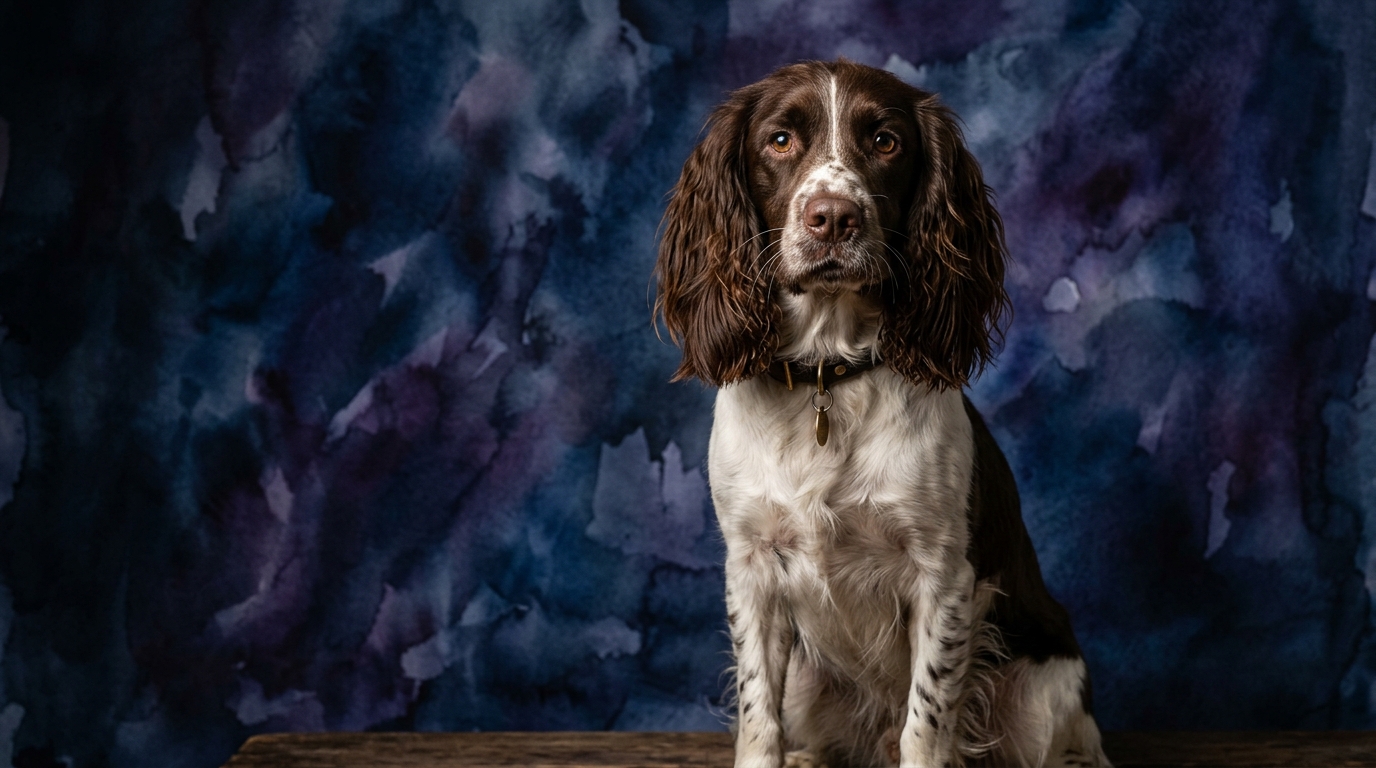

A Tale of Two Minds: IQ Profiles Side-by-Side
The Cosmic Pet Pet IQ Lab provides a detailed lens into the cognitive makeup of our canine companions. For the English Springer Spaniel, ranked #13 by Coren, and the Lhasa Apso, ranked #68, these profiles illuminate their distinct intellectual landscapes.
The English Springer Spaniel's profile showcases robust cognitive capabilities across the board. Their Problem Solving is rated 4/5, indicating a strong aptitude for navigating complex environments and figuring out solutions, crucial for their historical roles. A perfect 5/5 in Training Speed signifies exceptional responsiveness to instruction, with new commands and routines absorbed with remarkable efficiency, making them highly adaptable. Social Intelligence at 4/5 reflects their ability to read human cues well, fostering strong partnerships and thriving on interaction. Their Instinctive Drive is also a perfect 5/5, highlighting an inherent motivation for tasks like retrieving and scent tracking, propelling them with vigor. Finally, a Memory score of 4/5 ensures effective retention of learned behaviors and past experiences, aiding consistent performance.
In contrast, the Lhasa Apso's profile presents a different set of strengths. Their Problem Solving is 3/5, demonstrating a functional capacity, particularly for their home environment or personal advantage, often methodical and independent. Training Speed stands at 3/5, indicating moderate learning pace; they require more repetition and patience, often evaluating a command's perceived value due to their independent spirit. Social Intelligence is 3/5, reflecting a discerning nature, forming deep bonds with primary family while being reserved with strangers, understanding household dynamics selectively. Their Instinctive Drive is also 3/5, leaning towards alert guardianship and companionship rather than active pursuit, with lower motivation for sustained, directed tasks. Memory at 3/5 means they possess functional recall for routines and familiar elements, learning from experience at a moderate pace.
Where the English Springer Spaniel Excels Cognitively
The English Springer Spaniel's cognitive profile paints a picture of an exceptionally adaptable and eager collaborator. Their perfect 5/5 in Training Speed means they grasp new concepts and commands with remarkable swiftness, often requiring fewer repetitions than many other breeds. This makes them prime candidates for advanced obedience, agility, or any task-oriented discipline, demonstrating a keen desire to engage and learn.
Their 5/5 Instinctive Drive fuels a relentless enthusiasm for engagement and activity. This isn't just about physical energy; it's a deep-seated mental drive to participate, to work, and to achieve a goal. Whether it's tracking a scent, retrieving a thrown object, or mastering a complex sequence of actions, their intrinsic motivation to perform is a significant cognitive asset, a direct legacy of their sporting heritage.
The 4/5 in Problem Solving allows them to apply their rapid learning and drive to real-world scenarios. They aren't merely executing rote commands; they can assess a situation, adapt their approach, and figure out how to overcome an obstacle to complete a task. For instance, navigating a complex scent trail with multiple distractions or figuring out how to retrieve an item from a tricky spot showcases this practical intellect. Their strong memory (4/5) further enhances this, allowing them to recall successful strategies and apply them consistently, making them highly reliable partners.
Unique Cognitive Strengths of the Lhasa Apso
While their scores might appear lower in comparison, the Lhasa Apso's cognitive strengths lie in their discerning independence and focused awareness. Their 3/5 in Social Intelligence, while not reflecting broad social eagerness, indicates a nuanced ability to form deep, selective bonds and understand the subtle dynamics within their chosen family. They often excel at picking up on specific household routines and the emotional states of their closest companions, offering a quietly attentive presence.
The Lhasa Apso's Problem Solving (3/5) often manifests in a different way than a working breed. They might not be driven by a handler's task, but they are adept at solving problems related to their comfort, security, or personal desires. This could involve finding the warmest sunbeam, strategically positioning themselves for optimal observation, or even subtly manipulating their environment or owners to get what they want. This independent reasoning, combined with their moderate memory (3/5), allows them to learn from experience and adapt their strategies for personal gain, demonstrating a shrewd practicality.
Their Instinctive Drive (3/5) is channeled into alert guardianship and self-preservation. This manifests as a keen awareness of their surroundings and a quickness to alert their family to perceived changes. This isn't about retrieving, but about vigilant observation and a confident, sometimes stubborn, decision-making process rooted in their historical role as sentinels. Their cognitive abilities are geared towards maintaining their space and comfort, making them excellent watchdogs within their territory.
Training Dynamics: Eagerness vs. Independence
Comparing the ease of training between these two breeds highlights a significant difference in their approach to learning and instruction. The English Springer Spaniel, with its perfect 5/5 Training Speed and 5/5 Instinctive Drive, is typically a joy to train. They possess an inherent desire to work collaboratively and a strong eagerness to please their human companions. This translates into rapid acquisition of commands, a high success rate in obedience, and a general enthusiasm for learning new tasks.
English Springers respond well to positive reinforcement and often seek out opportunities for engagement, making training sessions productive and rewarding for both dog and owner. Their strong memory (4/5) ensures consistent recall of learned behaviors, allowing them to build a vast repertoire of skills and maintain them over time. Their collaborative nature means they are generally receptive to guidance and correction, making the training journey smoother.
The Lhasa Apso, conversely, approaches training with a more independent mindset, reflected in its 3/5 Training Speed and 3/5 Instinctive Drive. While perfectly capable of learning, they often require more patience, consistency, and a clear demonstration of why a command is relevant to them. They might not possess the same inherent drive to please or the high-octane enthusiasm for repetitive tasks that a Springer Spaniel exhibits.
Their problem-solving (3/5) and social intelligence (3/5) mean they're evaluating the situation, and if they don't see the immediate benefit or feel inclined, they might offer a 'lhasa shrug' rather than immediate compliance. Training a Lhasa Apso often involves tapping into their discerning nature and making learning a positive, engaging experience that respects their self-assured personality. They are trainable, but the journey requires more strategic engagement and understanding of their unique motivations than sheer repetition.
Lifestyle Match: Active Partnership vs. Calm Companionship
The English Springer Spaniel is an ideal match for active owners who seek a true partner in adventure. Their robust 5/5 Instinctive Drive and 4/5 Problem Solving mean they thrive when given a 'job' to do, whether it's daily long walks, runs, hikes, or participating in dog sports like agility, flyball, or scent work. They need consistent mental and physical stimulation to prevent boredom and channel their considerable energy constructively. Owners who enjoy outdoor activities and are willing to invest time in structured training and play will find the Springer Spaniel to be an incredibly devoted and capable companion, eager to share every experience. Their social intelligence (4/5) also means they integrate well into active family dynamics, thriving on shared experiences.
The Lhasa Apso, with its more moderate 3/5 scores across the board, is better suited for owners seeking a calm, confident, and discerning companion. While they appreciate regular walks and playtime, their need for intense, sustained activity is lower than a Springer Spaniel's. Their cognitive profile leans towards observation, independent thought, and selective social engagement, making them excellent companions for those who enjoy a more relaxed pace of life. They are content with being close to their family, providing alert companionship, and enjoying comfortable routines. Owners who appreciate a dog with a distinct personality, a touch of independence, and a watchful nature will find the Lhasa Apso a fulfilling presence in their home, offering quiet loyalty.
The Verdict
Opt for an English Springer Spaniel if you desire a highly trainable, energetic partner for outdoor adventures, dog sports, or a busy family life, valuing their eagerness to learn and work alongside you.
Select a Lhasa Apso if you prefer a confident, discerning companion for a calmer household, appreciating a dog with independent thought and a watchful, yet affectionate, presence.
🧠 Find Your Pet's IQ Score
Our Pet IQ Lab assessment covers 25+ tests across 5 cognitive dimensions — personalized to your breed.
Take the Full IQ Test →Frequently Asked Questions
Are English Springer Spaniels good for first-time dog owners?
With their high trainability and eagerness to please, English Springer Spaniels can be a good fit for dedicated first-time owners who are prepared for their significant energy levels and commitment to consistent training and exercise. Their collaborative nature makes the learning process rewarding.
Do Lhasa Apsos bark a lot?
Lhasa Apsos often have a strong instinctive drive for guarding and alerting, which can lead to barking at perceived intruders or unusual sounds. Early socialization and consistent training can help manage this natural tendency, channeling their vigilance appropriately.
What kind of mental stimulation do English Springer Spaniels need?
English Springer Spaniels benefit immensely from activities that engage their problem-solving and instinctive drive, such as puzzle toys, scent work, obedience training, agility, or retrieving games. This mental engagement is as crucial as physical exercise for their well-being.